Award-Winning Middle School Math Tutors
serving Houston, TX
Middle School Math
Tutors in Houston
Private 1-on-1 tutoring, weekly live classes for academic support, test prep & enrichment, practice tests and diagnostics, and more to elevate grades and test scores.
Based on 3.4M Learner Ratings
UniversitiesSchools & Universities
DeliveredHours Delivered
ProficiencyGrowth in Proficiency
Who needs tutoring?
No obligation. Takes ~1 minute.
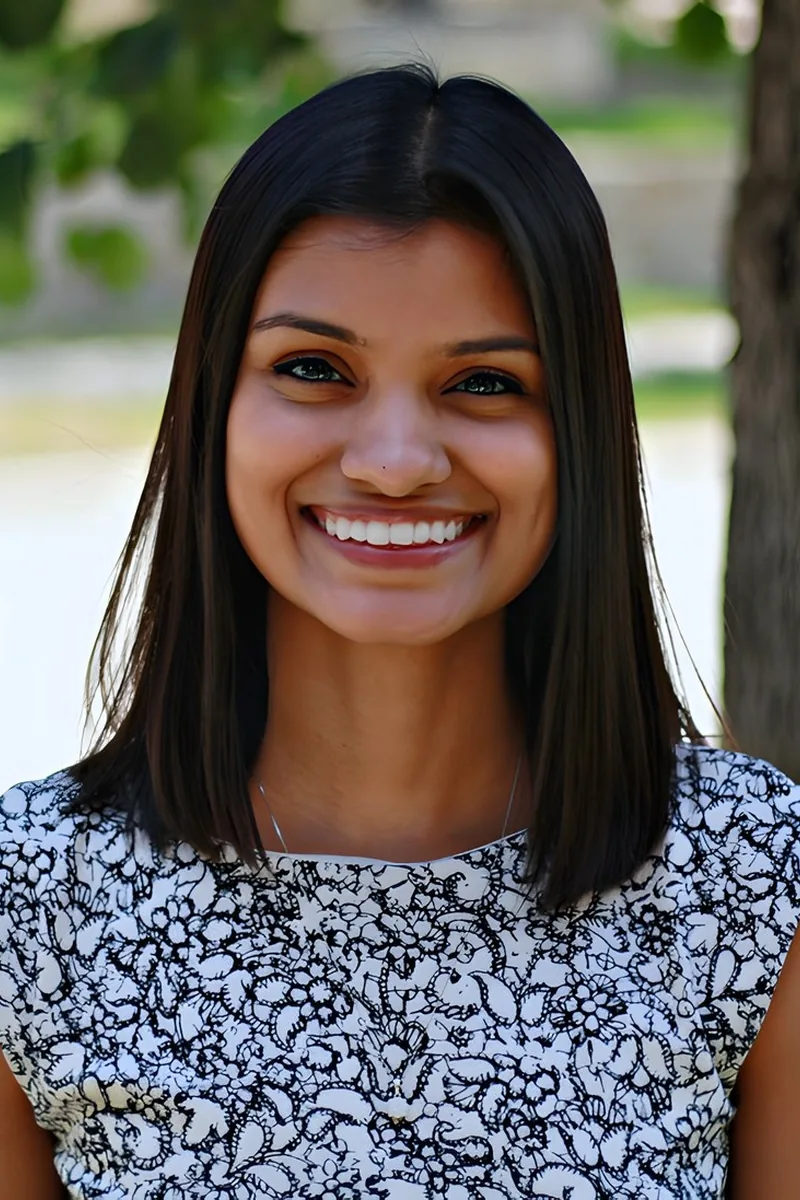
The middle school math years — ratios, proportions, integer operations, intro to linear equations — set the trajectory for everything that comes after. Sugi approaches these topics by building the reasoning behind each procedure, so a student doesn't just cross-multiply but understands why it works. Rated 5.0 by her students, she keeps sessions structured without making them feel like a lecture.

Fractions, ratios, and proportional reasoning trip up a lot of middle schoolers not because the math is hard, but because it's often taught as disconnected procedures. Aadith ties these concepts together so students see how multiplying fractions and setting up ratios are really the same kind of thinking. His physics and math background at Rice means he's full of real-world examples that make abstract ideas click.
Fractions, ratios, and proportional reasoning are the skills that quietly determine whether a student thrives or struggles in every math class that comes after middle school. William spent time tutoring younger students at his high school and at-risk youth programs, so he's practiced at making these foundational topics feel approachable rather than intimidating. He keeps sessions relaxed and builds confidence alongside competence.
Cognitive science at Rice taught Adam how people actually learn — how working memory handles new information, where misconceptions form, and what makes a concept stick versus vanish after the test. He applies that understanding directly when teaching topics like integer operations and early equation-solving, adjusting his explanations based on how a student is thinking, not just whether they got the right answer. His 34 ACT and math tutoring background mean the content itself is second nature, so his attention stays on the learner.
As experienced and passionated educator with a Bachelor's degree in Computer Science from Rice University, I am passionate about empowering students to achieve their academic goals. With over 3 years of tutoring experience in subjects such as AP Computer Science A, Machine Learning, and SAT Math, I adapt to different learning styles and create a supportive learning environment. My teaching philosophy centers on personalized instruction, where I connect with each student to understand their unique learning styles and challenges. I take pride in guiding students through the complexities of computer science and college application essays, equipping them with the skills they need for future success. Outside of tutoring, I enjoy exploring new technologies and engaging in coding projects to improve my teaching approach.
Biochemistry at Rice means Sajel solves equations and manipulates variables every day in coursework — so the pre-algebraic skills middle schoolers are developing around expressions, fractions, and ratios are things she uses constantly and can explain with genuine fluency. Her 35 ACT score speaks to sharp quantitative instincts, and having tutored a younger sibling through similar material gives her a practical sense of where kids this age tend to get stuck and how to unstick them.
The jump from fifth-grade arithmetic to ratios, proportions, and negative numbers can feel enormous. Raj tackles middle school math by connecting each new idea to something concrete — using proportions to scale a recipe, or plotting coordinates to map out a room — so the abstraction doesn't outpace understanding. He's a firm believer that repetition with varied problems is what actually locks concepts in.
Kendall scored a 1580 on the SAT, which means the foundational skills middle schoolers are building right now — integer operations, proportional reasoning, solving multi-step equations — are second nature to her. She's particularly good at showing students how to organize their work on paper so they can catch their own mistakes, a habit that pays dividends once math gets faster in high school. Rated 4.9 by families.
At the middle school level, math confidence matters as much as math skill — one bad experience with fractions or proportional reasoning can snowball for years. Emily tackles concepts like ratios, integer operations, and early equation-solving with patience and concrete examples drawn from science and everyday life. She's the kind of tutor who makes a sixth grader feel smart rather than stuck.
The middle school math years are when students go from straightforward computation to reasoning about proportions, negative numbers, and basic equations. Molly tackles these transitions by walking through the "why" behind each rule, which keeps students from relying on shortcuts that fall apart in harder problems later.
Fractions, ratios, and proportional reasoning trip up a lot of middle schoolers not because the math is hard, but because the concepts are often taught too abstractly. Jennifer connects these ideas to real scenarios — unit pricing, recipe scaling, sports statistics — so the logic clicks before the formulas come out. Her 4.9 rating from students speaks to how well that approach lands.
Between fractions, decimals, ratios, and early geometry, middle school math piles up concepts fast — and gaps at this stage tend to snowball. Mingee breaks each topic into concrete steps and connects them to real-world problems so the reasoning sticks, not just the procedure. Her 5.0 rating speaks to how well that approach lands with students.
Ratios, proportions, and integer operations trip up a lot of middle schoolers because the math suddenly feels more abstract than anything they've seen before. Amanda teaches these concepts through real-world scenarios drawn from her elementary classroom experience, building the bridge between arithmetic and the algebraic thinking that comes next. Rated 5.0 by students.
Fractions, ratios, and proportional reasoning trip up more middle schoolers than almost any other topic — and they're the exact skills that make or break high school math readiness. Malcolm breaks these concepts into concrete, visual steps that click, drawing on the same logical precision his biochemistry training at Rice demands daily.
Theresa breaks middle school math into manageable pieces, whether that's proportional reasoning, coordinate graphing, or early work with equations. As a biomedical engineering major at Rice, she connects abstract concepts to tangible examples — like how ratios show up in real medical device design — so the material actually sticks. Rated 5.0 by students.
From ratios and proportions to introductory geometry and basic equation solving, middle school math covers a huge range of topics in a short time. Natalie tutors Rice University athletes in math and has developed a knack for identifying which specific skill gaps are causing confusion downstream. She keeps sessions structured but conversational, so students actually voice where they're getting stuck.
Having studied child development at Vanderbilt alongside her art history work, Sarah understands how kids at this age actually process new abstractions — which matters when a sixth grader hits fractions of fractions or negative numbers for the first time. She leans on that developmental knowledge to pace lessons around how a student is thinking, not just what they're getting wrong. Her SAT score of 1430 confirms the math fundamentals are solid, and she brings a calm, structured approach to building each concept onto the last.
The jump from arithmetic to algebraic thinking is one of the biggest conceptual shifts in all of math, and it happens in middle school. Casey tackles topics like proportional reasoning, integer operations, and basic equation-solving by grounding each one in concrete examples before moving to abstract notation. She's the kind of tutor who will create extra challenge problems when a student is ready to push further.
The jump from elementary to middle school math introduces ratios, proportions, and negative numbers all at once, which can feel like learning a new language. Jiatian's approach is to slow down at the exact point where a concept stops making sense and rebuild understanding from there. As a Rice University graduate now finishing medical school, she brings the kind of analytical precision that makes tricky multi-step problems feel manageable.
Fractions, ratios, proportions, basic geometry — middle school math covers a wide range, and gaps at this stage compound fast. Alexander breaks each concept into clear steps and ties them to everyday reasoning, drawing on his philosophy training to ask the kind of questions that build genuine number sense.
Growing up schooled in Mexico before moving to the U.S. gave Alfonso firsthand experience navigating two different math curricula — which means he's seen multiple ways to approach the same concept and can offer a second explanation when the textbook's version doesn't land. He's pursuing electrical and computer engineering, so the pre-algebraic skills middle schoolers are building (integer operations, expressions, basic geometry) are tools he relies on daily. His 32 ACT composite confirms the quantitative chops behind that practical fluency.
Sixth through eighth grade is when math shifts from computation to reasoning, and a student's confidence during that transition shapes everything that follows. Logan tackles middle school topics like proportional relationships, basic geometry, and introductory statistics by connecting each concept to problems students can visualize. He also teaches across writing and reading, so he's comfortable explaining word-heavy problems that trip up students who are strong with numbers but unsure about language.
Fractions, ratios, and proportions click faster when a student sees how they connect to real things — scaling a recipe, reading a blueprint, splitting a budget. Irfan uses these kinds of concrete examples constantly, drawing on his engineering background to make middle school math feel purposeful rather than abstract.
Getting ratios, proportions, and basic geometry right in middle school sets up everything that comes after in math. Roni started tutoring while still in high school and has a knack for making concepts like fraction operations and introductory equations feel approachable — he uses real-world scenarios, including examples from his own fascination with space and rocketry, to keep things engaging.
A Rice University degree in Mathematical Economic Analysis means Frances didn't just study math in the abstract — she learned to apply quantitative reasoning to model real decisions, which gives her a practical vocabulary for explaining concepts like ratios, percentages, and variable expressions to middle schoolers. She spent years tutoring and teaching math to this exact age group during college, so she knows the specific moments (negative numbers, fraction division, setting up equations) where confidence tends to wobble. Rated 5.0 by students.
Enstin started tutoring middle schoolers while still in high school, so he's familiar with the specific moments where students get stuck — fractions turning into decimals, variables appearing for the first time, or negative numbers breaking every rule they thought they knew. He keeps sessions active and conversational, asking students to explain their thinking out loud so gaps surface quickly. His patience and easygoing style make even frustrating topics feel approachable.
Ratios, proportions, and early linear equations are the moments where a student either builds genuine number sense or starts relying on memorized tricks that fall apart later. Aurnab breaks each problem into a story — what the numbers represent, why the operation makes sense — so middle schoolers develop intuition they'll carry into algebra and beyond.
Fractions, ratios, and proportional reasoning trip up more middle schoolers than almost any other topic, and the confusion usually traces back to one small gap in understanding. Lila is patient about finding that gap and rebuilding from there, turning a shaky relationship with math into real confidence before high school.
Fractions, ratios, and proportions start making sense when students can see how the ideas connect instead of treating each chapter like a separate universe. Neethi breaks down multi-step problems by teaching students to identify what a question is actually asking before jumping into calculations. Her patient, style-adaptive approach keeps middle schoolers engaged through the trickier leaps in pre-algebra and geometry.
Ratios, proportions, and integer operations trip up a lot of middle schoolers because the math suddenly becomes more abstract than anything they've seen before. Mostafa's electrical engineering background means he can ground those concepts in real-world examples — like how ratios describe gear systems or how negative numbers model electrical charge — making the jump to pre-algebra feel less intimidating.
Fractions, ratios, and early equation-solving are the building blocks that everything in engineering runs on — and Anne uses that perspective to make middle school math feel purposeful. She connects topics like proportional reasoning and integer operations to real-world problems so students see the point behind the practice.
From ratios and proportions to coordinate graphing, middle school math piles on new concepts fast. Yasmin's biochemistry background means she's comfortable connecting abstract math ideas to concrete examples, and her 4.8 rating from students speaks to how well those explanations land.
Getting ratios, proportions, and integer operations right in middle school changes a student's entire math trajectory. Yuanxin treats each concept as a building block, connecting fraction arithmetic to real-world problems and walking through early equation-solving with enough patience that students stop fearing the variable. Rated 4.9 by families.
Fractions, ratios, and proportional reasoning trip up more middle schoolers than almost any other topic, and shaky understanding here echoes through every math class that follows. Mathilde digs into the specific step where a student's reasoning breaks down and rebuilds from there, turning confusion into genuine number sense.
The jump from arithmetic to pre-algebraic thinking is one of the biggest conceptual leaps in all of math education. Sage tackles middle school topics like ratios, proportional reasoning, and integer operations by grounding abstract ideas in concrete examples — the kind of approach that makes a student say 'oh, that's why' instead of just following steps.
From fractions and ratios to introductory geometry and basic equation-solving, middle school math covers a huge range of skills in a short time. Ryan breaks each concept into manageable steps and ties them back to real scenarios — like using proportions to scale a recipe or percentages to compare prices — so the math actually sticks.
Getting comfortable with fractions, ratios, and basic equation-solving in middle school determines how smoothly everything from algebra to calculus will go later. Omar first discovered his love of teaching by tutoring younger family members through exactly these concepts, finding ways to make proportional reasoning and integer operations feel logical instead of rule-heavy. He brings that same patient, ground-up approach to every session.
Before college, Joshua spent years as a primary school instructor at Kumon, drilling fundamental arithmetic and number sense into students aged 5–13 — so the building blocks of middle school math (integer operations, fractions, early equation work) are material he's taught hundreds of times over. His nutrition sciences coursework at UT Austin keeps him neck-deep in applied math daily, from unit conversions to data interpretation, which means he can show a seventh grader exactly where today's ratio problem leads. Rated 5.0 by students.
Fractions, ratios, and pre-algebra concepts often trip students up not because the math is hard, but because the explanation didn't click the first time. Isaac, a biomedical engineering student at Rice, reworks problems using visual and real-world examples until the logic behind operations like dividing fractions or solving for unknowns actually makes sense. Rated 5.0 by students.
Fractions, ratios, and early algebraic thinking are the exact skills that determine whether a student feels confident or lost when high school math arrives. Aleksey brings patience and structure to these foundational concepts, using visual models and real-world scenarios — splitting pizza, scaling recipes, measuring distances — to make abstract ideas concrete. He holds a 5.0 rating across his students.
Testimonials
Because the right Middle School Math tutor makes all the difference.
Average Session Rating – Based on 3.4M Learner Ratings
Nearby Middle School Math Tutors
Other Houston Tutors
Related Math Tutors in Houston
Frequently Asked Questions
Middle school math introduces abstract thinking and conceptual understanding that goes beyond basic procedures. Students often struggle with word problems, multi-step equations, graphing, and understanding why mathematical processes work—not just how to perform them. Many students also experience math anxiety during this transition, which can impact confidence and performance. Personalized tutoring helps students bridge these gaps by breaking down concepts into manageable pieces and building the foundational understanding needed for success.
During an initial session, a tutor will assess your student's current understanding, identify specific areas of difficulty, and learn about their learning style and goals. This might include reviewing recent assignments, discussing which topics feel confusing, and understanding whether challenges stem from gaps in foundational skills or difficulty with new concepts. The tutor will use this information to create a personalized plan tailored to your student's needs, ensuring sessions are focused and effective from day one.
Many students rush through math problems without documenting their thinking, which makes it harder to catch errors and understand where misconceptions occur. Expert tutors teach students to break complex problems into smaller steps, explain their reasoning, and check their work systematically. By modeling strong problem-solving strategies and having students practice them repeatedly, tutoring builds habits that improve both accuracy and mathematical thinking—skills that transfer across all math topics.
Yes. Houston's 45 school districts use various math programs and approaches, and tutors are familiar with the different styles and expectations across these curricula. Whether your student's school uses traditional textbooks, problem-based learning, or integrated math sequences, Varsity Tutors connects you with tutors who understand the specific curriculum and can align instruction with what's being taught in class. This ensures tutoring reinforces classroom learning rather than introducing conflicting methods.
Absolutely. Math anxiety often stems from past struggles, pressure to perform quickly, or fear of making mistakes—and it can create a cycle where stress interferes with learning. Personalized tutoring provides a low-pressure environment where students can ask questions freely, work at their own pace, and experience success on manageable problems. As students see themselves improving and understanding concepts they once found confusing, confidence builds naturally, which reduces anxiety and opens the door to deeper learning.
Middle school math becomes more powerful when students recognize that different topics—like equations, graphing, and functions—are connected through underlying patterns and principles. Expert tutors help students move beyond memorizing procedures to understanding the 'why' behind mathematical concepts. By asking guiding questions, making visual connections, and showing how new topics relate to prior knowledge, tutors help students build a cohesive understanding of math rather than viewing each topic as isolated. This deeper comprehension makes learning new material faster and more meaningful.
The ideal frequency depends on your student's specific needs, current performance level, and learning goals. Many students benefit from one or two sessions per week, though some may need more intensive support initially. Most students see noticeable improvement in understanding and confidence within 4-6 weeks of consistent tutoring, though the timeline varies based on the complexity of topics being addressed and how actively they apply what they learn in class. A tutor can recommend a personalized schedule during your first session.
Varsity Tutors matches you with tutors based on your student's specific needs, learning style, and goals. When you connect with Varsity Tutors, you'll provide details about your student's current challenges, grade level, and any specific topics that need attention. This information helps ensure you're matched with a tutor who has expertise in middle school math and a teaching approach that resonates with your student. If the fit isn't perfect after the first session, you can request a different tutor to find the right match.
Let’s find your perfect tutor
Answer a few quick questions. We’ll recommend the right plan and match you with a top 5% tutor.