Award-Winning Statistics Tutors
serving Palm Bay, FL
Statistics
Tutors in Palm Bay
Private 1-on-1 tutoring, weekly live classes for academic support, test prep & enrichment, practice tests and diagnostics, and more to elevate grades and test scores.
Based on 3.4M Learner Ratings
UniversitiesSchools & Universities
DeliveredHours Delivered
ProficiencyGrowth in Proficiency
Who needs tutoring?
No obligation. Takes ~1 minute.
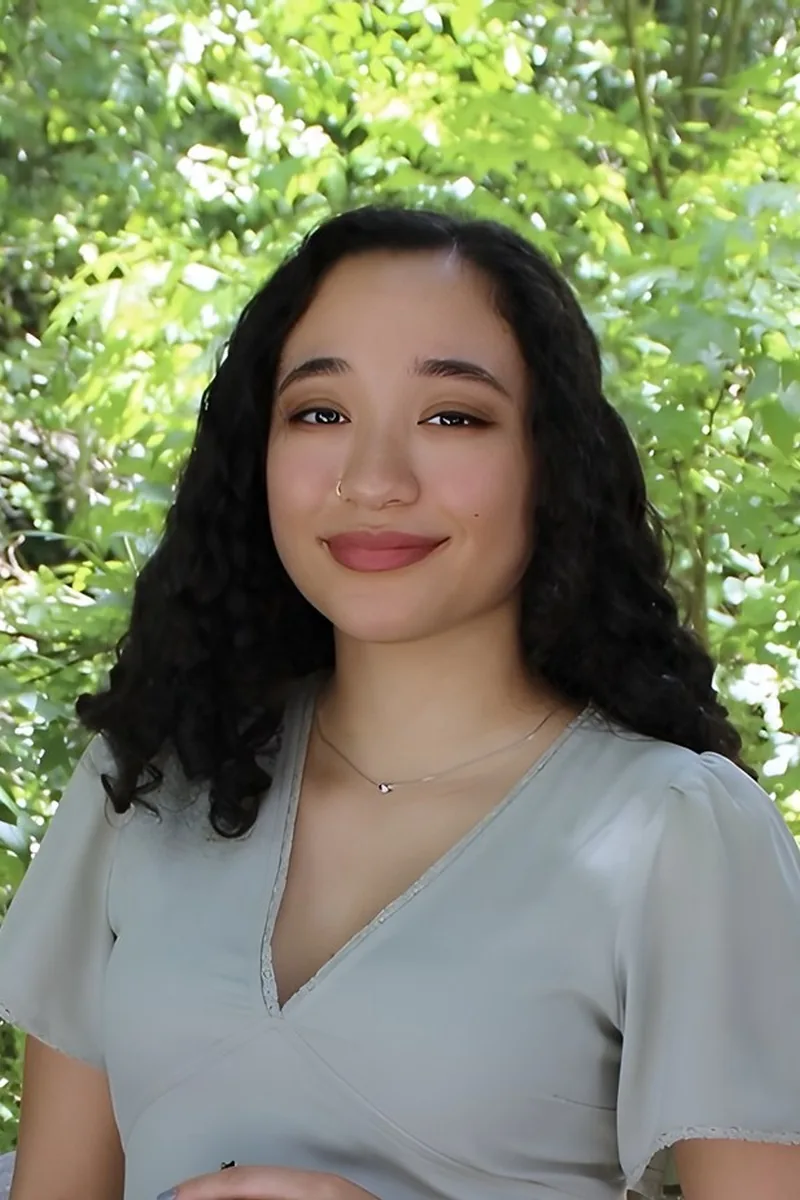
Kaylah's graduate work in Computational Social Science at the University of Chicago is built almost entirely on statistical methods — probability distributions, hypothesis testing, regression modeling, and data interpretation. She teaches statistics the way she actually uses it: starting with what question you're trying to answer, then selecting and applying the right tool. Her background in cognitive neuroscience research means every example she pulls from is grounded in real data.
Probability distributions, hypothesis testing, and regression analysis all click faster when you've actually used them to make decisions. Hari's finance background means he's applied statistical methods to real datasets — forecasting, risk analysis, variance modeling — and he teaches the logic behind each test so students can choose the right approach on their own.
Most students can plug numbers into a standard deviation formula — the harder part is interpreting what the result actually means in context. Joshitha approaches statistics by connecting every calculation to real-world reasoning: why a confidence interval narrows, what a p-value does and doesn't tell you. Her engineering background at Johns Hopkins means she uses statistical thinking constantly and can show students where these ideas live outside the textbook.
Licensed math teacher with a competition math background, Jacob approaches statistics problems by connecting them to the algebraic and calculus foundations students already have — showing, for instance, how a continuous probability density function ties back to integration concepts from calculus. His classroom experience means he knows exactly where students stall on topics like experimental design and inference, and he scaffolds the reasoning so each new concept builds naturally on the last. Rated 5.0 by students.
Understanding when to use a t-test versus a z-test, or why a sampling distribution behaves the way it does, requires more than formula sheets. Apoorva applies statistical methods in her graduate engineering research at Berkeley, which means she can unpack concepts like standard error, regression assumptions, and hypothesis testing with real-world context that makes the theory stick.
Too many students treat statistics as a formula-matching exercise — plug numbers into the z-test formula, get an answer, move on. Matthew, who teaches and studies statistics at the graduate level, digs into the logic behind hypothesis testing, confidence intervals, and probability distributions so that choosing the right test becomes intuitive. Rated 4.8 by students.
Studying psychology and neuroscience at the University of Chicago, Emerson uses statistics constantly — running hypothesis tests, interpreting p-values, and building regression models from real experimental data. That daily exposure makes him especially effective at explaining concepts like sampling distributions and standard error in ways that go beyond formula sheets. He's rated 5.0 by the students he's worked with.
Probability distributions, hypothesis testing, and regression analysis each require a different kind of thinking — and mixing them up is the fastest way to lose points. With a master's in mathematics education, Anthony teaches the logic underneath each method so students can identify which tool fits a given scenario. That conceptual clarity is what separates someone who survives a stats course from someone who actually commands the material.
I like helping students. I am very patient. I have experience teaching Calculus classes at the University of Miami. I have done private tutoring for all levels of math up to Calculus, as well as Statistics, Business Math, and Math Finance. I have worked in the actuarial field. I have an undergraduate degree in mathematics from Michigan State University and a Master's degree in mathematics from the University of Miami. I worked for The Princeton Review as a tutor for the SAT. I did very well on both the SAT and ACT, and like teaching students how to do better on those. I like history, too, and always find it fun to tutor history.
Understanding probability distributions or hypothesis testing requires more than memorizing formulas — it demands knowing what question you're actually answering with the data. Lou approaches statistics through real-world problem framing, a skill sharpened by years of engineering and business analysis where interpreting data correctly had tangible consequences.
Probability distributions, regression analysis, and standard deviation calculations all become more intuitive when you see how they apply to real data sets. As a civil engineering major at UF, Cavan runs statistical analyses regularly in his coursework — from sampling methods to interpreting p-values — and brings that hands-on context into his tutoring. He holds a 5.0 client rating.
St. John's College Great Books program might seem far from statistics, but it trains students to interrogate evidence and build arguments from primary data — skills that map directly onto interpreting datasets, evaluating claims about correlation, and understanding what a p-value actually means. Kelsey brings that analytical rigor to topics like measures of central tendency and probability, breaking down the reasoning behind each calculation so students grasp not just the procedure but the logic driving it.
Understanding statistics means learning to ask the right question before running any calculation — is this a z-test or a t-test, one-tail or two, and does the sample actually support the claim? As a statistics major at the University of Florida, Juan unpacks distributions, confidence intervals, and regression analysis with the fluency of someone who applies them in his own coursework every week.
Between hypothesis testing, probability distributions, and confidence intervals, statistics demands a kind of reasoning that's genuinely different from other math courses. Kaitlyn's biology training at the university level required heavy statistical analysis — interpreting p-values, designing experiments, running regressions — so she teaches stats as a practical tool rather than a set of formulas to memorize.
Most math subjects reward speed and precision, but statistics rewards careful thinking about what data can and can't tell you — a skill Emily sharpens by approaching problems like a political scientist evaluating polls, surveys, and demographic trends. Her poli-sci training at New College of Florida meant constant exposure to sampling methods, margin of error, and data interpretation, which she now channels into teaching concepts like variability, normal distributions, and statistical inference. She holds a 5.0 rating from students.
Graduate-level biostatistics coursework and a teaching assistantship in R programming mean Tyler doesn't just understand statistical theory — he's taught others how to apply it to real biological datasets, from calculating p-values in ecological studies to running regression analyses on fish population data. His applied statistics minor and marine ecology research give him a knack for explaining concepts like hypothesis testing and variability through tangible scientific questions. Rated 5.0 by students.
Most students can plug numbers into a formula for mean or standard deviation — the hard part is knowing what those numbers actually tell you about a dataset. Javier zeroes in on interpretation, teaching students to read the story behind measures of spread, probability, and data displays so they can reason through problems instead of just computing answers. His finance training gives him a practical lens for showing how statistical thinking applies to real decisions.
Probability distributions, hypothesis testing, and confidence intervals all click faster when you understand the logic underneath the formulas. Gianfranco's mathematics degree work at the University of Florida means he can unpack why a p-value matters or how a chi-square test actually measures deviation — not just walk through the calculator steps. Rated 5.0 by students.
I am listening to and learning about him or her as an individual. I can also discover what motivates the student during this conversation and plan for how to frame future tutoring sessions in terms of what the student already knows and enjoys.
Probability distributions, hypothesis testing, confidence intervals — statistics is a subject where one fuzzy concept early on can snowball into confusion for the rest of the course. Michelle tackles each idea with real-world data scenarios drawn from science and everyday life, making formulas feel like tools rather than arbitrary rules. She holds a 4.9 rating from students.
The jump from collecting data to interpreting it trips up a lot of students, especially around probability distributions and hypothesis testing. Danielle approaches statistics by grounding every formula in what it actually measures, so concepts like standard deviation and p-values stop feeling like arbitrary calculations.
Studying behavioral neuroscience means Hanna runs statistical analyses constantly — regression models, hypothesis testing, probability distributions — so she teaches statistics as a practical tool rather than an abstract math course. She breaks down each concept by connecting it to real data scenarios, which makes topics like standard deviation and normal curves feel intuitive instead of formulaic.
Her Exercise Science coursework at the University of Alabama means Jenna regularly interprets data sets, calculates standard deviations, and evaluates statistical significance in research contexts. She brings that applied perspective to statistics tutoring, making concepts like probability distributions and hypothesis testing feel grounded in real scenarios.
Probability distributions, confidence intervals, and regression analysis are central to Nicholas's own research in genetics, where statistical reasoning drives every conclusion. He teaches statistics by walking through how to choose the right test for a given dataset and interpret the output — not just how to plug numbers into a formula.
I am a college student studying data science. Empathy and equity are essential in our world and for students' success. I have spent the last few years helping students learn complex subjects such as Statistics, Calculus, and General Biology. Not every student learns the same way. My goal in tutoring is to find a student's learning style and optimize their success. I believe that anyone can learn anything under the right conditions!
I am a graduate of Rollins College in Winter Park, Florida. I recently received my Bachelor of Arts in Psychology in 2019 with a focus on neuropsychology. I have several years of experience in tutoring high school students for various math classes, as well as tutoring other undergraduate college students in math classes and psychology classes. I'm most passionate about the subject of clinical, cognitive, and neuropsychology, but I find most math subjects to be exciting and entertaining. I'm also experienced in editing and reviewing essays, as I am also APA certified. Regarding my future, I plan on completing a master's program for psychology followed by a Psy.D. program with a specialization in neuropsychology.
Probability distributions, hypothesis testing, confidence intervals — statistics asks students to think about uncertainty in a structured way, which is a genuine shift from the deterministic math they're used to. Payal's physics training involved heavy statistical analysis of experimental data, so she teaches these concepts through the lens of what the numbers actually mean in practice rather than just which formula to apply.
Interpreting p-values, setting up hypothesis tests, understanding what a confidence interval actually means — statistics is as much about careful reasoning as it is about computation. Jake developed sharp analytical skills through his CDC research internship, where data interpretation is part of daily work. He brings that real-world statistical thinking into sessions so concepts like standard deviation and regression aren't just textbook exercises.
I am a senior at Rollins College and have my IB diploma from high school. I did TOK, HLs: Psych, Econ, language and literature, and SLs: Spanish, biology, and mathematical studies. I prefer psych, econ, business, and anything English or literature related. I can do paper revisions, essay help, reading comprehension, elementary/middle/high school math. I would prefer more basic math and science, can help with reading and writing in Spanish, and am up for anything.
i am a student at The University of Pennsylvania studying business and computer science. My interest in tutoring began in middle school when I started taking online math classes for more enrichment and exposure. In high school, I founded Mu Alpha Theta and ran it all four years of high school. I love teaching students in all aspects of math and science.
I am Ankit Jajoo. I am enrolled in Duke University Class of 2022 studying neuroscience and computer science. STEM is my number one passion, while history is my number one interest. Humanities and STEM not only coexist, but work together often in life. While STEM provides the foundation for the future, humanities contributes to how it is used to advance humanity as a whole. I love biology, chemistry, and computers. It is so cool to see how all these tiny minute parts of the world interact to create you, me, and everything we touch. On the other hand, history is cool to see how societies interacted to create the present world. The past is never separate from us, but always influencing everything from the various countries to cities to the tiny villages all over the world. The world is a combination of all of this and it is my passion to understand the world. Other than just about education and information, I love teaching other people about stuff. I enjoy teaching all my friends some stuff, in return they teach me other stuff. Contrary to popular opinion, teaching is a two way street. I've learned a tremendous amount from students and I hope they learned a similar amount from me. Tutoring students in a field I enjoy such as STEM or history is a dream come true.
I am a graduate of The State University of New York at New Paltz and am currently working towards my masters at Southeastern University. I received a Bachelor of Science in Elementary Education with a minor in Mathematics and I am obtaining my Master's in Educational Leadership. Throughout the years I have worked in the classroom as an elementary teacher and then obtained my certification in Middle School Mathematics which allowed me to work in my current profession as a middle school mathematics teacher. I have also been tutoring for over 10 years and I specialize in test preparation, organization, mathematics, and SAT/ACT Mathematics preparation. In my tutoring sessions I provide detailed instruction and consistently check for understanding. I break mathematics down into obtainable small lessons to allow for student success. In my spare time, I enjoy the outdoors, exercise, reading, baking and even advancing my own learning.
I am extremely passionate about psychology, but I also really enjoy tutoring English. Literary analysis can be fun, I promise! When I am tutoring a student, I try to relate to him or her on a more friendly and personal level; it is important to me that my students understand I am accessible and there to help, not to intimidate them or make them uncomfortable and confused. I feel that this makes it much easier for a student to approach me with questions or a simple I have no idea whats going on in this math problem. When it comes to standardized testing, I firmly believe that test-taking is a skill in and of itself the SAT, for example, tests ones math and verbal abilities, but it also tests your ability to take the SAT, which is a skill that can be taught and practiced. Outside of academics, I enjoy participating in on-campus theater, folding origami, and baking.
I am a law student, but I took an unusual route to get there. I used to attend medical school but had a change of heart in my career path. Part of this was due to my political science major (double major with biology) in college as well as a number of Spanish and other courses that I took. Tutoring is something, I feel, that has come naturally to me, even back to my high school days. My goal is to help you learn as much as you can and reach your true potential. I will work hard to make sure that this happens, as long as you put in the work, too! We will work together to tailor your learning experience to your needs.
As a current Mechanical Engineering student at The University of Alabama, I am passionate about sharing my love for STEM subjects, particularly in mathematics and science. With experience tutoring a variety of courses, including AP Calculus, AP Statistics, and High School Physics, I strive to create engaging, supportive learning environments where students can thrive. My teaching philosophy centers around understanding each student's unique learning style and filling in knowledge gaps through interactive problem-solving and real-world applications. I believe that instilling confidence in students is crucial, as I want them to realize their potential and foster a growth mindset. Outside of tutoring, I enjoy exploring new teaching methodologies and learning about the latest developments in engineering. I am dedicated to helping students succeed academically while nurturing their curiosity and enthusiasm for learning.
I am an undergraduate student studying both legal studies and accounting at the University of Central Florida. Prior to college I was in the IB (International Baccalaureate) Program at my high school and was named a National Merit Commended Scholar. I've spent a number of years teaching and tutoring, despite my young age, in a variety of subjects ranging from music to different levels of math. I am most passionate about tutoring math related subjects as I see how many students struggle to connect certain concepts with others. I also love to tutor business related fields such as economics as I am an accounting major and it is what I study. I am a strong proponent of the idea that no matter how long it takes, every student is capable of being successful in a subject if they put in the work, with the proper guidance. In my spare time, I really love being a referee and participating in taekwondo tournaments as well as practicing the piano.
Probability distributions, hypothesis testing, and regression analysis each require a different kind of thinking — and Rahi distinguishes clearly between the conceptual reasoning and the mechanical calculation so students know which skill a problem is actually testing. His applied mathematics background means he can explain the logic behind formulas like the Central Limit Theorem instead of just handing students a recipe to follow.
Studying Comparative Human Development at the doctoral level means Gabriel has spent years designing studies, interpreting data sets, and running statistical analyses firsthand. He teaches statistics by grounding concepts like probability distributions, hypothesis testing, and regression in real research questions rather than abstract formulas. That practical lens makes the subject click for students who struggle with the textbook approach.
I am currently working in a Bronx Public School as a teaching apprentice in Algebra. I have four years of experience tutoring one on one with students of all ages.
The IB Mathematics program threw Kinjal into statistics early — designing internal assessments that required real data collection, chi-square tests, and interpreting results under strict analytical standards. That experience, combined with her biology training at Texas A&M where statistical analysis underpins every lab report, means she teaches concepts like correlation, sampling, and variability as practical tools rather than isolated formulas. Rated 5.0 by students.
Testimonials
Because the right Statistics tutor makes all the difference.
Average Session Rating – Based on 3.4M Learner Ratings
Practice Statistics
Free practice tests, flashcards, and AI tutoring for Statistics
Nearby Statistics Tutors
Other Palm Bay Tutors
Related Math Tutors in Palm Bay
Frequently Asked Questions
Statistics requires both conceptual understanding and procedural skill—students often struggle with interpreting what statistical measures actually mean rather than just calculating them. Common pain points include understanding probability concepts, working with distributions, interpreting graphs and data sets, and applying the right statistical test to real-world scenarios. Many students also find it challenging to translate word problems into statistical language and to recognize patterns in data. Personalized tutoring helps break down these concepts and build confidence in both the "why" and the "how."
While Algebra focuses on solving equations and manipulating expressions, Statistics emphasizes data interpretation, probability, and drawing conclusions from information. This shift from procedural problem-solving to conceptual reasoning can feel like a different subject entirely. Students strong in Algebra may still struggle with the logic of hypothesis testing or the interpretation of confidence intervals. Expert tutors help students make this transition by connecting statistical concepts to real-world examples and building intuition alongside calculation skills.
Statistics word problems require students to extract relevant information, decide which statistical method applies, and interpret results in context—often multiple steps in one problem. The challenge isn't just the math; it's translating English into statistical thinking. Tutors help students develop a systematic approach: identifying what the question is asking, recognizing the type of data involved, selecting the appropriate method, and explaining what the answer means. With practice and guided problem-solving strategies, students build the pattern recognition skills that make these problems manageable.
Yes. Varsity Tutors connects students with expert tutors who are familiar with Statistics curricula across Florida schools, including the approaches and textbooks used in Palm Bay's 26 schools. Whether your student is working with AP Statistics, college-prep Statistics, or introductory probability and data analysis, tutors can align their instruction with what's being taught in class. This ensures personalized tutoring complements classroom learning and builds on the specific methods and vocabulary your student's teacher is using.
In the first session, a tutor will assess your student's current understanding of Statistics concepts, identify specific areas of struggle (whether it's probability, distributions, hypothesis testing, or something else), and learn about their learning style. The tutor will then create a personalized plan focused on building both conceptual understanding and problem-solving confidence. Expect the session to be collaborative—the tutor will ask questions to understand how your student thinks about data and statistics, then tailor their approach accordingly.
Math anxiety in Statistics often stems from feeling lost in abstract concepts or overwhelmed by unfamiliar terminology. One-on-one tutoring reduces anxiety by allowing students to ask questions without judgment, work at their own pace, and see concepts explained in multiple ways until they click. When students understand the reasoning behind statistical methods—not just memorize formulas—they build genuine confidence. Tutors also help students recognize that struggling with Statistics is normal and that persistence and the right strategies lead to improvement.
In Statistics, showing work demonstrates your reasoning—not just your final answer. Teachers want to see that you identified the correct method, set up the problem correctly, and interpreted your results. Many students skip steps or jump to answers, missing points even when the final number is right. Tutors help students build the habit of documenting each step: stating assumptions, explaining which statistical test or formula applies, showing calculations, and interpreting results in context. This approach also helps students catch their own errors and understand where mistakes happen.
With consistent personalized tutoring, students typically see improvement in both understanding and grades within a few weeks. Many students move from feeling lost in class to actively participating, asking better questions, and tackling problems independently. Long-term benefits include stronger performance on tests and exams, improved confidence when facing new statistical concepts, and the ability to apply statistical thinking to other subjects and real-world situations. The timeline depends on where a student starts and how frequently they meet with a tutor, but the combination of targeted instruction and practice is highly effective.
Let’s find your perfect tutor
Answer a few quick questions. We’ll recommend the right plan and match you with a top 5% tutor.