Award-Winning ACT Science Tutors
serving Augusta, GA
ACT Science
Tutors in Augusta
Private 1-on-1 tutoring, weekly live classes for academic support, test prep & enrichment, practice tests and diagnostics, and more to elevate grades and test scores.
Based on 3.4M Learner Ratings
UniversitiesSchools & Universities
DeliveredHours Delivered
ProficiencyGrowth in Proficiency
Who needs tutoring?
No obligation. Takes ~1 minute.

The ACT Science section barely tests science knowledge — it's really about interpreting graphs, comparing experimental setups, and drawing conclusions from conflicting data sets under time pressure. Ilesh treats it as a data-literacy drill, teaching students to extract the key variable from a figure in seconds rather than reading every word of the passage first. His own 36 composite backs up the approach.
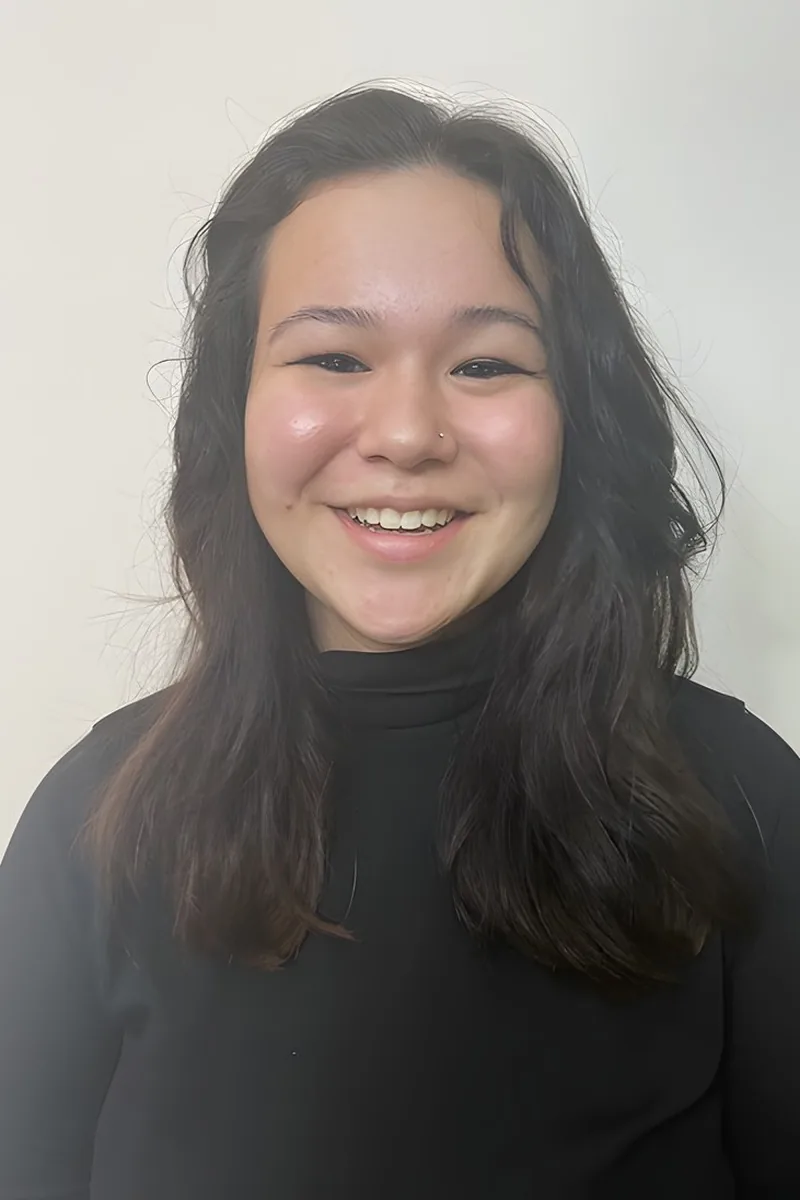
I am double majoring in Neuroscience and Behavioral Biology and Philosophy at Emory University. I genuinely enjoy working with students to achieve their academic goals. I have experience teaching children and adolescents language skills, science, and math. In my free time, I can mostly be found outside hiking, running, or doing yoga.
As a neuroscience major at Emory, Jennifer reads dense scientific figures and data tables every week — which is essentially what the ACT Science section tests. She teaches students to ignore the intimidating jargon and zero in on graph trends, variable relationships, and conflicting viewpoints. Her 35 ACT composite backs up an approach that treats this section as a data literacy exercise, not a science quiz.
The ACT Science section isn't really a science test — it's a data interpretation test disguised as one. Tyler scored a 35 ACT composite and, with a biology degree and med school admission to Columbia, teaches students to read graphs, compare experimental designs, and identify conflicting viewpoints quickly rather than getting bogged down in scientific jargon.
The ACT Science section is really a data-literacy exam disguised as biology and chemistry. Ethan, a neuroscience major at WashU who reads scientific figures daily, teaches students to ignore jargon and zero in on graph trends, table relationships, and experimental controls. He scored a 35 ACT composite and treats this section as the most coachable part of the entire test.
I'm always up for the challenge of changing my methods of instruction and breaking down topics to foster a deeper understanding of a subject. On a different note, I generally spend my spare time playing lacrosse or running outdoors when possible. I also play the violin with a school quartet, and teach lessons to beginning students working through the Suzuki program.
Most students panic when they see ACT Science passages full of unfamiliar terminology, but the section is really about reading graphs, interpreting data trends, and evaluating conflicting hypotheses under time pressure. Jackson, who scored a 35 composite, teaches students to ignore the jargon and zero in on what the figures actually show — a shift in approach that typically unlocks significant score gains.
Most students overthink the ACT Science section because they assume it requires deep content knowledge — in reality, it's a data-interpretation test dressed up in biology and chemistry language. Burhanuddin, a Georgia Tech physics major with a 35 ACT composite, teaches students to read graphs, compare experimental setups, and spot trends without getting distracted by unfamiliar terminology. Once students see the section for what it actually is, their speed and accuracy jump significantly.
Here's the secret of ACT Science: it's barely a science test. It's a data interpretation exam that happens to use biology, chemistry, and physics as window dressing. Marion's neurobiology degree means she's genuinely comfortable with the content when it does matter, but she spends most of her time teaching students to read graphs, compare experimental setups, and identify conflicting hypotheses quickly — the skills that actually move scores.
I am a Biotechnology Master's Student at the Swiss Federal Institute of Technology, ETH Zurich. I completed my undergraduate degree in Chemical and Biomolecular Engineering from Georgia Tech in 2018 while minoring in Biomedical Engineering. My passion is researching novel ways to use ethically derived induced pluripotent stem cells in both research and therapeutic environments, and I love to share my knowledge and excitement for science, math, and language with others.
I am currently a graduate student at Georgia Tech studying Prosthetics and Orthotics. My career goal is to become a certified prosthetist/orthotist, which means I would make and fit artificial limbs (prostheses) to patients who need them as well as make and fit assistive devices that support existing body parts (orthoses) to treat various conditions.
Most students overthink ACT Science because they assume it tests biology, chemistry, and physics knowledge. It's really a data interpretation exam — reading graphs, comparing experimental setups, and spotting trends under time pressure. Varshini, who scored a 34 composite and spent her neuroscience program analyzing research data, teaches students to extract answers directly from figures without getting distracted by unfamiliar terminology.
The ACT Science section is less about knowing biology or chemistry and more about reading graphs under pressure. Chris treats it as a data interpretation drill, teaching students to identify variables, spot trends in conflicting viewpoints passages, and avoid the traps embedded in answer choices. His own 35 ACT composite came partly from mastering exactly this approach.
I'm Adel, a native of Atlanta, GA and graduate of Georgia Tech. I love playing basketball, football, eating all kinds of great food, catching the newest movie or new TV show and most of all, hanging out with my friends and family. I have been tutoring since my freshmen year in college a variety of subjects including Mathematics, English and Science. With my youngest brother in high school and my youngest sister in elementary school, I have constant exposure to different levels and types of academic subjects.
I am continuing to add to my range of subjects that I teach.
Most of ACT Science isn't really about science — it's about reading dense graphs, conflicting viewpoints, and experimental setups quickly and accurately. Paula teaches students to treat each passage like a data puzzle, zeroing in on variables and trends before even glancing at the questions. Her 32 ACT composite and experience tutoring biology, chemistry, and anatomy means she can also explain the underlying science when a question actually demands it.
I'm Thomas, a sophomore Computer Science student at Georgia Tech. While I may be a STEM major at a tech school, I've always been skilled in reading and writing, never earning less than A in an English class throughout my academic career. If you're looking for someone with a high success rate in English, whether it be standardized testing or general writing, you're in the right place. In high school, I received a perfect score on the SAT writing section (only missed perfect on Verbal by 10 points), won first place in the UIL Regional Ready Writing Contest, and served as an editor on the school newspaper. While completing my university English requirement, I created an online tour stop for Atlanta's National Center for Civil and Human Rights.
I am an undergraduate at Rice University in Houston pursuing a Bachelor of Science in Biochemistry and Cell Biology. I have both formal and informal tutoring experience: I worked as an assistant teacher in my high school's math department in Atlanta teaching geometry, algebra and pre-calculus to students over the summer. As an Academic Fellow at Rice, I provide academic assistance to my peers in the natural sciences, specifically chemistry and biochemistry. Although my studies are focused in STEM, I am a strong writer and I excel in helping students improve grammar and essay organization. Additionally, I have abundant experience in both standardized and AP testing. I am a friendly and empathetic person, and I want to do whatever I can to help other students succeed!
The ACT Science section is less about knowing biology or chemistry and more about reading graphs, interpreting experimental setups, and spotting trends in data tables quickly. Benjamin's computer science training in data analysis translates directly here — he teaches students to extract variables and relationships from figures before even looking at the questions, which speeds up the entire section.
The ACT Science section barely tests science knowledge — it's really about reading dense graphs, conflicting-viewpoint passages, and experimental designs under brutal time pressure. Morgan treats it as a data-literacy exercise, teaching students to identify variables and extract trends before they even look at the answer choices. Her 34 ACT composite shows the approach works.
The ACT Science section is really a data-interpretation exam disguised in lab coats. Yilin's chemistry background means she can quickly clarify the actual science when a passage on titration curves or gene expression confuses students, but her main focus is teaching how to read graphs, compare experimental setups, and spot conflicting viewpoints — the skills that drive scores up regardless of the topic. She scored a 34 composite and holds a 5.0 student rating.
The ACT Science section barely tests science knowledge — it tests whether a student can read a graph, compare two experiments, and draw conclusions under time pressure. Josh's undergraduate research experience in neuroscience means he spent years interpreting data tables and experimental designs, exactly the skills this section demands. He teaches students to ignore jargon, locate the relevant variables, and answer each question in under a minute.
I am currently a rising junior at Emory University in Atlanta, Georgia although I am originally from Chicago, IL. I am double majoring in Psychology and English. My current GPA is a 3.9 and I have taken a wide range of courses. I was editor in chief of my school's newspaper, competed internationally for our Model UN team, and I currently college counsel low-income high-achieving students at high schools in downtown Atlanta, in addition to tutoring multiple students in ACT/SAT prep, English, Biology, and History. This includes helping them prepare for standardized tests, editing essays and applications, and generating lists of potential institutions to apply to. I received a 35 on my ACT. In the past, I was a teacher's assistant at a home and school for severely autistic children ages 9-14, and worked on overcoming communicative barriers to foster interpersonal connections. I have also tutored multiple children with learning disabilities. In my experience, getting students engaged is just about finding the strategy that works best for them. That may mean we have to try multiple approaches, or approaches that I don't prefer, but I am willing to do whatever it takes to achieve that incredible feeling with a student when they finally grasp a concept.
Dhruv self-studied his way to a 35 ACT composite and a perfect 1600 SAT, which means he's reverse-engineered the Science section's timing traps and question patterns from scratch rather than learning them in a classroom. His public health coursework keeps him fluent in the kind of study designs and data figures the section loves to throw at students — conflicting researcher viewpoints, dose-response curves, experimental controls. Rated 4.9 by students.
Most students panic when they see an unfamiliar experiment on the ACT Science section, but the questions rarely test actual science knowledge — they test whether you can read a graph, compare two data sets, or follow a researcher's reasoning. Megan's biology degree gives her genuine comfort with experimental design, and she teaches students to extract answers from figures and tables without getting lost in the technical language surrounding them.
I am passionate about teaching others as I believe knowledge is an infinite resource that can be used to help us achieve great things in life. As a student at Northwestern University I have been constantly challenged to learn in new ways and I hope to inspire and help others navigate through various subjects. I am obtaining a Bachelor of Arts degree in Neuroscience on the pre-med track and I have already attained a legal studies minor. I am a firm supporter of customized learning as finding the best way to teach or learn is the best way to receive amazing results.
The ACT Science section is really a data-interpretation exam disguised as biology and chemistry. Saniya's neuroscience degree means she spent years reading dense figures, conflicting experimental results, and multi-variable graphs — exactly the skills this section demands. She teaches students to ignore jargon and zero in on trends, controls, and axis labels to answer questions quickly and accurately.
I am committed to empowering my students and supporting their academic and personal growth. I believe the foundation to successful tutoring to be a mutually trusting and accommodating relationship; thus, I am a firm believer of individualized lesson plans that play to the unique strengths and weaknesses of each student.
I am a current senior at Davidson College, working towards my B.A. in German Studies and Arab Studies. I have spent many hours tutoring the German and Arabic language to college students. I have spent time abroad in Germany, studying German as a second language with AATG (American Association of Teachers of German). My years of being a camp counselor and babysitter have translated into my teaching methods and style. I encourage young learners to approach problems in multiple ways by retesting previously learned material and encouraging independent thinking. I am a huge believer in discovering answers instead of being told them. I look forward to working with you!
Treating ACT Science as a data-interpretation test rather than a science knowledge test changes everything — the section rewards students who can read conflicting viewpoints passages and extract trends from dense graphs quickly. Andrew, who also tutors biology, chemistry, and physics, has the content background to clarify the occasional question that does require outside knowledge, which gives his students an edge on the hardest problems.
The ACT Science section is really a data-interpretation exam disguised as biology and chemistry. Emily shows students how to read graphs, compare experimental setups, and identify conflicting viewpoints without getting bogged down in scientific jargon — a skill set that translates directly to faster, more accurate answers under the section's brutal time limit.
The ACT Science section isn't really a science exam — it's a test of how quickly you can read graphs, interpret data tables, and evaluate conflicting hypotheses. Kellie's chemical engineering training gave her years of practice doing exactly that with real experimental data. She teaches students to ignore the intimidating scientific jargon and zero in on what the figures actually show, a skill that translates directly to higher scores.
I am now a Dean's List sophomore at Oglethorpe University.
Most students panic when they see the ACT Science section because they think they need to know chemistry or biology — but it's really a data interpretation test. Monroe breaks down conflicting viewpoints passages and complex graphs into a repeatable process: read the axes, find the trend, answer the question. His 35 ACT composite shows that systematic approach pays off.
Most students panic over the ACT Science section because they think it requires deep content knowledge — Daniel teaches them to treat it as a data interpretation exercise instead. With a 34 composite and a computer science degree built on analyzing patterns in information, he shows students how to read graphs, compare experimental setups, and pull answers directly from the passages without overthinking the biology or chemistry behind them.
Most students panic when they see the ACT Science section's graphs and data tables, but the test is really about reading comprehension under a lab coat. Joseph teaches students to ignore the intimidating scientific jargon and zero in on what the data actually shows — trends, relationships, and conflicting viewpoints. His 32 ACT composite and 5.0 rating speak to how well this approach clicks.
I am originally from Cartersville, Georgia, but go to school at Washington University in St. Louis. I am a sophomore pursuing a double major in Biology and Women, Gender, and Sexuality Studies. I am currently on the pre-health track in the hopes of one day becoming an Obstetrician Gynecologist. I spend most of my free time volunteering for the Distinguished Young Women program as an interview coach and participant coordinator, locally and statewide.
I'm a Civil Engineering major, Sustainable Communities minor at Georgia Tech heading into my second year this fall. I love tutoring most subject, ranging from US Government to Algebra. In the past, the subjects that I have tutored the most are AP US Government and Reading. My tutoring method changes depending on the student, but I love to ask questions and make comparisons to other topics to provide a multidisciplinary understanding and make connections. My philosophy is to avoid memorization and promote understanding! I feel that students have more fun this way and will be better equipped to apply this information to their lives. Outside of the classroom, I am an avid Georgia Tech football fan (we're getting better, I promise!), traveler, and recycler!
I am a recent Emory law school graduate. I am passionate about building students' confidence in all subjects, but I am most fulfilled when students can express themselves in new ways through language and writing.
Most students panic when they see an unfamiliar experiment on ACT Science, but the section is really about reading data displays — extracting trends from graphs, comparing variables across tables, and evaluating conflicting hypotheses. Kinza's biology training at UGA gave her years of practice interpreting experimental results, and she teaches students to treat each passage as a data puzzle rather than a content quiz.
Testimonials
Because the right ACT Science tutor makes all the difference.
Average Session Rating – Based on 3.4M Learner Ratings
Practice ACT Science
Free practice tests, flashcards, and AI tutoring for ACT Science
Nearby ACT Science Tutors
Other Augusta Tutors
Related Test Prep Tutors in Augusta
Frequently Asked Questions
Varsity Tutors matches Augusta students with expert ACT Science tutors for 1-on-1 instruction. We pair each student with a tutor based on their specific needs, learning style, and goals.
Whether you need homework help, exam prep, or want to get ahead, our ACT Science tutors are ready to help.
Common challenges include gaps from earlier material, difficulty with specific concepts, and trouble applying learning to new problems. These issues can snowball quickly in ACT Science.
A tutor identifies where you're stuck, fills in gaps, and provides targeted practice. The 1-on-1 format means you get help exactly where you need it.
Tutors work with your student's actual coursework—homework assignments, class notes, and upcoming tests. This keeps tutoring directly relevant to what's happening in the classroom.
When you share information about your student's school and curriculum, we can match you with a tutor who has relevant experience.
All tutors complete background checks, credential verification, and teaching evaluation. Many of our ACT Science tutors hold advanced degrees or have years of teaching experience.
You can review tutor profiles to find someone with the right background for your student's level and needs.
Many students see improved grades within a few weeks, along with better understanding of ACT Science concepts and more confidence tackling challenging material.
Tutors track progress and adjust their approach to ensure continued improvement.
Most students benefit from 1-2 sessions per week. More frequent sessions help if your student is significantly behind or has an important exam coming up.
Your tutor can recommend a schedule based on your student's specific situation and goals.
Tutoring is purchased in packages of hours, with rates varying by tutor experience. Varsity Tutors offers several options to fit different budgets and needs.
You can discuss pricing during your consultation to find what works best.
Your tutor will assess where your student is, discuss goals, and start working on priority areas. Most students bring current homework or upcoming test material to focus on.
By the end, you'll have a clear sense of how the tutor can help and a plan for moving forward.
Let’s find your perfect tutor
Answer a few quick questions. We’ll recommend the right plan and match you with a top 5% tutor.