Award-Winning AP Biology Tutors
serving Chicago, IL
AP Biology
Tutors in Chicago
Private 1-on-1 tutoring, weekly live classes for academic support, test prep & enrichment, practice tests and diagnostics, and more to elevate grades and test scores.
Based on 3.4M Learner Ratings
UniversitiesSchools & Universities
DeliveredHours Delivered
ProficiencyGrowth in Proficiency
Who needs tutoring?
No obligation. Takes ~1 minute.
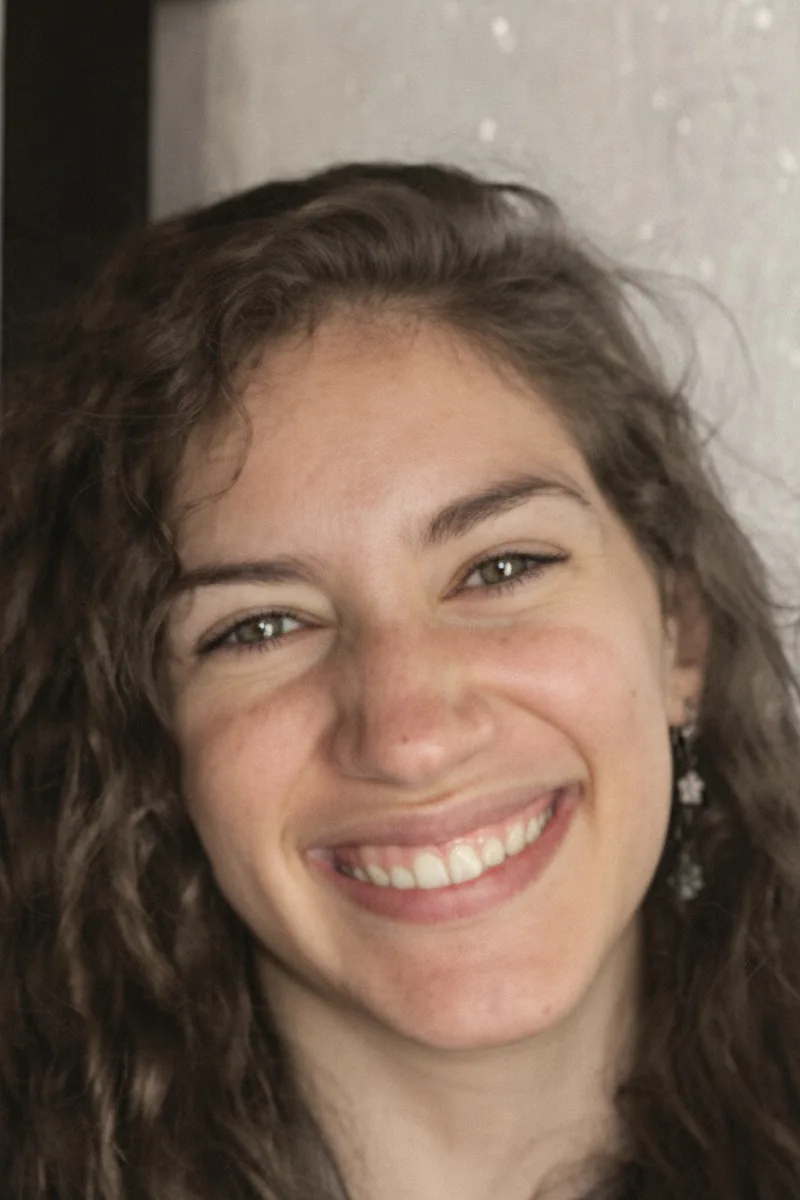
Ruthie studied the biological basis of behavior in college, which means she didn't just memorize AP Bio content like cell signaling and genetics — she had to apply it to understand how nervous systems produce behavior, how neurotransmitters cross synapses, and how gene expression shapes organisms at every level. That interdisciplinary angle is especially useful for the exam's ecology and evolution units, where students need to connect molecular mechanisms to organism-level outcomes. Rated 5.0 by students.

Ethan's economics and public policy studies at the University of Chicago aren't a typical path into AP Bio, but they've made him sharp at interpreting data sets, constructing evidence-based arguments, and reasoning through cause-and-effect chains — all skills the exam's free-response questions heavily reward. He's especially useful for students who struggle with the experimental design and data analysis portions of the test, where reading graphs and evaluating hypotheses matters more than memorizing vocabulary.
Few tutors bring a neuroscience specialization to AP Biology, which means Jhonatan can unpack signal transduction, membrane potentials, and nervous system physiology with a depth most students never get in the classroom. He also tackles the broader curriculum — from cellular respiration energetics to Hardy-Weinberg equilibrium — by tying each unit back to the four Big Ideas the exam is built around.
I am a graduate of Cornell University's College of Arts and Sciences. I received my Bachelor of Arts in Chemistry with Distinction in 2015. Since graduation, I was a physics/chemistry teacher and soccer coach at a private school in Virginia for a year, where I led the soccer team to an undefeated season. Before teaching and coaching professionally, I was a Teaching Assistant for the Cornell Math and Physics Departments, where I taught many subjects including calculus, mechanics, electromagnetism. Throughout my time at Cornell and as a teacher, I tutored subjects ranging from the SAT to AP Physics and Algebra II, which is where my true talents lie: in small group or one-on-one settings where I can give students the full attention they deserve and tailor my approach specifically to their learning styles. This is why I am now pursuing tutoring as a part-time occupation at Varsity Tutors. I embrace teaching all math and science subjects, especially physics and calculus, at both the college and high school level and will go above and beyond to make sure all of my students succeed, according to their definition of success. In my spare time, I enjoy playing league soccer, basketball, tennis and guitar, and also like to travel and see as much of the world as I can.
Richard earned his PhD studying microbiology and public health at Northwestern, where he also lectured undergraduates in cell biology — so the AP Bio curriculum on cellular energetics, microbial ecology, and heredity sits well within territory he's taught and researched firsthand. He's especially strong at connecting microbiology concepts to the broader evolutionary and ecological frameworks the exam tests, showing students how to build the kind of multi-level explanations that earn full marks on free-response questions. Rated 5.0 by students.
Microbiology coursework across three associate's degrees means Felix has spent serious time with the organisms and cellular processes that many AP Bio students find abstract — bacterial genetics, microbial metabolism, and the ecological roles of microorganisms. His university TA experience translates directly here, since he's already practiced breaking down concepts like gene regulation and metabolic pathways for students encountering them for the first time. Rated 5.0 by students.
Pre-med coursework at the University of Chicago means Callie is actively working through the biology, chemistry, and physiology that overlap heavily with AP Bio's units on cellular processes and heredity — so the material is current, not distant. Her History and Philosophy of Science background also gives her an unusual edge: she teaches students to think about *why* biological models were built the way they were, which sharpens the kind of conceptual reasoning the exam's free-response questions demand. Rated 4.9 by students.
Psychology gave Christopher a behavioral and cognitive lens on biology — understanding how neurons fire, how hormones regulate behavior, and how organisms respond to environmental stimuli — which maps well onto AP Bio's units covering animal behavior, nervous system signaling, and feedback mechanisms. He's also strong at teaching the data interpretation skills the exam demands, since psychology training requires constant practice reading experimental designs, analyzing graphs, and evaluating statistical claims.
Grant's biochemistry degree and medical school training in infectious diseases mean he's studied microbial pathogenesis, immune responses, and host-pathogen interactions at a level that makes AP Bio's ecology and evolution units click in unexpected ways — like explaining natural selection through antibiotic resistance mechanisms he's actually researched. His MD coursework also keeps him sharp on the molecular biology side, particularly gene regulation and protein expression, which are exactly the concepts students struggle to articulate on free-response questions.
Ian studied biological sciences at the undergraduate level and knows exactly which AP Bio concepts trip students up — things like the details of oxidative phosphorylation, Hardy-Weinberg equilibrium assumptions, and signal transduction cascades. He breaks the massive AP curriculum into systems that connect to each other, so students can reason through free-response questions instead of relying on rote recall.
Kishore's bioengineering research on traumatic brain injury and Alzheimer's Disease at UIC means he doesn't just teach AP Biology concepts like signal transduction and gene expression — he uses them daily in a lab setting. That real-world connection makes dense units like cellular energetics and molecular genetics click faster, because he can show students exactly where textbook biology meets actual scientific inquiry. Rated 4.9 by students.
Fourth-year medical school means Shannon has already been tested on AP Bio's hardest content — gene regulation, metabolic pathways, immune system cascades — under USMLE-level pressure, so she knows exactly which details matter and which are noise. Her biochemistry background is especially useful for the units where biology and chemistry blur together, like enzyme kinetics and photosynthesis, where students often memorize steps without understanding the energy logic driving them.
I am passionate for the sciences, specifically biology. Tutoring helps me directly engage with students in a way that is both fulfilling for the student and myself.
Ellen's biology major and chemistry minor at Oberlin gave her the kind of cross-disciplinary fluency that AP Bio increasingly demands — especially in units on cellular energetics and enzyme kinetics, where understanding the chemistry behind the biology separates strong answers from incomplete ones. She digs into the "why" behind processes like photosynthesis and signal transduction, teaching students to build the mechanistic reasoning that earns full credit on free-response questions rather than relying on memorized diagrams. Rated 5.0 by students.
I'm a junior studying nursing at the University of Illinois at Chicago. I'm currently working towards a BSN degree, and hope to get a DNP (Doctorate of Nursing Practice) in the future. Nursing in itself is a very collaborative major, so my peers and I have spent a lot of time tutoring each other through our tougher courses.
Sareen earned a B.S. in Neuroscience with a chemistry minor and is now a medical student at Northwestern, which means AP Biology's toughest units — cell signaling, gene expression, and metabolic pathways — are territory she navigates daily. She connects each concept to bigger biological stories, turning dense diagrams of cellular respiration or the lac operon into processes students can actually reason through on exam day.
AP Biology's free-response questions reward students who can design experiments, interpret data, and write precise explanations under time pressure. Jacob, a current medical student with a biochemistry degree, knows the College Board's emphasis on cellular energetics, gene expression, and ecology inside out. He teaches students to think like the exam writers — connecting concepts across units instead of memorizing them in isolation.
Three years running a cell biology lab section at Notre Dame gave Connor a front-row seat to exactly where students stumble on AP Bio material — signal transduction pathways, gene regulation, experimental design questions. His master's work in biomedical sciences deepened that knowledge, and he teaches the course with an eye toward the free-response questions that separate 4s from 5s.
Studying biology and chemistry on the pre-med track at Northwestern means Kade is immersed daily in the exact material the AP Bio exam tests — from cellular respiration and signal transduction to gene regulation and evolutionary mechanisms. He also runs study groups at his university, so he's practiced at explaining dense concepts like feedback inhibition or Hardy-Weinberg equilibrium in ways that actually stick. That combination of current coursework and teaching experience makes a real difference on exam day.
Todd's undergraduate biology degree from UIUC gives him the content foundation for AP Bio, but it's his 33 ACT and analytical training through his University of Chicago graduate work that sharpen how he teaches the exam's trickiest skill: translating dense lab data into clear, structured free-response answers. He zeroes in on the units where students lose the most points — cellular energetics and heredity — and builds the kind of process-level reasoning that turns memorized pathways into usable knowledge on test day.
Nicolette's bioengineering degree from Rice meant she didn't just memorize biological systems — she had to model them, which is exactly the kind of mechanistic thinking AP Bio's free-response questions demand when students need to explain processes like signal transduction or feedback in gene regulation. Her engineering training makes her especially sharp at teaching students to reason through experimental design and data interpretation questions, where you have to connect variables to biological outcomes rather than just recall facts. Rated 5.0 by students.
As a biology major at Washington University in St. Louis who served as a teaching assistant for an upper-level biology course, Alexander knows AP Bio from both sides — the content and the exam. He digs into the trickiest units, like cell signaling pathways and gene regulation, by mapping out the logic visually rather than relying on rote memorization. His approach emphasizes the data-analysis and experimental-design questions that carry heavy weight on the AP exam.
Claire's chemistry degree from Emory and her molecular medicine focus in medical school mean she approaches AP Bio from the biochemical side — enzyme kinetics, metabolic pathways, and the chemistry behind DNA replication — which is exactly where many students struggle to connect what they learned in earlier science classes to what the exam actually asks. She's rated 5.0 by students, and her strength is teaching the molecular and cellular units with enough chemical detail that processes like oxidative phosphorylation stop feeling like arbitrary steps to memorize.
Aya is pursuing a biology major at Carleton College, which means she's immersed in the same cellular processes, genetics pathways, and ecological models that dominate the AP Bio exam. She digs into the conceptual reasoning behind data-analysis questions — interpreting gel electrophoresis results, evaluating experimental controls, connecting molecular biology to organism-level outcomes — because that's where most students lose points.
I am a sophomore at UIUC studying agricultural and biological engineering. Eventually, I hope to work on environmental engineering related projects concerning the improvement of ecosystem management and reducing the harmful effects of pollutants in the environment. As an aspiring engineer, my favorite subjects to teach students are math and science. I've been working with kids as a swim instructor and music teacher for the past six years now. As I've begun developing experience tutoring students, my favorite part about helping students learn math and science concepts is teaching them how these different concepts interconnect and later helping them to develop critical thinking skills to work through difficult material.
Humza's neuroscience degree means he's spent serious time with the nervous system, cell signaling, and feedback mechanisms that show up across AP Bio's toughest units — and he understands how to connect molecular details to organism-level function. He's particularly useful for students struggling with the information processing and animal physiology content that other tutors sometimes rush through, since those topics were the core of his college coursework. Rated 4.8 by students.
As a Biological Sciences major in UIC's GPPA Medical Scholars program, Kelly lives and breathes the material tested on the AP Biology exam — from cellular respiration and gene expression to ecology and evolutionary mechanisms. She unpacks dense topics like signal transduction pathways and Hardy-Weinberg equilibrium by linking each concept to clinical or real-world examples that stick. Her own recent experience with the exam format means she knows which free-response strategies actually earn points.
Three semesters on UIUC's Teachers Ranked as Excellent list — while studying cellular and molecular biology — means Angelina has been tested not just on knowing AP Bio content like gene regulation, protein synthesis, and cell division, but on explaining it clearly enough to earn recognition from students. Her molecular biology background is especially useful for the exam's heredity and gene expression units, where students need to trace how a mutation in a promoter region can ripple through to a changed phenotype. Rated 5.0 by students.
As a pre-med biology major at Brandeis who's actively taking upper-level coursework in the subject, Jaina is studying the same cellular processes, genetics, and ecological concepts that AP Bio covers — just at a faster pace and greater depth. She's especially good at drilling the practice-heavy approach that AP Bio demands, since she also tutors a high school student weekly in STEM subjects and knows where the gaps tend to form between understanding a concept and applying it on exam day. Rated 5.0 by students.
I am a graduate of Cornell University and the University of Illinois with a BS in Biological Sciences and MS in Crop Science. I started tutoring students one-on-one in calculus at Cornell and since then, I have served multiple times as a teaching assistant, both at the undergraduate and graduate level. Currently, I am a high school science teacher in New York State, so I am very familiar with the regents and NGSS curriculums. Understanding beats memorization every time! Understand the "why" and "how" of the topic; don't just memorizing facts. This is especially important for FRQs, word problems, and more advanced topics that require analysis of the material, beyond simple regurgitation of lectures. No question is too small to make sure that the foundational and basic knowledge is solid. I always have fun tutoring. I love the topics I teach, and I'm sure you will too!
Hannahlore's analytical chemistry background gives her an unusual edge in AP Bio's biochemistry-heavy content — she breaks down enzyme kinetics, water potential calculations, and the energetics of photosynthesis and respiration through the quantitative lens that trips up students who treat biology as a purely memorization-based course. Her 35 ACT and 5.0 tutoring rating speak to how well that approach translates when it's time to tackle data-interpretation questions and design-based free-response prompts on exam day.
Mateusz's molecular and cellular biology degree from the University of Illinois means he built his understanding of AP Bio's core content — gene expression, cell division, protein function — through the same rigorous coursework that the exam's curriculum is modeled on. He's particularly good at unpacking the molecular biology units where students struggle to connect what's happening at the DNA level to observable traits, since that was the daily work of his major. Rated 4.9 by students.
Victoria's Master's in Reproductive Science and Medicine from Northwestern means she's studied developmental biology, hormonal regulation, and cellular signaling at a graduate level — content that maps directly onto AP Bio's units on cell communication and organism-level physiology. Her biology degree from Case Western Reserve built the foundation in genetics and ecology that rounds out the rest of the exam, and she's especially effective at teaching students how to construct the multi-step biological explanations that free-response questions demand. Rated 4.8 by students.
Most tutors on this page come from biology or pre-med backgrounds — Kshitij comes from Michigan's Ross School of Business, which means he teaches AP Bio the way the exam actually tests it: as a reasoning and data-interpretation challenge, not a memorization marathon. His perfect 36 ACT includes the Science section, where he mastered the same graph-reading and experimental-design skills that drive AP Bio's lab-based free-response questions. Rated 4.8 by students.
Currently pursuing a PhD in Analytical Chemistry at UIUC, Whitney has TA'd college-level biology courses where she regularly teaches the biochemical underpinnings — enzyme structure, membrane dynamics, and metabolic regulation — that AP Bio students need to explain on free-response questions. Her chemistry-first perspective is especially useful for the cellular energetics units, where understanding what's actually happening to electrons in the mitochondria separates a 3 from a 5. She also brings lab fluency that sharpens students' ability to design and critique experiments, a skill the exam increasingly demands.
Currently pursuing a Master's in Teaching with a science focus, Hannah designs her own lesson materials for topics like cellular energetics and heredity — building explanations from scratch rather than recycling textbook language, which means she knows exactly where the confusing gaps are for students. Her biology degree gives her the content depth, but it's the teaching training that sharpens how she breaks down multi-step processes like photosynthesis or protein synthesis into sequences that actually make sense on a first pass. Rated 5.0 by students.
Tackling AP Biology's eight units means juggling everything from signal transduction to Hardy-Weinberg equilibrium, often in the same week. As a medical student with a neuroscience degree from Saint Louis University, Minu connects molecular-level concepts like gene expression and cellular respiration to the bigger biological picture. She's especially strong at walking through the data-analysis and experimental-design questions that trip up most students on the exam.
Two semesters tutoring college-level ecology plus a biology degree from Mount Holyoke means Anna can tackle AP Bio's toughest units — from cellular energetics and gene expression to ecosystem dynamics — with genuine depth. She emphasizes the quantitative side of the exam, including chi-square analysis and Hardy-Weinberg calculations, which often catches biology-focused students off guard.
Osteopathic medical training demands mastering biology at a systems level — Paulina's current DO program builds directly on her biology degree, meaning she's working through the same cellular processes, genetics, and physiological concepts that AP Bio tests, but at clinical depth. She's especially strong at teaching students to diagram how a single mutation can ripple from DNA through protein function to whole-organism effects, which is the kind of multi-scale reasoning the exam's free-response questions consistently demand. Rated 5.0 by students.
As an integrative biology honors student at UIUC, Yesha is immersed in the exact content AP Bio tests — cell signaling, gene regulation, ecology, and evolutionary mechanisms. She unpacks the free-response questions by teaching students how to construct precise, evidence-based explanations that earn full credit, since knowing the science and scoring well on the exam are two different skills.
Testimonials
Because the right AP Biology tutor makes all the difference.
Average Session Rating – Based on 3.4M Learner Ratings
Practice AP Biology
Free practice tests, flashcards, and AI tutoring for AP Biology
Nearby AP Biology Tutors
Other Chicago Tutors
Related Science Tutors in Chicago
Frequently Asked Questions
Score improvement depends on your starting point and consistency with tutoring. Students who work with tutors typically see the most gains by focusing on their weakest units—whether that's genetics, photosynthesis, or cellular respiration—and building a systematic approach to multiple-choice questions and free-response essays. Most students benefit from starting tutoring 3-4 months before the exam to allow time for deep review and practice testing.
The AP Biology exam scores range from 1-5, with a 3 considered passing for college credit at most universities. A tutor can help you identify which of the 8 major units need the most work and create a targeted study plan to maximize your score in the areas where you're struggling most.
AP Biology covers 8 major units: Evolution, Energy and Metabolism, Photosynthesis, Cellular Respiration, Cell Division, Heredity, Molecular Genetics, and Ecology. Tutors work with you to master the core concepts in each unit, then help you apply that knowledge to the two exam sections: 60 multiple-choice questions (90 minutes) and 6 free-response questions (90 minutes).
Many students find certain units particularly challenging—genetics and molecular biology trips up a lot of Chicago students because they require both memorization and deep conceptual understanding. A tutor can break down these complex topics into manageable pieces and help you practice the types of questions you'll see on test day.
Free-response questions account for 50% of your AP Biology score, so mastering them is critical. Tutors teach you how to structure your answers to earn maximum points—including how to clearly explain processes like photosynthesis or meiosis, interpret data from experiments, and connect concepts across units. The key is understanding what the College Board is looking for in each type of FRQ.
Working through practice FRQs with a tutor helps you identify common mistakes (like leaving out key vocabulary or failing to explain the "why" behind a process) and build confidence in your explanations. You'll practice timing—learning to write clear, complete answers within the time limits—and get feedback on exactly how to improve before test day.
AP Biology multiple-choice questions test both content knowledge and critical thinking. Many students rush through them or eliminate answer choices incorrectly. Tutors teach you to slow down, identify what the question is actually asking, eliminate obvious wrong answers, and recognize which concepts are being tested.
A common mistake is choosing an answer that contains correct information but doesn't actually answer the question. Tutors help you practice reading comprehension strategies—underlining key words, predicting your answer before looking at choices, and recognizing trap answers. Doing timed practice tests under realistic conditions with a tutor helps you calibrate your pacing so you finish with time to review.
Ideally, start tutoring 3-4 months before the AP exam (typically given in May). This gives you enough time to review all 8 units, take full-length practice tests, identify weak areas, and focus your final weeks on targeted improvement. However, tutoring can help at any point—even if you're a few weeks out, a tutor can help you prioritize which units to focus on and teach you test-taking strategies that improve your score.
For Chicago students juggling multiple courses, starting early means you're not cramming alongside regular classwork. A tutor can help you create a realistic study schedule that fits your other commitments while building mastery of the material.
Yes—the AP Biology exam includes questions about experimental design, data analysis, and interpreting lab results. Tutors help you understand the reasoning behind the recommended labs and teach you how to think like a scientist when approaching experimental questions on the exam.
You'll practice interpreting graphs and data tables, understanding what conclusions you can or cannot draw from an experiment, and explaining why scientists design experiments a certain way. This is especially important for free-response questions that ask you to design an experiment or predict results of a modified lab protocol.
Varsity Tutors connects you with expert AP Biology tutors who understand the curriculum and know how to prepare students for the exam. When you get matched, you'll work with someone who can tailor their approach to your learning style and focus on the specific units where you need the most help.
You can start tutoring whenever works best for your schedule—whether that's intensive sessions a few months before the exam or ongoing support throughout your AP Biology course. Get started by telling us your goals and availability, and we'll connect you with the right tutor for your needs.
Let’s find your perfect tutor
Answer a few quick questions. We’ll recommend the right plan and match you with a top 5% tutor.