Award-Winning AP Statistics Tutors
serving Grand Rapids, MI
AP Statistics
Tutors in Grand Rapids
Private 1-on-1 tutoring, weekly live classes for academic support, test prep & enrichment, practice tests and diagnostics, and more to elevate grades and test scores.
Based on 3.4M Learner Ratings
UniversitiesSchools & Universities
DeliveredHours Delivered
ProficiencyGrowth in Proficiency
Who needs tutoring?
No obligation. Takes ~1 minute.

Psychology research is fundamentally a statistics course in disguise — Martha's work at Michigan examining how culture shapes self-related psychological processes means she's constantly designing studies, choosing between t-tests and ANOVAs, and defending whether her sample sizes and methods actually support her conclusions. That firsthand experience with the full research cycle translates directly to the AP Stats units on experimental design and inference, where she can explain why you'd stratify a sample or what a Type II error looks like in a real study rather than a textbook prompt. Rated 5.0 by students.
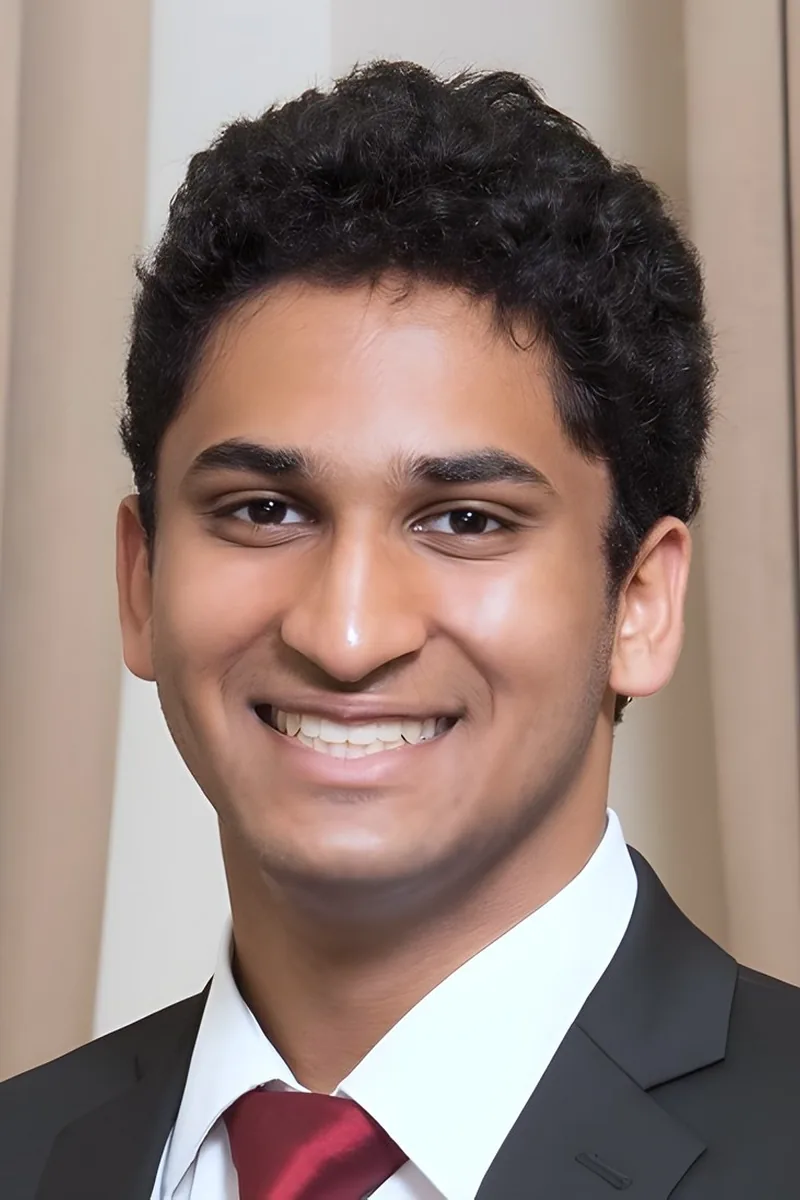
Pre-med coursework at Cornell means Pratik reads research papers full of p-values, confidence intervals, and regression tables — the same statistical literacy AP Stats is designed to build. He leans into the biology-meets-data angle, teaching students how to interpret experimental results and articulate why a particular inference procedure fits the study design, which is where the free-response rubric awards the most points. His 35 ACT reflects the kind of precise, structured reasoning that translates well to stats communication.
I am a undergraduate freshman of the University of Michigan, studying business at the Ross School of Business. Working together with students and having a good time while seeing steady improvements has proven to provide me great joy. I believe that communication and relationship building is crucial for students to open up about their struggles and also for me to identify problems they don't realize they can improve on, so this is a key aspect of all of my lessons. During my free time, I enjoy playing sports or snacking on desserts while binge-watching Friends!
Biomedical engineering at Michigan means Jack spent two degrees analyzing experimental data — from lab studies on cell behavior to device performance metrics — where choosing the right statistical test and interpreting results correctly wasn't optional. He brings that applied perspective to AP Stats topics like chi-square tests and regression analysis, teaching students to read output and articulate conclusions the way the free-response rubric actually demands. Rated 4.9 by students.
Most AP Stats students come in expecting another math class and get blindsided when the exam cares more about explaining *why* they chose a chi-square test than actually computing one. Krisha's biology background at Michigan means she's constantly reading studies built on exactly that kind of statistical reasoning — sample design, interpreting p-values in context, distinguishing correlation from causation in published research. Her 5.0 rating speaks to how well she bridges that gap between crunching numbers and writing the precise justifications the free-response section rewards.
Most AP Stats students come from algebra and calculus courses where there's one right answer — so the shift to interpreting output, justifying assumptions, and writing about uncertainty in plain English catches them off guard. Matthew's dual math and computer science background at Harvard means he's comfortable on both sides of that divide: the formal probability theory underneath and the data-driven reasoning the exam actually grades you on. Rated 4.9 by students.
Most AP Stats students walk in expecting another formula-driven math class, then hit a wall when the exam asks them to explain *why* a particular sampling method could introduce bias or *what* a 95% confidence level actually means in context. Jake's 1580 SAT and 4.9 rating point to the kind of precise, structured communication skills that make the difference on those language-heavy free-response questions. He breaks down the interpretive reasoning behind inference procedures and experimental design so students learn to write answers that match the rubric's expectations, not just punch numbers into a calculator.
Chemical and biomolecular engineering at Princeton means Satya's coursework is steeped in statistical modeling — analyzing reaction yields, quantifying experimental uncertainty, and determining whether process variations are significant or just random noise. That engineering lens is especially useful for the AP Stats units on inference and experimental design, where understanding why you'd choose a particular test matters more than memorizing which calculator button to press. His 36 ACT speaks to the precision and structured reasoning the free-response section rewards.
Most AP Stats students come in expecting another math class and get blindsided when the exam asks them to write — to describe distributions in context, justify a choice of test, or explain what a confidence interval actually captures. Emerson's dual background in biology and psychology means he's read and dissected dozens of studies built on exactly this kind of statistical reasoning, from clinical trial designs to behavioral research with messy human data. Rated 5.0 by students, he teaches the interpretive vocabulary and structured argumentation that turn a halfway answer into full free-response credit.
Studying statistics at Northwestern means Jake isn't just learning the concepts AP Stats covers — he's using them daily in upper-division coursework involving real data analysis, probability models, and inference procedures. That ongoing immersion makes him sharp on the details students tend to blur, like the difference between a parameter and a statistic or why checking conditions before running a test isn't optional. Rated 5.0 by students.
Neuroscience research at Duke meant Ankit was knee-deep in experimental design before he ever opened an AP Stats textbook — controlling for confounding variables, choosing between-subjects versus within-subjects designs, and deciding whether behavioral data actually supports a hypothesis. That background makes him especially sharp on the exam's experimental design and chi-square inference questions, where understanding why you structure a study a certain way matters more than memorizing formulas. Rated 4.8 by students.
As a statistics major at Carleton College, Aya doesn't just teach AP Stats formulas — she uses them daily in her own coursework. She breaks down tricky concepts like inference for regression slopes, chi-square tests, and experimental design by connecting each one to real data scenarios that make the logic behind the math click.
Carnegie Mellon's biology program is lab-intensive, and Puja spent semesters designing experiments, collecting messy real-world data, and determining whether results were meaningful — skills that map directly onto AP Stats topics like experimental design, sampling methods, and inference reasoning. She's particularly sharp at teaching students how to translate calculator output into the precise written explanations the free-response section demands, since her science training required the same kind of defend-your-conclusion thinking. Rated 4.7 by students.
Most AP Stats students come in expecting another calculation-heavy math class, then hit a wall when the exam asks them to explain *why* they chose a particular test or *what* a confidence interval actually captures in context. Elena's Child Development background gives her sharp instincts for identifying exactly where that conceptual shift stalls out for each student, and her 1540 SAT confirms the quantitative chops to back it up. She breaks down the free-response writing demands — describing distributions, justifying inference choices — as a communication skill, not just a math skill.
I am a graduate of Cornell University's College of Arts and Sciences. I received my Bachelor of Arts in Chemistry with Distinction in 2015. Since graduation, I was a physics/chemistry teacher and soccer coach at a private school in Virginia for a year, where I led the soccer team to an undefeated season. Before teaching and coaching professionally, I was a Teaching Assistant for the Cornell Math and Physics Departments, where I taught many subjects including calculus, mechanics, electromagnetism. Throughout my time at Cornell and as a teacher, I tutored subjects ranging from the SAT to AP Physics and Algebra II, which is where my true talents lie: in small group or one-on-one settings where I can give students the full attention they deserve and tailor my approach specifically to their learning styles. This is why I am now pursuing tutoring as a part-time occupation at Varsity Tutors. I embrace teaching all math and science subjects, especially physics and calculus, at both the college and high school level and will go above and beyond to make sure all of my students succeed, according to their definition of success. In my spare time, I enjoy playing league soccer, basketball, tennis and guitar, and also like to travel and see as much of the world as I can.
Studying statistics as an actual major at UVA — not just taking a service course — means Benjamin has gone well beyond the AP curriculum into multivariate methods, probability theory, and statistical computing, giving him a deep bench to draw from when explaining why, say, a sampling distribution behaves the way it does or when a normal model applies. He's particularly sharp on the inference units, where students need to move from calculator output to writing conclusions that use the specific contextual language the free-response rubric demands. Rated 4.7 by students.
Data analytics coursework in biomedical and public health analysis means Vishank doesn't just know the AP Stats formulas — he's used them to draw real conclusions from messy health data sets, which is the exact skill the exam's free-response questions are testing. He's especially sharp on the data collection and study design unit, breaking down why randomization matters and how confounding variables sneak into observational studies. Rated 4.9 by students.
Testimonials
Because the right AP Statistics tutor makes all the difference.
Average Session Rating – Based on 3.4M Learner Ratings
Practice AP Statistics
Free practice tests, flashcards, and AI tutoring for AP Statistics
Other Grand Rapids Tutors
Related Math Tutors in Grand Rapids
Frequently Asked Questions
AP Statistics focuses on four main units: exploring data through distributions and relationships, sampling and experimentation, probability and random variables, and inference procedures. Throughout the course, you'll learn how to design studies, collect and analyze data, and draw conclusions using statistical methods. The exam tests both your conceptual understanding and your ability to apply these skills to real-world scenarios.
Score improvement depends on your starting point and how consistently you engage with practice. Students who work with tutors typically see gains by strengthening weak areas—whether that's interpreting probability concepts, designing experiments, or mastering inference procedures. The key is identifying which topics are holding you back early on, then building targeted practice around those gaps. Most students benefit from starting tutoring at least 2-3 months before the exam.
Many students struggle with probability concepts and understanding when to use different inference procedures—these topics require both conceptual clarity and practice. Others find the free-response section challenging because it requires clear communication of statistical reasoning, not just calculations. Time management during the exam is also common; students often spend too long on early problems and rush through later ones. A tutor can help you develop strategies for each challenge, from probability intuition to organizing your written responses efficiently.
Practice tests are essential for AP Statistics because they help you get comfortable with the exam format, pacing, and question types you'll encounter on test day. The best approach is to take full-length practice tests under timed conditions, then review every question—especially ones you missed or found confusing—to understand the reasoning behind correct answers. Spacing these tests throughout your preparation (rather than cramming them all at the end) helps you identify patterns in your mistakes and adjust your study focus accordingly.
The free-response section rewards clear communication of your statistical reasoning, so structure matters as much as accuracy. For each question, identify what's being asked, state the procedure you'll use, show your work, and interpret your results in context—graders want to see that you understand *why* you're doing each step. Many students lose points by jumping straight to calculations without explaining their approach. Tutors can help you practice organizing your responses efficiently and developing templates for common question types.
The exam gives you 3 hours total: 90 minutes for the multiple-choice section (40 questions) and 90 minutes for the free-response section (6 questions). For multiple-choice, aim to spend about 2 minutes per question, which leaves buffer time for harder problems. For free-response, budget roughly 12-15 minutes per question so you have time to write clear explanations. The key is not getting stuck: if a question is taking too long, move on and come back to it later. Practice tests help you develop a feel for this pacing.
Inference procedures (confidence intervals and hypothesis tests) are challenging because there are many similar-looking procedures, and students often memorize formulas without understanding when to use each one. The key is learning the decision tree: What type of data are you working with? One sample or two? Categorical or quantitative? Once you can confidently answer these questions, selecting the right procedure becomes much easier. Working through problems with a tutor who can explain the logic behind each choice—not just the mechanics—makes a huge difference.
Starting 3-4 months before the exam (typically January or February for the May test) gives you time to work through challenging concepts without rushing. However, if you're already in April or May, tutoring can still help you focus on your weakest areas and develop test-taking strategies. The earlier you identify gaps—especially in foundational topics like probability and experimental design—the more time you have to build confidence. Varsity Tutors can connect you with expert tutors who can assess where you stand and create a personalized study plan.
Let’s find your perfect tutor
Answer a few quick questions. We’ll recommend the right plan and match you with a top 5% tutor.