Award-Winning AP Statistics Tutors
serving Detroit, MI
AP Statistics
Tutors in Detroit
Private 1-on-1 tutoring, weekly live classes for academic support, test prep & enrichment, practice tests and diagnostics, and more to elevate grades and test scores.
Based on 3.4M Learner Ratings
UniversitiesSchools & Universities
DeliveredHours Delivered
ProficiencyGrowth in Proficiency
Who needs tutoring?
No obligation. Takes ~1 minute.
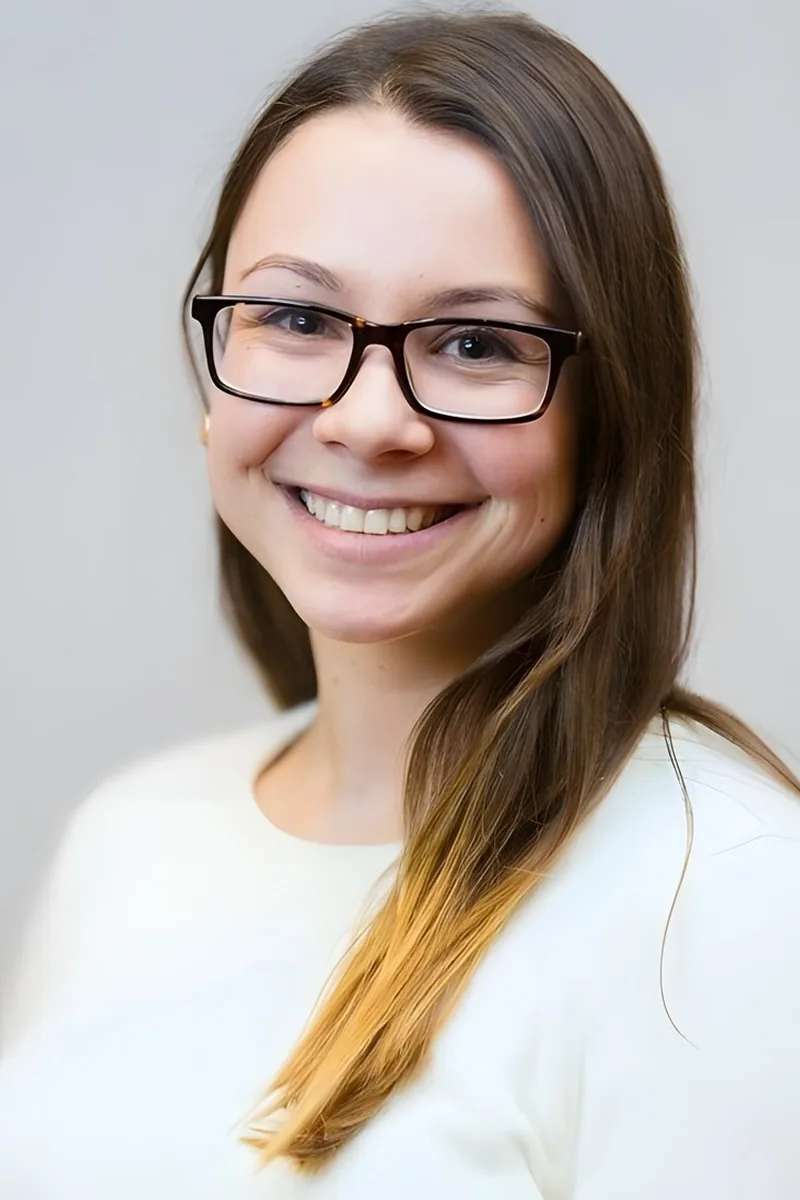
Psychology research is fundamentally a statistics course in disguise — Martha's work at Michigan examining how culture shapes self-related psychological processes means she's constantly designing studies, choosing between t-tests and ANOVAs, and defending whether her sample sizes and methods actually support her conclusions. That firsthand experience with the full research cycle translates directly to the AP Stats units on experimental design and inference, where she can explain why you'd stratify a sample or what a Type II error looks like in a real study rather than a textbook prompt. Rated 5.0 by students.
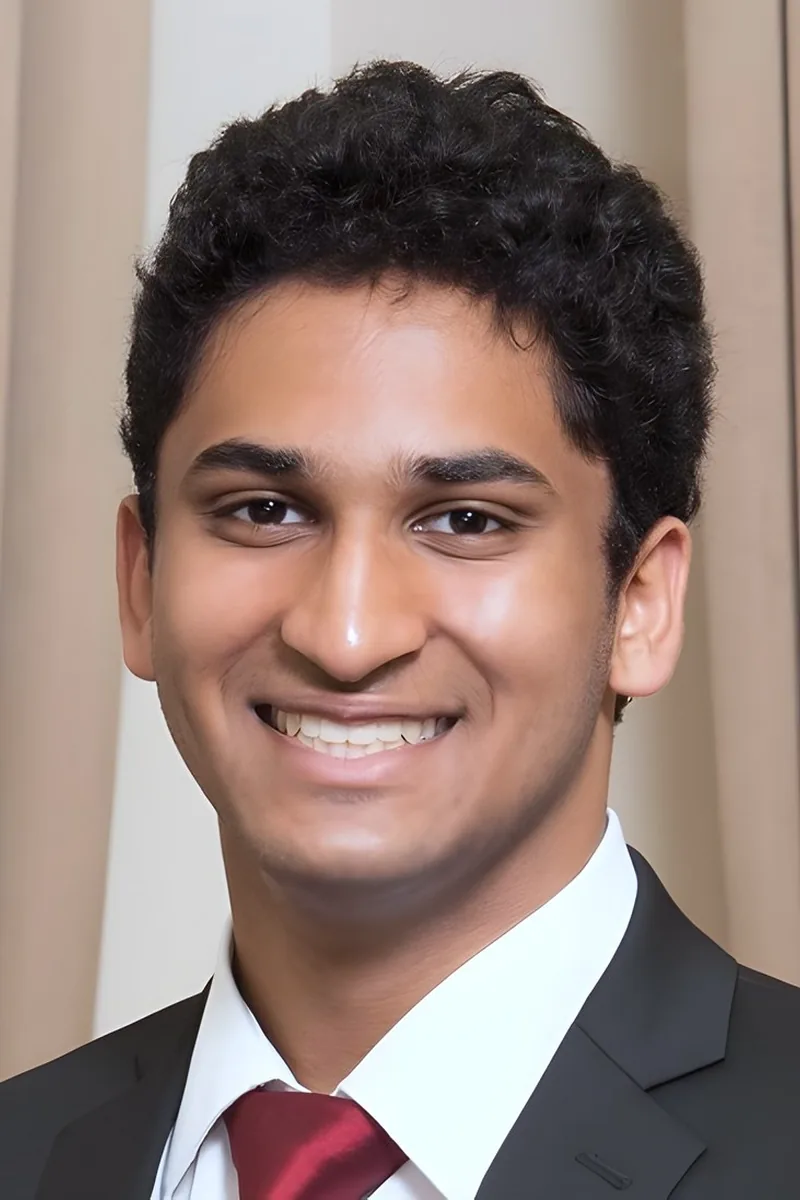
Pre-med coursework at Cornell means Pratik reads research papers full of p-values, confidence intervals, and regression tables — the same statistical literacy AP Stats is designed to build. He leans into the biology-meets-data angle, teaching students how to interpret experimental results and articulate why a particular inference procedure fits the study design, which is where the free-response rubric awards the most points. His 35 ACT reflects the kind of precise, structured reasoning that translates well to stats communication.
I am a undergraduate freshman of the University of Michigan, studying business at the Ross School of Business. Working together with students and having a good time while seeing steady improvements has proven to provide me great joy. I believe that communication and relationship building is crucial for students to open up about their struggles and also for me to identify problems they don't realize they can improve on, so this is a key aspect of all of my lessons. During my free time, I enjoy playing sports or snacking on desserts while binge-watching Friends!
Biomedical engineering at Michigan means Jack spent two degrees analyzing experimental data — from lab studies on cell behavior to device performance metrics — where choosing the right statistical test and interpreting results correctly wasn't optional. He brings that applied perspective to AP Stats topics like chi-square tests and regression analysis, teaching students to read output and articulate conclusions the way the free-response rubric actually demands. Rated 4.9 by students.
Most AP Stats students come in expecting another math class and get blindsided when the exam cares more about explaining *why* they chose a chi-square test than actually computing one. Krisha's biology background at Michigan means she's constantly reading studies built on exactly that kind of statistical reasoning — sample design, interpreting p-values in context, distinguishing correlation from causation in published research. Her 5.0 rating speaks to how well she bridges that gap between crunching numbers and writing the precise justifications the free-response section rewards.
Biology research at Yale means Shreya regularly interprets data — reading regression output, evaluating sample designs, and deciding whether results are statistically significant before drawing conclusions. She brings that same analytical lens to AP Statistics, teaching students how to set up and justify inference procedures the way the free-response section demands. Rated 5.0 by students.
Victor's master's in applied mathematics means he's worked through probability theory at a level well beyond what AP Stats requires — and that depth lets him explain *why* the normal model underlies so many inference procedures, not just how to punch z-scores into a calculator. He zeros in on the conditional reasoning behind hypothesis tests and the precise language needed to interpret p-values and confidence intervals, which is where most points are won or lost on the free-response section. Rated 5.0 by students.
When I was young, I used to hate swimming at the beach. The idea of sharks moving around under the waves where I could not see them made me scared to go into the water. As I grew up, however, and began to learn about the different sharks that lived off the shores of my home in Massachusetts, USA, I became less and less scared and more and more fascinated with how and why sharks move around in this underwater world. I began to ask questions like, what do sharks do under the water when we cannot see them? and, where do sharks like to go and why? As a marine scientist now I try to answer these questions. Because sharks live and breathe under the water and can swim long distances and go deep into the ocean, further and deeper than I could follow by myself, to study how these animals move and behave underwater I have to use lots of different types of technology. Sometimes I use underwater robots that can follow the sharks down deeper than humans can go, and that can carry things like cameras so I can directly see what the sharks are doing. In my work now, I use special tags that send out signals every few seconds with a unique name that identifies individual sharks. When the shark swims close enough to receivers placed out in the ocean, these receivers are able to hear and record the tag name, telling where and when individual sharks are present in different areas of the ocean. One thing I love about being a shark scientist is that I can follow sharks all over the world. First, I followed the movement of sharks all the way over in the Atlantic Ocean off the east coast of the USA. Then I moved to Tasmania, Australia, and I followed young sharks as they move around off the coast of New South Wales. Now I am back home in Massachusetts and working on publishing my research.
Studying neuroscience at Cornell with a math minor, Aneri encounters statistics constantly — analyzing behavioral data, interpreting research findings, and evaluating whether experimental results actually mean something. She digs into the normal distribution and sampling logic that underpin most AP Stats inference questions, connecting the abstract formulas to the kind of real study designs her psychology coursework requires her to critique every week.
I am a graduate of Cornell University's College of Arts and Sciences. I received my Bachelor of Arts in Chemistry with Distinction in 2015. Since graduation, I was a physics/chemistry teacher and soccer coach at a private school in Virginia for a year, where I led the soccer team to an undefeated season. Before teaching and coaching professionally, I was a Teaching Assistant for the Cornell Math and Physics Departments, where I taught many subjects including calculus, mechanics, electromagnetism. Throughout my time at Cornell and as a teacher, I tutored subjects ranging from the SAT to AP Physics and Algebra II, which is where my true talents lie: in small group or one-on-one settings where I can give students the full attention they deserve and tailor my approach specifically to their learning styles. This is why I am now pursuing tutoring as a part-time occupation at Varsity Tutors. I embrace teaching all math and science subjects, especially physics and calculus, at both the college and high school level and will go above and beyond to make sure all of my students succeed, according to their definition of success. In my spare time, I enjoy playing league soccer, basketball, tennis and guitar, and also like to travel and see as much of the world as I can.
Neuroscience research at Duke meant Ankit was knee-deep in experimental design before he ever opened an AP Stats textbook — controlling for confounding variables, choosing between-subjects versus within-subjects designs, and deciding whether behavioral data actually supports a hypothesis. That background makes him especially sharp on the exam's experimental design and chi-square inference questions, where understanding why you structure a study a certain way matters more than memorizing formulas. Rated 4.8 by students.
Pure math training at the University of Chicago might seem like an odd fit for AP Stats, but Carson's coursework in probability theory and combinatorics gives him the formal backbone behind concepts like sampling distributions and expected value that most students only encounter as calculator procedures. He's especially sharp at demystifying the normal distribution and z-score logic, connecting them back to the mathematical reasoning that makes the formulas make sense rather than just appear on a formula sheet.
Most AP Stats students come in expecting another calculation-heavy math class, then hit a wall when the exam asks them to explain *why* a normal model applies or *what* a 95% confidence level actually means in context. Alexander's math and CS background at UBC — where his statistics major means he's knee-deep in probability theory and data analysis daily — gives him the language and intuition to bridge that gap. Rated 5.0 by students.
Caltech's economics program is quantitatively rigorous — Brian's coursework meant building econometric models, running hypothesis tests on real datasets, and defending statistical conclusions in ways that mirror exactly what AP Stats free-response questions demand. His dual background in CS and economics gives him a knack for explaining the logic behind choosing between z-procedures and t-procedures, or why independence conditions matter, in terms that click for students who think algorithmically. SAT score of 1580 speaks to the precision he brings to exam strategy.
Philosophy trained Calin to dissect arguments and spot logical gaps — skills that translate directly to the interpretive reasoning AP Stats demands, where students must justify why a particular test applies or explain what a confidence interval actually captures. His math and computer science background means he also handles the quantitative side fluently, from probability distributions to regression mechanics. Rated 5.0 by students.
Most AP Stats students come in expecting another algebra class and get blindsided when the exam asks them to explain *why* a normal model applies or *what* a 95% confidence level actually means in context. Kenneth's applied math background gives him the conceptual fluency to teach that interpretive shift — connecting the formal probability theory underneath to the plain-language reasoning the free-response rubric demands. Rated 4.7 by students.
Computational mathematics at Rice means Vinson doesn't just know the formulas behind normal distributions and chi-square tests — he understands the underlying theory well enough to explain why a particular inference procedure works, not just when to use it. That mathematical depth is especially useful for the AP Stats units on sampling distributions and probability, where students with strong computational instincts often struggle to shift into the interpretive, context-driven reasoning the exam actually scores on. Rated 4.8 by students.
Testimonials
Because the right AP Statistics tutor makes all the difference.
Average Session Rating – Based on 3.4M Learner Ratings
Practice AP Statistics
Free practice tests, flashcards, and AI tutoring for AP Statistics
Other Detroit Tutors
Related Math Tutors in Detroit
Frequently Asked Questions
AP Statistics focuses on four main units: exploring data through visualizations and summaries, sampling and experimentation, probability and simulation, and inference using confidence intervals and hypothesis testing. The course emphasizes real-world data analysis and statistical reasoning rather than heavy computation, so you'll spend time interpreting results and communicating findings—skills that are critical for the AP exam and beyond.
Score improvement depends on your starting point and consistency with practice. Students who work with a tutor to master hypothesis testing, probability concepts, and free-response question strategies typically see meaningful gains—often moving from a 2 or 3 to a 4 or 5. The key is identifying your specific weak areas early (many students struggle with interpreting p-values or designing experiments) and building targeted practice into your study plan.
Students in Detroit and nationwide often find probability, sampling distributions, and hypothesis testing most difficult—these concepts require both conceptual understanding and the ability to apply formulas in context. The free-response section is another common challenge because it requires you to explain your reasoning, not just calculate an answer. A tutor can help you move beyond memorization to truly understand why we use certain tests and how to interpret results.
The AP Statistics exam has a 90-minute multiple-choice section (40 questions) and a 90-minute free-response section (6 questions). Key strategies include: reading questions carefully to identify what's being asked, showing all work on free-response items even if you're unsure (partial credit is valuable), and managing your time so you don't rush through the free-response section. Practice with released AP exams under timed conditions helps you develop pacing and builds confidence in recognizing question patterns.
Practice tests are essential—they help you identify knowledge gaps, get comfortable with the exam format, and build test-taking stamina. Taking at least 3-4 full-length practice exams under timed conditions in the weeks before the test gives you realistic feedback on which units need more review. A tutor can help you analyze your practice test results to pinpoint whether your errors stem from conceptual misunderstandings or careless mistakes, then target your studying accordingly.
In your first session, a tutor will assess your current understanding of statistics fundamentals, discuss your goals (score target, timeline), and identify which topics feel most challenging. You might work through a sample problem together to see how you approach statistical reasoning and where you need support. This gives both you and your tutor a clear starting point and helps create a personalized study plan tailored to your needs.
Look for tutors with strong backgrounds in statistics or mathematics, ideally with experience teaching or tutoring AP Statistics specifically. They should understand the AP exam format and scoring rubric, especially how to help you write effective free-response answers. Varsity Tutors connects you with expert tutors in the Detroit area who know the curriculum inside and out and can explain complex concepts like sampling distributions and inference in ways that click.
Ideally, begin tutoring or intensive review 8-12 weeks before the exam in May. This gives you time to work through challenging units systematically, take multiple practice tests, and refine your test-taking strategy. If you're starting later or struggling with specific topics, even 4-6 weeks of focused tutoring can help you solidify weak areas and boost your confidence heading into the exam.
Let’s find your perfect tutor
Answer a few quick questions. We’ll recommend the right plan and match you with a top 5% tutor.