Award-Winning Organic Chemistry Tutors
serving Detroit, MI
Organic Chemistry
Tutors in Detroit
Private 1-on-1 tutoring, weekly live classes for academic support, test prep & enrichment, practice tests and diagnostics, and more to elevate grades and test scores.
Based on 3.4M Learner Ratings
UniversitiesSchools & Universities
DeliveredHours Delivered
ProficiencyGrowth in Proficiency
Who needs tutoring?
No obligation. Takes ~1 minute.

Having completed both semesters of organic chemistry at the University of Michigan — on top of AP Chemistry before that — Ajay knows exactly where students get stuck, whether it's arrow-pushing in reaction mechanisms or keeping substitution and elimination pathways straight. He teaches students to recognize electron behavior patterns so new reactions feel predictable instead of random.
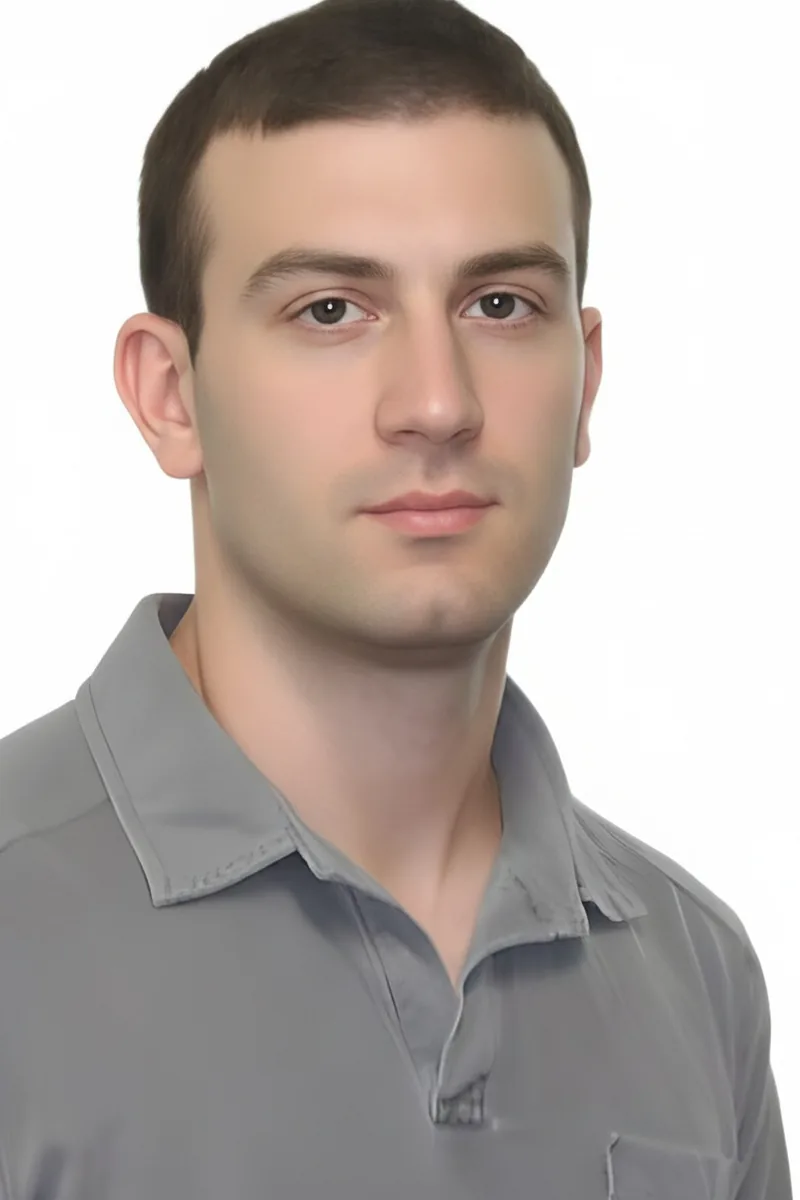
Reaction mechanisms click when you understand electron movement — why a nucleophile attacks one carbon over another, or how steric hindrance reshapes a synthesis pathway. Vazrik's chemistry degree and doctoral work in materials science mean he can trace organic reactions from their molecular-orbital roots through to real laboratory outcomes, making arrow-pushing feel intuitive rather than arbitrary.
I am eternally grateful! I minored in Chemistry after getting interested in the inner workings of organic chemistry. While going to college I earned money by tutoring classes I had already taken. I also offered "supplemental instruction" which were informal classroom question and answer sessions. I worked in a research lab after earning an undergraduate research fellowship and explored Physiology at the School of Medicine. Then went on to study Toxicology at the University of Wisconsin, Madison. While there a decision appeared clear between focusing on research or teaching. I like teaching better. I truly enjoy spreading knowledge about Biology and Chemistry and finding fun ways to introduce people to these (often difficult) subjects.
I am a PhD student in Chemistry at the University of Windsor. I did both my Undergraduate and Master's degree in Chemistry at the University of Windsor as well. I also did a year and a half of course/research work at Cornell University. I am interested in the academic field and hope to one day hold a position in the academic world to do groundbreaking research and teach the next generation of students the very fundamentals of Chemistry. I love teaching and I have been doing it since 2011. I have taught many students at different levels and from different backgrounds. I like to make sure that students understand concepts rather than memorize. I take my time explaining concepts and always have examples on the top of my head to help understand different problems in Chemistry.
I'm your girl! I majored in Biochemistry at the University of Michigan and am looking to help any students in need of assistance.
Having taught General Chemistry, Organic Chemistry, and GOB courses for health professions repeatedly at the college level, Jeremy approaches reaction mechanisms as skills to be practiced — not facts to be memorized. His PhD in Chemistry from Yale means he can trace arrow-pushing, stereochemical analysis, and multi-step synthesis all the way down to first principles, then rebuild them at whatever level a student needs. He holds a 4.6 rating.
Reaction mechanisms are the heart of organic chemistry, and they only make sense when a student can track electron movement and predict how functional groups behave. Malcolm is studying biochemistry and cell biology at Rice, where organic chemistry is foundational — he knows which arrow-pushing patterns show up repeatedly and teaches students to recognize them instead of memorizing hundreds of individual reactions.
Reaction mechanisms are the language of organic chemistry, and Jon spent his Master's work at Princeton immersed in that language daily. He unpacks arrow-pushing, stereochemistry, and functional group reactivity by tying each mechanism back to the electron behavior driving it, so students build intuition instead of relying on rote memorization. His TA students at Princeton gave him reviews strong enough to earn a teaching award — a good sign for anyone staring down a semester of orgo.
Reaction mechanisms in organic chemistry demand the same kind of pattern recognition Seong uses in her neuroscience coursework at Northwestern — tracking electron movement, predicting intermediates, and understanding why one pathway dominates over another. She unpacks arrow-pushing notation by tying each step to underlying principles of nucleophilicity and sterics, so students can reason through unfamiliar reactions on exams instead of relying on rote memorization.
A bio-organic chemistry degree means Alex didn't just pass orgo — the entire major was built around understanding how molecular structure dictates reactivity, from substitution and elimination selectivity to multi-step synthesis design. He breaks down each mechanism by identifying the nucleophile, electrophile, and driving force first, so students develop a repeatable framework instead of a growing pile of flashcards. That same logic scales directly into spectroscopy interpretation and retrosynthetic analysis when exams get harder.
Having fought through orgo on the path to a 36 ACT and a biology degree — with MCAT prep sharpening every mechanism further — Aleeza knows exactly where students get tripped up on topics like carbonyl additions and substitution-vs-elimination decision-making. She teaches reaction patterns by connecting them back to the biological molecules they show up in, which makes the logic behind electron flow feel purposeful rather than abstract. Rated 4.9 by students.
Reaction mechanisms are the language of organic chemistry, and Josef teaches students to read them — arrow pushing, stereochemistry, and functional group reactivity — rather than memorize hundreds of individual reactions. His biochemistry focus at Cornell means he can connect orgo concepts like nucleophilic substitution and carbonyl chemistry directly to biological molecules students will encounter later.
Reaction mechanisms in organic chemistry are less about memorizing hundreds of arrows and more about recognizing a handful of recurring patterns — nucleophilic attacks, leaving group stability, and electron density shifts. Aidan studied organic chemistry as part of Notre Dame's premed track and teaches students to predict products by understanding why electrons move, not just where.
Siddharth's biology degree means he first encountered organic chemistry through the lens of biomolecules — amino acid reactivity, lipid structures, and the functional group behavior that drives metabolic pathways. That biological framing gives him a practical way to teach arrow-pushing and reaction classifications, connecting each mechanism to molecules students can visualize rather than treating them as abstract exercises.
As an MD/PhD student at Northwestern doing doctoral research in organic synthesis, Austin lives in the world of reaction design — figuring out which bonds to form, which protecting groups to use, and why one retrosynthetic route beats another. That daily immersion means he teaches mechanisms and stereochemistry with the fluency of someone who actually builds molecules, not just someone who once passed the course.
Most organic chemistry struggles come down to not recognizing patterns — why a nucleophile attacks here and not there, or how electron-pushing arrows predict a product. Eric's graduate training in chemistry means he teaches reaction mechanisms as a connected framework of electronic and steric principles rather than a list of isolated reactions. Students rated him 5.0.
Reaction mechanisms are the backbone of organic chemistry, and students who try to memorize each one individually run out of mental storage by the second exam. Bintou's chemistry training at Penn taught her to classify reactions by electron behavior — nucleophilic attack, leaving group stability, carbocation rearrangement — so patterns emerge instead of isolated steps. She teaches students to predict products by reading the mechanism, not by recognizing a specific example they've seen before.
Testimonials
Because the right Organic Chemistry tutor makes all the difference.
Average Session Rating – Based on 3.4M Learner Ratings
Practice Organic Chemistry
Free practice tests, flashcards, and AI tutoring for Organic Chemistry
Other Detroit Tutors
Related Science Tutors in Detroit
Frequently Asked Questions
Organic chemistry requires students to visualize molecular structures and reaction mechanisms in three dimensions—something that doesn't come naturally without practice. Many students struggle because they try to memorize reactions rather than understanding the underlying principles of how electrons move and bonds form. With Detroit's average student-teacher ratio of 20.7:1, many students don't get enough individual feedback to catch these conceptual gaps early. Personalized 1-on-1 instruction focuses on building this foundational understanding, which makes everything else click into place.
Strengthening your general chemistry foundation is essential—make sure you're comfortable with atomic structure, bonding, electronegativity, and equilibrium concepts. Many students benefit from reviewing Lewis structures, formal charges, and VSEPR theory before their first organic chemistry class. If you're uncertain about these fundamentals or want to get a head start on mechanisms and nomenclature, connecting with a tutor over the summer can set you up for success in the fall semester. Starting prepared makes a significant difference in your confidence and grade.
Understanding is always the better strategy. When you understand why a reaction happens—how nucleophiles attack electrophiles, how electron-withdrawing groups affect reactivity—you can predict new reactions instead of being trapped by memorization. However, some key reactions and mechanisms do need to be internalized through repeated practice. The best approach balances both: build conceptual understanding first, then reinforce it through problem-solving and practice tests. Tutors for students in Detroit can help you recognize which reactions are foundational principles versus variations you can derive from those principles.
Beyond theory, personalized instruction covers how to apply organic chemistry concepts in the lab—understanding why you're performing each step of a procedure, predicting outcomes, and troubleshooting when results don't match expectations. Tutors help you connect lab observations to reaction mechanisms and theoretical principles, so you understand not just what happened but why. This builds stronger scientific reasoning skills and helps you write better lab reports that demonstrate deep understanding rather than just following instructions.
AP Chemistry focuses on general chemistry concepts with an introduction to organic basics, requiring broad knowledge across multiple topics. College organic chemistry goes much deeper into mechanisms, synthesis, and spectroscopy—it's more specialized and rigorous. The study strategies differ too: AP requires efficient memorization and quick problem-solving under time pressure, while college organic demands sustained conceptual mastery and the ability to apply principles to novel problems. Tutors experienced with Detroit-area schools and universities can tailor their approach to match exactly what your course requires, whether it's AP preparation or college-level success.
Most students notice improvement in understanding within 3-4 weeks of consistent weekly sessions, especially if they're working on fundamental concepts like mechanisms and nomenclature. However, true mastery—being able to predict reactions and solve novel problems confidently—typically takes 2-3 months of regular practice and tutoring support. The timeline depends on where you're starting and how much you practice between sessions. Students who engage actively with practice problems between tutoring sessions see faster progress than those who only study during sessions.
Varsity Tutors connects you with tutors who have experience with your particular course level—whether that's high school chemistry with organic units, AP Chemistry, college general organic chemistry, or advanced courses like organic synthesis. When matching you with a tutor, we consider the specific curriculum, textbook, and exam format your course uses. This personalized matching ensures your tutor can address exactly what you're studying and prepare you effectively, rather than giving generic chemistry help that may not align with your class.
Let’s find your perfect tutor
Answer a few quick questions. We’ll recommend the right plan and match you with a top 5% tutor.