Award-Winning AP Calculus BC Tutors
serving Grand Rapids, MI
AP Calculus BC
Tutors in Grand Rapids
Private 1-on-1 tutoring, weekly live classes for academic support, test prep & enrichment, practice tests and diagnostics, and more to elevate grades and test scores.
Based on 3.4M Learner Ratings
UniversitiesSchools & Universities
DeliveredHours Delivered
ProficiencyGrowth in Proficiency
Who needs tutoring?
No obligation. Takes ~1 minute.
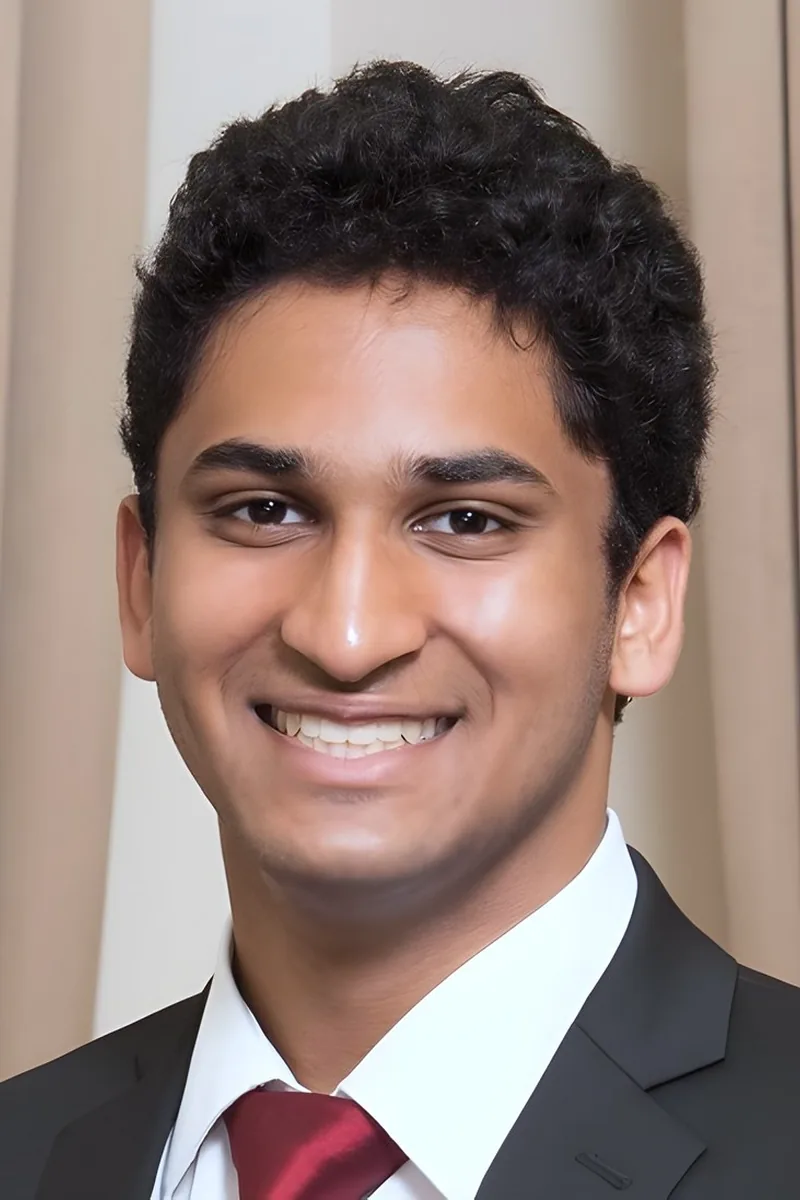
BC Calculus layers convergence tests, parametric equations, and polar curves on top of an already demanding AB foundation, and each topic requires its own strategic approach. Pratik breaks down series convergence by teaching students to recognize which test applies and why, building the kind of intuition that turns free-response questions into reliable points.

Aerospace engineering at the University of Michigan means Rohan uses series expansions, parametric equations, and differential equations daily — the exact topics that separate BC from AB and trip up most students. He breaks down convergence tests and integration techniques by connecting them to the physics and engineering problems they were invented to solve. Rated 5.0 by students.
BC Calculus piles on convergence tests, parametric equations, and polar curves right when students think they've mastered AB material. Krisha scored a 36 ACT and carries a 4.0 GPA in her biology program at Michigan, where calculus-heavy coursework keeps these concepts sharp. She breaks down series convergence strategies and integration techniques into decision frameworks students can actually apply on the AP exam.
Most BC students can memorize the list of convergence tests but freeze when deciding which one to actually apply — Krishanu breaks that decision process into a diagnostic sequence, teaching students to read the structure of a series before reaching for a tool. His computer science background at the undergraduate level trained him to think algorithmically, which translates directly into how he approaches multi-step problems like constructing Taylor polynomials or setting up integration by parts chains.
BC Calculus layers convergence tests, parametric equations, and polar curves on top of an already demanding AB foundation, and the pacing leaves little room to fall behind. Vinson earned a 36 ACT and National AP Scholar distinction while building the kind of deep mathematical fluency that makes series analysis and integration techniques click. He breaks each new BC topic into the AB concept it extends, so the jump never feels arbitrary.
Managing an immunology research lab at Columbia means Matthew lives in the quantitative deep end — modeling biological systems, analyzing experimental data — and his physics degree built the calculus fluency that makes that possible. He's especially sharp on the BC topics that trip students up after AB: constructing Taylor series from scratch, navigating convergence tests systematically, and connecting parametric or polar problems back to the derivative logic underneath them.
BC Calculus throws students into series convergence tests, parametric equations, and polar coordinates — topics that feel disconnected unless someone ties them back to the core ideas of AB. Dylan's physics major at Vanderbilt means he uses calculus daily and can show exactly how Taylor series or integration by parts behave visually, not just symbolically. He turns abstract series into something students can sketch, interpret, and reason through on exam day.
Running a peer-tutoring program in high school meant Ryan spent years diagnosing exactly where classmates got stuck on calculus problems — a skill he's sharpened further through his civil engineering coursework at Cornell, where series expansions and integration techniques show up constantly in structural analysis and fluid mechanics. He breaks down the BC-specific leap into convergence tests and Taylor polynomials by grounding each new idea in the derivative and integral logic students built in AB. His 35 ACT and 4.7 rating speak to the precision he brings to every session.
BC Calculus covers a massive range — from parametric equations and polar curves to Taylor series and convergence tests — and Dennis's physics research at Princeton demanded fluency in all of it. He connects topics like integration techniques and differential equations to the physical problems they were invented to solve, which makes the logic behind each method click.
Scoring a 36 on the ACT while majoring in chemistry at MIT means Nicholas lives in the overlap where rigorous math meets scientific application — and BC Calculus sits right at that intersection. He's especially good at breaking down series convergence and integration techniques by grounding them in the kind of approximation problems he encounters in physical chemistry coursework, so the logic behind a ratio test or a Taylor expansion feels earned rather than arbitrary. Rated 5.0 by students.
Biomedical engineering at Yale means Jonathan lives in the calculus that comes after most students stop — modeling biological systems with differential equations, approximating nonlinear tissue behavior with series expansions, running convergence analysis on numerical simulations. That daily exposure makes him especially effective at teaching the logic behind the ratio and integral tests, because he's seen firsthand what happens when you pick the wrong one. Holds a 5.0 rating.
Having worked as a teaching assistant for multiple engineering courses at Washington University in St. Louis, Ava spent hours breaking down the calculus that trips students up most — and BC's jump into series convergence, parametric derivatives, and advanced integration techniques is exactly the material she kept revisiting with struggling engineers. Her dual degree in mechanical and energy engineering means she's applied Taylor expansions and improper integrals to real thermodynamic and fluid systems, giving her a concrete vocabulary for explaining why these tools matter beyond the AP exam.
Having TA'd Calculus I and II at Rice while pursuing a graduate degree in computational and applied mathematics, Sakibul knows exactly where the AB-to-BC transition trips students up — particularly when series convergence and parametric differentiation demand a sharper kind of reasoning than anything before. He breaks down topics like interval of convergence arguments and integration techniques by rebuilding the logic from scratch rather than handing over shortcuts. His applied math background means he treats Taylor approximations and error bounds as precision tools, not abstract busywork.
Rachel's 35 ACT and economics coursework at WashU mean she's comfortable with the quantitative reasoning BC demands, though her real edge is in how she breaks down the transition from AB material into BC-specific territory — particularly series convergence and polynomial approximations, where students often memorize tests without understanding what they're actually checking. She approaches each new BC tool by rebuilding the calculus logic underneath it, so topics like the ratio test or integration by parts hold up under exam pressure instead of falling apart.
BC Calculus piles on topics like Taylor series, parametric equations, and convergence tests at a pace that leaves little room for falling behind. As a Penn math major who also tutors multivariable calculus and linear algebra, Ben understands these concepts at a depth that lets him explain not just the how but the why behind each technique. That deeper perspective makes integration methods and series analysis click faster.
Studying both mathematics and computer science at Rice, William is taking the courses that treat BC topics like series convergence and parametric integration as foundational tools rather than standalone exam material. His 1540 SAT reflects the kind of precise, structured reasoning he brings to breaking down the jump from AB to BC — especially when Taylor polynomial construction or convergence tests start feeling like they came out of nowhere.
Testimonials
Because the right AP Calculus BC tutor makes all the difference.
Average Session Rating – Based on 3.4M Learner Ratings
Practice AP Calculus BC
Free practice tests, flashcards, and AI tutoring for AP Calculus BC
Other Grand Rapids Tutors
Related Math Tutors in Grand Rapids
Frequently Asked Questions
AP Calculus BC builds on calculus fundamentals and covers limits, derivatives, integrals, differential equations, sequences, and series. The exam tests your ability to apply these concepts to real-world problems and includes both multiple-choice and free-response sections. For students in Grand Rapids, personalized tutoring can help you master each unit systematically and understand how topics connect to the exam format.
AP Calculus BC covers everything in AB plus additional topics like parametric equations, polar coordinates, and series—making it more comprehensive but not necessarily harder if you have strong foundational skills. Many students find BC manageable with consistent practice and clear explanations of advanced concepts. Tutors can help you build confidence in these additional topics and develop efficient problem-solving strategies.
Score improvement depends on your starting point, consistency, and how much time you dedicate to practice. Students who work with tutors typically see gains of 1-2 score points through targeted review of weak areas, practice with exam-style questions, and refinement of test-taking strategies. For students in Grand Rapids, personalized instruction can identify exactly which concepts need work and create a focused study plan before exam day.
Many students struggle with series convergence tests, understanding when to use different integration techniques, and managing time during the free-response section. Pacing is critical—you have about 1.5 minutes per multiple-choice question and roughly 15 minutes per free-response problem. Tutors can help you practice time management, recognize which techniques apply to specific problems, and build the conceptual understanding that makes these topics click.
Practice tests are essential—they help you identify weak areas, get comfortable with the exam format, and build stamina for the full 3-hour exam. Taking full-length practice tests under timed conditions reveals exactly where you lose points, whether it's conceptual gaps or careless errors. Tutors can review your practice test results with you, explain mistakes, and help you develop strategies to avoid similar errors on test day.
Test anxiety often stems from uncertainty about concepts or pacing. Building genuine confidence through repeated practice with different problem types, understanding your personal test-taking rhythm, and having a clear strategy for each section can significantly reduce anxiety. Tutors can help you practice under realistic conditions, develop a pre-exam routine, and work through challenging problems so you feel prepared and capable on exam day.
Ideally, start tutoring early in the school year to build strong foundations and avoid cramming before May. If you're already in the course and struggling, starting now is still valuable—tutors can target specific weak areas and help you make gains before the exam. For students in Grand Rapids, connecting with a tutor 2-3 months before the exam allows time for systematic review and practice without rushing.
Look for tutors with strong calculus backgrounds who understand the AP exam format and can explain concepts clearly. They should be able to help you work through free-response problems, discuss multiple solution approaches, and identify your specific weak areas. Varsity Tutors connects you with expert tutors who have experience preparing students for AP Calculus BC and can tailor instruction to your learning style and goals.
Let’s find your perfect tutor
Answer a few quick questions. We’ll recommend the right plan and match you with a top 5% tutor.