Award-Winning AP Spanish Language & Culture Tutors
serving Bronx, NY
AP Spanish Language & Culture
Tutors in Bronx
Private 1-on-1 tutoring, weekly live classes for academic support, test prep & enrichment, practice tests and diagnostics, and more to elevate grades and test scores.
Based on 3.4M Learner Ratings
UniversitiesSchools & Universities
DeliveredHours Delivered
ProficiencyGrowth in Proficiency
Who needs tutoring?
No obligation. Takes ~1 minute.
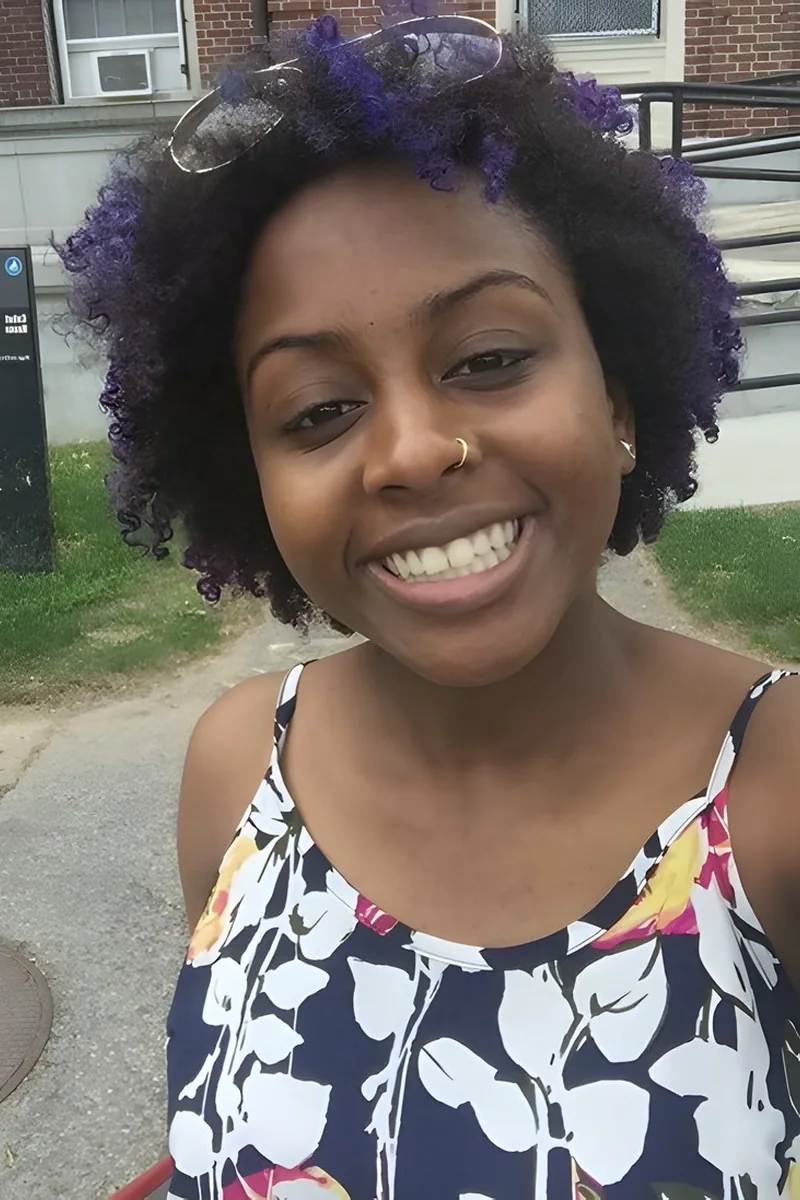
Pursuing a language citation in Spanish at Harvard while studying African American Studies, Gabriela tackles the AP exam's cultural comparison task with a cross-cultural analytical instinct baked into her daily coursework. She teaches Spanish from level 1 through 4 and conversational Spanish, so she can zero in on whether a student needs to shore up subjunctive mechanics or sharpen their ability to construct a timed persuasive essay in formal register. Rated 5.0 by students.

This isn't Vicquaja's primary lane — her background is in economics and math, not Spanish. But her analytical approach to pattern-based subjects means she can break down grammar systems like verb conjugations and subjunctive triggers as logical structures, which can be a useful complement for students who struggle with the rule-heavy side of AP Spanish prep.
While Spanish isn't Vivian's primary teaching area, her extensive experience with standardized test prep and essay writing transfers directly to the AP Spanish Language exam's presentational writing and interpersonal communication tasks. She brings a structured, strategy-first approach to tackling the exam's source-comparison essays and audio-response prompts.
Scoring well on the AP Spanish Language & Culture exam means toggling between interpersonal conversation, presentational writing, and audio-source synthesis — often in the same sitting. Heather's deep Spanish background, built through years of advanced coursework and one-on-one tutoring, means she can drill the specific skills each task type demands. She's particularly strong at coaching students through the persuasive essay, where organizing an argument in Spanish trips up even strong speakers.
Corey trained as a total immersion instructor through the Ann Arbor Language Partnership and taught communicative Spanish in public schools for two years before moving to Nicaragua, where he used Spanish daily in professional and community settings. That real-world fluency shows up in how he prepares students for AP Spanish Language — tackling interpersonal speaking prompts, persuasive essays, and audio-source synthesis with the kind of cultural nuance the exam rewards. His background in cognitive science also informs how he teaches listening comprehension strategies that actually stick.
Being Colombian and fully bilingual, Esteban doesn't just teach Spanish — he thinks, writes, and jokes in it daily. For AP Spanish Language & Culture, that native fluency matters: he coaches students through the interpersonal speaking tasks, persuasive essays, and audio-source questions using authentic cultural contexts from across the Spanish-speaking world. His 4.9 rating speaks to how effectively he prepares students for both the language mechanics and the cultural comparisons the exam demands.
Gus teaches Spanish across all four levels plus conversational Spanish, and his History degree means he's already wired to think about how cultural contexts shape language — a skill that directly feeds the AP exam's cultural comparison free-response. He approaches the interpersonal speaking and listening tasks by turning grammar patterns into narrative logic, making subjunctive triggers and register shifts stick the way a good story does rather than a conjugation chart.
Ryan's American Studies background means he already thinks in terms of cross-cultural comparison — a skill that maps directly onto the AP Spanish exam's cultural comparison task, where students need to connect practices across communities with nuance and specificity. He teaches Spanish from level 2 through AP and conversational Spanish, so he bridges the gap between structured grammar work and the kind of spontaneous communication the interpersonal speaking section rewards.
Having studied Spanish as part of his undergraduate degree and continuing to teach it from introductory levels through AP alongside conversational practice, Adam knows exactly where students plateau — and it's usually the jump from classroom grammar to the timed, register-aware writing the AP exam actually scores. His history background also sharpens the cultural comparison task, where connecting Spanish-speaking communities' practices to broader historical context turns a generic response into a compelling one.
While AP Spanish Language & Culture isn't Orlando's primary teaching area, his background in the arts and economics gives him a strong handle on the interpretive and presentational communication skills the exam demands — particularly the persuasive essay and cultural comparison tasks. He approaches language study with the same analytical rigor he brings to his core subjects, breaking down source materials and building argument structure.
Hillel's geology research on Antarctic ice sheet dynamics — conducted partly through Spanish-language scientific literature — gives him a practical connection to the formal register and academic vocabulary the AP exam's persuasive essay demands. He also teaches conversational Spanish and Hebrew, so he's comfortable switching between languages and coaching students through the interpersonal speaking tasks where real-time fluency matters most. Rated 5.0 by students.
The AP Spanish Language & Culture exam demands more than vocabulary — it requires constructing persuasive arguments in Spanish and interpreting authentic audio sources on the fly. Isabelle's multilingual background and experience as a private language tutor abroad give her practical fluency in coaching students through the interpersonal speaking tasks and cultural comparison essays that determine exam scores.
This isn't Katie's core subject — her degrees are in biomedical and biological engineering from Cornell, and her teaching load leans heavily toward STEM, history, and English. That said, her engineering training built the kind of systematic, pattern-based thinking that can help break down Spanish grammar structures and exam strategies for students who need a more analytical approach to language learning.
The AP Spanish Language & Culture exam tests whether students can actually think in Spanish — synthesizing audio clips, reading articles, and writing persuasive essays all under time pressure. Adam teaches across multiple levels of Spanish and understands how to bridge the gap between classroom grammar and the real-world fluency the exam rewards. He zeroes in on the presentational writing and speaking tasks where most points are won or lost.
Clio also teaches the SAT Subject Test in Spanish with Listening, which means she's comfortable with both audio comprehension and timed response strategies that overlap heavily with the AP exam's interpretive listening and interpersonal speaking sections. Her film studies background at Columbia adds an unexpected edge — analyzing narrative structure and authorial intent in visual media trains the same close-reading instincts the exam's source-synthesis persuasive essay rewards. Rated 5.0 by students.
Growing up as a native Spanish speaker and then studying Spanish literature at Amherst College gave Alvaro fluency across both casual conversation and the formal academic register the AP exam's persuasive essay and presentational speaking tasks demand. His work as a freelance translator sharpens the same skill the interpretive reading section tests — processing dense Spanish-language source material quickly and accurately. Rated 5.0 by students.
Jesus teaches Spanish across every level from 1 through 4, plus conversational and AP, which means he's watched students progress from basic conjugations to the kind of spontaneous, register-aware communication the AP exam actually tests. His creative writing background sharpens the presentational writing task specifically — structuring a persuasive essay in Spanish under time pressure is as much about rhetorical organization as it is about grammar. Rated 5.0 by students.
As a passionate educator with a Master's in Law from Harvard University and a Bachelor's in Law from Universidad del Pacfico, I bring over 2 years of tutoring experience across subjects like Spanish, Law, Political Science, and Math. My teaching philosophy centers on fostering a supportive learning environment where students feel empowered to explore complex concepts and develop their critical thinking skills. I strive to connect with each student individually, tailoring my approach to meet their unique needs and learning styles. My dedication to helping students succeed is further fueled by my love for languages and cultures, which I share in my lessons. I look forward to guiding students on their academic journeys and celebrating their achievements along the way.
Pursuing a double major in Spanish and English with a Creative Writing concentration at the University of North Texas, Alexandra lives inside language structure daily — parsing how words build meaning across two languages at once. That dual-language immersion sharpens her ear for the register shifts and idiomatic precision the AP exam's interpersonal speaking and persuasive essay tasks demand. Rated 4.9 by students.
The AP Spanish Language & Culture exam tests real communicative ability: interpersonal writing, persuasive essays that synthesize sources, and spoken presentational responses under time pressure. With a bachelor's degree in Spanish, Phyllis tackles each of these task types directly, sharpening students' command of subjunctive usage, transitional phrases, and the cultural comparisons the exam rewards.
Amy's PhD in Spanish Linguistics means she doesn't just know the language — she's studied how it works at the structural level, from phonological patterns to syntactic variation across dialects. That depth shows up most in the exam's interpretive listening section, where recognizing regional pronunciation shifts and parsing rapid connected speech separates students who truly comprehend from those guessing at context. She also teaches every Spanish level from 1 through AP, so she can quickly identify which grammatical gaps need closing before a student tackles timed writing in formal register.
Speaking five languages — Gujarati, Hindi, Spanish, Arabic, and French — gives Sahar an intuitive grasp of how Spanish grammar and idiomatic expression actually work in conversation, not just on paper. She digs into the interpersonal and presentational communication modes the AP exam tests, from crafting persuasive essays with proper subjunctive usage to navigating audio sources on cultural topics. Rated 5.0 by students.
Scoring well on AP Spanish Language & Culture means toggling between interpersonal conversation, presentational writing, and rapid-fire audio sources — often in the same exam session. Meagan majored in Spanish at the undergraduate level and has taught ESL, so she understands language acquisition from both directions and can pinpoint where a student's comprehension or production breaks down.
Living in Spain for six months gave Rebecca the kind of immersive fluency that AP Spanish Language & Culture demands — not just grammar accuracy, but the ability to navigate cultural comparisons and presentational speaking with confidence. She tackles the interpersonal and presentational writing tasks by teaching students how to integrate source material and build arguments entirely in Spanish. Her Notre Dame training in close reading also translates directly to the audio and print source analysis on the exam.
Between teaching Spanish 1 through 4, conversational Spanish, and both SAT Spanish Subject Tests, Linda has logged serious hours across every level of the language — which means she can quickly spot whether an AP student's weak point is a shaky subjunctive foundation or an inability to shift into formal written register under timed conditions. Her graduate work in education at USC's Rossier School sharpens how she structures exam prep, particularly for the persuasive essay task where students need to synthesize Spanish-language sources into a cohesive argument fast.
Nicole's linguistics degree means she understands how languages work as systems — the morphology, syntax, and pragmatics underneath Spanish that most tutors teach purely by repetition. She applies that structural knowledge to the AP exam's trickiest moments, like shifting between informal and formal register mid-task or decoding rapid authentic audio in the interpretive listening section. Her Italian heritage and fluency in multiple Romance languages sharpen her ear for the cognate traps and dialectal variations the exam loves to test.
Success on the AP Spanish Language & Culture exam depends on toggling fluently between interpretive, interpersonal, and presentational communication — often within a single task. Margaret tackles each mode separately, drilling persuasive email writing one session and audio-source synthesis the next, so students build confidence across the full exam format. Her own deep engagement with Spanish literature and conversation gives her the cultural fluency this exam specifically rewards.
Joshua teaches Spanish from level 1 through AP and pairs that with four levels of Latin, so he's used to thinking about how Romance languages borrow structures from their classical roots — a perspective that sharpens his explanations of tricky Spanish grammar like subjunctive triggers and conditional sequences. His 1600 SAT reflects the kind of precise reading and analytical writing skills that translate directly to the AP exam's source-synthesis and persuasive essay tasks.
The AP Spanish exam's persuasive essay asks students to synthesize sources and argue in formal register — skills that Miguel's English degree sharpened on the analytical side, even though Spanish isn't his core teaching area. His computer science training adds a systematic, pattern-based approach to grammar structures like subjunctive triggers and pronoun placement that can make those rules feel less arbitrary. Rated 4.9 by students.
Growing up in Miami gave Caitlin daily exposure to Spanish in real-world contexts — the kind of authentic, unscripted language that mirrors what the AP exam throws at students in its interpretive listening and reading sections. She teaches Spanish 1 through 4 and pairs that progression with her own experience navigating Spanish across levels, so she knows exactly which grammar gaps (subjunctive triggers, formal vs. informal register) trip students up on timed free-response tasks. Rated 5.0 by students.
Testimonials
Because the right AP Spanish Language & Culture tutor makes all the difference.
Average Session Rating – Based on 3.4M Learner Ratings
Nearby AP Spanish Language & Culture Tutors
Other Bronx Tutors
Related Languages Tutors in Bronx
Frequently Asked Questions
The AP Spanish Language & Culture exam tests your ability to communicate in Spanish across speaking, listening, reading, and writing skills. The exam is divided into two sections: the multiple-choice section (reading and listening comprehension) and the free-response section (writing and speaking tasks). You'll have about 3 hours total, and the exam emphasizes real-world communication scenarios rather than just grammar rules.
Score improvement depends on your starting point and how consistently you prepare. Students who work with tutors typically see gains of 1-3 points on the 5-point AP scale over several months, though some improve faster with intensive practice. The key is identifying your weakest skill area—whether that's listening comprehension, written expression, or speaking fluency—and targeting that systematically through personalized instruction and practice tests.
Many students struggle with the listening section because native speakers talk at natural speed with authentic accents and regional variations. The free-response speaking task also intimidates students who aren't used to thinking and speaking in Spanish under pressure. Additionally, the writing section requires understanding cultural nuances and formal register, which goes beyond basic grammar. Tutors can help you practice these specific skills with targeted feedback and timed practice.
Pacing is critical—the multiple-choice section gives you limited time per question, so practicing with timed drills helps you recognize question patterns quickly. For the free-response section, allocate your time based on point value: the email writing task is shorter, while the persuasive essay requires more planning and editing. Working with a tutor on practice tests under timed conditions helps you develop a rhythm that prevents rushing through easier questions and running out of time on harder ones.
Varsity Tutors connects you with expert tutors who have deep knowledge of the AP Spanish Language & Culture curriculum and exam format. When you get matched with a tutor, you can discuss your specific goals—whether you're aiming for a 4, 5, or just want to pass—and they'll tailor instruction to your needs. Tutors can work with you on speaking practice, essay writing, listening comprehension, and test-taking strategies specific to this exam.
Most students benefit from 3-6 months of focused preparation, though this varies based on your current Spanish level. If you're starting from intermediate Spanish, you might need longer to build fluency and cultural knowledge. A tutor can assess where you are now and create a study schedule that covers all exam sections, incorporates regular practice tests, and leaves time for targeted review of your weaker areas before test day.
Practice tests reveal exactly which question types, vocabulary themes, or skills trip you up—information that's essential for efficient studying. Taking full-length practice tests under timed conditions also builds confidence and reduces test anxiety by making the exam format familiar. Tutors use your practice test results to pinpoint weak areas and adjust your study plan, so you're not wasting time on skills you've already mastered.
The speaking section feels intimidating because you're recording yourself, but practice with a tutor removes that isolation—you get immediate, constructive feedback in a low-pressure environment. Regular speaking practice with a tutor helps you develop confidence in your accent, word choice, and ability to think on your feet. As you practice more, the speaking tasks become familiar rather than scary, and you'll develop strategies for recovering if you stumble during your recording.
Let’s find your perfect tutor
Answer a few quick questions. We’ll recommend the right plan and match you with a top 5% tutor.