Award-Winning Calculus Tutors
serving Raleigh, NC
Calculus
Tutors in Raleigh
Private 1-on-1 tutoring, weekly live classes for academic support, test prep & enrichment, practice tests and diagnostics, and more to elevate grades and test scores.
Based on 3.4M Learner Ratings
UniversitiesSchools & Universities
DeliveredHours Delivered
ProficiencyGrowth in Proficiency
Who needs tutoring?
No obligation. Takes ~1 minute.
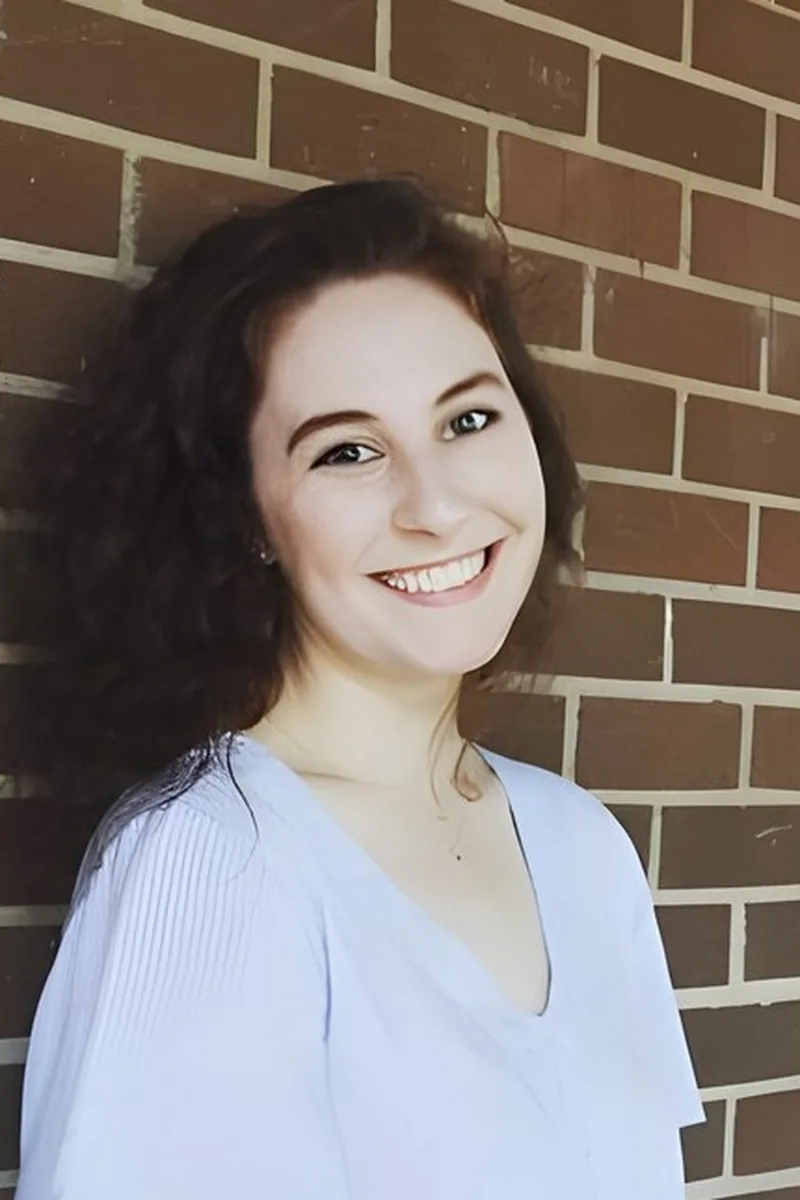
History and religious studies don't scream calculus, but Bethany's 1450 SAT shows she's comfortable with quantitative reasoning, and her project-based teaching style — building understanding through concrete examples rather than abstract drill — adapts well to early calculus concepts like limits and derivative interpretation. She approaches new notation the way she'd approach a primary source: breaking it apart piece by piece until the underlying logic becomes clear. Rated 5.0 by students.

Studying computer science and physics at Duke means Bryce uses calculus daily — whether it's computing gradients for optimization algorithms or modeling motion in classical mechanics. That dual exposure lets him teach concepts like derivatives and integration techniques through the problem-solving lens of someone who actually depends on them, not just someone who passed the course. His 35 ACT composite confirms the quantitative chops to back it up.
Having taught calculus to engineering undergrads at UT Tyler, Prakash knows exactly where students stumble — integration techniques that require choosing the right method, limit definitions that feel abstract, and series convergence tests that blur together. He ties each concept to real engineering applications so the math feels purposeful rather than arbitrary.
Between a 34 ACT, a 1530 SAT, and a course load that spans math through pre-calculus and beyond, Alisha has the quantitative chops to back up her calculus tutoring — even with a BFA on her transcript. She zeroes in on the transition points that trip students up, like moving from average rate of change to instantaneous rate of change, making sure the conceptual shift lands before the derivative rules pile on.
Between a bachelor's in applied mathematics from UCLA and PhD-level engineering design work at Virginia Tech, Professor Florence has used calculus as a daily tool — from multivariable optimization in engineering systems to the differential equations that govern physical modeling. That depth means she can teach not just how to compute a derivative or evaluate an integral, but why the Fundamental Theorem ties them together and how each technique extends into real engineering and scientific problems.
An MFA in Creative Writing and a Political Science degree don't scream calculus, so Michael is honest that this isn't his deepest subject — but a 1470 SAT shows he can handle quantitative reasoning, and his tutoring across algebra and broader math means he's comfortable walking through the conceptual groundwork that early calculus builds on. He's strongest at translating intimidating notation into clear, plain-English explanations, treating a derivative the way a writer treats a dense paragraph: one piece at a time until the meaning emerges.
I am persuasive and capable of developing rapport and trust, as well as experienced in influencing the attitudes and ideas of others.
An MBA program doesn't let you skip the quantitative heavy lifting — William's graduate business coursework meant working through optimization problems, marginal analysis, and the derivative-based reasoning that underpins strategic decision-making. He teaches calculus by connecting each concept to the kind of real-world modeling he actually used, turning integration and differentiation into tools with a clear purpose rather than abstract exercises.
Limits, derivatives, and integrals each build on the one before — so a shaky grasp of limit behavior can quietly undermine everything that follows. Parth's math background gives him the depth to trace a student's confusion back to its source, whether that's chain rule mechanics or the conceptual leap from average to instantaneous rate of change.
Biochemistry at Boston College meant Hunter didn't just take calculus — he kept using it, working through reaction kinetics, enzyme rate equations, and the quantitative modeling that underpins lab science. That repeated exposure to derivatives and integrals in applied settings gives him a fluency with the material that makes explaining chain rule or integration techniques feel like second nature. Rated 5.0 by students.
Creative writing and French literature are Erintrude's home turf, not mathematics, so she's transparent that calculus is far from her strongest offering. That said, her 31 ACT composite shows solid analytical reasoning, and her workshop-honed instinct for breaking complex material into digestible steps applies well to walking through the logic of limits and introductory derivative concepts.
After Princeton and a stint at Google, Rick landed back in academia pursuing a PhD in Psychology — a field where calculus quietly runs the show behind statistical modeling, signal detection theory, and psychometric curve fitting. That combination of tech-industry quantitative work and research-track training means he can unpack derivatives and integrals as tools that actually do something, not just abstract exercises. His geosciences background adds another layer, since rate-of-change problems in earth systems gave him hands-on calculus fluency.
I am passionate about learning and teaching others.
The jump from understanding derivatives as a formula to understanding them as rates of change is where most calculus students stall out. George unpacks that transition carefully, connecting limits, differentiation, and integration to the kinds of optimization and modeling problems he encountered in his UNC Chapel Hill business coursework.
Studying English literature doesn't scream calculus, and Rachel is honest that it's not her deepest subject — but a 34 ACT composite and experience tutoring algebra and pre-calc mean she understands the quantitative reasoning that underpins early calculus concepts. She's especially useful for students who need someone to slow down and translate the notation into plain English, walking through what a limit or a derivative is actually saying before jumping to computation.
An English Education major isn't the typical calculus background, but Brielle's analytical reading skills — picking apart structure, sequencing ideas logically, translating dense material into plain language — map surprisingly well onto unpacking what a limit or derivative is actually saying. She treats calculus notation the way she'd treat a difficult passage: slow it down, decode each piece, and rebuild understanding from the ground up. Rated 5.0 by students.
Understanding what a derivative actually represents — not just how to compute one — is the difference between surviving calculus and mastering it. Joseph unpacks core ideas like the limit definition, related rates, and integration techniques by tying them to physical applications from his biomedical engineering studies. He's rated 5.0 by students.
Cognitive psychology research at Purdue meant Joshua spent serious time with the math underneath the science — statistical modeling, rate-of-change problems in learning curves, and the quantitative reasoning that makes experimental design work. That background gives him a practical grip on derivatives and integrals, especially when it comes to explaining what a function's behavior actually means rather than just computing answers.
Engineering students don't just take calculus — they use it daily, and Artem's electrical and computer engineering coursework means he's applying integration techniques, series expansions, and differential equations to real circuit analysis and signal processing problems. That hands-on fluency through Calc 3 lets him teach everything from limit definitions to multivariable applications with the confidence of someone who actually needs the math to work. Rated 5.0 by students.
Between AP Physics 1 and his broader physics tutoring, Jeffrey has already been doing calculus in disguise — velocity-to-acceleration problems, area-under-the-curve reasoning, and rate-of-change thinking are baked into every mechanics unit. That physics intuition, paired with a 1440 SAT, means he teaches derivatives and integrals as tools that describe how things actually move and change rather than as isolated symbol-pushing exercises.
The leap from Pre-Calculus to Calculus often comes down to whether a student truly grasps limits, or just memorized enough to pass a quiz. Jenna teaches derivatives and integrals by grounding them in what's actually happening — rates of change, accumulation, the relationship between a function and its graph — so that application problems and the chain rule stop feeling like guesswork.
I graduated from the University of North Carolina at Chapel Hill with a Bachelor of Science in Physics. I work with students in a variety of subjects, including Math, Physics, and Chemistry. I have experience working with students on the Autism spectrum and with ADHD.
Mechanical engineering grad work is essentially applied calculus — Aaron uses derivatives to model thermal systems, integrals to analyze fluid flow, and differential equations to predict how structures respond to stress, every single day. That daily fluency means he can teach integration techniques or the chain rule by connecting them to problems where the math is doing real physical work. Rated 5.0 by students.
Pre-med coursework threw Sydny into calculus with real stakes — understanding rates of change in drug concentration curves, modeling exponential decay in pharmacokinetics, and applying integration to biological systems. She breaks down limits, derivatives, and integrals by connecting each concept to a concrete problem rather than leaving students adrift in abstraction.
Frances's psychology background at Duke involved statistical modeling and data analysis — work that builds directly on the calculus concepts of rates of change and area under a curve. She teaches early calculus by connecting derivatives and integrals to the kind of quantitative reasoning she used in research, making notation feel purposeful rather than arbitrary. Rated 4.6 by students.
Biomedical engineering at Duke means Eric lives in calculus daily — from modeling drug diffusion rates to analyzing physiological signals, derivatives and integrals are tools he actually uses. He breaks down concepts like the chain rule, related rates, and integration techniques by connecting them to real problems where the math matters.
From limits and derivatives through integration techniques, calculus rewards students who understand *why* a method works — not just when to apply it. Florence's physics minor at Duke means she regularly uses calculus to solve real problems in mechanics and electromagnetism, so she can show students what these abstractions actually describe. She holds a 5.0 rating.
Honestly, calculus is a stretch from Alex's religion and theology background — but his 5.0 tutoring rating across 27 subjects suggests he knows how to break down unfamiliar material and make it accessible. His approach leans on the study skills and structured reasoning side, walking through the logic of limits and basic differentiation step by step so the concepts build on each other rather than feeling like disconnected rules.
Environmental studies involves a surprising amount of calculus — modeling pollutant dispersion rates, analyzing resource depletion curves, and optimizing conservation strategies all require fluency with derivatives and integrals. Simon's background in that field, combined with the quantitative reasoning behind his 1590 SAT, means he can ground abstract calculus concepts in systems where rates of change describe something tangible. Rated 5.0 by students.
Doing biomedical research at Duke Medical Center means Callie uses calculus daily — modeling tumor growth rates, analyzing change over time, interpreting area under curves in experimental data. She teaches derivatives and integrals by grounding them in what they actually measure, which makes the chain rule and integration techniques feel purposeful rather than mechanical.
Engineering students don't just take calculus — they live in it, and Natalie's civil engineering track at Duke means she's applying derivatives and integrals to real structural problems like load distribution, fluid flow, and stress analysis. That daily fluency with the material lets her teach concepts like related rates or integration techniques as tools with obvious purpose, not abstract exercises. Her 35 ACT composite confirms the quantitative chops behind that engineering lens.
Growing up in Rwanda and Kenya, Caleb taught himself mathematics long before he had access to formal schooling — an experience that gave him an unusually clear sense of how calculus concepts like limits and derivatives build from simpler ideas, because he had to construct that progression on his own. Now studying social sciences at Harvard, he lists calculus among his most-tutored and most-loved subjects, bringing a 35 ACT composite and genuine enthusiasm for walking through integration techniques and application problems step by step.
Neuroscience coursework doesn't just touch calculus — it lives in it, from modeling action potential propagation to quantifying synaptic transmission rates, and Julie's BS in the field means she's solved these problems firsthand rather than in the abstract. Her 1480 SAT confirms sharp quantitative chops, and she teaches derivatives and integrals by connecting each concept to the real systems where rates of change actually matter. Rated 5.0 by students.
Limits, derivatives, and integrals each introduce a fundamentally new way of thinking about functions, and rushing past any one of them creates problems later. Taariq earned his math degree at Duke and brings that depth to calculus sessions, unpacking the reasoning behind the chain rule or Riemann sums so students can handle unfamiliar problems on their own. He's rated 4.9 across his students.
Years of applying calculus in biochemistry and medical coursework at Duke gave Tammy a concrete sense of what derivatives and integrals actually mean — rate of drug absorption, area under a concentration curve, modeling growth. She teaches the chain rule, integration techniques, and series convergence by tying each back to problems that have real stakes. Her 5.0 rating speaks to how well that approach lands.
I am a freshman at Vanderbilt University currently pursuing a B.S. in Biochemistry. My inquisitive nature has fostered a love for mathematics, the natural sciences, and how they interact to produce the world we experience every day. This extends to my teaching strategy, where I emphasize the importance of conceptual understanding rather than pure memorization of equations and steps. My recent experience in a wide variety of Advanced Placement courses lends me insight to recent changes in course objectives and exam formatting.
Studying medical sociology at Duke with plans for med school means Zhong is heading straight into territory where calculus matters — epidemiological modeling, dosage curves, and the quantitative reasoning that underpins public health research. A 1590 SAT confirms he has serious mathematical chops, and his approach to calculus leans on connecting the mechanics of derivatives and integration to the real-world rate problems he'll soon encounter in clinical science.
A PhD in Literature might not scream calculus, but Renee's years directing tutoring programs across subjects — math included — mean she's spent real time walking students through the conceptual hurdles that make early calculus feel impossible. She's especially good at translating dense notation into plain English, treating a derivative definition the way she'd treat a difficult passage: slowing down, identifying what each piece does, and rebuilding understanding from there. Rated 4.9 by students.
Studying economics at Duke means Devanshi uses calculus constantly — optimization problems, marginal analysis, and modeling how variables shift in response to each other are baked into her coursework. A 35 ACT composite backs up that quantitative fluency, and she teaches derivatives and integrals by connecting the mechanics to the economic intuition behind them, so the rules feel purposeful rather than arbitrary.
Limits, derivatives, and integrals each introduce a new way of thinking about change, and students who rush past the conceptual layer tend to struggle when problems get layered. Alyssa approaches calculus by making sure each idea — what a derivative actually represents, why the chain rule works — is genuinely understood before moving to computation.
Testimonials
Because the right Calculus tutor makes all the difference.
Average Session Rating – Based on 3.4M Learner Ratings
Other Raleigh Tutors
Related Math Tutors in Raleigh
Frequently Asked Questions
Many students struggle with the shift from algebra and precalculus to calculus's conceptual focus on rates of change and limits. Word problems that require translating real-world scenarios into mathematical models, multi-step derivative and integral problems, and understanding why calculus techniques work—not just how to apply them—are frequent pain points. Calculus also demands strong foundational skills in algebra and trigonometry, so gaps in these areas can compound quickly. A tutor can help you identify which concepts need reinforcement and build the connections between procedures and underlying principles.
Your first session is about understanding where you are and where you want to go. A tutor will assess your comfort with prerequisite topics like functions, limits, and algebraic manipulation, discuss specific challenges you're facing (whether it's derivatives, integrals, or applications), and learn about your learning style and goals. From there, they'll create a personalized plan focused on the areas that will have the biggest impact on your understanding and performance. Most students find this diagnostic approach helps them feel heard and gives them clarity on next steps.
Showing work is essential in calculus because it reveals your understanding and helps you catch errors. Tutors teach you how to structure solutions step-by-step, explain the reasoning behind each move, and use proper notation—skills that matter for both tests and real comprehension. By working through problems together, a tutor can model clear communication, ask you to explain your thinking, and give immediate feedback when steps are skipped or logic is unclear. This builds habits that improve both your grades and your confidence in problem-solving.
Word problems require you to identify what's changing, what you're asked to find, and which calculus tools apply—a skill that takes deliberate practice. Tutors teach you a systematic approach: reading carefully, defining variables, sketching diagrams, and connecting the problem to relevant calculus concepts like rates of change, optimization, or related rates. Working through multiple examples with a tutor helps you recognize patterns and build confidence that you can tackle unfamiliar problems. This is one area where personalized instruction makes a real difference because every problem is slightly different.
Yes. Raleigh's 17 school districts use different resources and pacing, and tutors are experienced working across various curricula—whether your school uses AP Calculus AB, BC, IB Higher Level, or standard college-prep calculus. Tutors adapt to your specific textbook, notation, and course expectations, so you get support that aligns with what your teacher emphasizes. This personalized alignment means the tutoring directly reinforces what you're learning in class rather than introducing conflicting approaches.
Absolutely. Math anxiety often stems from gaps in understanding or past negative experiences, and 1-on-1 tutoring creates a judgment-free space to ask questions and move at your own pace. Tutors break complex topics into manageable pieces, celebrate progress, and help you see that calculus is logical and learnable—not mysterious. Over time, as you understand concepts more deeply and solve problems successfully, confidence naturally builds. Many students discover that calculus is actually more intuitive than they expected once someone explains it in a way that clicks for them.
Look for tutors with strong backgrounds in mathematics—ideally with college-level calculus experience and success teaching or tutoring the subject. Experience working with students at your level (high school AP, college, etc.) and familiarity with your curriculum matters too. Beyond credentials, you want someone who can explain concepts clearly, asks good questions to check your understanding, and adapts their approach based on how you learn best. Varsity Tutors connects you with vetted tutors whose expertise and teaching style match your needs.
Many students notice better understanding and confidence within 3-4 sessions once they're working on targeted weak areas. Grade improvement often follows within 2-3 weeks as concepts solidify and problem-solving skills sharpen. The timeline depends on your starting point, how frequently you meet, and how much you practice between sessions—consistent effort accelerates results. Think of it like learning a language: regular, focused practice with expert guidance compounds quickly, and you'll start seeing patterns and making connections that make calculus feel less overwhelming.
Let’s find your perfect tutor
Answer a few quick questions. We’ll recommend the right plan and match you with a top 5% tutor.