Award-Winning Calculus Tutors
serving Charlotte, NC
Calculus
Tutors in Charlotte
Private 1-on-1 tutoring, weekly live classes for academic support, test prep & enrichment, practice tests and diagnostics, and more to elevate grades and test scores.
Based on 3.4M Learner Ratings
UniversitiesSchools & Universities
DeliveredHours Delivered
ProficiencyGrowth in Proficiency
Who needs tutoring?
No obligation. Takes ~1 minute.
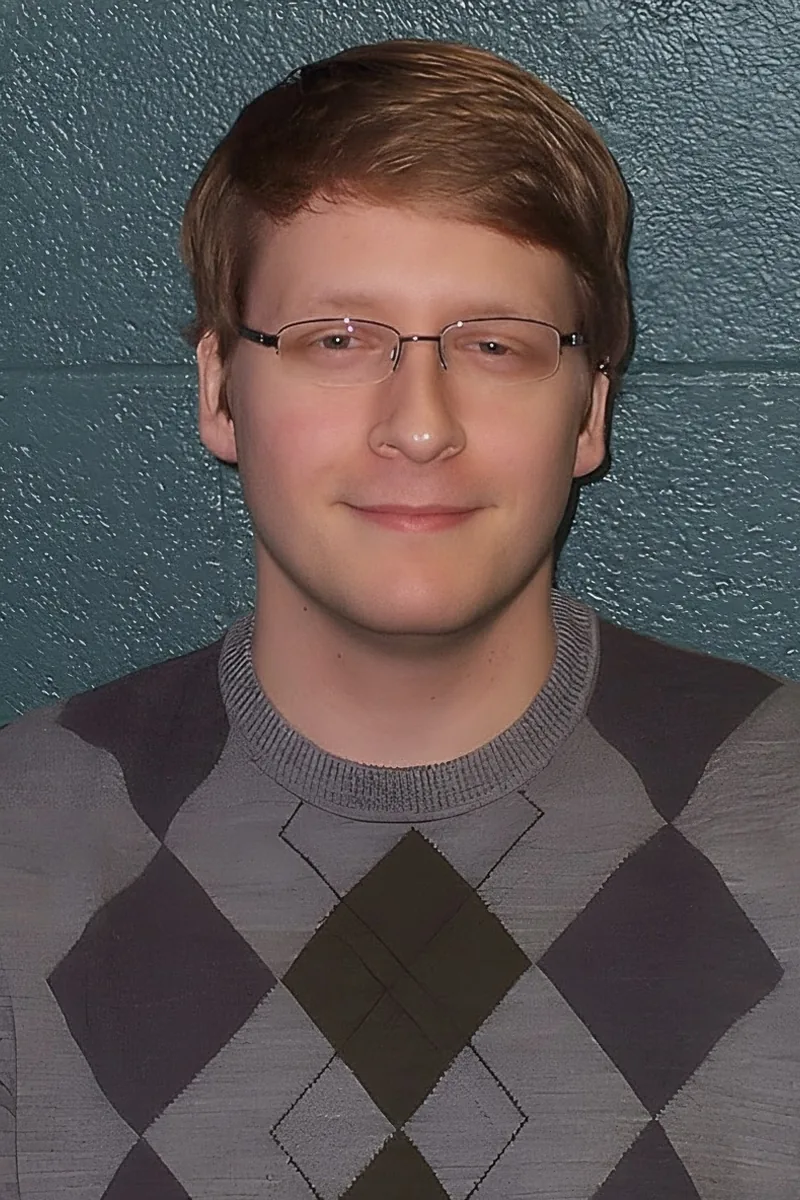
Honestly, calculus is a stretch from Alex's religion and theology background — but his 5.0 tutoring rating across 27 subjects suggests he knows how to break down unfamiliar material and make it accessible. His approach leans on the study skills and structured reasoning side, walking through the logic of limits and basic differentiation step by step so the concepts build on each other rather than feeling like disconnected rules.
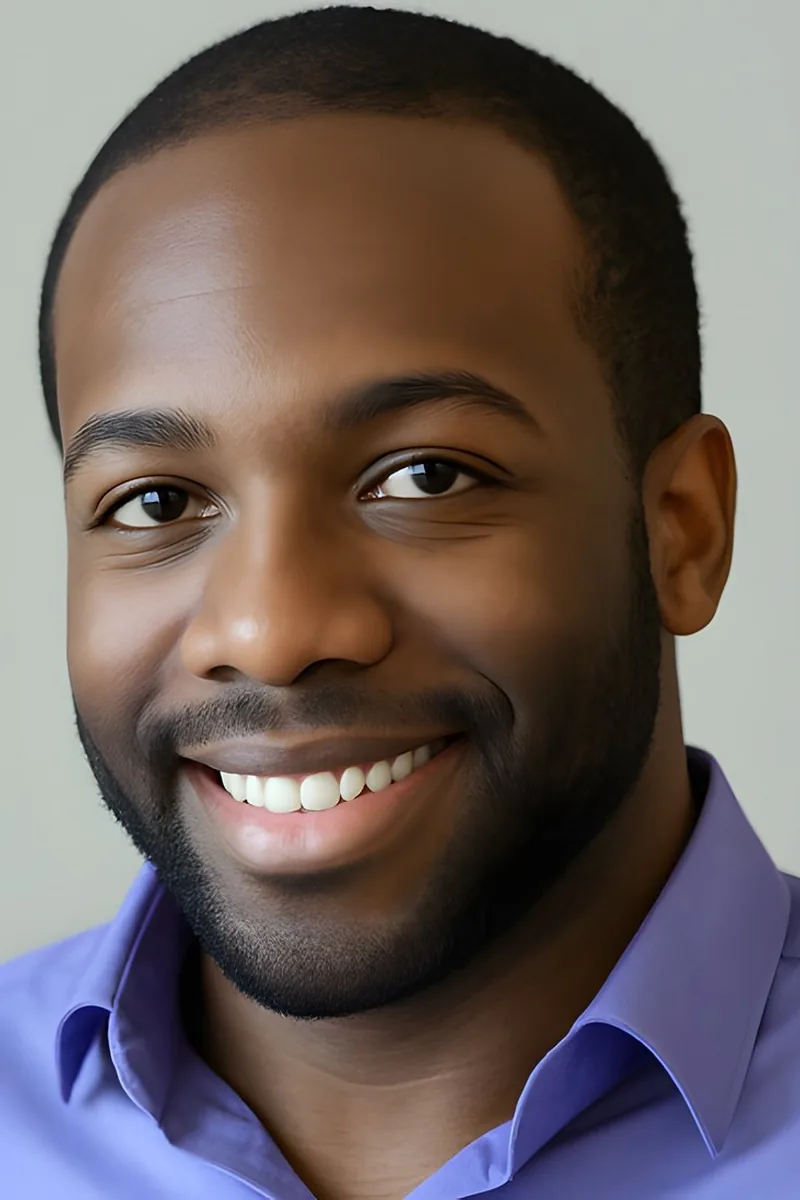
Two degrees in chemical and biomolecular engineering mean Earnest didn't just take calculus — he used it daily, from modeling heat transfer rates to solving mass balance differential equations across reactor systems. That applied fluency lets him teach derivatives, integrals, and series by connecting each concept to the physical intuition behind it, so the math feels like a tool rather than an abstraction.
Economics coursework leans heavily on calculus — marginal analysis, optimization problems, and interpreting how cost and revenue functions behave all require fluency with derivatives. Ify tackles those concepts from the inside, connecting the rules of differentiation to the economic models where they actually get used, which gives the math a purpose students can hold onto. Rated 5.0 by students.
Isabel's coursework at UNC Chapel Hill spans math from pre-algebra through calculus, so she's walked the full path a student takes before hitting derivatives and integrals — and knows exactly where the conceptual gaps tend to hide. She's especially useful for students who need to shore up their algebra and function fluency while tackling new calculus material, since she can diagnose what's actually causing confusion rather than just re-explaining the current chapter.
Physiology at the graduate level is essentially applied calculus — Morgan's Georgetown master's work meant constantly interpreting rate-of-change relationships in cardiac output, respiratory flow dynamics, and membrane transport kinetics. That daily exposure to derivatives and integrals in biological contexts gives her a way to teach the math through systems that actually behave according to the rules, making abstract notation feel grounded. Rated 5.0 by students.
Economics at Berkeley isn't just supply-and-demand curves — Rebecca's coursework leaned heavily on calculus-driven models like marginal analysis, elasticity functions, and optimization under constraints, meaning she's applied derivatives and integrals to solve real problems rather than just practice them in isolation. Her data science training added another layer, using calculus concepts in gradient descent and probability distributions. Rated 5.0 by students.
Computer science at UNC Chapel Hill means Jack writes code that depends on calculus daily — from analyzing algorithm efficiency with limits to the optimization problems that underpin machine learning. That fluency, paired with a 1540 SAT, lets him teach derivatives and integrals as tools he actually uses rather than abstract exercises. Rated 4.7 by students.
Pursuing a physics degree at NC State means Gatlin uses calculus daily — computing projectile trajectories, modeling wave behavior, deriving equations of motion — so the material isn't abstract to him, it's the language his major speaks. That physics-native perspective lets him teach concepts like integration and the chain rule through problems where the math actually describes something physical and intuitive.
Biology majors don't just take calculus — they use it, and Daiven's coursework meant grappling with exponential growth models, enzyme kinetics curves, and the kind of rate-of-change problems where derivatives stop being abstract and start describing how living systems actually work. That hands-on context lets him teach integration and differentiation through problems that have a biological pulse, not just textbook exercises. His 32 ACT composite backs up the quantitative chops behind the life-science perspective.
Biology majors don't just take calculus — they use it, and Madison's coursework meant modeling everything from population growth rates to enzyme kinetics where derivatives describe how living systems change in real time. That hands-on context makes her effective at connecting the abstract machinery of limits and integration back to problems where the math actually does something. Rated 5.0 by students.
Pre-med coursework at Michigan put Cailee through the full calculus sequence — derivatives, integrals, and the differential equations that underpin everything from reaction rates in chemistry to drug absorption models in pharmacology. That science-application background means she teaches concepts like the chain rule or integration by parts with a clear sense of where they're actually headed. Rated 5.0 by students.
As a physics major at UNC Chapel Hill, Shourya uses calculus daily — it's the language underneath every kinematics equation, every electric field integral, every moment of inertia derivation. That constant exposure means he teaches derivatives and integrals with an intuitive sense of what they physically represent, not just how to compute them. Rated 4.9 by students.
As a chemistry undergrad, Srikavya uses calculus daily — reaction rates, thermodynamic work integrals, and concentration-over-time curves all depend on derivatives and integrals having real meaning beyond the math classroom. That constant exposure to applied calculus means she can unpack concepts like the chain rule or area under a curve by connecting them to physical processes students can actually visualize.
Psychology research leans heavily on statistical reasoning — understanding how variables change in relation to each other — which gives Traci a conceptual foothold for early calculus ideas like rates of change and slope behavior. She's straightforward that this isn't her deepest subject, but her knack for breaking down dense material into clear, repeatable steps (honed across years of reading and English tutoring) carries over well to demystifying limit notation and basic derivative rules.
Public health coursework at UNC Charlotte leans heavily on rates of change — tracking how infection spreads through a population, modeling disease curves, interpreting the slope of an epidemic's trajectory — and all of that is calculus. Kelsey's chemistry minor adds another layer, since reaction rates and concentration changes are derivative problems in disguise. She teaches the material by connecting it to those real-world contexts where the math actually drives decisions.
Economics at UVA means Emma encounters calculus constantly — consumer optimization, marginal utility curves, and the derivative-driven logic behind supply and demand elasticity are baked into her coursework. That gives her a practical vocabulary for explaining what a derivative actually represents, grounding abstract rules in the kind of "how fast is this changing and why does it matter" reasoning that makes the concepts stick. Rated 5.0 by students.
Finishing a Michigan history degree in three years required serious analytical discipline — the same kind of structured, logical thinking that makes early calculus concepts like limits and continuity accessible even without a math-specific background. Colleen breaks down intimidating notation into plain steps, treating each new rule as an argument to understand rather than a formula to memorize, drawing on the same close-reading instincts she uses across her English and writing tutoring.
Statistics training at the undergraduate level means Taylor has spent serious time with the calculus that underpins probability distributions, expected value proofs, and continuous density functions — the kind of work where integration isn't optional. That foundation lets her teach derivatives and integrals as tools with a purpose, connecting each technique to the data-driven problems where it actually gets used. Rated 4.9 by students.
Civil engineering at Clemson meant Matthew was solving calculus problems long before he was tutoring them — calculating load distributions, modeling beam deflection curves, and optimizing structural designs all run on derivatives and integrals. That applied background lets him show students what's actually happening when they take a derivative or set up a Riemann sum, connecting each technique to a physical scenario where the math does real work. Rated 5.0 by students.
Journalism training at UNC Chapel Hill might not scream calculus, but it does build the kind of precise, logical thinking that makes early derivative and limit problems more approachable — breaking a complex story into its component parts isn't so different from breaking a function into its rates of change. Molly's 31 ACT composite confirms she can handle quantitative reasoning, and she brings a structured, step-by-step clarity to walking through the notation and concepts that tend to trip students up first.
My name is Ananya, and I am a recent graduate of Georgetown University, where I obtained a B.S. in Mathematics and a B.A. in Government, graduating with Honors. In college, my favorite areas of math were calculus, linear algebra, and data science, which led me to conduct math statistics research for two years. I am an incoming Master's student at Cambridge University, where I will be studying and researching Digital Policy. My interdisciplinary educational experience informs my creative and engaging approach to education. I have many years of teaching experience throughout high school, I tutored elementary and middle school math and English in both paid and volunteer positions, and served as a TA for Precalculus and AP US History. In college, I served as a leader for multiple mentorship programs for high schoolers and incoming college students. These experiences taught me patience and the ability to adapt learning experiences to individual students' strengths. I take a reflective and iterative approach to tutoring, with practice, feedback, and application of material in various contexts. As your tutor, I am passionate about fostering a deeper understanding of material that will lead to your success, while embedding fun into the process. Please consider booking a lesson, and I look forward to getting started!
Hi! I'm Kavya, and I'm passionate about helping students build confidence and succeed in school. I tailor each lesson to a student's learning style, making concepts clear, engaging, and easy to understand. I specialize in math, from elementary concepts to algebra, geometry, trigonometry, statistics, calculus, and college-level courses, focusing on true understanding rather than memorization. I also tutor English, reading, writing, grammar, homework support, study skills, organization, and test preparation. My sessions are patient, supportive, and interactive, creating a comfortable environment where students feel confident asking questions. Whether a student needs extra help, wants to improve grades, or wants to get ahead, I provide personalized lessons that build strong academic skills, confidence, and a lifelong love of learning.
Mechanical engineering grad work is essentially applied calculus — Aaron uses derivatives to model thermal systems, integrals to analyze fluid flow, and differential equations to predict how structures respond to stress, every single day. That daily fluency means he can teach integration techniques or the chain rule by connecting them to problems where the math is doing real physical work. Rated 5.0 by students.
Pre-med coursework threw Sydny into calculus with real stakes — understanding rates of change in drug concentration curves, modeling exponential decay in pharmacokinetics, and applying integration to biological systems. She breaks down limits, derivatives, and integrals by connecting each concept to a concrete problem rather than leaving students adrift in abstraction.
Frances's psychology background at Duke involved statistical modeling and data analysis — work that builds directly on the calculus concepts of rates of change and area under a curve. She teaches early calculus by connecting derivatives and integrals to the kind of quantitative reasoning she used in research, making notation feel purposeful rather than arbitrary. Rated 4.6 by students.
Biomedical engineering at Duke means Eric lives in calculus daily — from modeling drug diffusion rates to analyzing physiological signals, derivatives and integrals are tools he actually uses. He breaks down concepts like the chain rule, related rates, and integration techniques by connecting them to real problems where the math matters.
From limits and derivatives through integration techniques, calculus rewards students who understand *why* a method works — not just when to apply it. Florence's physics minor at Duke means she regularly uses calculus to solve real problems in mechanics and electromagnetism, so she can show students what these abstractions actually describe. She holds a 5.0 rating.
Doing biomedical research at Duke Medical Center means Callie uses calculus daily — modeling tumor growth rates, analyzing change over time, interpreting area under curves in experimental data. She teaches derivatives and integrals by grounding them in what they actually measure, which makes the chain rule and integration techniques feel purposeful rather than mechanical.
History and religious studies don't scream calculus, but Bethany's 1450 SAT shows she's comfortable with quantitative reasoning, and her project-based teaching style — building understanding through concrete examples rather than abstract drill — adapts well to early calculus concepts like limits and derivative interpretation. She approaches new notation the way she'd approach a primary source: breaking it apart piece by piece until the underlying logic becomes clear. Rated 5.0 by students.
Engineering students don't just take calculus — they live in it, and Natalie's civil engineering track at Duke means she's applying derivatives and integrals to real structural problems like load distribution, fluid flow, and stress analysis. That daily fluency with the material lets her teach concepts like related rates or integration techniques as tools with obvious purpose, not abstract exercises. Her 35 ACT composite confirms the quantitative chops behind that engineering lens.
Environmental studies involves a surprising amount of calculus — modeling pollutant dispersion rates, analyzing resource depletion curves, and optimizing conservation strategies all require fluency with derivatives and integrals. Simon's background in that field, combined with the quantitative reasoning behind his 1590 SAT, means he can ground abstract calculus concepts in systems where rates of change describe something tangible. Rated 5.0 by students.
Studying computer science and physics at Duke means Bryce uses calculus daily — whether it's computing gradients for optimization algorithms or modeling motion in classical mechanics. That dual exposure lets him teach concepts like derivatives and integration techniques through the problem-solving lens of someone who actually depends on them, not just someone who passed the course. His 35 ACT composite confirms the quantitative chops to back it up.
Neuroscience coursework doesn't just touch calculus — it lives in it, from modeling action potential propagation to quantifying synaptic transmission rates, and Julie's BS in the field means she's solved these problems firsthand rather than in the abstract. Her 1480 SAT confirms sharp quantitative chops, and she teaches derivatives and integrals by connecting each concept to the real systems where rates of change actually matter. Rated 5.0 by students.
Growing up in Rwanda and Kenya, Caleb taught himself mathematics long before he had access to formal schooling — an experience that gave him an unusually clear sense of how calculus concepts like limits and derivatives build from simpler ideas, because he had to construct that progression on his own. Now studying social sciences at Harvard, he lists calculus among his most-tutored and most-loved subjects, bringing a 35 ACT composite and genuine enthusiasm for walking through integration techniques and application problems step by step.
I am a freshman at Vanderbilt University currently pursuing a B.S. in Biochemistry. My inquisitive nature has fostered a love for mathematics, the natural sciences, and how they interact to produce the world we experience every day. This extends to my teaching strategy, where I emphasize the importance of conceptual understanding rather than pure memorization of equations and steps. My recent experience in a wide variety of Advanced Placement courses lends me insight to recent changes in course objectives and exam formatting.
Years of applying calculus in biochemistry and medical coursework at Duke gave Tammy a concrete sense of what derivatives and integrals actually mean — rate of drug absorption, area under a concentration curve, modeling growth. She teaches the chain rule, integration techniques, and series convergence by tying each back to problems that have real stakes. Her 5.0 rating speaks to how well that approach lands.
Limits, derivatives, and integrals each introduce a fundamentally new way of thinking about functions, and rushing past any one of them creates problems later. Taariq earned his math degree at Duke and brings that depth to calculus sessions, unpacking the reasoning behind the chain rule or Riemann sums so students can handle unfamiliar problems on their own. He's rated 4.9 across his students.
Studying medical sociology at Duke with plans for med school means Zhong is heading straight into territory where calculus matters — epidemiological modeling, dosage curves, and the quantitative reasoning that underpins public health research. A 1590 SAT confirms he has serious mathematical chops, and his approach to calculus leans on connecting the mechanics of derivatives and integration to the real-world rate problems he'll soon encounter in clinical science.
Limits, derivatives, and integrals each introduce a new way of thinking about change, and students who rush past the conceptual layer tend to struggle when problems get layered. Alyssa approaches calculus by making sure each idea — what a derivative actually represents, why the chain rule works — is genuinely understood before moving to computation.
Having taught calculus to engineering undergrads at UT Tyler, Prakash knows exactly where students stumble — integration techniques that require choosing the right method, limit definitions that feel abstract, and series convergence tests that blur together. He ties each concept to real engineering applications so the math feels purposeful rather than arbitrary.
Testimonials
Because the right Calculus tutor makes all the difference.
Average Session Rating – Based on 3.4M Learner Ratings
Other Charlotte Tutors
Related Math Tutors in Charlotte
Frequently Asked Questions
Many students struggle with the transition from algebra and precalculus to calculus's conceptual foundation—understanding why limits, derivatives, and integrals work, not just how to compute them. Word problems involving rates of change and optimization are particularly challenging, as they require students to translate real-world scenarios into mathematical language. Additionally, graphing functions and interpreting what derivatives and integrals represent visually often trips up students who've relied on procedural memorization in previous math courses.
In the first session, a tutor will assess your current understanding of precalculus concepts (functions, limits, algebraic manipulation) and identify specific areas where you need support—whether that's limits, derivatives, integrals, or applications. They'll also learn about your learning style, any math anxiety you're experiencing, and your goals (passing the course, preparing for the AP exam, or mastering the material for future STEM coursework). From there, they'll create a personalized plan that builds conceptual understanding alongside problem-solving skills.
Expert tutors focus on helping you see the big picture—understanding that derivatives measure instantaneous rates of change and integrals represent accumulated area, not just memorizing formulas. Through guided problem-solving and visual explanations, tutors help you recognize patterns and connections between concepts, so you can approach unfamiliar problems with reasoning rather than relying on memorized steps. This deeper understanding makes it easier to tackle complex multi-step problems and word problems that require you to decide which calculus tool to use.
Word problems require you to translate English into mathematical notation, identify which calculus concept applies (optimization, related rates, area under a curve), and then execute the solution—that's multiple steps where confusion can happen. Tutors break this process down by teaching you a systematic approach: identify the variables, write equations, determine what you're solving for, and then apply the appropriate calculus technique. With practice and guided feedback, you'll build confidence recognizing problem types and develop strategies for tackling unfamiliar scenarios.
Showing work is critical in calculus because it demonstrates your reasoning and helps tutors (and teachers) identify exactly where misunderstandings occur. Your work should include the limit definition or derivative/integral rule you're using, each algebraic step clearly written, and a final answer with units or context when applicable. Tutors emphasize this from day one because clear work habits not only earn partial credit on exams but also help you catch your own mistakes and deepen your understanding of why each step matters.
Yes—Charlotte's school districts use various calculus resources, and tutors are experienced working across different textbooks, problem sets, and teaching approaches. Whether your school uses Stewart, Larson, or another standard calculus text, or if you're taking AP Calculus AB/BC, tutors can align their instruction to your specific curriculum and help you master the concepts as they're presented in your course. This personalized alignment ensures the tutoring directly supports what you're learning in class.
Absolutely. Many students who struggled with earlier math courses find success in calculus with the right support because tutors can rebuild your confidence through manageable, step-by-step problem-solving and by celebrating progress along the way. A tutor creates a judgment-free space to ask questions, revisit foundational concepts if needed, and develop a growth mindset about mathematics. Over time, as you solve problems correctly and understand the reasoning behind each step, anxiety typically decreases and confidence grows.
Tutors help you master both AB and BC content (depending on which exam you're taking), practice with released AP problems, and develop test-taking strategies like time management and recognizing which calculus techniques to apply under pressure. They'll also help you understand the AP rubric so you know exactly what graders are looking for in free-response answers. With consistent practice and personalized feedback on your problem-solving approach, you'll be well-prepared for exam day.
Let’s find your perfect tutor
Answer a few quick questions. We’ll recommend the right plan and match you with a top 5% tutor.