Award-Winning SAT Tutors
serving Pittsburgh, PA
SAT
Tutors in Pittsburgh
Private 1-on-1 tutoring, weekly live classes for academic support, test prep & enrichment, practice tests and diagnostics, and more to elevate grades and test scores.
Based on 3.4M Learner Ratings
UniversitiesSchools & Universities
DeliveredHours Delivered
ProficiencyGrowth in Proficiency
Who will be getting tutoring?
No obligation. Takes ~1 minute.

Elliot's neuroscience PhD trained him to parse dense research passages and interpret statistical figures quickly — exactly the skills that drive scores up on the SAT's evidence-based reading and data-heavy math questions. He scored a 1540 on the SAT himself and builds test strategy around recognizing how the exam reuses the same question logic across sections. Rated 5.0 by students.
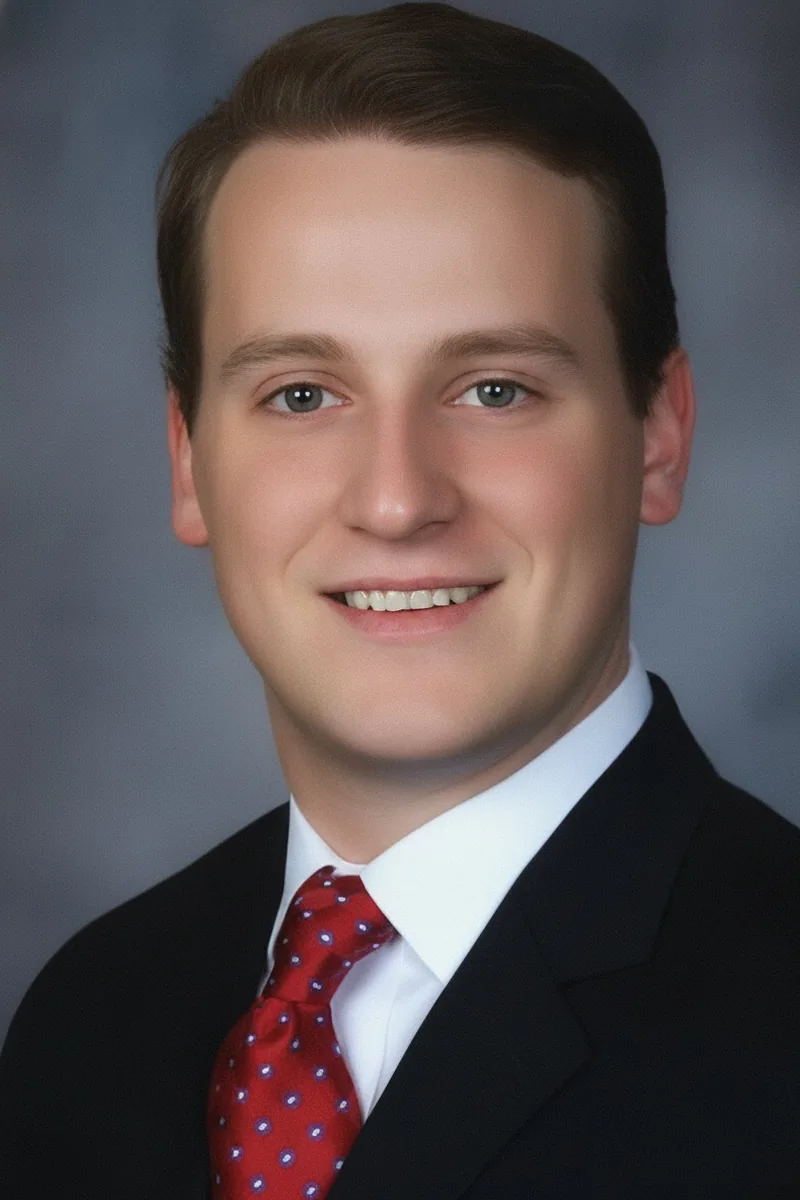
Georgetown's math program trained Peter to think in precise, logical steps — exactly the skill that turns the SAT Math section's multi-step word problems and data analysis questions into straightforward solves. His 1580 SAT score and years of tutoring both math and writing mean he covers the full exam without switching gears, connecting algebraic reasoning on one section to evidence-based reading strategy on the next. Rated 5.0 by students.
Three semesters teaching ESL to immigrants and refugees at Tufts gave Danielle a sharp sense for how people actually process language under pressure — a skill that translates directly to coaching the SAT's Reading and Writing sections, where time management and passage decoding matter more than vocabulary size. She scored a 1550 on the SAT herself and pairs that with a systematic, pacing-driven approach to the Math section built during her biology and pre-med coursework. Rated 5.0 by students.
MIT's math program builds exactly the kind of quantitative reasoning the SAT Math section demands — from algebraic manipulation to data analysis under time pressure — and Enrico pairs that with a 1570 SAT score of his own. He teaches students to recognize the underlying structure of each problem type so they can work efficiently rather than re-deriving every solution from scratch. His 5.0 tutoring rating and experience across subjects from pre-algebra through linear algebra mean he can meet gaps in foundational skills without losing sight of test-day strategy.
Most SAT math points are lost not on hard concepts but on misreading what a problem actually asks — something Ben addresses by teaching students to translate word problems into equations before touching their calculator. His 1560 SAT score and math degree from Penn back up an approach that emphasizes strategic pacing and error analysis across both sections, not just content review. Rated 5.0 by students.
What sets Naomi apart for SAT prep is her ability to coach both sides of the exam with equal confidence — she scored a 1480 herself and has tutored everything from elementary reading to calculus, so neither the verbal reasoning nor the math section is a blind spot. She teaches students to spot the SAT's recurring grammar traps in the Writing and Language section and to translate word problems into clean algebraic setups on the Math side. Rated 5.0 by students.
Neuroscience coursework at Pitt trained Mary to process dense, data-heavy passages quickly — exactly the skill that drives scores up on the SAT's Evidence-Based Reading section, where students need to extract arguments and match them to supporting citations under time pressure. She scored a 1550 on the SAT and pairs that firsthand knowledge of the test's structure with strong math fundamentals from her science background to cover both sections without switching tutors. Rated 4.8 by students.
Most SAT prep treats the Math and verbal sections as completely separate worlds, but Samuel's applied mathematics training actually bridges them — the logical structure behind solving a systems-of-equations problem mirrors the reasoning needed to evaluate evidence-based reading pairs. He scored a 1590 on the SAT and uses that experience to teach students how to spot the exam's predictable patterns, from no-calculator algebra shortcuts to the grammar rules that appear on nearly every Writing and Language passage.
A 1590 SAT means Vaughn knows what it takes to perform at the top of the scale — but more importantly, his physics background gives him a structured, analytical approach to both the Math and Evidence-Based Reading sections. He breaks down question types by the specific reasoning each one tests, so students learn to spot traps in answer choices and manage pacing across sections. Rated 4.7 by past students.
Scoring a 1470 on the SAT while juggling a heavy AP course load, Matt developed time-management strategies for each section that keep students from getting stuck on high-difficulty questions. His engineering background makes him especially effective on the math portion — breaking down word problems involving systems of equations, statistics, and data interpretation into clear, repeatable steps.
I am currently an undergraduate studying Statistics and Machine Learning + Computer Science at Carnegie Mellon University. At CMU, I am an undergraduate research assistant for the AI for Intelligent Tutoring Systems Team, and I am a teaching assistant for Fundamentals of Programming. My teaching philosophy centers on fostering a supportive learning environment where students feel empowered to tackle challenging concepts. I believe in using real-world applications to make math relatable and engaging, which helps my students build confidence and achieve academic success. I am passionate about tutoring because I enjoy seeing students overcome obstacles and progress over time, while developing a love for the subject. Outside of tutoring, I enjoy tennis, playing violin in an orchestra, and delving into literary classics.
What sets Matthew apart for SAT prep is the math-and-CS combination — he doesn't just know the algebra and data analysis tested on the Math section, he understands the underlying logic well enough to teach students how to spot which approach a problem is actually asking for before they start solving. His 1520 SAT score backs up a strategy built on efficiency: identifying question patterns, managing time across sections, and knowing when to skip and return. Rated 4.9 by students.
Rishi's math major at Yale means the SAT's algebra, advanced math, and data analysis questions are well within his comfort zone, but his dual focus in music and humanities also gives him strong instincts for the Reading and Writing sections — particularly rhetorical structure and grammar logic. He scored a 1590 on the SAT and knows exactly where those last few points hide, teaching students the timing habits and error-checking routines that separate a good score from a great one. Rated 5.0 by students.
What sets Jacob apart for SAT prep is the unusual range he covers — his Carnegie Mellon coursework in music, French, and education means he's equally comfortable unpacking the rhetorical structure of a Reading passage and walking through algebra and data questions on the Math section. He scored a 1430 on the SAT himself and uses that experience to teach pacing and elimination strategies tailored to each section's timing pressure.
I am a graduate of Carnegie Mellon University with a Master's of Entertainment Technology. I tutor a wide range of subjects, but my focus areas are Computer Science, Game Development, creative writing, and both SAT and ACT test prep. I think students are at their best when they embrace both their technical and creative sides, and I want to guide students in how to achieve that for themselves. Outside of tutoring, I create games in my free time, as well as write.
Lawrence's dual training in biology and music composition at Oberlin built an unusual combination of analytical and creative thinking — exactly the kind of mental flexibility the SAT rewards when students have to shift between data-heavy math problems and nuanced reading passages in the same sitting. He scored a 1540 on the SAT and uses that experience to teach specific pacing and elimination strategies across both sections. Rated 4.8 by students.
Studying both English literature and linguistics at the University of Chicago gave Mollie an unusual double lens for the SAT — she reads passages the way a literature student does, but she analyzes grammar and sentence structure questions with a linguist's precision. That combination is especially effective on the Writing and Language section, where knowing *why* a rule exists makes spotting errors faster than memorizing correction patterns. She scored a 1500 on the SAT herself and holds a 5.0 tutoring rating.
Training at a competitive high school writing center taught Erin how standardized prompts and timed essays actually work from the inside — a perspective she now applies to the SAT's Reading and Writing sections, where spotting argument structure and grammar patterns under pressure is everything. Her 1420 SAT score and dual focus on Political Science and Psychology mean she's equally comfortable walking students through data-heavy math questions and evidence-based passage analysis.
Hello! My name is Danica and I am an incoming sophomore at the University of Pennsylvania majoring in Neuroscience and Psychology. As the founder of my high school's Chemistry Club, I worked to make challenging scientific concepts approachable and engaging for students of all grade levels. I developed educational materials, organized meetings, and created an environment where students felt comfortable asking questions and exploring their curiosity. I tailor my tutoring approach to each student's learning style, whether that involves working through practice problems, reviewing test corrections, creating study resources, or breaking down complex topics into manageable steps. I believe every student is capable of growth when provided with patience, guidance, and the right support. As a tutor, my goal is not only to help students improve their grades but also to foster confidence, independence, and a genuine appreciation for learning.
Mechanical engineering at Carnegie Mellon means Vincent lives in the kind of math the SAT tests hardest — algebraic modeling, functions, and data interpretation — so he can show students exactly why certain problem setups repeat and how to spot shortcuts under time pressure. His 1490 SAT score and strong verbal skills also let him coach the Reading and Writing sections, where he teaches students to treat passage questions like logic puzzles with eliminable wrong answers. Rated 5.0 by students.
Growing up homeschooled before transitioning to public school for his final three years, Philip experienced standardized testing from a unique angle — learning to decode what the SAT actually rewards versus what school curricula emphasize. His 1490 composite score came from building repeatable strategies for the Evidence-Based Reading questions and tackling algebra and data analysis problems efficiently under time pressure. He now studies International Relations at Carnegie Mellon, where the same analytical reading skills he honed for the SAT show up daily.
I am a graduate from Rochester Institute of Technology with a master's in Game Design and Development. My passions lie in everything related to games and mathematics. In the past, I have tutored various subjects in mathematics throughout high school and college, including but not limited to Algebra, Algebra II, Trigonometry, Calculus, Discrete Mathematics, Mathematics of Graphical Simulation, and Linear Algebra. As for technology, I am more than happy to reach out for help in Web Development (HTML, CSS, Javascript) or C# programming. I believe that every person can learn any topic. While every individual has different tastes, strengths, and weaknesses, there is no such thing as an "incapability" to know a subject. Education often possesses a guise of anti-fun, but I can promise you that all topics can be engaging, and I am willing to show you how engaging mathematics and technology can be. As a Game Designer, I have a deep interest in both playing games and making games. This includes games of all kinds: video games, board games, tabletop role-playing games, trading card games, miniatures, and even some sports like tennis or ping pong. Games act as a fantastic teaching tool. They teach by design without users recognizing. It is always a satisfying moment when somebody says "I learned that word from Magic" or "D&D taught me that." Remember: you can succeed. If something is important to you, then it's always worthwhile.
Scoring a 1550 on the SAT while juggling a dual PhD/MD track at Northwestern says something about efficiency under pressure — Chelain knows how to maximize points per minute on both the math and evidence-based reading sections. She breaks down SAT questions by what they're actually testing (inference vs. command of evidence, heart-of-algebra vs. passport-to-advanced-math) so students stop second-guessing and start recognizing patterns. Rated 5.0 by students.
Medical school admissions forced Nishad to master every section of the SAT on his way to a 1580 composite — and that full-test perspective means he coaches the Reading, Writing, and Math sections as one integrated strategy rather than three separate prep tracks. His premed science training sharpens his approach to data interpretation and graph-based questions, while his literature and essay background keeps the evidence-based reading instruction equally rigorous.
Molecular biology coursework demands the same kind of precise, evidence-based reasoning that shows up throughout the SAT — pulling key details from dense material, interpreting data, and constructing logical arguments under pressure. Annabel pairs that scientific training with a perfect 1600 SAT score, meaning she knows the test inside out from both the math and verbal sides. She teaches students to spot the structural patterns in Reading passages and recognize the algebraic setups the College Board recycles in the Math sections.
Scoring a 1550 on the SAT herself, Kirstie knows the difference between understanding the content and understanding the test — and she teaches both. Her M.Ed. background means she builds targeted strategies for each section, from dissecting evidence-based reading passages to catching the grammar patterns the College Board recycles. Rated 5.0 by students, she keeps prep structured without making it feel like a grind.
Both of Matthew's parents are university math professors, so quantitative thinking was literally the dinner-table conversation — a background that shows up in how naturally he teaches the SAT Math section's trickier algebra and data-analysis problems. His Yale biochemistry degree and 1580 SAT score mean the reading-heavy science passages and evidence-based questions come just as easily. Rated 4.9 by students, he covers the full exam without needing to hand off any section.
Hannah's MFA in Creative Writing and triple humanities background make her especially effective on the SAT's Evidence-Based Reading and Writing sections, where she teaches students to trace argument structure through dense passages and spot the grammar conventions the test rewards. Her 1590 SAT score — just 10 points shy of perfect — means she also knows the Math section's pacing traps and algebraic reasoning patterns from firsthand experience.
Jasmine's biochemistry training at Swarthmore built the kind of analytical precision that pays off on SAT Math — translating word problems into equations and interpreting data tables quickly — while her strength in reading and writing covers the verbal side with equal depth. She scored a perfect 1600, so she knows exactly where the exam tries to trip students up, from no-calculator algebra shortcuts to command-of-evidence traps in the Reading section. Rated 4.9 by students.
Having gone through an intensive SAT prep course herself and earned a 1550, Mahitha knows exactly which strategies actually move the needle on test day — especially the pacing tricks and process-of-elimination techniques that turn rushed guessing into confident answering. Her computer engineering training at Northeastern sharpens the algebraic and data-analysis skills that dominate the Math section, while her love of writing keeps her fluent in the grammar and passage-structure logic behind the Reading and Writing questions.
Studying and working in France for eight months, earning an environmental engineering master's, and scoring a 1580 on the SAT gave Kate an unusual combination — she's equally comfortable unpacking a dense reading passage as she is solving multi-step algebra under time pressure. She teaches students to spot the SAT's recurring math traps (especially in word problems requiring equation setup) and builds a systematic approach to evidence-based reading questions that replaces gut-feeling elimination with structural analysis. Rated 4.9 by students.
Running a peer-tutoring program in high school meant Ryan learned early how to spot the specific mistakes students make under pressure — rushing through no-calculator algebra, misreading evidence-based question stems, or losing time on grid-ins that have cleaner solutions. His civil engineering coursework at Cornell keeps his quantitative skills sharp, and a 1510 SAT score confirms he knows the test itself, not just the underlying math and reading. Rated 4.7 by students.
Georgetown's pre-med track and a math minor meant Rachel spent four years toggling between dense scientific reading and quantitative problem-solving — exactly the split the SAT demands. She scored a 1550 and uses that experience to teach students how to manage pacing across both sections, spot the grammar patterns that repeat in Writing & Language, and translate word problems into solvable equations without second-guessing.
Running a writing program for elementary students and teaching Algebra I at a community center gave Katherine an unusual combination of verbal and quantitative coaching experience — exactly the split the SAT demands. She scored a 1590 and uses that near-perfect result to pinpoint the specific question patterns in both the Math and Evidence-Based Reading sections where students tend to leave points on the table. Her approach at Wharton's West Philadelphia Tutoring Project reinforced a flexible, question-driven style that adapts to what each student actually needs on test day.
What makes Stephen effective for SAT prep is that he lives in both halves of the test — his English degree and 1550 score mean he's equally comfortable unpacking evidence-based reading passages and walking through the algebra and data analysis on the math side. He teaches the Writing and Language section as applied grammar rather than abstract rules, drawing on his deep background in English syntax and essay structure to show students exactly why one answer choice is tighter than another.
Linguistics training at Brown gave Claire a structural understanding of how language works — the kind that turns SAT Writing and Language questions into predictable pattern-matching rather than guesswork about what "sounds right." She scored a 1590 on the SAT and applies that same analytical precision to the Reading section, where she teaches students to trace argument structure and identify evidence pairs quickly. Her broad coverage across math, French, and essay writing means she can address weak spots across the entire exam.
What sets Juliette apart for SAT prep is her fluency across both halves of the exam — her English and French literature background sharpens the close-reading and grammar instincts needed for the verbal sections, while her math and science tutoring experience keeps the quantitative side from becoming an afterthought. She scored a 1480 on the SAT herself and uses that familiarity to teach pacing and question-type triage, so students spend their time where it actually moves the needle.
Critical reading for a materials science career taught Jennifer how to extract key information from dense, data-heavy texts quickly — exactly the skill that separates strong SAT Reading scores from average ones. She pairs that analytical approach with math section strategies built on her engineering training, covering everything from algebraic manipulation to data interpretation. Her 1550 SAT score and 5.0 rating back up the full-test coverage.
Most SAT prep treats the Reading and Writing sections as skill-based drills, but Justin — who holds a PhD in English — approaches them as exercises in argument and structure, teaching students to see how passages are built before they ever look at the answer choices. His 1530 SAT score backs up that method, and his background in literary analysis makes him especially effective at unpacking the evidence-based questions where students tend to second-guess themselves.
Conor scored a 1480 on the SAT and has spent years breaking down the exam's particular tricks — the no-calculator section's emphasis on algebraic structure, the way Reading passages bury answers in subordinate clauses, and the Writing section's love of concision. His math degree from the University of Pittsburgh means the quantitative side comes naturally, but he's equally sharp on the evidence-based reading strategies that push scores past the 1400 mark. He treats each practice test as diagnostic data, zeroing in on the specific question types where points are being left on the table.
Testimonials
Because the right SAT tutor makes all the difference.
Average Session Rating – Based on 3.4M Learner Ratings
Practice SAT
Free practice tests, flashcards, and AI tutoring for SAT
Other Pittsburgh Tutors
Related Test Prep Tutors in Pittsburgh
Frequently Asked Questions
Penn State typically sees middle 50% SAT scores between 1210-1390, while University of Pittsburgh averages 1300-1480 for admitted students. For Pittsburgh-area students targeting these schools, a score of 1250+ puts you in a strong position for Penn State, while 1350+ is more competitive for Pitt's selective programs. Keep in mind that scores are just one part of your application—GPA, essays, and extracurriculars matter significantly.
Ivy League schools like Harvard, Yale, and Princeton typically see admitted students with SAT scores between 1500-1580. Schools like Penn and Cornell are slightly lower at 1480-1570. If you're targeting these elite institutions from Pittsburgh, you'll want to aim for 1500+, which puts you in the top 1% nationally. This is an ambitious goal that requires sustained preparation and strong fundamentals across all sections.
Most students see score improvements of 100-300 points with focused preparation, depending on their starting score and how much time they invest. Students starting around the national average (1050) often see gains of 150-250 points over 3-4 months of consistent work. Larger improvements typically require more time and are easier to achieve in the 400-1200 range; gains become harder to earn above 1400. The key is identifying your specific weak areas—whether that's time management in Reading, grammar patterns in Writing, or multi-step problem solving in Math—and targeting those directly.
Most juniors benefit from starting SAT prep in the fall or winter, giving them time to take the test in spring or summer before senior year. This timeline allows for 3-4 months of preparation and the option to retake in fall if needed. If you're aiming for highly competitive schools (1400+), starting earlier in junior year or even late sophomore year gives you more flexibility. Starting too late (junior spring) limits your ability to retake and improve before college applications are due in fall.
The SAT has historically been more popular in the Northeast and remains the preferred test for Pennsylvania students, especially those targeting East Coast colleges. Most Pittsburgh-area high schools and colleges expect the SAT, and it's generally the better choice unless you have specific reasons to prefer the ACT (like stronger science reasoning skills). If you're undecided, many students take a practice test in each format to see which plays to their strengths—but for Pennsylvania students, the SAT is typically the strategic choice.
The Reading section is notoriously time-tight—65 minutes for 52 questions means you need a strategic approach. Many students struggle because they read every passage word-for-word; instead, try skimming the passage first, then reading questions, then returning to find evidence. Practice with a timer is essential—aim to complete each passage and its questions in 12-13 minutes. Identifying your personal weak spots (vocabulary in context vs. main idea questions) helps you allocate time more efficiently and know when to skip a tough question and come back.
Yes—most successful students retake the SAT at least once. Colleges see all your scores, but many use your highest score or superscore (best section scores across multiple tests). If you're 50-100 points away from your target, a retake with focused prep on your weak areas is usually worth it. However, if you're significantly below your goal (200+ points), consider whether you need more intensive preparation or tutoring before your next attempt rather than immediately retaking. The key is treating each retake strategically, not just hoping for better luck.
SAT Math tests problem-solving and data analysis across algebra, advanced math, and geometry—not just computation. Many students struggle with multi-step problems and graph interpretation. Start by identifying whether you're missing questions due to careless errors, conceptual gaps, or time pressure. Practice tests reveal patterns: Are you rushing through the calculator section? Misreading word problems? Once you know your specific challenge, targeted practice on those question types is far more effective than reviewing all math topics. Working with a tutor to build a personalized strategy based on your error patterns typically yields the fastest improvement.
Let’s find your perfect tutor
Answer a few quick questions. We’ll recommend the right plan and match you with a top 5% tutor.