Award-Winning Japanese Tutors
serving San Antonio, TX
Japanese
Tutors in San Antonio
Private 1-on-1 tutoring, weekly live classes for academic support, test prep & enrichment, practice tests and diagnostics, and more to elevate grades and test scores.
Based on 3.4M Learner Ratings
UniversitiesSchools & Universities
DeliveredHours Delivered
ProficiencyGrowth in Proficiency
Who needs tutoring?
No obligation. Takes ~1 minute.

Emily minored in Japanese at Texas A&M and continues to engage with the language through media and self-study. She teaches hiragana, katakana, and foundational grammar patterns like particle usage with the same structured approach she applies to her other languages, making the writing systems feel systematic rather than overwhelming.
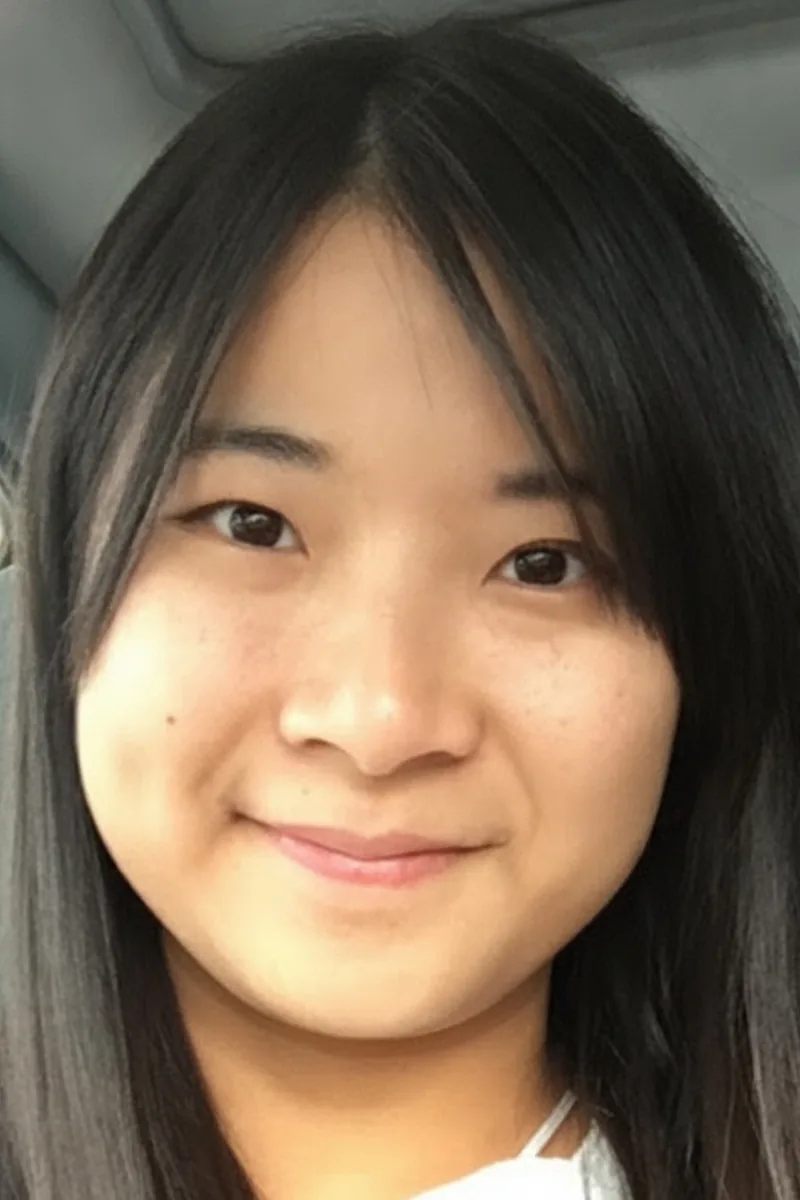
I am also fluent (reading/listening/writing) in Cantonese and mandarin Chinese because of my upbringing. Half of my childhood education was received in Hong Kong and the other half was in Australia.
I'm currently a freshman at Brown University. I will most likely triple major in Ancient Greek & Sanskrit, Latin, and Japanese. I have had lots of experience tutoring those around me, such as friends, peers, and class mates, and I have always enjoyed seeing their progress as students. My tutoring experiences include after-school assistance to those struggling in Ancient Greek at my former high school, to helping Juniors and Sophomores help ace the SAT. My specialty is language and history, with an emphasis on Japanese, English, Latin, US history and World History, but I am also more than happy to help out those struggling with Algebra and Geometry. As someone who was once an ESL student himself, I believe that a good education rests upon the ability to comprehend, interact, and apply ideas. Besides academic matters, I am also fond of running, calisthenics, and Enka music.
Linguistics training gives Andrew a structural advantage when teaching Japanese — he understands how languages build meaning differently, which matters when explaining why particles replace prepositions or why verbs land at the end of every sentence. His background in Korean and German means he's personally navigated multiple grammar systems far removed from English, and he applies that comparative instinct to make Japanese word order and conjugation feel logical rather than arbitrary.
I am a current student at the University of Vermont. I am completing two Bachelors in Linguistics and Japanese, and am a researcher for both departments. From high school to the present day I have tutored people my age and younger, and I have experience working with refugee/ELL students; I have collected 2 years of experience. Though I can tutor several subjects, I am most passionate for Japanese, and feel it is my true calling. In my experience helping those who want to learn a foreign language like Japanese, I have found that scaffolding, or building off of, your interests in film, food, literature and culture has a profound and positive effect on your learning. I love education and learning for the sake of learning, and I will soon graduate and plan to teach English in Japan; sharing language and culture is my way of helping others and the world.
Most students stall in Japanese once they move past hiragana and katakana into kanji recognition and grammatical particles like は versus が. Wahala minors in Japanese at Indiana University Bloomington and treats the language as a system to decode — connecting sentence structure, verb conjugation patterns, and cultural context so that reading and conversation reinforce each other.
Learning Japanese means juggling three writing systems, honorific levels, and grammar that works nothing like English — and Karen tackles all of it from firsthand experience using the language abroad. Whether a student is memorizing their first hundred kanji or practicing particle usage in complex sentences, she builds each lesson around practical communication skills.
Mechanical engineering at the University of Dayton doesn't obviously connect to Japanese, but Nicholas's systematic problem-solving mindset lends itself well to breaking down kanji radicals, verb conjugation groups, and particle logic into repeatable patterns. He's also genuinely social and talkative — a trait that matters more than you'd think when practicing conversational Japanese, where comfort with speaking aloud is half the battle.
I'm a student at Brown University with an eclectic set of interests. I am trilingual, analytical, and creative and look forward to tutoring you! :)
As a native Japanese speaker who has also worked professionally as an interpreter, Sonya understands both languages from the inside — the particles, sentence-final expressions, and politeness shifts that sound natural versus textbook-stiff. Her bilingual preschool volunteering sharpened her ability to explain concepts at any level, from first encounters with hiragana to nuanced keigo distinctions that even intermediate learners struggle with.
Studying Japanese as a minor at Columbia — with plans to eventually work in Japan's renewable energy sector — Shin uses the language as a living tool, not just a classroom exercise. He teaches everything from hiragana and katakana basics to intermediate grammar patterns like ~てしまう and ~ことにする, adjusting to each student's level and building real conversational confidence alongside written accuracy.
Zhaleh is actively studying Japanese at Carnegie Mellon University, which means she's navigating the same kanji memorization strategies, grammar particle distinctions, and reading comprehension challenges her students face. She breaks down tricky structures like て-form conjugations and は vs. が usage in ways that make the logic behind the language click.
I am an experienced tutor and teacher from Okinawa, Japan who recently graduated from Brown University and now lives in Brooklyn.
Cori is pursuing a Japanese minor at MIT, which means she's actively working through the grammar structures, kanji readings, and particle usage that trip up most learners. That proximity to the learning process gives her a practical sense of what sticks and what needs extra repetition.
Testimonials
Because the right Japanese tutor makes all the difference.
Average Session Rating – Based on 3.4M Learner Ratings
Nearby Japanese Tutors
Other San Antonio Tutors
Related Languages Tutors in San Antonio
Frequently Asked Questions
Your first session is an opportunity for a tutor to understand your current level, learning goals, and preferred pace. Whether you're starting from scratch or working to improve conversational fluency, the tutor will assess your strengths in reading, writing, speaking, and listening, then create a personalized plan tailored to your needs. This foundation ensures every session after builds on what works best for you.
In a typical classroom with San Antonio's average student-teacher ratio of 14.5:1, students get limited time to actually speak Japanese. Personalized 1-on-1 instruction gives you dedicated conversation practice every session—a tutor can correct your pronunciation in real time, help you think through complex sentences, and adjust the difficulty to keep you challenged but not overwhelmed. This consistent speaking practice is one of the fastest ways to build confidence and fluency.
The best approach combines both. Understanding grammar rules gives you a framework for constructing sentences correctly, while natural usage—hearing how native speakers actually speak and practicing in realistic contexts—helps you internalize patterns and develop authentic fluency. A tutor can balance these approaches, teaching you the 'why' behind grammar while also building your ear for how Japanese sounds and flows in real conversation.
Japanese verbs conjugate based on tense, politeness level, and sentence structure in ways that don't map directly to English, making them one of the trickiest parts of the language. A tutor breaks this down into manageable patterns, uses repeated practice with spaced repetition to cement them in your memory, and shows you how conjugations work in real sentences rather than just isolated drills. Over time, these patterns become automatic.
Vocabulary sticks when you encounter it multiple times in different contexts—reading it, hearing it, speaking it, and writing it. A tutor can integrate new words into conversation practice, use them in example sentences, and revisit them strategically over time rather than cramming. This approach, called spaced repetition, is backed by learning science and works far better than memorizing lists.
Absolutely. Understanding cultural context—like when to use formal versus casual speech, the significance of honorifics, or how politeness is embedded in the language—helps you use Japanese appropriately and remember it better. A tutor can weave cultural insights into lessons, explaining not just what to say but why and when to say it, which deepens both your language skills and your appreciation for the culture.
Yes—this is one of the biggest advantages of working with a tutor one-on-one. A tutor can hear exactly where your pronunciation differs from native Japanese, correct it immediately, and help you practice the specific sounds and pitch patterns that are tricky for English speakers. Regular feedback and targeted practice build muscle memory for correct pronunciation much faster than self-study.
Fluency depends on your starting point and how much you practice. According to language learning research, reaching professional proficiency in Japanese typically requires around 2,200 hours of study—but with consistent personalized tutoring combined with your own practice, you can accelerate progress and reach conversational fluency much sooner. A tutor can help you set realistic milestones and track your progress toward your specific goals.
Let’s find your perfect tutor
Answer a few quick questions. We’ll recommend the right plan and match you with a top 5% tutor.