Award-Winning Executive Functioning Tutors
serving Phoenix, AZ
Executive Functioning
Tutors in Phoenix
Private 1-on-1 tutoring, weekly live classes for academic support, test prep & enrichment, practice tests and diagnostics, and more to elevate grades and test scores.
Based on 3.4M Learner Ratings
UniversitiesSchools & Universities
DeliveredHours Delivered
ProficiencyGrowth in Proficiency
Who needs tutoring?
No obligation. Takes ~1 minute.

The best part of tutoring is promoting students' long-term success through mastery of reading, writing, math, study skills, organization, and critical thinking. In particular, I enjoy helping students build test-taking strategies and core skills for the ACT, SAT, and other admissions tests. I also support pre-K and K-12 students learning math and ELA. Before joining Varsity, I tutored in a Reading and Writing Lab for university students with learning disabilities where I earned a College Reading and Learning Association (CRLA) certification. Since joining Varsity, I have completed continuing education through the Lastinger Center for Learning. I graduated from the University of Arizona in 2021 with a BA in Cultural Anthropology. In addition to tutoring, I have worked as an instructional aide for an art program, an applied anthropology researcher, and a nonprofit program coordinator. Out of all these experiences, I enjoy tutoring the most. I look forward to working with you!
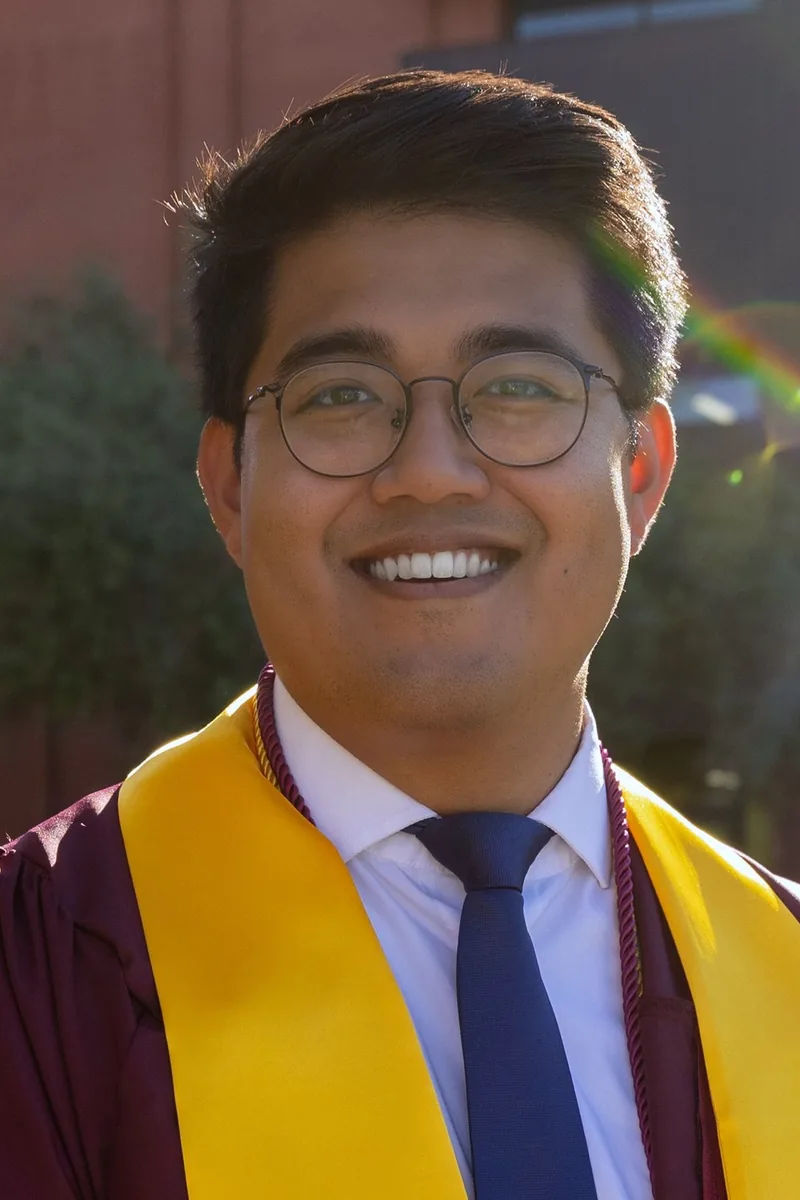
Hello! I am an Arizona State University graduate with a Bachelors of Science in Biological Science. My academic background is grounded in both technical problem-solving and a deep curiosity about how systems, whether digital or human, function. Outside the classroom, I've had the opportunity to work with students across a range of ages and abilities, from mentoring engineering and premed undergraduates at ASU to tutoring high schoolers in SAT/ACT prep, as well as K-12 students through Teach for America. I am comfortable with a range of subjects and am willing to work to meet your needs. Below are some of courses I have successfully tutored for in the past. K12 Subjects Elementary School (K5) Math (Basic Arithmetic, Word Problems) Reading & Phonics Writing & Grammar Science Social Studies Study & Organization Skills Middle School (68) Pre-Algebra Algebra I General Science (Life, Earth, Physical) English Language Arts (Reading, Writing) U.S. History & World History Intro to Coding / Computer Science High School (912) Algebra I & II Geometry Trigonometry Pre-Calculus Calculus AB/BC Biology (General, Honors) Chemistry (General, Honors) Physics (Conceptual, Algebra-Based) English Literature & Composition Essay Writing & Editing U.S. History & World History Psychology Economics & Government Health / Human Development Ethics / Philosophy Study Skills / Test Prep Standardized Test Prep SAT: Math, Reading, Writing & Language, Essay ACT: Math, Science, English, Reading, Essay PSAT MCAT (Content review & strategy) TOEFL / ESL (Certified ESL experience) AP Subjects AP Biology AP Chemistry AP Physics 1 AP Environmental Science AP Calculus AB AP Statistics AP English Language and Composition AP English Literature and Composition AP Psychology AP U.S. History AP World History AP U.S. Government & Politics AP Human Geography AP Macroeconomics / Microeconomics AP Computer Science Principles AP Seminar / Research College-Level Subjects STEM & Premed General Biology I & II Cell Biology Genetics Human Anatomy & Physiology General Chemistry I & II Organic Chemistry I & II Biochemistry Physics I & II (Algebra-Based) Calculus I & II Statistics (Introductory / Biostats) Humanities & Social Sciences Intro to Psychology Intro to Sociology Scientific Writing & Critical Thinking Medical Ethics Bioethics Philosophy of Science / Biology Research Writing & Academic Essays Business & Economics Intro to Macroeconomics Intro to Microeconomics Principles of Finance Financial Literacy / Budgeting Basics
Breaking large assignments into sequenced steps, building weekly planning routines, managing deadlines across multiple classes — Manuel tackles the organizational side of academics that often goes untaught. His structured approach to executive functioning gives students concrete systems they actually use, not just advice to "stay organized." Rated 5.0 by students.
Claire teaches concrete systems — color-coded planners, task-chunking methods, priority matrices — rather than vague advice about "staying organized." Her background across a wide range of academic subjects means she can tailor these executive functioning strategies to whatever coursework a student is actually struggling to manage, from essay deadlines to exam prep schedules.
Planning a multi-step essay, breaking a semester-long project into weekly milestones, keeping track of deadlines across six classes — these are executive functioning challenges Gabby addresses directly. Her five-plus years as a tutor and writing coach have centered on building concrete systems for organization, time management, and task prioritization that students can actually maintain on their own.
I've helped several hundred students in a wide variety of subjects, from executive functioning to computer science to standardized testing. I also help students with general support in math and English. Most of my students are around 9-17, but I work well with students who are older and a little younger as well. I also work very well with students who have specific obstacles or requirements, such as neurodiversity support or schedules that change a lot. Most of my background is in computer science, from my college major to my experience hands-on over the past 10 years. Regardless of the subject, I believe every student's needs are unique and every student is able to achieve great things with the right preparation and support. My number one goal is to provide that whenever I can, both to the student and to their parents. I communicate with parents outside of sessions a lot to establish their expectations, better understand students, and recommend ways they can directly support their children in their journey as well.
I hold a Master's degree from the University of Pennsylvania in developmental psychology (with a focus on cognition) and a B.A. from Swarthmore College in theatre and English. I enjoy working with students who are looking to improve their executive function skills as a part of their overall goals for tutoring because I believe in a whole-self approach to time management and skill building. I also thoroughly enjoy tutoring in English literature, high school and college writing, organizational skills, and standardized testing. I've spent 15 years teaching high school English, public speaking, and written expression at elite independent schools, while moonlighting as a public speaking coach. My professional experience includes providing speechwriting and coaching for a now-US Senator during his first congressional campaign. Prior to becoming a teacher, I worked as a director for multiple professional theaters, and my passions for English and Theatre converge in a deep love of Shakespeare. I love to talk about literature and dissect its craft in writing, and I believe everyone can write strong essays with the right coaching and framework.
Planning, prioritizing, managing time, and shifting between tasks — these executive functioning skills underpin academic success but rarely get taught explicitly. Derek tackles them as teachable skills, building concrete systems like task checklists, color-coded planners, and structured routines that students internalize over time. His doctorate focused on how curriculum design shapes learning behavior, which gives him a research-grounded toolkit for strengthening these cognitive habits.
Jennifer's teaching spans everything from elementary math to college essays to business courses, which means she's constantly adapting how she structures sessions for students at very different developmental stages — a skill that translates directly into coaching executive functioning. She zeroes in on the specific habits a student is missing, whether that's learning to estimate how long a reading assignment will actually take or building a consistent workflow for managing multiple classes at once. Her background in study skills and organization gives her concrete strategies rather than vague advice about "trying harder."
A PhD in philosophy trains you to hold complex arguments in your head, sequence multi-part proofs, and manage long-term research without external scaffolding — Christine now unpacks those same cognitive skills for students who struggle with planning, task initiation, and self-monitoring. Her breadth across math, writing, and business subjects means she can embed executive functioning strategies directly into whatever assignment a student is actually stuck on, whether it's a geometry problem set or a college essay draft.
All students can learn, however, not all students learn the same way. The key to learning and the most important part of any teachers job is helping students understand how they learn best. That is what I do well.
Planning, prioritizing, managing time, shifting between tasks — these are the invisible skills that school demands but rarely teaches outright. Elise breaks executive functioning into concrete, practicable habits: using checklists to start assignments, setting timers to maintain focus, and building routines for organizing materials. Her special education training means she understands the neurological side of these challenges, not just the behavioral one.
Planning, prioritizing, starting tasks, managing time — executive functioning skills don't come naturally to every student, and they're rarely taught explicitly in school. Hannah's Special Education program at Purdue trained her in scaffolding these skills through structured routines, visual organizers, and self-regulation strategies. She builds systems that students internalize gradually rather than depend on forever.
Planning, prioritizing, and self-monitoring don't come naturally to every student — they're skills that can be explicitly taught. Cristiana breaks executive functioning into concrete habits: using checklists to initiate tasks, time-blocking to manage sustained attention, and post-session reflections to build self-awareness about what strategies are working. Her own experience managing a demanding dual-major course load gives her practical techniques to share, not just theory.
Testimonials
Because the right Executive Functioning tutor makes all the difference.
Average Session Rating – Based on 3.4M Learner Ratings
Other Phoenix Tutors
Frequently Asked Questions
Executive functioning skills develop progressively throughout a student's academic career. In elementary school, students typically focus on foundational skills like following multi-step directions, organizing materials, and managing time for simple tasks. By middle school, expectations expand to include planning longer projects, breaking assignments into steps, and managing multiple deadlines. High school students are expected to juggle complex schedules, prioritize competing demands, and independently monitor their progress on major projects.
With Phoenix's 17.6:1 student-teacher ratio across the district, classroom teachers often have limited time for individualized support with these skills. Personalized instruction can help students master grade-level expectations through targeted practice tailored to their specific gaps.
Classroom teachers must address executive functioning within the context of content instruction and larger class sizes, which limits individualized feedback. Personalized 1-on-1 instruction allows tutors to focus entirely on how a student thinks, plans, and manages tasks—identifying specific barriers and building skills through real-time coaching.
This approach includes modeling strategies with the student's actual assignments, practicing organizational systems that fit their learning style, and adjusting techniques immediately based on what's working. Students also benefit from frequent, specific feedback that helps them internalize these skills more deeply than classroom settings typically allow.
Executive functioning struggles often appear as procrastination, difficulty starting assignments, losing track of materials or deadlines, trouble breaking large projects into manageable pieces, and difficulty shifting between tasks. Students may also struggle with working memory—holding multiple pieces of information while completing a task—or with emotional regulation when facing challenging work.
Many bright students in Phoenix's schools develop coping strategies that work temporarily but become overwhelmed when academic demands increase, particularly during transitions to middle or high school. Personalized instruction can help students build sustainable systems and metacognitive awareness so they understand their own thinking patterns and can self-monitor more effectively.
Executive functioning skills are absolutely developable—they're not fixed traits. Research in learning science shows that with consistent practice and explicit instruction, students can strengthen working memory, improve planning abilities, and develop stronger self-monitoring habits. These improvements often transfer across multiple areas of life, from academics to extracurriculars to personal responsibilities.
The key is targeted, personalized practice with real feedback. Tutors can work with a student using their own schoolwork, helping them practice executive functioning skills in context while building confidence and independence over time.
Many students notice improvements in organization and time management within 2-4 weeks of consistent personalized instruction, especially when working with real assignments. Deeper changes—like automatic use of planning strategies or sustainable habit formation—typically develop over 8-12 weeks as students practice skills repeatedly across different situations.
The timeline depends on the student's starting point and frequency of tutoring sessions. Regular sessions (1-2 per week) generally show faster progress than sporadic support, because executive functioning skills improve through repeated practice and reinforcement, similar to other academic skills.
Yes—many high-performing students have underlying executive functioning challenges that aren't yet obvious because they haven't hit their academic ceiling. A student might maintain good grades through sheer effort and anxiety, spending hours on assignments that should take 30 minutes, or pulling all-nighters when organized planning would prevent this.
Personalized instruction in executive functioning serves as preventative support, helping students build efficiency and reduce stress before they reach a breaking point. This is especially valuable in Phoenix's competitive schools, where students often face increased demands in honors, AP, and dual-enrollment courses.
Varsity Tutors connects students with tutors who specialize in executive functioning and understand how to coach students through planning, organization, and self-management. When you get matched with a tutor, you can discuss your student's specific challenges—whether that's project management, daily organization, time management, or emotional regulation during homework—so the tutor tailors their approach.
The best tutors combine practical strategies with metacognitive coaching, helping students understand their own thinking patterns and develop independence rather than becoming dependent on external systems. Your tutor can work with your student's actual school assignments and responsibilities, making the skills immediately applicable.
Let’s find your perfect tutor
Answer a few quick questions. We’ll recommend the right plan and match you with a top 5% tutor.