Award-Winning College Physics Tutors
serving Tucson, AZ
College Physics
Tutors in Tucson
Private 1-on-1 tutoring, weekly live classes for academic support, test prep & enrichment, practice tests and diagnostics, and more to elevate grades and test scores.
Based on 3.4M Learner Ratings
UniversitiesSchools & Universities
DeliveredHours Delivered
ProficiencyGrowth in Proficiency
Who needs tutoring?
No obligation. Takes ~1 minute.
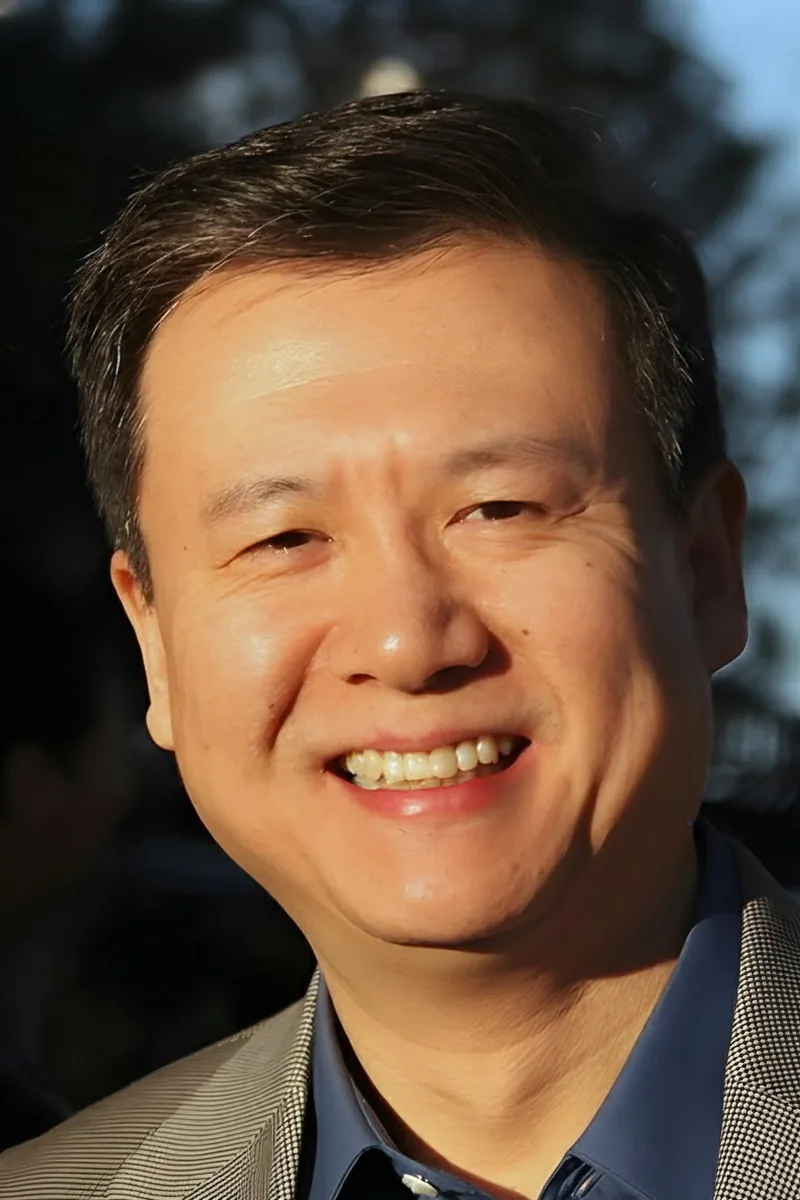
Twenty-five years of engineering work means Tim hasn't just solved college physics problems — he's built systems where getting the physics wrong had real consequences, from electromagnetic interference in circuit designs to thermal management in hardware. His B.S. in Physics gives him the theoretical backbone, while decades of applied work sharpen his ability to walk students through the calculus-heavy portions of mechanics and E&M with concrete, practical intuition behind every derivation.

Before pivoting to tech and co-founding a SaaS company, John earned a 1490 SAT largely on the strength of his quantitative reasoning — the same skill that carries students through force diagrams, energy conservation setups, and the vector math that makes college physics problems click. His law training also sharpened a habit of building arguments step by step, which translates surprisingly well to structuring multi-part physics solutions where one wrong assumption cascades through everything. Rated 5.0 by students.
Cadaver labs, organic chemistry TA sections, and a full medical school curriculum at Creighton — Elise has encountered college physics concepts embedded in every stage of her training, from force vectors in gross anatomy to fluid dynamics in cardiovascular physiology. That medical lens makes her particularly effective at teaching mechanics, waves, and thermodynamics to pre-med students who need to understand the physics inside the biology. Rated 4.9 by students.
Chemical engineering coursework at ASU Barrett is essentially college physics with the volume turned up — fluid mechanics, heat transfer, thermodynamics, and transport phenomena all demand the same calculus-based reasoning that fills introductory physics problem sets. Alex tackles those overlapping concepts daily as a grad student, which means he can walk through force balances, energy conservation, and pressure-driven systems with the fluency of someone who actually uses them. Rated 5.0 by students.
I am Arizona born and raised, my education includes an NYC law school degree with an undergraduate BS degree from University of Miami. In college I majored in Health Sciences with minors in Psychology and Public Health while in law school I leaned into corporate law and finance. Between law school and college I've pretty much covered every topic under the sun! In my spare time, I enjoy reading (especially mystery novels), pretending I'm a chef, and meditating.
Building high-powered lab lasers as a hobby — aligning optics, designing driver circuits, managing thermal dissipation — means Sam regularly applies the same physics that fills college problem sets, from electromagnetic wave behavior to circuit theory to heat transfer. His dual bachelor's in physics and mathematics gives him the formal grounding to walk through calculus-heavy derivations while keeping the physical intuition front and center. Holds a 5.0 rating.
Gordon's biology degree from Arizona State required the full algebra-based physics sequence — mechanics, thermodynamics, waves, electromagnetism — which means he tackled these courses alongside the same premed and life-science students he now tutors. That shared experience makes him particularly good at spotting where conceptual gaps hide, especially in topics like energy conservation and fluid dynamics where students often grab the right formula but set up the problem wrong. His additional comfort with calculus through BC level lets him bridge the gap when courses shift from algebra-based to calculus-based reasoning.
Few college physics tutors have launched their careers programming trajectory models for NASA's Cassini and Galileo missions. Chris brings that applied astrophysics background — plus a University of Arizona degree in the field — to topics like electromagnetism, thermodynamics, and classical mechanics. He connects textbook derivations to how they're actually used in research, which makes dense material far more intuitive.
Designing houses for a living means Aaron thinks in forces, loads, and material behavior every day — the same physics principles that show up in college mechanics and thermodynamics problem sets, just applied to beams, foundations, and thermal envelopes instead of textbook blocks on ramps. His architectural engineering degree grounds his teaching in physical intuition, so he walks students through why a free-body diagram should look a certain way before they ever touch an equation. Rated 5.0 by students.
Pursuing dual degrees in physics and mathematics at Emory gives Yurok the unusual ability to teach the physics and the underlying calculus as a single coherent language — so when a problem requires setting up a line integral for a magnetic field or deriving equations of motion from energy methods, he doesn't skip the math or treat it as a separate obstacle. He's tutored extensively at both the AP and college level, and his 4.9 rating suggests students leave sessions with sharper problem-solving instincts, not just worked examples to mimic.
Mechanical engineering coursework at Arizona State is essentially college physics on repeat — Nitesh has solved force equilibrium problems, worked through thermodynamic cycles, and applied fluid dynamics principles semester after semester in contexts that demand real understanding, not just formula substitution. He's particularly strong at walking through free-body diagrams and energy methods, breaking multi-step mechanics problems into clear, sequential reasoning. Rated 4.9 by students.
Every circuit Ajay designed during his electrical engineering degree started with the same physics — Kirchhoff's laws, Ohm's law, electromagnetic induction — so when college physics courses hit electricity and magnetism, he's working from years of hands-on application rather than textbook familiarity alone. He also brings strong mechanics fundamentals and a 1590 SAT that speaks to his quantitative precision, making him effective across the full range of calculus-based physics topics.
Geology is essentially physics applied to the Earth — wave propagation through rock layers, gravitational field modeling, fluid dynamics in groundwater systems — so Paul's geological sciences degree gave him hands-on experience with the mechanics and thermodynamics concepts that fill college physics problem sets. He breaks down force diagrams and energy conservation problems by connecting them to physical scenarios he's actually worked through, which makes abstract setups feel more concrete.
Being midway through medical school means Hanna is actively applying physics to the human body — pressure gradients in blood flow, lever mechanics in the musculoskeletal system, optics in clinical imaging — which keeps these concepts vivid rather than dusty. Her premed coursework at Arizona State covered the full calculus-based sequence, and her tutoring background through differential equations means she's comfortable walking through the math-heavy derivations that make or break a problem set. Rated 5.0 by students.
A biochemistry degree means Charles has already worked through the physics that underpins molecular behavior — thermodynamics governing reaction spontaneity, electrostatics driving protein folding, and fluid dynamics in biological systems. He leans on that applied context to make college physics problems feel less abstract, walking students through force diagrams and energy calculations with concrete examples rather than isolated equations.
College-level physics demands more than plugging numbers into formulas; it requires setting up problems from scratch using calculus-based reasoning. Arpita's pre-med track at Emory put her through rigorous physics coursework alongside organic chemistry and biology, so she understands how to connect mathematical tools like integration and vector decomposition to physical scenarios in mechanics and electromagnetism. She's earned a 5.0 rating teaching science at this level.
Hi, I recently earned my Ph.D. in Organic Chemistry from Purdue University and have entered the private sector. In my program, I found that teaching and instructing students was very enjoyable and I wish to continue that by being a tutor. I have been a successful tutor for over a decade and know how to instruct to a variety of different skill sets and learning abilities.
College-level physics ramps up quickly, and Maurice's strength across calculus, trigonometry, and statistics means he can keep pace with courses that integrate heavy math into topics like electromagnetic fields, oscillatory motion, and thermodynamic processes. He walks through derivations step by step, making sure students understand the reasoning behind each line rather than just copying solutions. His adaptive teaching style — shaped by graduate work in Special Education — translates well to the varied demands of university coursework.
Aerospace engineering at Georgia Tech means Naveen's entire curriculum runs on physics — orbital mechanics, fluid dynamics, thermodynamics, structural loads — so the concepts in a college physics course are tools he uses in his own coursework every week. He's particularly strong at breaking down force and motion problems by walking through free-body diagrams step by step, making sure the physical picture is clear before any math starts.
A mechanical engineering degree means Daniel didn't just take college physics — he spent four years applying it, from free-body diagrams in statics to heat transfer in thermodynamics to stress analysis in materials science. He breaks down calculus-based problems by starting with the physical intuition behind them, so students learn to reason through a scenario before defaulting to equation sheets. His 34 ACT reflects the kind of quantitative sharpness that keeps up with fast-paced, problem-heavy physics courses.
Pursuing a dual degree in biology and history at the University of Houston, Pooja regularly encounters physics in biological contexts — fluid dynamics in circulatory systems, optics in microscopy, and energy transfer in metabolic processes — which gives her a practical anchor for the concepts that often feel purely abstract in a lecture hall. She's especially attentive to the problem-setup phase, teaching students to sketch the scenario and identify governing principles before jumping to equations. Rated 5.0 by students.
Co-teaching an organic chemistry lab at UC Berkeley meant Yuxuan regularly explained physical concepts — heat transfer in reflux setups, pressure changes during distillations, light absorption in spectroscopy — to students who needed the physics to make sense right then, not just on an exam. That biochemistry foundation gives her a practical grip on thermodynamics, optics, and fluid behavior that translates directly to college physics problem sets. Rated 4.9 by students.
Pre-med students often hit a wall in college physics because the course feels disconnected from the biology they actually care about — Musa bridges that gap, drawing on his biological sciences degree at ASU to tie concepts like fluid dynamics to circulatory systems or wave behavior to diagnostic imaging. His year at ASU's tutoring center means he's seen where physics students get stuck repeatedly, especially on force diagrams and energy conservation problems, and he's built clear explanations around those exact sticking points. Rated 5.0 by students.
Statics, dynamics, and structural loading aren't textbook abstractions for Emeka — they're the core of his civil engineering degree from the University of Pittsburgh and his daily work as a practicing architect and engineer. That professional fluency means he can walk students through force equilibrium, stress-strain relationships, and energy methods with real structural examples that make the physics stick. Rated 5.0 by students.
Studying biophysics at Rice means Aadith lives where physics and biology collide — modeling protein folding forces, analyzing fluid flow through membranes, applying thermodynamic principles to living systems — so he brings a concrete, research-informed perspective to the mechanics, waves, and electromagnetism that fill college physics syllabi. His 1590 SAT reflects serious quantitative chops, and his dual exposure to physics and biochemistry means he can walk through a tough problem from multiple angles until the reasoning clicks.
Biomedical engineering at VCU meant Waleed spent years applying physics to biological systems — modeling forces on prosthetic joints, analyzing fluid flow through vessels, understanding the electromagnetic principles behind imaging equipment like MRI and ultrasound. That gives him a concrete hook for the mechanics, thermodynamics, and E&M topics that fill college physics problem sets, since he can ground abstract equations in systems students can actually picture. Holds a 5.0 rating.
Three physics-related bachelor's degrees give Avram an unusually deep undergraduate perspective on the subject — he's worked through mechanics, electromagnetism, and modern physics multiple times across different programs, which means he knows exactly where the conceptual gaps tend to hide. He breaks down wave phenomena and optics problems by connecting the math back to physical intuition, so equations feel like descriptions of real behavior rather than symbols to manipulate. His 1520 SAT reflects the quantitative precision he brings to problem solving.
A computer science degree from UCLA means Michael spent semesters deep in the physics that underpins simulation and graphics — kinematics, force modeling, energy systems — and his 1560 SAT confirms the quantitative chops to handle calculus-based problem solving. He teaches students to treat each physics problem like debugging code: isolate what you know, identify the governing principle, then execute step by step until the answer falls out.
College-level physics layers calculus and more rigorous problem-solving onto the conceptual foundations from high school, and Samantha's Cornell science background means she's fluent in both the math and the theory. She breaks down topics like rotational dynamics, electric fields, and thermodynamic cycles using visual models and step-by-step dimensional analysis that keep the problem-solving process clear.
Two physics degrees — a B.S. and a PhD — mean Zhengdong has worked through every layer of the college physics sequence, from introductory Newtonian mechanics all the way to quantum theory and advanced electrodynamics. He's particularly effective at teaching students to translate a physical scenario into the right mathematical framework, whether that's setting up free-body diagrams in mechanics or applying Gauss's law to symmetric charge distributions. Rated 4.8 by students.
Molecular biology might seem like a different world from physics, but Agustin's coursework lives in the overlap — diffusion equations, fluid dynamics in cellular transport, and the thermodynamics behind protein folding all demand real physics fluency. He pairs that life-sciences perspective with strong quantitative chops (1560 SAT) to break down mechanics and energy problems in ways that click for students who think more naturally in biological terms than abstract force diagrams.
Chemical engineering at Vanderbilt means Greg solves physics problems daily — fluid mechanics, heat transfer, thermodynamics, and force balances are baked into every core course, so his explanations come from repeated, hands-on application rather than textbook summaries. His math double major gives him the calculus fluency to walk through derivations cleanly, especially when problems involve integration over continuous systems or solving second-order differential equations of motion. Rated 5.0 by students.
Running an immunology lab at Columbia University Medical Center means Matthew applies physics daily in ways most tutors haven't — calibrating imaging equipment, analyzing force and pressure data in tissue samples, and troubleshooting instruments that depend on optics and electromagnetism. That hands-on fluency, combined with a physics degree and a 35 ACT, lets him teach college-level mechanics and E&M problems by connecting equations to the physical systems they actually describe.
Environmental engineering is essentially physics with consequences — Kate's master's work required her to model fluid flow, heat transfer, and pressure systems in real infrastructure, which means she's solved the same types of problems that show up on college physics exams but with actual design constraints attached. That applied perspective makes her particularly effective at teaching students to set up force balances and energy equations from a physical scenario rather than reverse-engineering from a formula sheet. Rated 4.9 by students.
Three science-focused bachelor's degrees — including biology — meant Garrett sat through the full calculus-based physics sequence and kept coming back to it in physiology and physical chemistry, where concepts like fluid dynamics, pressure gradients, and energy transfer show up again and again. That repeated exposure across disciplines gives him an intuitive feel for when to apply conservation of energy versus momentum, or how to reason through a thermodynamics problem without getting lost in the formalism. His 1530 SAT speaks to the quantitative sharpness he brings to each session.
When a college physics problem looks like pure abstraction — a block on a frictionless ramp, a charge in a uniform field — Dylan's instinct is to sketch it out, graph it, and show what's physically happening before touching an equation. That visual, graphical approach comes from his physics major at Vanderbilt, where he's simultaneously studying classics and computer science, giving him an unusual ability to translate dense quantitative reasoning into clear, intuitive language. He holds a 4.5 rating and a 36 ACT composite.
Testimonials
Because the right College Physics tutor makes all the difference.
Average Session Rating – Based on 3.4M Learner Ratings
Other Tucson Tutors
Related Science Tutors in Tucson
Frequently Asked Questions
College Physics students often struggle with translating abstract concepts—like forces, energy, and electromagnetic fields—into concrete mental models. Beyond conceptual understanding, many find unit conversions, vector mathematics, and problem-solving strategies challenging. Personalized tutoring helps bridge the gap between memorizing formulas and truly understanding the physics principles behind them, which is essential for success in both coursework and standardized exams.
Expert tutors help you understand the scientific method, design experiments, and interpret results—not just complete lab reports. They can clarify how theoretical concepts connect to what you're observing in the lab, help you troubleshoot experimental procedures, and develop stronger scientific reasoning skills. This deeper understanding makes lab work more meaningful and improves your ability to apply physics to real-world situations.
Your first session focuses on understanding your current level, identifying specific challenges (whether it's kinematics, thermodynamics, or problem-solving strategies), and learning your preferred learning style. The tutor will assess which concepts need reinforcement and create a personalized plan tailored to your goals—whether that's improving your grade, preparing for an exam, or building confidence with difficult topics. This foundation ensures every session after that is highly targeted and efficient.
Many College Physics concepts—like electric fields, wave behavior, and orbital mechanics—are difficult to visualize. Expert tutors use diagrams, analogies, real-world examples, and interactive explanations to help you build mental models of these abstract ideas. When you can visualize what's happening, problem-solving becomes much more intuitive, and you're less likely to rely on memorization alone.
Absolutely. Many students know physics concepts but struggle with applying them to novel problems. Tutors teach systematic problem-solving strategies—like identifying what you know, choosing the right equations, checking units, and verifying your answer makes physical sense. With personalized instruction, you'll develop the analytical thinking skills that transfer across different problem types and course levels.
Varsity Tutors connects you with tutors who have strong backgrounds in physics—often with degrees in physics, engineering, or related fields, and proven experience teaching college-level material. They understand both the content and the common misconceptions students have, allowing them to explain difficult concepts clearly and adapt their teaching to your learning style.
Tutors help you identify weak areas, practice problem-solving under timed conditions, review key concepts, and develop test-taking strategies specific to physics exams. Rather than cramming formulas, you'll focus on deep understanding and application—which leads to better retention and stronger exam performance. Many students find that consistent tutoring throughout the semester prevents last-minute panic and builds genuine confidence.
Getting matched with a tutor is straightforward—you'll tell us about your College Physics course, your goals, and your schedule, and we'll connect you with an expert tutor who fits your needs. From there, you can arrange sessions that work for you and begin personalized instruction right away. Most students see improvement in both understanding and grades within a few weeks of consistent tutoring.
Let’s find your perfect tutor
Answer a few quick questions. We’ll recommend the right plan and match you with a top 5% tutor.