Award-Winning AP Calculus AB Tutors
serving Tucson, AZ
AP Calculus AB
Tutors in Tucson
Private 1-on-1 tutoring, weekly live classes for academic support, test prep & enrichment, practice tests and diagnostics, and more to elevate grades and test scores.
Based on 3.4M Learner Ratings
UniversitiesSchools & Universities
DeliveredHours Delivered
ProficiencyGrowth in Proficiency
Who needs tutoring?
No obligation. Takes ~1 minute.

I have been a tutor for over five years. I enjoy helping others to learn the subjects that I believe I am proficient enough to teach. I offer tutoring in calculus, physics, and computer science. While I aim to help my students understand a concept, the motivation to improve and learn must come from them. I will do my best to inspire such a mentality.
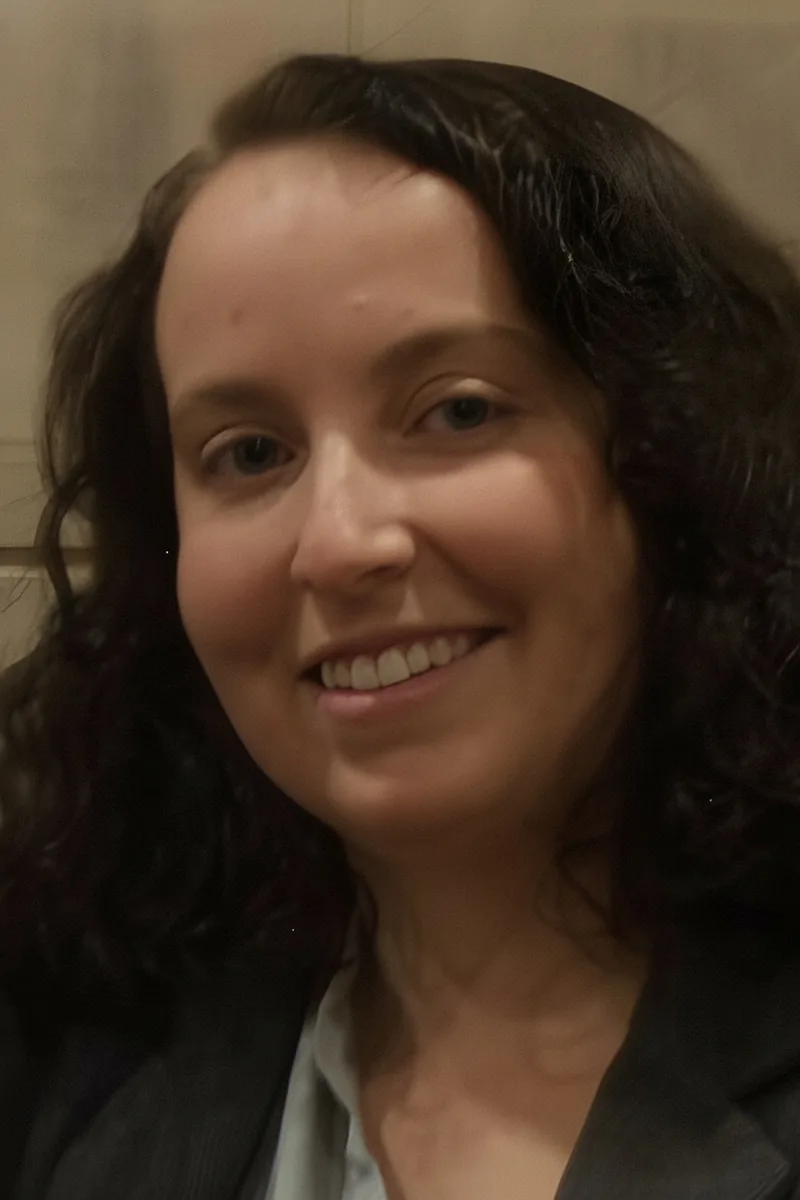
Kristi calls calculus her favorite subject to teach, and her AP Calculus AB sessions zero in on building real intuition for limits, derivatives, and the meaning behind the Fundamental Theorem — not just memorizing formulas for the exam. Her dual astrophysics degree from Harvard means she can show students how these tools actually describe the physical world, from rates of change to accumulation problems.
The leap from memorizing derivative rules to applying them — related rates, optimization, interpreting accumulation functions — is where most AB students stall. Jake teaches each application type as its own problem-solving framework, giving students a reliable way to set up problems before they ever touch the calculus. His 4.9 rating speaks to how well that structured approach clicks.
Gordon treats AP Calculus AB as a course built on two big ideas — limits that become derivatives, and derivatives that lead to integrals — rather than a disconnected set of rules to memorize. His approach to related rates and accumulation problems draws on the applied math he used throughout his biology degree at Arizona State. Students come away understanding why the chain rule works, not just when to use it.
Hello! I'm Alexis Kelley! In Louisiana, I have begun volunteering with Baton Rouge Youth Coalition where I help senior students complete the college application process from finding fit to writing essays. Having just recently gone through this process and successfully navigating elite admissions like Columbia, Cornell, and Duke I feel equipped (and excited!) to share my advice. Whether this looks like help putting your story into words on the common application essay or determining the best colleges to apply to, I would love to be a part of this process. All through high school I was a math tutor ranging in topics from basic elementary math to AP Calculus! I really enjoy teaching math (especially algebra and calculus!!). I would also be more than happy to help with any standardized testing prep. I want to help students reach their maximum potential and achieve the target scores they're looking for! I am super eager to meet you and get started!
Holding dual degrees in physics and mathematics, Sam attacks AB topics like limits, continuity, and the Fundamental Theorem from both the rigorous proof side and the applied side — knowing why a theorem is true and seeing it govern real physical behavior. That combination is especially useful when students hit the conceptual free-response questions where procedural fluency alone isn't enough to set up the problem correctly. Rated 5.0 by students, with a 1510 SAT reinforcing the quantitative precision behind his explanations.
Hi! I'm a STEM, SAT/ACT, and language tutor with over a decade of teaching and tutoring experience. I have tutored students in every grade level in K-12 and first and second year college students. I mainly teach Math, Science, Physics, Hindi, English, French, ACT (35 score), and SAT (1560 score), and other subjects upon request.
Having completed coursework through Calculus 3, differential equations, and linear algebra, Christopher brings depth that lets him explain AP Calculus AB concepts — limits, derivatives, integrals — in the context of where they lead, not just what's on the exam. He breaks down tricky applications like related rates and accumulation functions by connecting them to intuitive, real-world reasoning.
The leap from memorizing derivative rules to actually reasoning through related rates or accumulation problems is where most AP Calculus AB students stall. Yurok breaks these problems into physical stories — shrinking shadows, filling tanks — drawing on his physics background to make abstract calculus feel concrete and solvable.
The jump from Pre-Calc to AP Calculus AB trips up students who memorized formulas but never built a mental picture of what a derivative represents. Lindsay tackles this by connecting rate-of-change problems to real scenarios from her biology background — population growth, reaction rates, fluid dynamics — so that concepts like the chain rule and Riemann sums feel concrete rather than abstract. Her math minor at the University of Arizona kept her deep in calculus coursework well beyond the AP level.
Mechanical engineering coursework at Arizona State doesn't let you fake your way through calculus — Nitesh has worked derivatives and integrals into stress analyses, kinematics problems, and thermodynamic models where a wrong setup means a wrong answer, full stop. That engineering rigor pays off most when teaching AB students how to handle the exam's optimization and accumulation problems, where building the right mathematical model from a word problem is the entire challenge. Rated 4.9 by students.
Aerospace engineering at Georgia Tech is essentially calculus with wings — Naveen's coursework applies derivatives to model flight dynamics and integrals to compute lift and thrust, so the AB curriculum's core concepts map onto problems he solves routinely. He's particularly effective at teaching the limit definition and continuity concepts that trip students up early, since getting those right determines whether the rest of the course feels intuitive or like a guessing game. His 35 ACT and 1570 SAT back up the quantitative precision behind his explanations.
When I was in high school, I remember seeing the joy of my math teachers when they would teach in class. This inspired me to become a high school math teacher. The first step was becoming a peer tutor to my classmates. This lead to tutoring math to college students. Then tutoring students while working as a TA. Then I worked as a data scientist which not only did I understand more how to apply math in the workspace, but also learned how to explain math concepts to coworkers without a strong math background. This helped me to shape my tutoring philosophy to relate to the person being tutored and this opened the door to me teaching high school calculus 1 & calculus 2! I am currently teaching precalculus at a community college.
The jump from "find the derivative" to "explain what the derivative means in context" is where most AP Calculus AB students lose points on free-response questions. Yuxuan breaks down limits, the chain rule, and accumulation functions by tying each concept back to its graphical and physical interpretation, drawing on the applied math she uses daily in her UC Berkeley science coursework.
Limits, derivatives, and integrals each represent a genuinely new way of thinking about functions, and rushing past the conceptual shift is where most AP Calc AB students get stuck. Aaron's pure math training at Rice means he can explain why the chain rule works or what a Riemann sum actually measures, then connect that understanding to the kinds of free-response problems the AP exam throws at students. He holds a 4.9 client rating.
Jack earned a 5.0 rating teaching AP Calculus AB by breaking the course into two core skills: understanding what derivatives and integrals actually mean, and learning the mechanical rules for computing them. His engineering background at ASU keeps him using this math daily, so he can pull in concrete examples — rates of change in structures, optimization of real quantities — that make abstract ideas tangible.
I hold a B.S. in Mathematics from Arizona State University and bring over a decade of professional experience to university-level mathematics instruction. As a CRLA Certified educator tutoring since 2013, my methodology focuses on building a rigorous conceptual understanding of the mathematical architecture rather than relying on rote memorization. I specialize in dismantling complex gatekeeper courses, including Calculus, Differential Equations, Discrete Mathematics, Finite Mathematics, and Statistics. When students hit a wall in these advanced subjects, it is rarely a lack of effort. It is almost always a breakdown in foundational logic. My remote sessions utilize a premium digital whiteboard workflow to meticulously map out exact logical pathways and repair these foundational gaps. This first-principles approach rebuilds analytical independence and guarantees absolute precision for engineering, business, and advanced science applications.
The jump from pre-calc to AP Calculus AB trips up students who memorized trig identities and function rules without understanding why they work. Kerr rebuilds that foundation by unpacking derivatives and integrals as ideas — rates of change and accumulated quantities — before drilling the mechanics of chain rules and Riemann sums. Rated 4.9 by students, he brings a concept-first approach shaped by his quantitative coursework at Vanderbilt.
Cognitive science at Northwestern taught Amanda to think about how people learn — and she applies that lens to the specific moments in AB Calculus where understanding collapses, like the jump from computing a derivative mechanically to interpreting what it means on a free-response question. Her 36 ACT and prior experience tutoring math at Mathnasium mean the computational side is second nature, freeing her to zero in on the conceptual gaps that actually cost students points. She's especially effective at teaching limits and continuity as a coherent story rather than disconnected epsilon-delta exercises.
Teaching calculus at Harvard as a Course Assistant gives Sanjana a front-row seat to the mistakes students make most often — and the explanations that actually click. She breaks down AB topics like related rates, the Fundamental Theorem, and integration techniques by connecting each one back to the graphical intuition behind it.
Limits, derivatives, and integrals become far more intuitive when a student sees why they matter, not just how to compute them. Dennis's physics background means he can ground every AB Calculus concept — from the chain rule to Riemann sums — in tangible problems involving motion, area, and rates of change.
Limits, derivatives, and integrals each build on the last, so a shaky understanding of one topic creates problems that compound through the entire AP Calculus AB curriculum. Alex's applied math background at Stanford keeps him immersed in calculus daily, and he teaches the chain rule, related rates, and accumulation functions by tying abstract procedures to the reasoning behind them. Rated 4.8 by students.
The moment AB Calculus shifts from "find the derivative" to "interpret what the derivative means in context," many students lose their footing. Vinson tackles that gap head-on — connecting limits, Riemann sums, and the Fundamental Theorem to their graphical and real-world meanings. His applied math studies at Rice keep him immersed in exactly this kind of conceptual reasoning every day.
The jump from memorizing derivative rules to actually applying them — related rates, optimization, accumulation functions — is where most AP Calc AB students stall. Joshitha teaches problem-solving frameworks that make it clear which technique fits which scenario, so students aren't guessing on free-response questions. Rated 5.0 by her students.
Limits, derivatives, and integrals each build on the last, so one shaky concept can snowball through the entire AP Calculus AB curriculum. Annie breaks down each idea with concrete visual intuition — what a derivative actually means on a graph, why the chain rule works the way it does — drawing on the rigorous calculus sequence she completed as a biomedical engineering major at Cornell. Rated 4.9 by students.
Limits, derivatives, and integrals each build on the last, so a shaky grasp of one topic can snowball fast in AP Calculus AB. Aidan tackles this by connecting each new concept back to its geometric meaning — showing, for example, why the derivative is a slope before diving into differentiation rules. His 1540 SAT and 35 ACT reflect the kind of precision he brings to exam preparation.
Limits, derivatives, and the fundamental theorem of calculus click faster when a student sees how they connect — not just how to compute them in isolation. Nicholas approaches AP Calculus AB by building intuition around rates of change and accumulation, drawing on the applied math side of his Johns Hopkins engineering program. His 4.8 rating speaks to how well that conceptual clarity translates for students prepping for the AP exam.
Three engineering degrees mean Andrea has spent years where calculus isn't a course but a daily language — computing derivatives to analyze mechanical stress, integrating to find volumes and energy transfers across systems. That fluency shows up most when she teaches limits and continuity, building the conceptual scaffolding that keeps students from hitting a wall once the AB curriculum reaches the Fundamental Theorem. Her 32 ACT and 4.8 rating back up an approach grounded in genuine mechanical intuition.
Scoring a 1570 SAT and 35 ACT takes the kind of disciplined problem-solving that translates directly into teaching limits, derivatives, and integration techniques at the AB level. Amber zeroes in on the moment students go from mechanically applying the power rule to actually understanding why the Fundamental Theorem ties differentiation and integration together — a shift that unlocks the entire second half of the course. Rated 5.0 by students.
Testimonials
Because the right AP Calculus AB tutor makes all the difference.
Average Session Rating – Based on 3.4M Learner Ratings
Practice AP Calculus AB
Free practice tests, flashcards, and AI tutoring for AP Calculus AB
Other Tucson Tutors
Related Math Tutors in Tucson
Frequently Asked Questions
AP Calculus AB covers limits, derivatives, applications of derivatives, and integrals. The course focuses on understanding rates of change, optimization problems, and accumulation. Most students spend significant time on derivative rules, chain rule applications, and definite/indefinite integrals—these are the heaviest-weighted topics on the exam.
Many students struggle with the transition from algebra to abstract thinking about rates of change and limits. Others find the multiple-choice section's time pressure challenging, or they mix up derivative and integral applications on word problems. Pacing during the exam is critical—students often spend too long on early problems and rush through later ones, which hurts their overall score.
Score improvement depends on your starting point and consistency with practice. Students who work with a tutor typically see gains of 1-2 points on the 5-point scale, especially when they focus on identifying weak topics and practicing under timed conditions. The key is starting early enough to build conceptual understanding rather than cramming formulas at the last minute.
Your first session focuses on understanding where you stand. A tutor will review your current coursework, past exams or practice problems, and identify which topics (limits, derivatives, integrals, applications) need the most work. From there, you'll create a personalized study plan that targets your weak areas while reinforcing your strengths before test day.
Practice tests are essential—they help you get comfortable with the exam format, practice pacing, and identify which question types trip you up. Most tutors recommend taking full-length practice tests every 1-2 weeks leading up to the exam, then reviewing mistakes in detail. This retrieval practice is one of the most effective ways to lock in understanding and build test-taking confidence.
Ideally, start tutoring in the fall or early winter if you're taking the exam in May. This gives you time to strengthen foundational concepts and practice under timed conditions without rushing. If you're already in spring, tutoring can still help you focus your study efforts and maximize your score, but you'll want to commit to consistent weekly sessions.
Varsity Tutors connects you with tutors who have deep expertise in calculus and AP exam preparation. They understand the specific skills the College Board tests, common student misconceptions, and effective strategies for both multiple-choice and free-response sections. Many have taught AP Calculus or worked with numerous students preparing for the exam.
Yes, Varsity Tutors connects students in Tucson with expert tutors who specialize in AP Calculus AB. With personalized 1-on-1 instruction tailored to your pace and learning style, you can focus on the topics that matter most for your score. Get matched with a tutor who fits your schedule and goals.
Let’s find your perfect tutor
Answer a few quick questions. We’ll recommend the right plan and match you with a top 5% tutor.