Award-Winning Pre-Calculus Tutors
serving Los Angeles, CA
Pre-Calculus
Tutors in Los Angeles
Private 1-on-1 tutoring, weekly live classes for academic support, test prep & enrichment, practice tests and diagnostics, and more to elevate grades and test scores.
Based on 3.4M Learner Ratings
UniversitiesSchools & Universities
DeliveredHours Delivered
ProficiencyGrowth in Proficiency
Who needs tutoring?
No obligation. Takes ~1 minute.
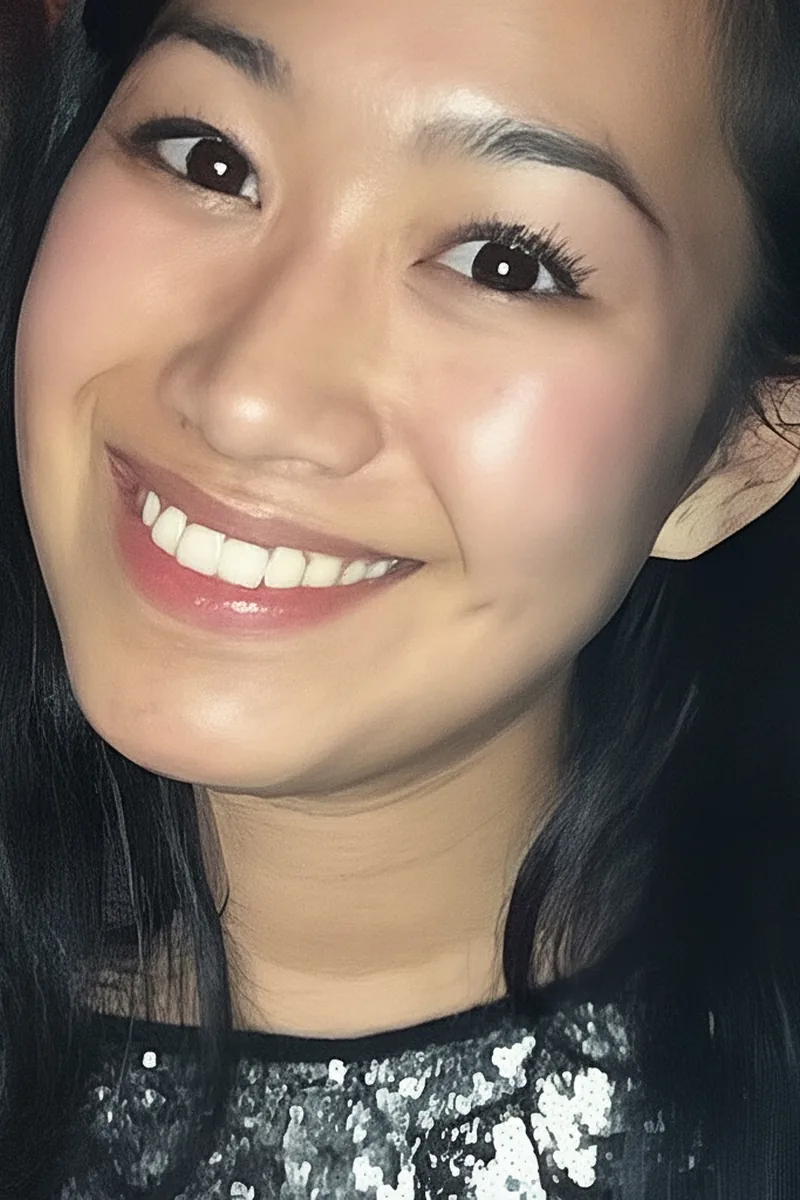
Whitney's neuroscience degree from Pomona required serious quantitative chops — modeling neural firing rates with sinusoidal functions, fitting dose-response data to logarithmic curves, and composing multivariable functions long before most students see them in a textbook. She teaches pre-calculus by connecting each new function family to the intuition students already have from algebra, making the jump to abstract behavior feel like a natural next step rather than a wall. Her 1480 SAT confirms the mathematical fluency behind that approach.
Having earned dual physics degrees and a state teaching certification, Gerardo knows exactly where pre-calculus stops being review and starts demanding new thinking — the shift from manipulating expressions to reasoning about function behavior, limits of sequences, and trigonometric models. He teaches the course as a physicist would, grounding abstract topics like polar coordinates and parametric equations in the physical scenarios that give them meaning. That bridge between concrete intuition and formal math is where his classroom experience pays off most.
As a chemistry major at Occidental College, Chandler constantly relies on the mathematical toolkit pre-calculus builds — logarithmic relationships in pH calculations, exponential models in reaction kinetics, and trigonometric functions in spectroscopy. He teaches these topics by connecting them to the science that made them click for him, turning abstract function families into something students can actually picture. His 34 ACT confirms the quantitative skill behind that approach.
A drama degree might seem like an unlikely background for pre-calculus, but Michael's 35 ACT and deep comfort teaching everything from pre-algebra through AP Calculus BC reveal genuine mathematical range — he knows exactly how polynomial end behavior, rational asymptotes, and trigonometric graphs connect to the calculus waiting on the other side. His performer's instinct for reading an audience translates into sessions where he picks up on confusion quickly and reframes explanations on the fly. Rated 4.8 by students.
Studying physics and mathematics simultaneously means Drew encounters every pre-calculus concept twice — once as pure math, once as the scaffolding behind kinematics, wave equations, and force decomposition. That double exposure gives him a sharp sense of which ideas (like trigonometric identities and function transformations) students need to genuinely internalize versus which ones they can reference as needed. His 31 ACT and three years of tutoring high schoolers in math and science keep his explanations grounded at the right level.
A dual degree in physics and mathematics from Clark means Sarah didn't just pass through pre-calculus — she built on it daily, using trigonometric relationships to model wave behavior and polynomial functions to approximate physical systems. She's especially sharp on the conceptual bridges that trip students up, like connecting right-triangle trig to the unit circle or seeing why a rational function's end behavior follows from its degree. That physics background gives her a knack for making abstract function analysis feel grounded and purposeful.
After studying economics and computer science at Caltech, Brian developed a habit of thinking about functions as machines — inputs transform into outputs through a chain of operations, and pre-calculus is where that mechanical intuition gets built. He digs into the transition points that trip students up most, like moving from polynomial behavior to rational functions where asymptotes and holes suddenly matter. His 1580 SAT reflects the kind of precision he brings to breaking down each concept.
A bio-psychology major on the pre-med track, Aaron spends his UCSB coursework navigating the quantitative models — exponential decay in pharmacology, logarithmic dose-response curves — that pre-calculus is quietly preparing students for. His conversational teaching style turns topics like function transformations into back-and-forth problem-solving, where students talk through each step until they can explain the reasoning themselves. Holds a 5.0 rating and a 32 ACT.
Running a high school math club and tutoring program meant Chris spent years watching exactly where students stumble on the bridge between algebra and calculus — the shift from manipulating expressions to reasoning about function behavior, especially with trigonometric and logarithmic families. His biomedical engineering coursework at UCLA keeps those pre-calculus tools sharp, since modeling biological systems demands constant fluency with transformations, compositions, and periodic functions. An 800 SAT math score and 5s on both AP Calculus exams confirm he's built the kind of understanding he now passes along.
Mitch's general engineering degree means he didn't just pass through pre-calculus — he pressure-tested every concept in it across physics, statics, and signal analysis, where sloppy trig or shaky function intuition actually costs you. He zeroes in on the spots where students tend to fake understanding, like the shift from memorizing unit circle values to genuinely reasoning through inverse trig problems. Rated 5.0 by students.
Four years of biology coursework at Loyola Marymount — plus clinical oncology research at UCLA — meant John was constantly solving the kinds of exponential growth, logarithmic scaling, and trigonometric problems that pre-calculus students are just starting to encounter. He tackles these topics by connecting them to the science applications where he actually uses them, turning abstract function families into something students can visualize. His 1410 SAT and upcoming medical school training at Creighton reflect the quantitative rigor behind his approach.
Every mechanical engineering course Alok has taken at UC Irvine — from statics to thermodynamics — runs on the trigonometric identities, vector operations, and function transformations that pre-calculus is built around. He teaches these concepts as someone who's actively using them in design problems and force analyses, which means he can show exactly where each skill pays off rather than leaving students wondering why it matters. His engineering lens is especially useful for demystifying polar coordinates and parametric equations.
Everything in Pre-Calculus — trigonometric identities, rational functions, limits intuition, conic sections — exists to set up what comes next. Milan teaches each topic with that forward momentum, showing students why they're learning the unit circle now and how it pays off in calculus later. His computer science training reinforces a logical, step-by-step approach to proofs and function analysis that clicks for analytically minded students.
Holding dual degrees in mathematics and violin from La Sierra University, Alexander understands pre-calculus the way a musician reads a score — every transformation, identity, and function family has an internal structure that becomes intuitive once you see how the pieces relate. He digs into topics like composite functions and trigonometric graphs by building the logic step by step from the algebra underneath, so students carry real understanding into calculus instead of a stack of half-remembered formulas. His 1570 SAT confirms the quantitative depth behind that approach.
Having tutored calculus and physics privately through college at UC Irvine, Pooja knows exactly which pre-calculus skills — especially rational functions, trigonometric reasoning, and function transformations — students need to have locked down before making that jump. Her biology training added another layer, since modeling population dynamics and enzyme behavior demands real comfort with exponential and logarithmic functions. She teaches each topic by connecting it to what's coming next, so the course feels like preparation rather than busywork.
Neuroscience training builds a particular comfort with the math that describes biological systems — and for Megan, that means the exponential decay, logarithmic scaling, and periodic functions at the heart of pre-calculus showed up constantly in modeling neural firing rates and sensory thresholds. She teaches these function families by connecting the algebra students already have to the graphical and analytical reasoning pre-calc demands, closing gaps before they compound in calculus. Rated 4.9 by students.
The jump from algebra to pre-calculus is really a jump in how you think about functions — suddenly you're composing them, inverting them, and tracking how transformations ripple through an entire graph. Jack's integrative biology work at UC Berkeley keeps him fluent in exactly this kind of layered reasoning, since modeling ecological systems means constantly manipulating exponential, logarithmic, and trigonometric relationships. His 1590 SAT confirms the mathematical precision he brings to breaking down each concept.
I'm an affable chemistry-loving person whose joy come from delivering knowledge :D
A UCLA math degree means Alex didn't just pass through pre-calculus — he built the rest of his coursework on top of it, from calculus through upper-division analysis and mathematical economics. He's particularly sharp at bridging the gap between algebraic mechanics and the functional thinking pre-calc demands, walking students through the moment when familiar equations become transformations, compositions, and abstract behavior they need to reason about rather than just solve.
Harvey Mudd's engineering curriculum throws students into calculus-heavy coursework from day one, which means Daniel spent years relying on the pre-calculus toolkit — rational functions, trigonometric identities, polar coordinates — as the scaffolding beneath everything else. He teaches the course with that backward clarity, zeroing in on how each concept will actually get used once calculus starts. His engineering lens is especially useful for students who need to see the structural purpose behind topics like conic sections and parametric equations.
Joanne's math degree covers the full arc from arithmetic through multivariable calculus, which means she teaches pre-calculus as someone who knows exactly how each topic — polynomial end behavior, rational function asymptotes, the mechanics of the unit circle — will be used in the courses that follow. She's especially sharp at diagnosing where an algebra misconception is quietly sabotaging a student's work with logarithms or composite functions, then rebuilding that piece before moving on. Rated 5.0 by students.
Most pre-calc struggles come down to one thing: students learned algebra procedures without building the intuition for how functions actually behave — and suddenly they're expected to transform, compose, and invert them fluently. Nathan, currently pursuing his math degree, tackles that gap head-on by rebuilding the conceptual links between algebraic mechanics and functional reasoning. His 1540 SAT and 4.5 rating reflect the kind of careful, adaptive problem-solving he brings to each session.
The jump to pre-calculus catches many students off guard because it layers trigonometric identities, polar coordinates, and limit intuition on top of everything learned in algebra. Caroline's molecular biology degree from UC Berkeley required heavy quantitative coursework, so she's comfortable connecting these abstract tools to the applied problems that make them click. She's particularly effective at demystifying function transformations and the unit circle.
Alain's plan to pursue graduate work in mathematical game theory means he's actively deepening the exact functional reasoning — optimization, strategic modeling, multi-variable relationships — that pre-calculus sets up. His UCLA math minor built rigorous comfort with polynomial behavior, composite functions, and the transition from algebraic mechanics to the kind of abstract thinking calculus demands. He teaches each concept by pressure-testing whether students can actually explain the logic back, not just execute the steps.
A math degree from Penn means Ben didn't just pass through pre-calculus — he built everything that came after on top of it, from linear algebra to multivariable calculus. That depth lets him teach topics like rational functions and trigonometric identities by revealing the structural logic underneath, so students carry real understanding into calculus instead of a fragile set of memorized steps. Holds a 5.0 rating.
Trigonometric identities, logarithmic functions, and the behavior of rational expressions all land differently when a student can see what's happening on a graph. Dylan leans heavily on visual and graphical reasoning to make Pre-Calculus concepts intuitive rather than procedural — an approach sharpened by his physics and math coursework at Vanderbilt. He's particularly effective at bridging the gap between algebraic manipulation and the conceptual thinking calculus will demand.
The University of Chicago's core curriculum put Valerie through rigorous math coursework alongside her Classics and Theatre studies, giving her a working command of the function families, transformations, and trigonometric reasoning that define pre-calculus. She's particularly sharp at demystifying sequences and series — breaking the pattern logic down step by step until the formulas feel inevitable rather than arbitrary. Her 1540 SAT confirms the quantitative skill behind her approach.
The moment pre-calculus shifts from familiar algebra into rational functions, sequences, and trigonometric identities, many students lose their footing — Vansh tackles that transition by making each new concept feel like a natural extension of what came before. His finance background at WashU means he thinks in terms of models and projections built on the same exponential and logarithmic frameworks students are learning to navigate. A 1550 SAT and 4.8 rating confirm he delivers on that approach.
The jump into pre-calculus is really about learning to think in terms of functions — how they behave, transform, and connect to each other across trigonometric, polynomial, and rational families. Dane's engineering coursework at Duke means he uses these tools daily and can show students how concepts like limits, composite functions, and unit circle values actually build toward calculus rather than existing as isolated topics.
A mechanical engineering degree from WashU (magna cum laude) means Caroline spent years where pre-calculus wasn't a course — it was the baseline language for everything from thermodynamic cycles to stress analysis, with polar coordinates, parametric equations, and trig identities showing up in nearly every problem set. She zeroes in on the conceptual leap from manipulating expressions to thinking in terms of function behavior, which is exactly where most students stall before calculus. Holds a 5.0 rating and a 1560 SAT.
A dual BS in physics and math plus a PhD in economics at Yale means Anthony has moved through pre-calculus material from every possible direction — trigonometric reasoning in mechanics, function composition in mathematical proofs, exponential and logarithmic models in econometric analysis. He teaches the course as someone who knows exactly which skills carry forward and which shortcuts collapse under pressure in later coursework. Holds a 5.0 rating and a 1560 SAT.
Chemical engineering at Georgia Tech means Aimee has been solving problems built on pre-calculus concepts — rational functions in reactor design, trigonometric models in thermodynamic cycles, logarithmic relationships in kinetics — since her first semester. She teaches the course by showing how each topic threads into the next, so the jump from polynomial behavior to limits feels like a natural step rather than a cliff. Her 33 ACT and 4.9 rating reflect the kind of structured, patient approach that makes that transition stick.
Everything in Pre-Calculus — trigonometric identities, rational functions, limits intuition — exists to set students up for calculus, but most courses don't make that connection explicit. Annie does, because she's already on the other side of it: her engineering program at Cornell showed her exactly which Pre-Calc skills matter most and where gaps tend to cause trouble later.
An applied mathematics degree from Stanford means Alex didn't just pass through pre-calculus — he built an entire major on top of it, so he knows exactly which concepts in trigonometric reasoning, function transformations, and limit intuition carry the most weight later. He teaches the course as a bridge rather than a checklist, connecting each new idea back to the algebra underneath it and forward to the calculus ahead. His 35 ACT and 4.8 rating reflect a tutor who's still close enough to the material to remember where it gets confusing.
Competition math throughout high school taught Tracy to see pre-calculus topics like sequences, series, and trigonometric manipulations as puzzles with elegant internal logic — not just procedural hurdles before calculus. Her triple economics degree means she also knows how these tools land in practice, since exponential models and rate-of-change reasoning show up constantly in economic analysis. A 36 ACT and 4.9 rating confirm she delivers on both the conceptual and practical sides.
Having earned a 35 ACT and a 1540 SAT while completing dual science and computing degrees at Notre Dame, Aidan built the kind of cross-disciplinary math fluency that makes him especially sharp on the pre-calculus topics where algebra starts becoming abstract — rational functions, composite functions, and the shift from manipulating expressions to analyzing their behavior. He zeroes in on the conceptual bridge between what students already know from algebra and the functional thinking calculus will demand, making sure each new idea has a logical foothold rather than floating as an isolated procedure.
Testimonials
Because the right Pre-Calculus tutor makes all the difference.
Average Session Rating – Based on 3.4M Learner Ratings
Practice Pre-Calculus
Free practice tests, flashcards, and AI tutoring for Pre-Calculus
Nearby Pre-Calculus Tutors
Other Los Angeles Tutors
Related Math Tutors in Los Angeles
Frequently Asked Questions
Pre-Calculus demands a shift from procedural problem-solving to understanding the "why" behind mathematical concepts. While Algebra II focuses on solving equations and manipulating expressions, Pre-Calculus emphasizes seeing patterns, making connections between concepts, and building intuition for how functions behave. This conceptual leap—understanding that a parabola's vertex form reveals its transformation, or recognizing how trigonometric functions model cyclical patterns—prepares you for Calculus. Many students find this transition challenging because it requires thinking beyond memorizing steps.
Word problems in Pre-Calculus require you to translate real-world scenarios into mathematical language—identifying which function best models the situation, setting up equations correctly, and then solving them. The difficulty isn't just the math; it's determining which concept to use. Personalized tutoring helps by breaking down the translation process: identifying variables, recognizing what type of function describes the relationship, and connecting the mathematical answer back to the original context. With guided practice, students develop a systematic approach that makes word problems less intimidating.
Strong graphing skills come from understanding how algebraic changes affect visual shape. Rather than plotting individual points, expert tutors help you recognize key features: how coefficients stretch or compress graphs, how transformations shift them, and how key characteristics like asymptotes, vertices, and intercepts tell the story of a function. The key is seeing the connection between the equation and the graph. With practice, you'll develop the pattern recognition needed to sketch accurate graphs quickly—a crucial skill for Pre-Calculus and beyond.
Absolutely. Los Angeles has 169 school districts using various textbooks and pacing guides—some emphasize applied Pre-Calculus, others focus on preparation for AP Calculus. Varsity Tutors connects you with tutors who work with your specific curriculum and can align their instruction to your course expectations. Whether your school uses a traditional sequence of polynomial, rational, exponential, logarithmic, and trigonometric functions, or a different approach, personalized instruction ensures you're building skills that directly support your coursework and exams.
Trigonometry trips up many students because it introduces circular functions—a new way of thinking compared to polynomial and rational functions. Rather than just memorizing unit circle values and identities, expert tutors help you understand why the unit circle works, how sine and cosine relate to real-world applications like oscillations, and how to use identities strategically to simplify expressions. Building this conceptual foundation, combined with spaced repetition of key angles and identities, transforms trigonometry from confusing memorization into a coherent, connected system.
Math anxiety often stems from feeling lost or unsupported during challenging transitions—like the jump into Pre-Calculus. One-on-one personalized instruction provides a judgment-free space to ask questions, work through problems at your own pace, and build confidence through small wins. Tutors help you develop problem-solving strategies, show you that mistakes are learning opportunities, and celebrate progress. When you understand the "why" behind concepts rather than just memorizing procedures, Pre-Calculus becomes less intimidating and more manageable.
Varsity Tutors connects you with expert Pre-Calculus tutors who understand the curriculum, pacing, and challenges specific to Los Angeles schools. The process is simple: share your needs, get matched with a tutor who fits your learning style and goals, and start personalized instruction tailored to your course. Whether you need help with foundational concepts, exam preparation, or deepening your understanding of trigonometry and functions, you'll work with a professional experienced in helping students transition successfully through Pre-Calculus.
Let’s find your perfect tutor
Answer a few quick questions. We’ll recommend the right plan and match you with a top 5% tutor.