Award-Winning AP Physics C: Electricity and Magnetism Tutors
serving Riverside, CA
AP Physics C: Electricity and Magnetism
Tutors in Riverside
Private 1-on-1 tutoring, weekly live classes for academic support, test prep & enrichment, practice tests and diagnostics, and more to elevate grades and test scores.
Based on 3.4M Learner Ratings
UniversitiesSchools & Universities
DeliveredHours Delivered
ProficiencyGrowth in Proficiency
Who needs tutoring?
No obligation. Takes ~1 minute.
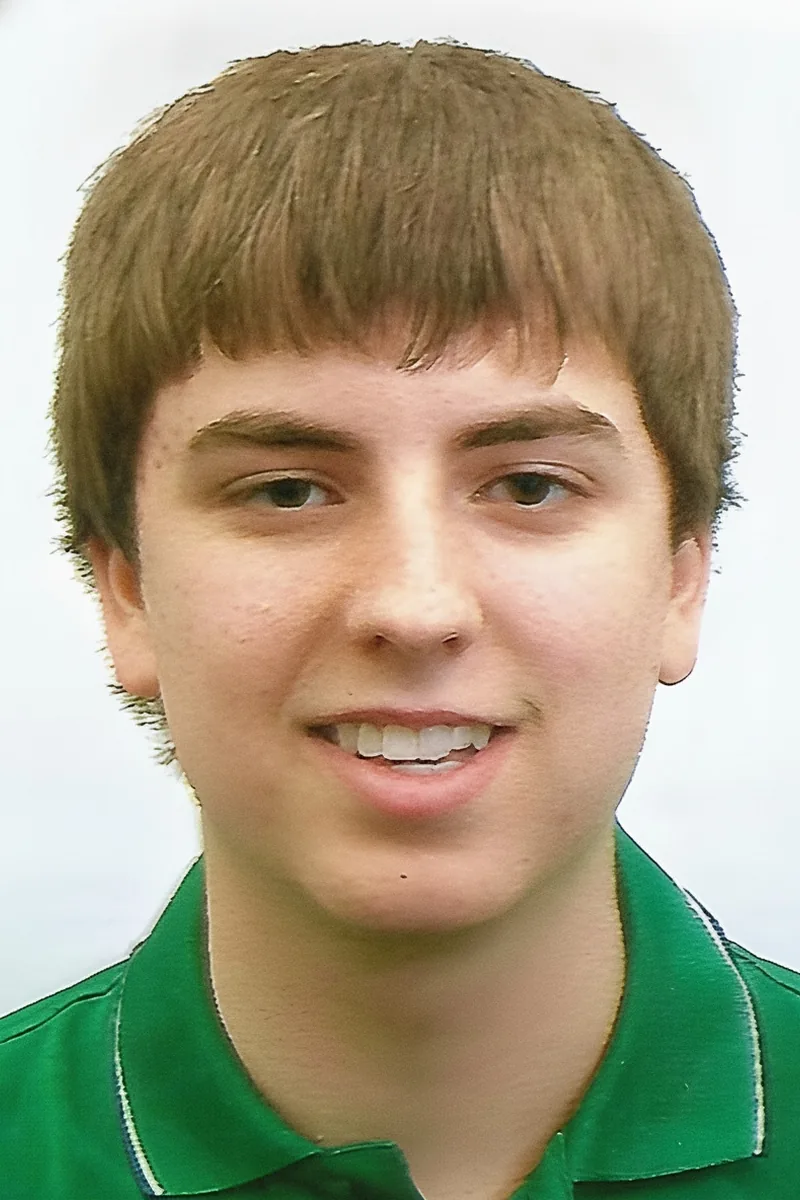
Gauss's law, Ampère's law, and RC circuits can feel impossibly abstract until someone connects the math to something tangible. Matthew's engineering coursework in electrical systems gives him practical fluency with E&M concepts, and he teaches students to visualize field lines and charge distributions rather than just grinding through integrals. His 5.0 rating speaks to how well that approach lands.

Gauss's law, Ampère's law, Faraday's law — AP Physics C: E&M asks students to wield vector calculus in physical contexts that feel genuinely abstract at first. Jacques tackles this by grounding each law in a concrete setup (a charged sphere, a solenoid, a changing magnetic flux) before layering in the integral formulations. His engineering training at Princeton and decades of classroom physics teaching make him unusually comfortable in this territory.
Gauss's law, Ampère's law, Faraday's law — AP Physics C: E&M asks students to wield vector calculus in physical contexts that feel deeply abstract. Shira tackles this by grounding each law in a concrete scenario first (a charged sphere, a solenoid, a changing magnetic flux) before layering on the integral setup, so students build physical intuition alongside mathematical fluency.
I love to teach. I love young minds and fresh brains. Those are just like clean sheets of papers I can draw anything I like. I really like to help young people to achieve their full capacities with my long experience of teaching. I am very patient and good at explaining complex concepts in simple terms. I am looking forward to meeting students who need my help.
Gauss's law, Ampère's law, Faraday's law, RC circuits — AP Physics C: E&M asks students to wield vector calculus in physical contexts most haven't encountered before. Justin earned his bachelor's in physics and mathematics at Washington University in St. Louis before completing a PhD in Computational Mathematics at the University of Chicago, giving him the exact blend of mathematical rigor and physical intuition this course demands. He breaks down intimidating surface integrals and field superposition problems into clear, repeatable reasoning steps.
Gauss's law, Ampère's law, Faraday's law — E&M demands comfort with vector calculus that most high schoolers haven't fully developed yet. Sanjana's applied math training at Harvard means she can teach the calculus and the physics simultaneously, connecting flux integrals and field equations to physical intuition rather than leaving students to wrestle with two subjects at once.
Gauss's law, Ampère's law, Faraday's law — AP Physics C: E&M asks students to wield vector calculus inside electromagnetic theory, which is a steep jump from most prior coursework. Steven approaches each topic by first explaining the physical picture, then showing the mathematical framework, then working through a practical example that ties both together. His PhD in chemical engineering required deep work with electromagnetic principles and multivariable calculus alike.
Gauss's law, Ampère's law, Faraday's law — AP Physics C: E&M asks students to think in vector fields and surface integrals, which is a major leap from mechanics. As an astrophysics and chemistry double major at CU Boulder, Graham works with electromagnetic theory as a core part of his studies and breaks down each law into the physical picture behind the math. He holds a 5.0 rating from students.
Gauss's law, Ampère's law, Faraday's law — AP Physics C: E&M asks students to wield vector calculus in three dimensions, often before they've fully internalized what a flux integral actually means. Rishik unpacks each law by starting with the geometry of the field before jumping into the math, so the integral setup feels logical rather than memorized. His parallel background in calculus and computer science gives him multiple ways to visualize abstract electromagnetic concepts.
During his physics PhD, Jonathan taught E&M at the university level — not just the conceptual overview, but the full calculus-heavy treatment of Maxwell's equations, dielectric materials, and magnetic induction that AP Physics C demands. He walks students through the reasoning behind each problem setup, showing how to identify symmetry, choose the right integration path, and connect the math back to what the fields are actually doing. Rated 5.0 by students.
Gauss's law, Ampère's law, RC circuits, and electromagnetic induction can feel abstract until someone connects them to physical systems. Justin's ME coursework at Illinois includes electronics and E&M-heavy physics sequences, so he unpacks Maxwell's equations and circuit analysis with the same rigor his engineering professors demand. He teaches students to sketch field diagrams first, turning intimidating integrals into manageable geometry.
Gauss's law, Ampère's law, Faraday's law — AP Physics C: E&M asks students to choose the right tool for each field configuration and then execute the calculus cleanly. Sophia breaks each problem into two phases: identifying the symmetry that dictates the approach, then setting up and evaluating the integral. Her 5.0 rating speaks to how clearly she communicates concepts that most students find abstract.
Testimonials
Because the right AP Physics C: Electricity and Magnetism tutor makes all the difference.
Average Session Rating – Based on 3.4M Learner Ratings
Practice AP Physics C: Electricity and Magnetism
Free practice tests, flashcards, and AI tutoring for AP Physics C: Electricity and Magnetism
Nearby AP Physics C: Electricity and Magnetism Tutors
Other Riverside Tutors
Related Science Tutors in Riverside
Frequently Asked Questions
Students typically find Gauss's Law, magnetic fields, and electromagnetic induction most difficult because they require visualizing invisible forces in three dimensions. Additionally, the calculus-based approach—especially line integrals and flux calculations—trips up many students who haven't solidified their multivariable calculus skills. A tutor can break these concepts into manageable pieces and help you build intuition before diving into complex problem sets.
Score improvement depends on your starting point and consistency, but most students who work with a tutor see meaningful gains—typically 1–3 points on the 1–5 AP scale over a semester. The key is identifying your specific weak spots (conceptual gaps vs. problem-solving speed vs. exam strategy) and addressing them systematically. Personalized 1-on-1 instruction lets you focus on what actually holds you back rather than reviewing material you already know.
The exam gives you 45 minutes for 35 multiple-choice questions and 45 minutes for 3 free-response questions. A smart strategy is spending about 1 minute per multiple-choice question, which leaves time to review and tackle harder problems. For free-response, allocate roughly 15 minutes per question, showing all work since partial credit is available. A tutor can help you practice pacing with real AP exams and develop a timing strategy that matches your strengths.
Aim to complete at least 4–6 full-length practice exams under timed conditions in the months leading up to the test. This builds stamina, reveals patterns in what you struggle with, and makes the real exam feel familiar. After each practice test, review every question—especially ones you missed—to understand why and prevent repeating those mistakes. Your tutor can help you analyze practice test results and target remaining weak areas efficiently.
Yes—this course is calculus-based, so you need comfort with derivatives, integrals, and multivariable concepts like partial derivatives and line integrals. If calculus isn't solid, you'll struggle not just with the math but with understanding the physics concepts themselves, since they're expressed through calculus. Varsity Tutors connects you with tutors who can refresh your calculus skills while teaching you how they apply to electricity and magnetism, so you're not learning both from scratch simultaneously.
Your tutor will start by assessing where you stand—reviewing your recent tests, homework, or problem sets to identify your strongest and weakest areas. You'll discuss your AP exam timeline and goals, then work through a sample problem together to understand your problem-solving approach and learning style. This foundation lets your tutor create a personalized study plan focused on the topics and skills that will have the biggest impact on your score.
Riverside's 7 school districts serve over 77,000 students, and many high schools offer AP Physics C with varying levels of support. While school resources are valuable, personalized tutoring fills gaps that classroom instruction can't always address—especially the calculus-heavy problem-solving and exam strategy that separate good scores from great ones. Varsity Tutors connects you with expert tutors who specialize in this course and can work around your school's schedule.
Test anxiety often stems from uncertainty—not knowing what to expect or doubting your preparation. Taking multiple practice exams under real exam conditions builds confidence and makes the actual test feel routine rather than threatening. Your tutor can also teach you quick stress-management techniques (like strategic breathing or starting with easier questions first) and help you develop a pre-exam routine that calms your nerves. The more prepared you feel, the less anxiety typically interferes with your performance.
Let’s find your perfect tutor
Answer a few quick questions. We’ll recommend the right plan and match you with a top 5% tutor.