Award-Winning AP Calculus AB Tutors
serving Visalia, CA
AP Calculus AB
Tutors in Visalia
Private 1-on-1 tutoring, weekly live classes for academic support, test prep & enrichment, practice tests and diagnostics, and more to elevate grades and test scores.
Based on 3.4M Learner Ratings
UniversitiesSchools & Universities
DeliveredHours Delivered
ProficiencyGrowth in Proficiency
Who needs tutoring?
No obligation. Takes ~1 minute.
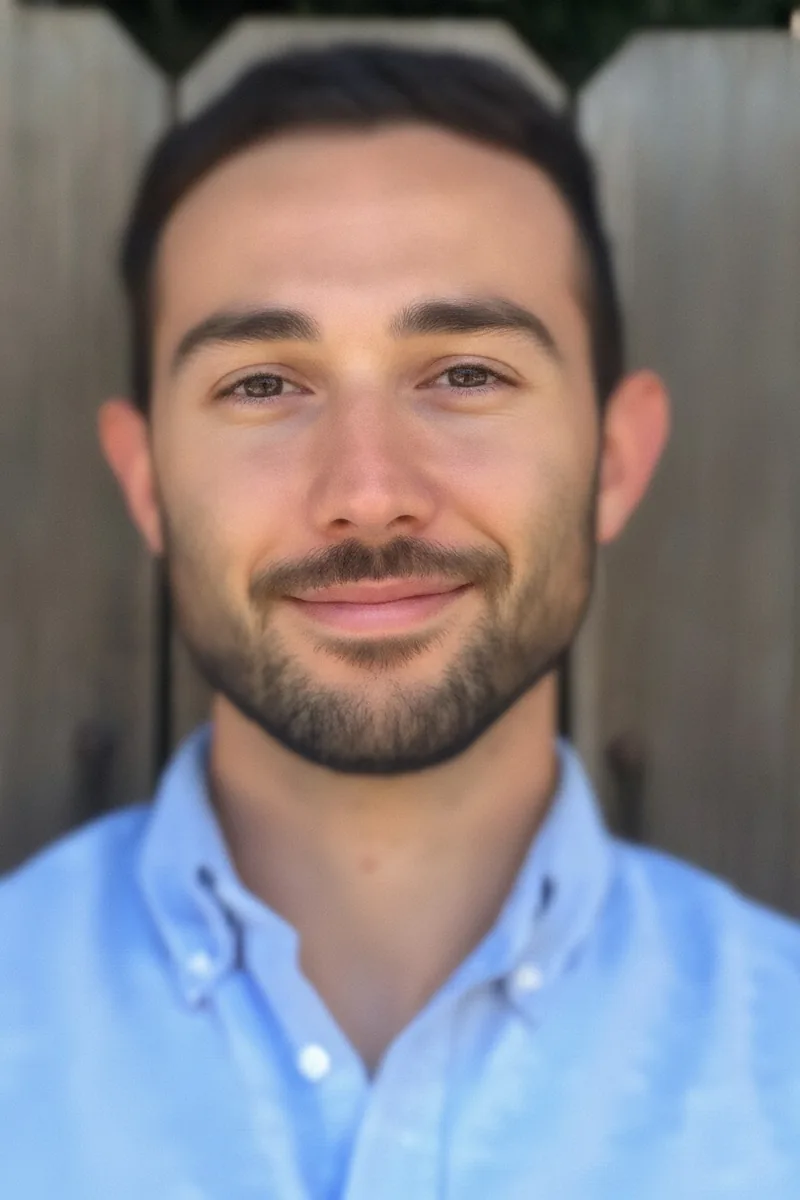
Psychobiology at UCLA required Shant to work through calculus-heavy coursework in biological modeling — population growth curves, enzyme kinetics, pharmacokinetics — where derivatives and integrals describe systems that actually matter. That science-first perspective gives him a practical angle on the AB curriculum's trickiest conceptual jumps, particularly interpreting what a rate of change means in a word problem before writing a single equation. Rated 5.0 by students.

The jump from memorizing derivative rules to actually applying them — related rates, optimization, accumulation functions — is where most AP Calc AB students stall. Milan tackles these application problems by connecting each one back to the underlying concept, so students build intuition instead of hunting for formulas. His double major in computer science and English gives him a rare ability to explain abstract math in plain language.
Limits, derivatives, and integrals each build on the last in AP Calculus AB, and Alexander's math degree from La Sierra University means he can trace that progression clearly — showing, for instance, why the chain rule works rather than just how to apply it. His approach to the related rates and accumulation problems that dominate the AP exam ties abstract rules back to concrete, visual reasoning.
Limits, derivatives, and integrals each build on the last, and one shaky concept early in AP Calculus AB can snowball fast. Michael tackles that chain of dependencies head-on, making sure students can explain *why* the chain rule works before drilling dozens of practice problems. His 35 ACT and deep comfort across math subjects mean he can meet a tricky related-rates problem from multiple angles until one clicks.
I'm an affable chemistry-loving person whose joy come from delivering knowledge :D
Studying physics and mathematics simultaneously means Drew encounters every AB concept twice — limits and derivatives in his math courses, then those same tools applied to motion and force in his physics lectures. That double exposure makes him especially good at explaining why, say, the derivative of position gives velocity, turning the abstraction of differentiation into something students can visualize and reason about on exam day.
The jump from memorizing derivative rules to actually applying them — related rates, optimization, accumulation functions — is where most AB students stall. Daniel's engineering background at Harvey Mudd means he's solved hundreds of real applied-calculus problems, and he brings that concrete, problem-solving mindset to every AB concept from limits through the Fundamental Theorem.
The jump from memorizing derivative rules to applying them — related rates, optimization, accumulation functions — is where most AB students stall. Alain teaches each application type as its own problem-solving framework, connecting the calculus back to the graphical and numerical reasoning the AP exam actually tests. His plan to pursue graduate work in mathematical game theory reflects how deeply he thinks about the logic underneath the procedures.
Studying neuroscience at Vanderbilt meant Benjamin couldn't escape calculus — modeling membrane potentials, analyzing signal decay curves, computing rates of neurotransmitter diffusion — so the AB curriculum's core concepts aren't textbook abstractions for him but tools he's actually used. His 34 ACT reflects the quantitative precision he brings to teaching limits and the chain rule, two topics where small conceptual gaps snowball into free-response mistakes. He's especially good at slowing down the problem-setup phase so students learn to read what a question is really asking before jumping into computation.
Cornell's engineering curriculum throws calculus at you from day one — Ravnoor uses derivatives and integrals across his computer science coursework to analyze algorithm efficiency and model computational processes, which keeps the AB material sharp and immediately relevant. He's especially strong at teaching limits and continuity, breaking down the epsilon-delta logic that most students find intimidating into concrete, step-by-step reasoning. Rated 5.0 by students.
The jump from Pre-Calc to AP Calculus AB trips up students who never fully grasped limits or the logic behind the chain rule. Daniel's approach is to rebuild each concept from scratch when needed — he's an applied math major who got where he is by sitting with hard material until it clicked, not by breezing through it. That means he knows exactly where the confusion usually lives in topics like related rates, Riemann sums, and the Fundamental Theorem.
Limits, derivatives, and integrals click faster when a student sees how each concept builds on the last — and Tim's computational science training at MIT means he can show exactly how those connections work, from the epsilon-delta definition through the Fundamental Theorem. He's tutored every level of high school math up through AP Calculus BC, so he knows precisely where AB students tend to stumble on topics like related rates and accumulation functions.
Having already completed multivariable calculus and linear algebra as a freshman in Northwestern's engineering program, Dylan teaches AB concepts like limits, derivative rules, and integration techniques with the confidence of someone who uses them as building blocks for more advanced work every week. His 1500 SAT and 5.0 rating back up an approach grounded in making sure students understand the reasoning behind each step before moving on to the next application.
The jump from memorizing derivative rules to actually applying them — related rates, optimization, the Fundamental Theorem — is where most AB students start to struggle. William teaches these connections by building intuition for what a derivative or integral actually means, not just how to compute one. He's studying mathematics at Rice and has continued through multivariable calculus and beyond, giving him a clear view of where AB concepts are headed.
Mechanical engineering at Harvard means Christopher builds with calculus daily — every force balance is a derivative, every energy calculation an integral — so the AB curriculum maps directly onto problems he's already solving in his coursework. He's especially sharp at teaching students how to navigate optimization and area-between-curves setups, where translating the scenario into the right expression is the real challenge. His 35 ACT and 4.8 rating back up an approach grounded in engineering intuition rather than formula memorization.
Public policy analysis at the University of Chicago is surprisingly calculus-heavy — modeling rates of change in population data, interpreting area under cost curves, quantifying how small policy shifts produce outsized effects — which means Noel learned AB-level concepts by actually using them to argue about real decisions. That policy lens makes him especially effective at teaching students how to set up and interpret definite integrals and optimization problems, where understanding what the math means in context is the difference between a formulaic answer and a convincing free-response solution. His 1550 SAT and 4.9 rating back up the analytical precision he brings to every problem.
The jump from "find the derivative" to "explain what the derivative means on this graph" is where most AP Calculus AB students lose points on free-response questions. Justin bridges that gap by teaching limits, Riemann sums, and the Fundamental Theorem as connected ideas rather than isolated procedures — an approach shaped by his dual background in physics and mathematics at Washington University in St. Louis.
Chemical engineering coursework drills calculus into you through a different lens — Kelly spent her undergraduate years using derivatives to track reaction kinetics and integrals to size equipment, so the AB curriculum's application problems map naturally onto skills she's already internalized. She's particularly strong at teaching students how to set up problems from scratch, especially optimization and definite integral applications where the hardest part isn't the math but knowing what to model. Rated 5.0 by students.
The jump from memorizing derivative rules to actually applying them — related rates, optimization, accumulation functions — is where most AP Calc AB students stall. Matthew tackles these problems by tying them to physical intuition from his physics degree, making concepts like rate of change feel concrete instead of formulaic. His approach turns the AB exam's free-response section from a guessing game into a structured process.
Pre-med biology and chemistry at Northwestern means Kade is constantly using calculus to make sense of other disciplines — enzyme kinetics, population growth models, dose-response curves — which keeps the AB material grounded in something tangible. He's especially good at walking through limit definitions and continuity arguments, the early-course concepts that quietly determine whether the rest of the year clicks or collapses. His 1550 SAT reflects the kind of precise, methodical thinking that pays off on AP free-response questions.
Testimonials
Because the right AP Calculus AB tutor makes all the difference.
Average Session Rating – Based on 3.4M Learner Ratings
Practice AP Calculus AB
Free practice tests, flashcards, and AI tutoring for AP Calculus AB
Nearby AP Calculus AB Tutors
Other Visalia Tutors
Related Math Tutors in Visalia
Frequently Asked Questions
Varsity Tutors matches Visalia students with expert AP Calculus AB tutors for 1-on-1 instruction. We pair each student with a tutor based on their specific needs, learning style, and goals.
Whether you need homework help, exam prep, or want to get ahead, our AP Calculus AB tutors are ready to help.
Common challenges include gaps from earlier material, difficulty with specific concepts, and trouble applying learning to new problems. These issues can snowball quickly in AP Calculus AB.
A tutor identifies where you're stuck, fills in gaps, and provides targeted practice. The 1-on-1 format means you get help exactly where you need it.
Tutors work with your student's actual coursework—homework assignments, class notes, and upcoming tests. This keeps tutoring directly relevant to what's happening in the classroom.
When you share information about your student's school and curriculum, we can match you with a tutor who has relevant experience.
All tutors complete background checks, credential verification, and teaching evaluation. Many of our AP Calculus AB tutors hold advanced degrees or have years of teaching experience.
You can review tutor profiles to find someone with the right background for your student's level and needs.
Many students see improved grades within a few weeks, along with better understanding of AP Calculus AB concepts and more confidence tackling challenging material.
Tutors track progress and adjust their approach to ensure continued improvement.
Most students benefit from 1-2 sessions per week. More frequent sessions help if your student is significantly behind or has an important exam coming up.
Your tutor can recommend a schedule based on your student's specific situation and goals.
Tutoring is purchased in packages of hours, with rates varying by tutor experience. Varsity Tutors offers several options to fit different budgets and needs.
You can discuss pricing during your consultation to find what works best.
Your tutor will assess where your student is, discuss goals, and start working on priority areas. Most students bring current homework or upcoming test material to focus on.
By the end, you'll have a clear sense of how the tutor can help and a plan for moving forward.
Let’s find your perfect tutor
Answer a few quick questions. We’ll recommend the right plan and match you with a top 5% tutor.