Award-Winning ACT Reading Tutors
serving Savannah, GA
ACT Reading
Tutors in Savannah
Private 1-on-1 tutoring, weekly live classes for academic support, test prep & enrichment, practice tests and diagnostics, and more to elevate grades and test scores.
Based on 3.4M Learner Ratings
UniversitiesSchools & Universities
DeliveredHours Delivered
ProficiencyGrowth in Proficiency
Who needs tutoring?
No obligation. Takes ~1 minute.

Most students treat ACT Reading as a speed test, but Ilesh reframes it as a precision exercise: knowing what the question actually asks before hunting for evidence in the passage. His 36 composite came partly from a disciplined passage-mapping strategy that he now teaches students to replicate across all four prose genres the section throws at them.
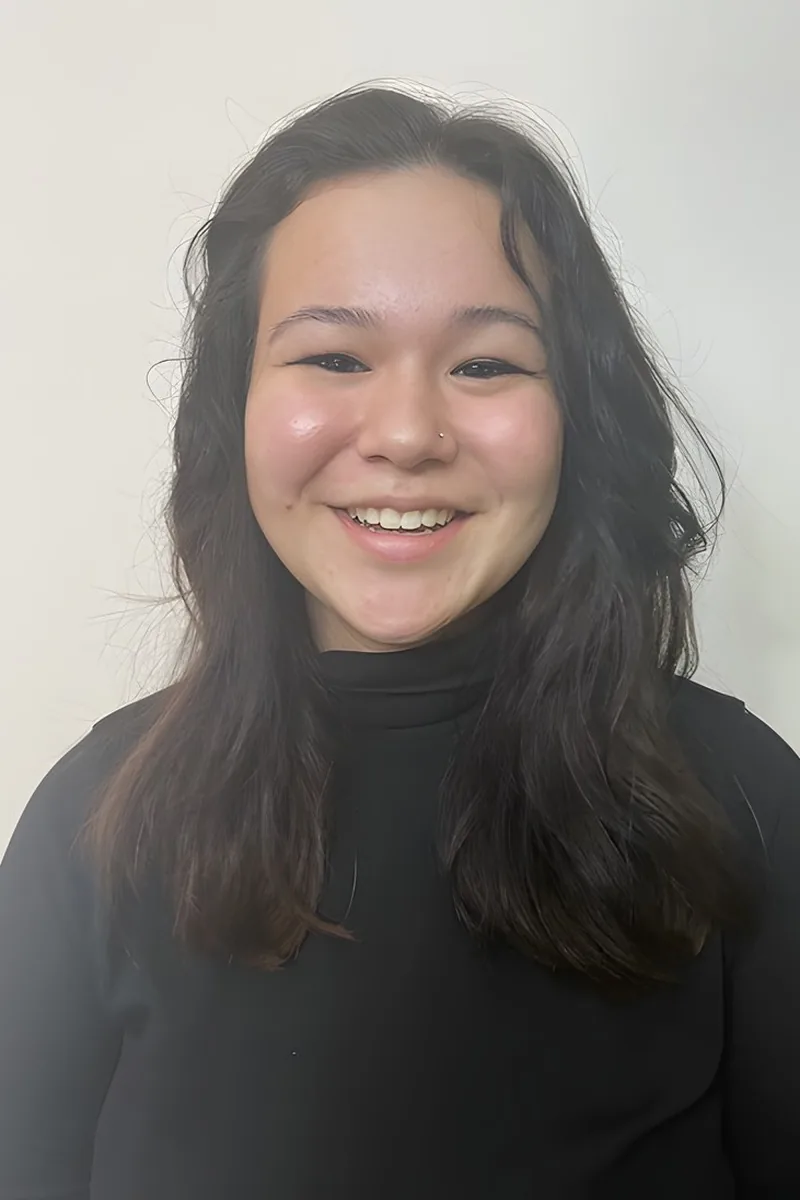
I am double majoring in Neuroscience and Behavioral Biology and Philosophy at Emory University. I genuinely enjoy working with students to achieve their academic goals. I have experience teaching children and adolescents language skills, science, and math. In my free time, I can mostly be found outside hiking, running, or doing yoga.
I'm always up for the challenge of changing my methods of instruction and breaking down topics to foster a deeper understanding of a subject. On a different note, I generally spend my spare time playing lacrosse or running outdoors when possible. I also play the violin with a school quartet, and teach lessons to beginning students working through the Suzuki program.
The ACT Reading section rewards a specific kind of speed — not rushing, but knowing exactly what the question is asking before going back to the passage. Jennifer treats each passage type (prose fiction, social science, humanities, natural science) as its own mini-strategy, teaching students to adjust their annotation approach accordingly. Her 35 ACT composite came partly from mastering this kind of adaptive reading under pressure.
Most ACT Reading mistakes happen not because students misunderstand the passage, but because they run out of time and start rushing. Tyler, who earned a 35 composite, tackles this by teaching a deliberate passage-mapping strategy: skimming for structure first, then attacking questions in an order that minimizes re-reading. It's a methodical approach that turns a stressful time crunch into a manageable routine.
Neuroscience coursework at WashU means Ethan spends his weeks digesting research papers that blend hard science with complex argumentation — the same kind of reading the ACT throws at students in its natural science and social science passages. With a 35 ACT composite, he teaches students to anchor each passage around its central claim and use that claim to quickly eliminate answer choices that subtly shift scope or misrepresent the author's reasoning.
I am currently a graduate student at Georgia Tech studying Prosthetics and Orthotics. My career goal is to become a certified prosthetist/orthotist, which means I would make and fit artificial limbs (prostheses) to patients who need them as well as make and fit assistive devices that support existing body parts (orthoses) to treat various conditions.
An avid reader and writing center volunteer, Jackson treats ACT Reading as a pacing and strategy challenge, not a comprehension one. He breaks down how to attack each passage type — prose fiction, social science, humanities, natural science — with targeted annotation habits that keep students on track for the 35-minute time crunch. His own 35 ACT composite came partly from mastering exactly these techniques.
I am a Biotechnology Master's Student at the Swiss Federal Institute of Technology, ETH Zurich. I completed my undergraduate degree in Chemical and Biomolecular Engineering from Georgia Tech in 2018 while minoring in Biomedical Engineering. My passion is researching novel ways to use ethically derived induced pluripotent stem cells in both research and therapeutic environments, and I love to share my knowledge and excitement for science, math, and language with others.
Physics majors at Georgia Tech don't get far without learning to extract precise meaning from dense, technical writing under time pressure — a habit Burhanuddin brings to the ACT Reading section's natural science and social science passages, where students often lose points by confusing what's stated with what's merely adjacent. He teaches students to anchor each passage around its central argument and then treat answer choices as claims to verify against the text, not gut-check. His 35 ACT composite and 5.0 student rating back that up.
Between a neurobiology degree and a master's in education, Marion has spent years toggling between dense scientific literature and the craft of teaching people how to actually understand what they read — which is the entire game on ACT Reading. She teaches students to anchor each passage around the author's purpose before diving into questions, a habit that's especially effective on the paired-viewpoint and natural science passages where students lose time re-reading. Her 34 ACT composite and 5.0 student rating back that up.
I'm Thomas, a sophomore Computer Science student at Georgia Tech. While I may be a STEM major at a tech school, I've always been skilled in reading and writing, never earning less than A in an English class throughout my academic career. If you're looking for someone with a high success rate in English, whether it be standardized testing or general writing, you're in the right place. In high school, I received a perfect score on the SAT writing section (only missed perfect on Verbal by 10 points), won first place in the UIL Regional Ready Writing Contest, and served as an editor on the school newspaper. While completing my university English requirement, I created an online tour stop for Atlanta's National Center for Civil and Human Rights.
I'm Adel, a native of Atlanta, GA and graduate of Georgia Tech. I love playing basketball, football, eating all kinds of great food, catching the newest movie or new TV show and most of all, hanging out with my friends and family. I have been tutoring since my freshmen year in college a variety of subjects including Mathematics, English and Science. With my youngest brother in high school and my youngest sister in elementary school, I have constant exposure to different levels and types of academic subjects.
I am a graduate of the University of Alabama at Birmingham. I graduated with honors, majoring in neuroscience and minoring in mathematics, chemistry, and French. I aspire to become a physician, especially a neurologist, since I am kind of obsessed with the brain and our nervous system. For the next year, I will be working part time as a scribe at the Northside Hospitals in Atlanta.
The ACT Reading section rewards students who can distinguish an author's implied argument from stated details — under brutal time pressure. Paula's dual background in Communication Studies and Psychology gives her a sharp eye for rhetorical structure and tone, which she uses to teach students how to attack passages strategically rather than reading every word. Rated 4.8 by students.
I am a rising junior in Cornell University in the College of Engineering. Currently, I am studying Computer Science and Education with the goal of becoming a high school teacher for Mathematics and Computer Science. I have educated others in a wide variety of age groups and settings from public schools to private tutoring to summer camps. With the rise of computer science and programming I have firsthand experience on what the future of someone pursuing that field is like and how to prepare and stay motivated in that field. In my time aiding students I saw that motivation and having a goal is the most important part of learning the subject and becoming a better student to help accomplish the set goal.
I am continuing to add to my range of subjects that I teach.
I am an undergraduate at Rice University in Houston pursuing a Bachelor of Science in Biochemistry and Cell Biology. I have both formal and informal tutoring experience: I worked as an assistant teacher in my high school's math department in Atlanta teaching geometry, algebra and pre-calculus to students over the summer. As an Academic Fellow at Rice, I provide academic assistance to my peers in the natural sciences, specifically chemistry and biochemistry. Although my studies are focused in STEM, I am a strong writer and I excel in helping students improve grammar and essay organization. Additionally, I have abundant experience in both standardized and AP testing. I am a friendly and empathetic person, and I want to do whatever I can to help other students succeed!
I'm a junior at Washington University in St. Louis studying English literature and international and area studies. My specialties are reading comprehension, writing, grammar, Spanish language, politics, and history, though I also enjoy chemistry/earth sciences and math up to Calculus 2! I can't wait to work with you!
Most students lose points on ACT Reading not because they can't comprehend the passages but because they spend too long re-reading. Yilin teaches an active-reading method — annotating for argument structure, tone shifts, and key claims — that cuts passage time significantly while improving accuracy on inference and detail questions. Her 34 composite and 5.0 rating come from making that process feel repeatable, not random.
Most ACT Reading mistakes happen not because students misunderstand the passage, but because they run out of time or get tricked by "almost right" answer choices. Benjamin teaches a passage-prioritization strategy — deciding which of the four passages to attack first based on a student's strengths — and a process-of-elimination method that cuts second-guessing dramatically.
Most ACT Reading mistakes come from spending too long on the passages and rushing the questions — or the reverse. Emily teaches a specific annotation method that cuts reading time without sacrificing comprehension, particularly on the social science and humanities passages where detail questions can be tricky. Her 33 ACT composite and 5.0 tutoring rating back up the approach.
Most ACT Reading mistakes happen not because students can't comprehend the passage but because they spend too long on it. Saniya teaches an active-reading method — annotating for argument structure and author tone — that cuts rereading time and makes inference questions far more straightforward. Her dual background in science and English means she's equally comfortable coaching students through dense natural-science passages and literary narratives.
I am working my way to med-school and a bright future. Active in both the Honors program and Center for Undergraduate Research, I have developed a great work ethic which I hope to impart to my students! I've spent the past two summers teaching private swim lessons to children and adults throughout my community. Turning a person's goal into reality is the greatest thrill I've known! Similarly, I spent two semesters as a mentor at the Thomas Lay After-School Program in Athens, GA. There, I both tutored and befriended the children of the program. My favorite memory occurred during mandatory reading hours. A stubborn, apathetic boy refused to read any books. Rather than becoming frustrated, I asked him "If you could be any animal, what would you be?" I knew the library had a large section of zoology books, and hoped to pique his interest. Immediately, he responded "A fish!" The following weeks were filled with shark, octopus, and whale books. To this day, his transformation from disinterested to engaged and motivated fuels my desire to mentor today's youth.
An avid reader with a background in both literature and writing, Megan treats the ACT Reading section as a strategic exercise in active annotation. She teaches students to identify the passage's argument structure in the first read-through so they can answer inference and tone questions without burning time re-reading. Her 34 composite reflects how well that approach translates to real test conditions.
I am passionate about teaching others as I believe knowledge is an infinite resource that can be used to help us achieve great things in life. As a student at Northwestern University I have been constantly challenged to learn in new ways and I hope to inspire and help others navigate through various subjects. I am obtaining a Bachelor of Arts degree in Neuroscience on the pre-med track and I have already attained a legal studies minor. I am a firm supporter of customized learning as finding the best way to teach or learn is the best way to receive amazing results.
I am a current senior at Davidson College, working towards my B.A. in German Studies and Arab Studies. I have spent many hours tutoring the German and Arabic language to college students. I have spent time abroad in Germany, studying German as a second language with AATG (American Association of Teachers of German). My years of being a camp counselor and babysitter have translated into my teaching methods and style. I encourage young learners to approach problems in multiple ways by retesting previously learned material and encouraging independent thinking. I am a huge believer in discovering answers instead of being told them. I look forward to working with you!
Most ACT Reading mistakes come not from misunderstanding the passage but from falling for answer choices that are almost right. Dhruv breaks down the difference between "supported by the text" and "sounds reasonable," teaching students to use line references and elimination strategies that turn a time-pressured section into a manageable one. His 35 ACT composite came from exactly this kind of disciplined approach.
Most ACT Reading mistakes happen not because students misunderstand the passage but because they fall for answer choices that are almost right — the ones that distort a detail or overstate a claim. Andrew teaches a specific annotation method for each passage type (prose fiction, social science, humanities, natural science) that makes those traps visible before time pressure kicks in. His 35 composite and 4.9 rating speak to how well the approach translates to score gains.
I am committed to empowering my students and supporting their academic and personal growth. I believe the foundation to successful tutoring to be a mutually trusting and accommodating relationship; thus, I am a firm believer of individualized lesson plans that play to the unique strengths and weaknesses of each student.
I am currently a rising junior at Emory University in Atlanta, Georgia although I am originally from Chicago, IL. I am double majoring in Psychology and English. My current GPA is a 3.9 and I have taken a wide range of courses. I was editor in chief of my school's newspaper, competed internationally for our Model UN team, and I currently college counsel low-income high-achieving students at high schools in downtown Atlanta, in addition to tutoring multiple students in ACT/SAT prep, English, Biology, and History. This includes helping them prepare for standardized tests, editing essays and applications, and generating lists of potential institutions to apply to. I received a 35 on my ACT. In the past, I was a teacher's assistant at a home and school for severely autistic children ages 9-14, and worked on overcoming communicative barriers to foster interpersonal connections. I have also tutored multiple children with learning disabilities. In my experience, getting students engaged is just about finding the strategy that works best for them. That may mean we have to try multiple approaches, or approaches that I don't prefer, but I am willing to do whatever it takes to achieve that incredible feeling with a student when they finally grasp a concept.
I am originally from Cartersville, Georgia, but go to school at Washington University in St. Louis. I am a sophomore pursuing a double major in Biology and Women, Gender, and Sexuality Studies. I am currently on the pre-health track in the hopes of one day becoming an Obstetrician Gynecologist. I spend most of my free time volunteering for the Distinguished Young Women program as an interview coach and participant coordinator, locally and statewide.
The ACT Reading section isn't really about reading — it's about quickly identifying what each question is actually asking and knowing where to find the answer in the passage. Monroe scored a 35 ACT composite and teaches students to tackle dual-passage comparisons and inference questions by building a consistent annotation strategy that cuts down on re-reading. Rated 4.9 by students.
I am now a Dean's List sophomore at Oglethorpe University.
I'm also very proficient in mathematics, especially Algebra. In fact, before I switched my major to Computer Science, I was pursuing a Mathematics major. I feel that algebra is one of the most important math skills to develop as it is what most further math classes build off of. It's also by far the most useful field.
I'm a Civil Engineering major, Sustainable Communities minor at Georgia Tech heading into my second year this fall. I love tutoring most subject, ranging from US Government to Algebra. In the past, the subjects that I have tutored the most are AP US Government and Reading. My tutoring method changes depending on the student, but I love to ask questions and make comparisons to other topics to provide a multidisciplinary understanding and make connections. My philosophy is to avoid memorization and promote understanding! I feel that students have more fun this way and will be better equipped to apply this information to their lives. Outside of the classroom, I am an avid Georgia Tech football fan (we're getting better, I promise!), traveler, and recycler!
Reading four dense passages in 35 minutes requires a specific kind of discipline — knowing what to skim, where to slow down, and how to match answer choices back to the text without second-guessing. Joseph's English background means he's spent years pulling apart prose, and he applies that skill directly to the ACT's natural science, social science, and literary narrative passages. He scored a 32 ACT composite and is rated 5.0 by students.
Most students treat ACT Reading as a speed test, but Kellie teaches it as an evidence-hunting exercise — every correct answer is directly supported by something in the passage. She shows students how to annotate strategically and eliminate answer choices that sound right but aren't backed by the text. Her own 34 ACT composite came partly from mastering exactly this kind of disciplined reading.
I am here to help you/your child excel in biology, chemistry, and/or mathematics.
I'm not teaching, I love to write and produce films. There's nothing quite as satisfying as creating something completely new out of nothing. Filmmaking provides me with that opportunity. I've filmed hundreds of wedding, events, and other community projects.
Testimonials
Because the right ACT Reading tutor makes all the difference.
Average Session Rating – Based on 3.4M Learner Ratings
Practice ACT Reading
Free practice tests, flashcards, and AI tutoring for ACT Reading
Nearby ACT Reading Tutors
Other Savannah Tutors
Related Test Prep Tutors in Savannah
Frequently Asked Questions
Varsity Tutors matches Savannah students with expert ACT Reading tutors for 1-on-1 instruction. We pair each student with a tutor based on their specific needs, learning style, and goals.
Whether you need homework help, exam prep, or want to get ahead, our ACT Reading tutors are ready to help.
Common challenges include gaps from earlier material, difficulty with specific concepts, and trouble applying learning to new problems. These issues can snowball quickly in ACT Reading.
A tutor identifies where you're stuck, fills in gaps, and provides targeted practice. The 1-on-1 format means you get help exactly where you need it.
Tutors work with your student's actual coursework—homework assignments, class notes, and upcoming tests. This keeps tutoring directly relevant to what's happening in the classroom.
When you share information about your student's school and curriculum, we can match you with a tutor who has relevant experience.
All tutors complete background checks, credential verification, and teaching evaluation. Many of our ACT Reading tutors hold advanced degrees or have years of teaching experience.
You can review tutor profiles to find someone with the right background for your student's level and needs.
Many students see improved grades within a few weeks, along with better understanding of ACT Reading concepts and more confidence tackling challenging material.
Tutors track progress and adjust their approach to ensure continued improvement.
Most students benefit from 1-2 sessions per week. More frequent sessions help if your student is significantly behind or has an important exam coming up.
Your tutor can recommend a schedule based on your student's specific situation and goals.
Tutoring is purchased in packages of hours, with rates varying by tutor experience. Varsity Tutors offers several options to fit different budgets and needs.
You can discuss pricing during your consultation to find what works best.
Your tutor will assess where your student is, discuss goals, and start working on priority areas. Most students bring current homework or upcoming test material to focus on.
By the end, you'll have a clear sense of how the tutor can help and a plan for moving forward.
Let’s find your perfect tutor
Answer a few quick questions. We’ll recommend the right plan and match you with a top 5% tutor.