Award-Winning Middle School Math Tutors
serving Peoria, IL
Middle School Math
Tutors in Peoria
Private 1-on-1 tutoring, weekly live classes for academic support, test prep & enrichment, practice tests and diagnostics, and more to elevate grades and test scores.
Based on 3.4M Learner Ratings
UniversitiesSchools & Universities
DeliveredHours Delivered
ProficiencyGrowth in Proficiency
Who needs tutoring?
No obligation. Takes ~1 minute.
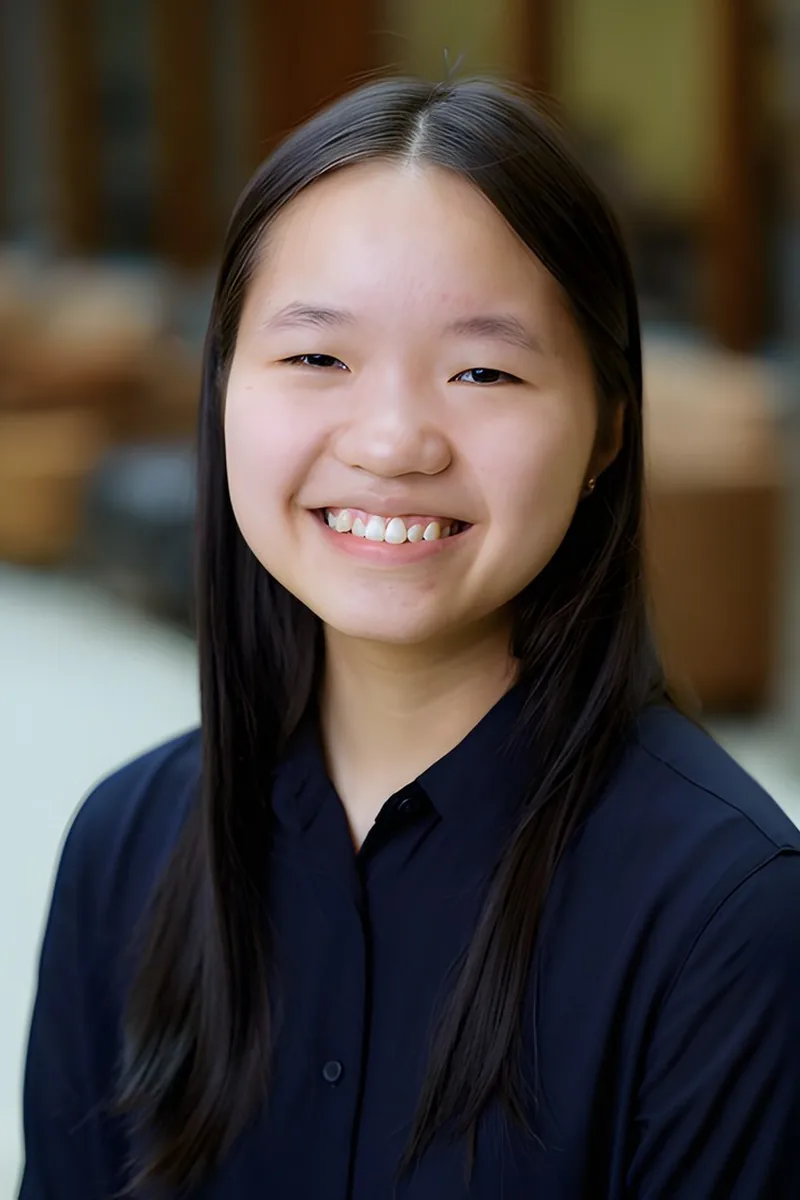
The jump from elementary arithmetic to middle school math introduces ratios, proportional reasoning, and basic equation-solving that can intimidate students if the logic isn't made visible. Ingrid uses concrete examples and real-world scenarios to demystify concepts like fractions-to-decimals conversion and simple inequalities. Her experience leading hands-on workshops for undergraduates translates naturally into clear, patient explanations for younger learners.
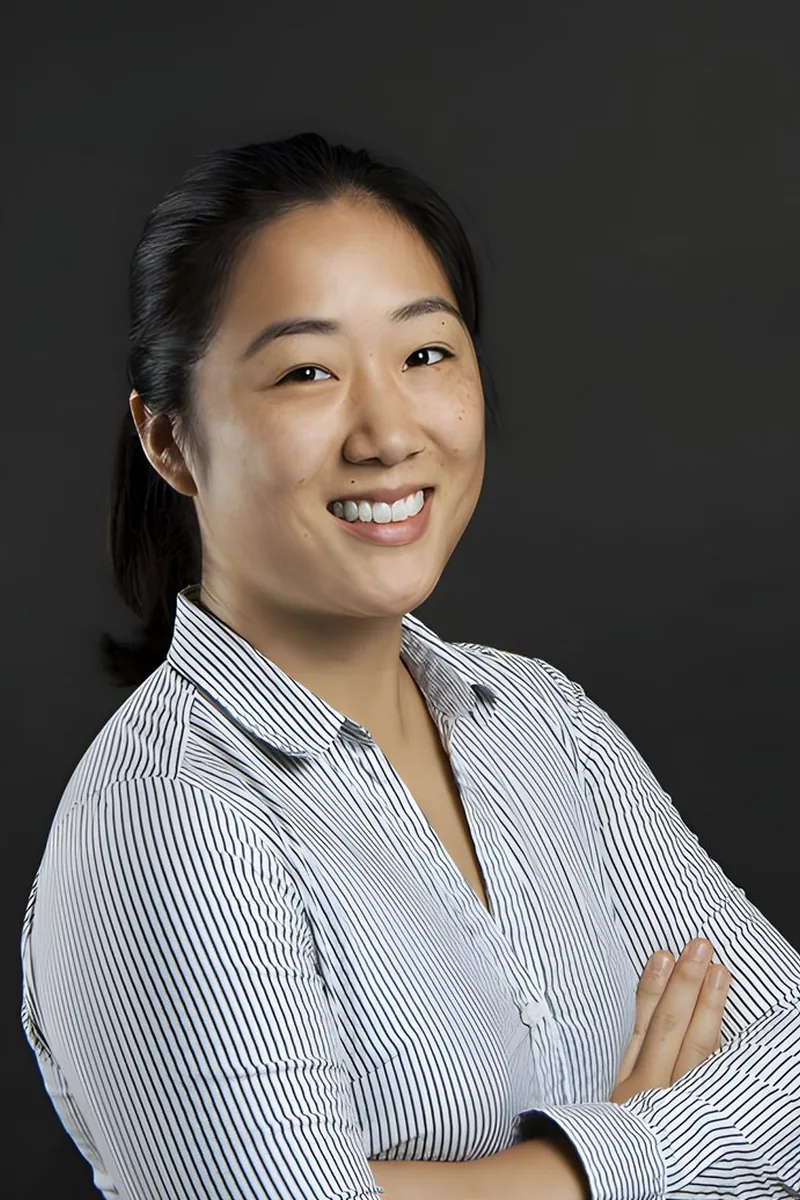
The jump from fifth-grade math to pre-algebra and early geometry catches many middle schoolers off guard, especially when proportional reasoning and negative numbers enter the picture. Asta tackles these transitional concepts by connecting them to patterns students already recognize, making ratios, percents, and coordinate graphing feel less abstract. She holds a 5.0 client rating.
Until about age 16, Viktor thought math was a boring exercise in memorizing formulas — which means he understands exactly how a middle schooler feels staring down fractions, ratios, or integer operations. What changed his mind was a teacher who showed him why the rules work, and that's the approach he brings to every session. He unpacks each concept so students carry understanding forward instead of forgetting everything after the test.
Years of tutoring her younger brother and his friends gave Ellie a front-row seat to the specific places middle schoolers get stuck — fractions turning into decimals, proportional reasoning, and that tricky leap into basic equation solving. She breaks each concept into concrete steps and ties them to scenarios kids actually care about. Her background coaching youth soccer also means she knows how to keep younger learners engaged and motivated.
Before becoming a formal tutor, Benjamin spent his high school years as the go-to classmate friends turned to for math help, and that knack for explaining things in plain language carries over especially well with middle schoolers. He tackles fractions, proportional reasoning, and early algebraic thinking by connecting each concept to the next so students see math as a building process rather than isolated chapters.
Every middle school math struggle Molly sees traces back to something specific — maybe fraction operations never fully clicked, or proportional reasoning feels shaky under word-problem pressure. Her three years as an elementary classroom teacher gave her firsthand knowledge of what students were supposed to master in earlier grades, so she can pinpoint and repair gaps fast. She pulls from multiple curricula she's actually taught, matching the explanation to the student rather than repeating the same script.
The jump from elementary arithmetic to middle school math — ratios, proportional reasoning, negative numbers, basic geometry — requires a different kind of thinking. Todd's graduate training in social work at the University of Chicago sharpened his ability to read how a student processes information and adjust explanations on the fly. He makes the conceptual leaps of sixth through eighth grade math feel less intimidating.
Music theory is applied math — intervals, time signatures, and rhythmic subdivisions all rely on the same proportional reasoning that middle schoolers encounter in fractions, ratios, and pre-algebra. Charles uses that crossover naturally, connecting abstract concepts like integer operations or percentage calculations to concrete patterns students can actually hear and see. Rated 5.0 by students.
Fractions, ratios, and pre-algebra concepts click faster when a student sees how they connect to real situations — and Christine's years tutoring at an Evanston elementary school gave her a clear sense of where middle schoolers typically get stuck in that transition to abstract thinking. Her psychology background also means she picks up on when a student is confused but not saying so, adjusting her explanations on the fly.
Architecture school at UChicago trained Grace to think spatially and proportionally — calculating scale, working with ratios, and translating between drawings and dimensions — which maps directly onto the geometry and proportional reasoning middle schoolers encounter. Her MAT in middle school teaching means she's studied how this age group actually learns, not just what they're supposed to learn. Rated 5.0 by students.
Math was Gabriel's favorite subject growing up, and that genuine enthusiasm shows when he's breaking down topics like fraction operations, ratios, or the first steps into algebraic thinking — he treats each concept as something worth getting curious about, not just getting through. His PhD work in Comparative Human Development at the University of Chicago gives him real insight into how adolescents learn and process new ideas, which shapes how he paces explanations and builds on what a student already knows. Rated 5.0 by students.
The jump from arithmetic to pre-algebraic thinking trips up a lot of middle schoolers, especially with fractions, ratios, and negative numbers. Charlie makes that transition smoother by connecting each new concept to reasoning skills students already have. Rated 5.0 by students, he brings the same rigor to sixth-grade proportions that he does to his advanced math sessions.
Fractions, ratios, and proportions click faster when students see how the concepts connect to each other instead of treating each chapter as a separate thing to memorize. Kruti breaks down these relationships using real-world examples — unit conversions, recipe scaling, percentage problems — that make abstract operations feel intuitive. Her science-heavy background at Northwestern means she's comfortable showing where middle school math actually leads.
The jump from elementary arithmetic to ratios, proportions, and basic geometry trips up a lot of middle schoolers because the problems suddenly require multi-step reasoning. Neha's science background means she naturally ties these skills to real-world contexts — unit conversions, data interpretation, scaling — which gives students a reason to care about the math.
The jump from elementary arithmetic to middle school math — suddenly dealing with negative numbers, two-step equations, and coordinate graphing — can feel like a different subject entirely. Katie thrives in this transitional space, connecting new concepts like ratios and proportions to the number sense students already have. Her genuine enthusiasm for math is the kind that rubs off on sixth and seventh graders who've decided they're "not math people."
The jump from elementary math to middle school math introduces fractions, decimals, proportions, and early algebraic thinking all at once — and each concept builds directly on the last. Zac's interest in education and human development gives him a sharp eye for how younger students process new ideas and where frustration sets in. He keeps sessions structured but conversational, turning problems into puzzles rather than chores.
Teaching middle school math daily in Chicago Public Schools means Elizabeth sees firsthand where students stumble — whether it's proportional reasoning, negative numbers, or translating word problems into expressions. She turns those sticking points into breakthroughs by connecting abstract concepts to problems students actually find interesting. Rated 5.0 by students.
Materials engineering at Northwestern meant Michael spent four years translating physical problems into math — geometry for crystal structures, algebra for stress-strain relationships — so the pre-algebraic and geometric reasoning middle schoolers are building is ground he knows cold. His 34 ACT and 5.0 student rating back that up, but what matters more at this level is his knack for showing a student *how* a formula describes something real, turning abstract operations into something worth remembering.
Fractions, ratios, and proportional reasoning are the concepts that tend to separate students who feel confident in math from those who start to disengage. Ariela re-communicates these ideas in concrete, visual ways that cut through the abstraction. Her knack for organizing information — honed through years of stage management — makes her especially effective at walking through multi-step word problems.
Ratios, proportions, and basic geometry proofs are where a lot of middle schoolers start deciding whether they're "math people" or not. Brett's goal is to make sure that decision goes the right way — he walks through problems step by step, emphasizing the reasoning behind each operation rather than just the answer at the bottom of the page.
Ruth has taught across elementary and middle school levels, so she knows the exact moments where math starts to feel harder — fractions becoming operations, ratios turning abstract, or pre-algebra introducing variables for the first time. She breaks these transitions into manageable steps and keeps students engaged rather than overwhelmed. Rated 4.9 by her students.
Fractions, ratios, and proportional reasoning click faster when students see how the ideas connect instead of treating each unit as a separate set of rules. Alexander ties middle school math concepts to real-world scenarios — like using percentages to compare sports stats or unit rates to plan a budget — so the logic sticks. Rated 4.7 by students, he keeps sessions structured but conversational.
The jump from elementary math to middle school math is really about learning to think in abstractions: ratios, negative numbers, coordinate planes, basic probability. Gabriel spent time tutoring 7th and 8th graders through exactly these concepts and knows how to make the logic behind each topic click before moving on to the next one. He holds a 5.0 rating from past students.
Hanlu scored a 34 on the ACT, which means the math fundamentals middle schoolers are working through — decimals, fractions, ratios, basic geometry — are skills she can explain quickly and from multiple angles when one approach isn't landing. Her international relations coursework at Washington University involves constant data interpretation and quantitative comparison, so she treats these topics as practical tools rather than abstract exercises. She's particularly good at breaking down the transition from straightforward arithmetic into the more symbolic thinking that pre-algebra requires.
Fractions, ratios, and proportions tend to be the concepts where middle schoolers first feel math getting abstract — and that's exactly where Kathleen zeroes in. She identifies what a student already understands and builds from there, turning shaky number sense into real confidence with decimals, percentages, and pre-algebra reasoning.
Knowledge is powerful tool that can change your life and the lives of others. As a tutor my goal is to teach my students how to wield knowledge through embracing their mistakes and teaching them how to learn. I expect my students to approach sessions with an open mind and a willingness to learn. In return, I hope to create an open, positive, and personalized learning space for them and provide them the educational and moral support required to succeed.
I am a student at the University of Chicago majoring in mathematics & comparative human development. I sing in an acapella group, play violin, and on weekends I love to go for bike rides or long runs, see local theater and music performances, and explore the city of Chicago. Through my studies and bike rides and runs, I enjoy working hard and building personalized, step-by-step plans for pursuing the goals I set. Nonetheless, I also believe in the importance of having fun and finding enjoyment in my day-to-day life, which I do through music and geographic exploration. I believe that this enthusiasm, curiosity, and steady work ethic are the keys to achieving goals once thought impossible, and I hope to inspire such a mindset in the people with whom I work.
I am a recent graduate of Princeton University's Mechanical and Aerospace Engineering Department. I am passionate about teaching and mentoring and have done so in multiple capacities over the last four years, including a fellowship during which I taught pre-algebraic math to a group of middle school students from traditionally underserved backgrounds in Saint Paul, MN. I love interacting with students and seeing them grow over the course of their studies. I'm ecstatic at the opportunity to learn alongside them as we venture into educational rabbit holes and uncover key concepts about math, science, and everything else.
The jump from arithmetic to pre-algebraic thinking — working with variables, negative numbers, and proportional reasoning — is where a lot of math confidence gets built or lost. Alyssa is studying secondary math education at Vanderbilt specifically because she wants to be the person who makes that transition feel natural. She's rated 5.0 and genuinely lights up when a student finally owns a concept they were struggling with.
Ratios, proportional reasoning, and early equation-solving form the backbone of middle school math — and they're also the skills that determine whether high school math feels manageable or overwhelming. Sparsh earned his engineering degree from Vanderbilt cum laude, so he understands how these foundational concepts thread into everything that comes later. He makes the "why" behind each procedure clear so students aren't just memorizing steps.
Caroline breaks middle school math into manageable pieces, whether a student is wrestling with proportional reasoning, basic geometry, or their first taste of negative numbers. Her approach connects each concept to real-world examples — something her science and medical training made second nature. Rated 5.0 by students.
The jump from arithmetic to proportional reasoning, integer operations, and basic equation-solving is one of the trickiest transitions in a student's math life. Claire approaches middle school math by making sure each new concept — whether it's ratios, coordinate graphing, or combining like terms — actually builds on something the student already understands. Her experience tutoring high schoolers at Emory taught her that most later struggles trace back to shaky middle school foundations.
Doubling in biology and statistics at Carleton means Aya lives in the math that middle school is building toward — ratios in lab data, variables in models, proportions in experimental design. She's particularly strong at showing students how to organize their scratch work on multi-step problems, a habit that pays off long before calculus but rarely gets taught explicitly. Her 1530 SAT speaks to the kind of quantitative fluency she brings even to foundational topics.
Sam's MS in Accounting means he's spent years where getting the math wrong has real consequences — balancing sheets, reconciling figures, catching errors in multi-step calculations — and that precision translates well to teaching middle schoolers the careful habits they need as arithmetic gives way to algebra. He's particularly effective at showing students how to check their own work on integer operations and equation-solving, building the kind of self-correction instinct that pays off long before high school.
Fractions, ratios, and proportional reasoning click once a student sees how they connect to each other — and that's exactly how Anya teaches middle school math. Her biology coursework at the University of Chicago keeps her using these foundational concepts daily, so she brings real examples that make abstract ideas tangible.
Ratios, proportions, and integer operations click faster when a student sees how they connect to real problems — Lauren draws on her IT and business background to show middle schoolers why these building blocks actually matter. Her 5.0 rating and ongoing volunteer tutoring with Tutoring Chicago in the city keep her sharp on exactly where students this age get stuck.
A strong middle school math student isn't just getting correct answers—they're starting to reason about why proportions work, how negative numbers behave, or what a variable actually represents. Felix, a math major at the University of Chicago, brings that deeper explanatory instinct even to foundational topics like fractions, ratios, and early algebraic thinking.
The jump from fifth-grade arithmetic to ratios, proportions, and negative numbers catches a lot of middle schoolers off guard. Hans tackles these concepts by showing how each new idea builds logically on what students already know — fractions become ratios, number lines extend into negatives, and simple equations start making sense as puzzles rather than rules to memorize. He holds a 5.0 client rating.
A neuroscience major at Northwestern, Seong uses math daily in coursework ranging from statistics to data analysis, giving her a practical perspective on why middle school concepts like ratios, proportions, and integer operations actually matter. She's especially effective at identifying the specific gap — whether it's fractions or negative numbers — that's holding a student back and addressing it directly.
The jump from elementary math to middle school math — fractions, ratios, proportional reasoning, negative numbers — trips up more students than most parents realize. Kathryn tackles these topics by building each lesson around concrete examples before moving to abstract notation. Her experience in a competitive STEM program gave her a knack for explaining foundational concepts in multiple ways until one lands.
Testimonials
Because the right Middle School Math tutor makes all the difference.
Average Session Rating – Based on 3.4M Learner Ratings
Nearby Middle School Math Tutors
Other Peoria Tutors
Related Math Tutors in Peoria
Frequently Asked Questions
Varsity Tutors matches Peoria students with expert Middle School Math tutors for 1-on-1 instruction. We pair each student with a tutor based on their specific needs, learning style, and goals.
Whether you need homework help, exam prep, or want to get ahead, our Middle School Math tutors are ready to help.
Common challenges include gaps from earlier material, difficulty with specific concepts, and trouble applying learning to new problems. These issues can snowball quickly in Middle School Math.
A tutor identifies where you're stuck, fills in gaps, and provides targeted practice. The 1-on-1 format means you get help exactly where you need it.
Tutors work with your student's actual coursework—homework assignments, class notes, and upcoming tests. This keeps tutoring directly relevant to what's happening in the classroom.
When you share information about your student's school and curriculum, we can match you with a tutor who has relevant experience.
All tutors complete background checks, credential verification, and teaching evaluation. Many of our Middle School Math tutors hold advanced degrees or have years of teaching experience.
You can review tutor profiles to find someone with the right background for your student's level and needs.
Many students see improved grades within a few weeks, along with better understanding of Middle School Math concepts and more confidence tackling challenging material.
Tutors track progress and adjust their approach to ensure continued improvement.
Most students benefit from 1-2 sessions per week. More frequent sessions help if your student is significantly behind or has an important exam coming up.
Your tutor can recommend a schedule based on your student's specific situation and goals.
Tutoring is purchased in packages of hours, with rates varying by tutor experience. Varsity Tutors offers several options to fit different budgets and needs.
You can discuss pricing during your consultation to find what works best.
Your tutor will assess where your student is, discuss goals, and start working on priority areas. Most students bring current homework or upcoming test material to focus on.
By the end, you'll have a clear sense of how the tutor can help and a plan for moving forward.
Let’s find your perfect tutor
Answer a few quick questions. We’ll recommend the right plan and match you with a top 5% tutor.