Award-Winning GRE Verbal Tutors
serving Boston, MA
Who needs tutoring?
FEATURED BY


TUTORS FROM
- YaleUniversity
- PrincetonUniversity
- StanfordUniversity
- CornellUniversity
Award-Winning GRE Verbal Tutors serving Boston, MA

Certified Tutor
Jacob
Reading comprehension passages on the GRE reward the same close-reading instincts Jacob built through two degrees in literature — spotting an author's implicit argument, weighing the function of a specific paragraph, and eliminating answer choices that subtly distort the text. He also digs into sent...
Vanderbilt University
Bachelors in Literature

Certified Tutor
10+ years
Aaron
The GRE Verbal section rewards a specific kind of reading — identifying argument structure, spotting assumptions, and choosing vocabulary based on contextual logic rather than memorization. Aaron pairs his analytical engineering mindset with strong writing skills honed through college essays and lit...
The University of Texas at Dallas
Bachelors, Mechanical Engineering
Duke University
Current Grad Student, Mechanical Engineering

Certified Tutor
Asta
The GRE Verbal section rewards the kind of close reading and argument analysis that a University of Chicago political science education drills relentlessly — picking apart an author's reasoning, weighing evidence, and spotting logical gaps. Asta applies that training directly to text completion, sen...
University of Chicago
Bachelor in Arts in Political Science

Certified Tutor
10+ years
Sherry
Linguistics training at the University of Chicago — where Sherry studied how syntax, semantics, and pragmatics interact — built the exact analytical toolkit GRE Verbal rewards: recognizing how a subordinate clause qualifies a claim, why one near-synonym fits a sentence's logic while another subtly d...
University of Chicago
Bachelor's degree in psychology and linguistics

Certified Tutor
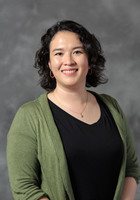
Ethan
Scoring a 36 ACT composite and a 1510 SAT required the same core skill GRE Verbal tests at a graduate level — rapidly parsing complex passages and pinpointing how word choice shapes an author's argument. Ethan's environmental science and public policy background means he's spent years reading the ki...
Harvard University
Bachelor in Arts, Environmental Science and Public Policy
Certified Tutor
9+ years
Michelle
The GRE Verbal section rewards the kind of precise reading Michelle honed across years of parsing dense academic literature during her PhD. She breaks down text completion and reading comprehension questions by teaching students to identify argument structure, eliminate trap answers, and decode unfa...
University of Iowa
Bachelor of Science, Biomedical Engineering
Northeastern University
Doctor of Philosophy, Biomedical Engineering

Certified Tutor
10+ years
Nina
The GRE Verbal section rewards a specific kind of reading — fast, precise, and skeptical of every answer choice. Nina's experience writing and editing at the graduate level at Columbia sharpened her ability to dissect reading comprehension passages and sentence equivalence traps, and she walks stude...
Columbia University
Masters in biostatistics
Northwestern University
Bachelor of Arts in biological sciences (focus in neurobiology)
Columbia University in the City of New York
Current Grad Student, Biostatistics

Certified Tutor
Reading comprehension on the GRE Verbal section isn't about understanding every word — it's about identifying argument structure, author tone, and the function of specific sentences within a passage. Tom's PhD in American Studies involved years of exactly this kind of close analytical reading across...
Boston University
PHD, American Studies
Harvard University
Bachelors

Certified Tutor
Catherine
Catherine's PhD work in history means she reads graduate-level academic prose all day — the same dense, argument-heavy writing the GRE Verbal section throws at test-takers. She brings that fluency to Reading Comprehension by teaching students how to map an author's claims and qualifications quickly,...
Stanford University
PHD, History
Princeton University
Bachelor in Arts

Certified Tutor
Sociology training at Wesleyan — where Reid graduated with High Honors — means years of wading through the kind of theory-heavy academic prose that populates GRE Verbal passages: authors qualifying claims, embedding counterarguments mid-paragraph, and using precise language to distinguish between co...
Harvard University
PHD, Education
Wesleyan University
Bachelor in Arts, Sociology
Practice GRE Verbal
Free practice tests, flashcards, and AI tutoring for GRE Verbal
Nearby GRE Verbal Tutors
Other Boston Tutors
Related Graduate Test Prep Tutors in Boston
Frequently Asked Questions
Score improvement varies based on your starting point and study commitment, but many students see gains of 3-5 points on the 130-170 scale through focused preparation. The Verbal section rewards both strategic test-taking skills and deeper reading comprehension, so improvement often comes from targeted practice on question types where you're weakest—whether that's Text Completion, Sentence Equivalence, or Reading Comprehension.
Working with a tutor helps you identify exactly which skills need work and develop a study plan that targets those areas, rather than spending time on content you've already mastered. Most students benefit from 8-12 weeks of consistent preparation combined with regular practice tests to track progress.
The Verbal section gives you 30 minutes for 20 questions, which means roughly 90 seconds per question on average. However, not all questions take equal time—Text Completion questions typically need less time than longer Reading Comprehension passages, so effective pacing means knowing which questions to tackle first.
Many test-takers benefit from starting with question types they find easier to build confidence and momentum, then tackling harder passages with more time remaining. A tutor can help you develop a personalized pacing strategy based on your strengths and practice test data, plus teach you when it's worth spending extra time on a question versus making an educated guess and moving forward.
GRE Reading Comprehension challenges you to understand main ideas, author intent, and specific details under time pressure—skills that go beyond just reading carefully. The key is learning to read actively, identifying the passage structure and what the author is emphasizing, rather than trying to absorb every detail.
Common trouble spots include inference questions (where you need to go beyond what's explicitly stated), paired passages (which require comparing two different perspectives), and dense academic subjects. Tutors help you develop annotation strategies that work within time limits, practice identifying question patterns, and build the stamina needed for back-to-back passages. Working through official practice materials with feedback accelerates improvement more than reading alone.
These question types test vocabulary in context and logical reasoning—you need to understand how sentences fit together, not just know word definitions. The most effective approach is reading for logic first (what word would make sense based on the sentence structure?) and then checking if that word matches the answer choices, rather than trying every option.
Sentence Equivalence questions are particularly tricky because both correct answers must create nearly identical meanings, which requires precision. A tutor can teach you to identify signal words (but, however, therefore, because) that guide you toward the right answers, help you build a strategic vocabulary list focused on words that actually appear in the test, and give you feedback on your reasoning process—not just whether you got the answer right.
Most students benefit from taking at least one full practice test per week during active GRE preparation, ideally under timed conditions that mimic the real test. This frequency gives you regular data on your progress, helps you identify patterns in which question types trip you up, and builds test-day stamina and confidence.
The GRE includes two official practice tests at no cost, and additional official practice materials are available—using these official resources matters because the real test is more predictable than random prep materials. Between full tests, focused practice on specific question types (15-20 minutes at a time) keeps your skills sharp without burning you out. A tutor can help you interpret your practice test results to pinpoint where to focus your study time most effectively.
Test anxiety on the Verbal section often comes from time pressure, challenging vocabulary, or the feeling that you're unsure of your answers. Building genuine confidence through targeted practice is the foundation—knowing you've successfully solved similar questions before makes the test feel less threatening.
Concrete strategies help too: developing a consistent pre-test routine, practicing the skill of "moving on" when you're uncertain (which the test rewards), and using breathing techniques during the actual exam. Many students also find it helpful to reframe the test as a learning opportunity rather than a pass/fail judgment. A tutor can work with you on test-day strategies, provide honest feedback on your readiness, and help you identify which practice situations most closely replicate real test conditions so you arrive at test day feeling prepared.
Most students preparing for the GRE benefit from 8-12 weeks of focused study, though your timeline depends on your starting point and target score. If you're aiming for a score in the 160+ range, or if reading comprehension and vocabulary are significant challenges, you may want 12+ weeks to build skills thoroughly.
Working with a tutor helps compress your timeline because instead of wasting time on trial-and-error, you get a customized study plan focused on your specific weaknesses from day one. Even starting with a few weeks of tutoring—where you identify your trouble areas and build foundational strategies—can help you study more efficiently on your own afterward, or you can continue with regular sessions for accountability and feedback as test day approaches.
Connect with GRE Verbal Tutors in Boston
Get matched with local expert tutors