Award-Winning AP Chemistry Tutors
serving Kalamazoo, MI
AP Chemistry
Tutors in Kalamazoo
Private 1-on-1 tutoring, weekly live classes for academic support, test prep & enrichment, practice tests and diagnostics, and more to elevate grades and test scores.
Based on 3.4M Learner Ratings
UniversitiesSchools & Universities
DeliveredHours Delivered
ProficiencyGrowth in Proficiency
Who needs tutoring?
No obligation. Takes ~1 minute.

Raveena's bioinformatics degree at VCU means she doesn't just know AP Chemistry's content — she applies it daily, using computational tools to analyze molecular structures and chemical data in ways that make topics like electron configuration and periodic trends feel concrete. Her 8-year direct med program has taken her well beyond the AP curriculum through organic chemistry and biochemistry, giving her a clear picture of which foundational concepts the free-response section rewards most. Rated 4.9 by students.
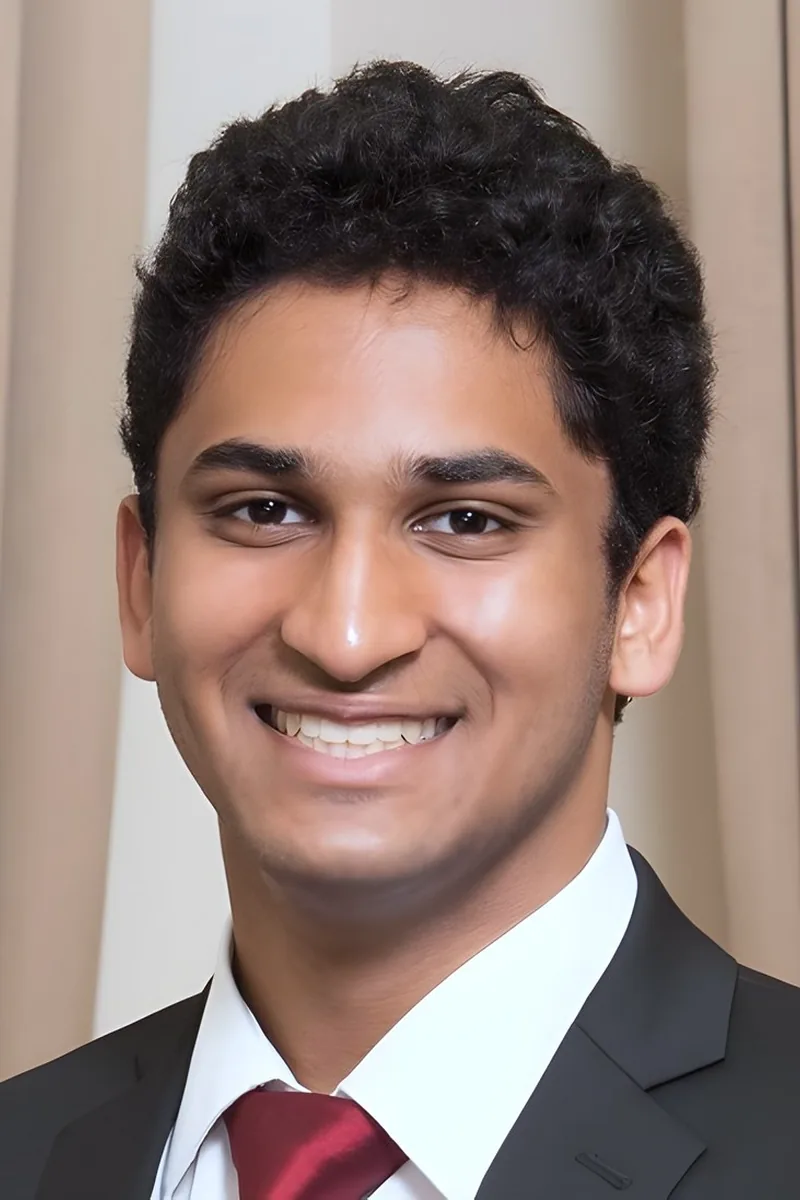
Pratik's strongest subject is chemistry, and it shows — he tutors it at both the high school and college level from his home base as a premed biology major at Cornell. He digs into the conceptual logic behind equilibrium, thermodynamics, and electrochemistry so that students can reason through unfamiliar free-response prompts instead of relying on memorized shortcuts.
I am a undergraduate freshman of the University of Michigan, studying business at the Ross School of Business. Working together with students and having a good time while seeing steady improvements has proven to provide me great joy. I believe that communication and relationship building is crucial for students to open up about their struggles and also for me to identify problems they don't realize they can improve on, so this is a key aspect of all of my lessons. During my free time, I enjoy playing sports or snacking on desserts while binge-watching Friends!
I am a second year medical student at Wayne State University. I graduated from Grand Valley State University with two bachelor's degrees in Biomedical Sciences and Classics with a minor in Chemistry. I have been tutoring for four years in various subjects, but my favorites are Chemistry and Latin. I have experience tutoring from middle school to college age students and enjoy working with them one on one to identify their weaknesses and create a plan to rectify them. I believe that each student learns differently and finding the best strategies for them will lead to their success.
Biology majors at Michigan often underestimate how much AP Chemistry overlaps with what they're already learning — Krisha didn't, and her coursework in general biology gave her a working fluency with chemical bonding, solution chemistry, and the thermodynamic principles that drive biological systems. She teaches AP Chem's trickiest conceptual leaps, like why Le Chatelier's principle actually predicts what it predicts, by unpacking the molecular reasoning instead of handing students a shortcut to memorize. Rated 5.0 by students.
Thermochemistry, equilibrium constants, electrochemical cells — AP Chemistry demands that students think quantitatively about reactions, not just balance them. Carly earned her degree in industrial engineering, which means stoichiometry and energy calculations are second nature to her. She teaches students to map out multi-step problems before touching a calculator, a strategy that pays off on both the multiple-choice and free-response sections.
Few AP Chemistry tutors have actually conducted graduate-level research at both Windsor and Cornell, which means Alaaeddeen can unpack equilibrium, thermodynamics, and kinetics with the depth the AP exam demands. He knows exactly where the free-response questions test conceptual understanding versus calculation, and he drills both. His 5.0 rating speaks to how clearly he communicates even the trickiest material.
Between earning a biochemistry degree magna cum laude from UMBC and completing three years of medical school at Michigan, Uchenna has worked through every layer of chemistry that AP students encounter — and then watched those same principles reappear in pharmacology and pathophysiology. He digs into topics like electrochemistry and reaction thermodynamics by showing how the math connects to molecular behavior, drawing on the kind of deep conceptual fluency that comes from years of teaching peers through complex material. Rated 4.9 by students.
Kirby's biochemistry degree from the University of Michigan means she didn't just pass through general and organic chemistry — she built on those courses through upper-level work where concepts like thermodynamics, kinetics, and molecular structure had to be second nature. She unpacks AP Chemistry's trickiest areas, particularly equilibrium and acid-base problems, by connecting the math to the molecular behavior driving it. Rated 4.9 by students.
Tyler is working toward a chemistry doctorate at the University of Michigan, which means he's teaching and studying the exact college-level material — kinetics, thermodynamics, electrochemistry — that AP Chemistry condenses into a single high school year. He unpacks tough quantitative concepts like ICE tables and calorimetry by connecting the math to what's physically happening in solution, so the logic sticks long after the exam. Rated 5.0 by students.
Pursuing a dual degree in Movement Science and Biopsychology, Cognition and Neuroscience at the University of Michigan, Vikhyathi has taken the rigorous college-level chemistry sequence where topics like periodic trends, bonding theory, and intermolecular forces aren't abstract — they're the foundation for understanding how drugs interact with neural receptors. She leverages that context to teach AP Chemistry's conceptual side, particularly molecular geometry and electron configuration, by connecting what's on paper to what's happening at the atomic level. Her 35 ACT speaks to the analytical precision she brings to quantitative problem-solving on exam day.
Chemical engineering graduate work means Raha has spent years inside the thermodynamics, kinetics, and equilibrium problems that form AP Chemistry's most demanding units — not as textbook exercises, but as tools for designing real reactors and separation processes. She unpacks concepts like Gibbs free energy and Le Chatelier's principle by showing students the industrial logic behind them, which makes the abstract math feel purposeful and easier to retain.
I'm Yanti, a USC award-winning writing instructor, an emergency medicine continuing educator, and a biology major with a chemistry minor. For 36 years, I've taught students how to master difficult concepts across a very wide range of subjects. While I focus on professional licensing and standardized exam test prep, I've taught most major subjects at every level and ability. I love teaching, not lecturing. You will get information and techniques in any way that works for you: color-coded charts, visual mind maps, easy-to-memorize songs. Whatever the format, I break complex ideas into clear, doable steps that make sense to you. No fluff. No jargon. Just clarity, confidence, and even some fun. In our sessions, you get structure, support, and a coach who makes learning enjoyable and easy again. If you're ready to succeed, laugh a little, and learn a lot, please book a lesson. I'd love to work with you. Thank you!
Earning High Honors in chemistry while tutoring the subject through NHS gave Shobhna a dual perspective — she knows both where the content gets difficult and how to reshape explanations until they land. As an incoming Michigan State freshman, she's especially sharp on the foundational AP Chemistry topics like periodic trends, nomenclature, and stoichiometric setups that students need locked down before tackling the exam's more complex free-response questions.
As an Academic Fellow at Rice, Maddie tutors college-level chemistry and biochemistry, so she's deeply familiar with the rigor AP Chemistry demands — from equilibrium calculations to thermodynamics and electrochemistry. She tackles the toughest free-response questions by teaching students to connect conceptual reasoning with precise mathematical setups, the combination the exam rewards most.
I am most passionate about biology and chemistry. I am a firm proponent of education, believing it to be absolutely necessary for an improved quality of life, and I try to impart this appreciation to all of my students.
AP Chemistry's toughest problems — multi-step equilibrium calculations, thermodynamic predictions, electrochemistry — demand the kind of quantitative fluency that comes naturally to a physics major. Nima walks through these concepts by building from first principles, connecting Le Chatelier's principle or Gibbs free energy to the underlying logic rather than a memorized rule set. His 1580 SAT speaks to the precision he brings to problem-solving.
A biophysics major and premed student at Johns Hopkins, Czarina is currently deep in the college chemistry sequence that AP Chemistry is designed to preview — so she knows exactly which concepts, like molecular orbital theory and colligative properties, carry the most weight on the exam versus which ones fade into background noise. She earned a 770 on the SAT Chemistry Subject Test and teaches the subject by linking quantitative problem-solving to the physical intuition behind each reaction. Rated 5.0 by students.
Teaching 12th grade Chemistry at a high-performing Philadelphia magnet school means Kathleen sees exactly which AP Chemistry concepts — from equilibrium reasoning to periodic trends — trip students up on exams, and she's built classroom-tested strategies for each one. Her Penn M.S.Ed in Secondary Science Education and her chemistry degree give her both the content depth and the pedagogical training to explain why a reaction proceeds the way it does, not just how to get the right answer. Rated 5.0 by students.
Blake's neuroscience studies at Vanderbilt required college-level chemistry where concepts like molecular bonding, reaction energetics, and acid-base chemistry weren't electives — they were foundations for understanding how the brain works at a chemical level. That background means he can teach AP Chemistry's trickiest quantitative problems, from stoichiometry to gas laws, while explaining the molecular logic behind each step. His 34 ACT and 5.0 rating speak to the rigor and clarity he brings to exam preparation.
AP Chemistry's free-response questions demand more than correct calculations — they want students to explain why a reaction proceeds, connect molecular structure to macroscopic behavior, and justify claims with particulate-level reasoning. Jake digs into those conceptual explanations alongside the quantitative work, so students aren't blindsided by the written portions of the exam.
Cornell's chemical engineering program put Rahul through physical chemistry, thermodynamics, and reaction engineering courses where AP Chemistry concepts like enthalpy, equilibrium, and kinetics were just the starting point — so he can teach those topics with the depth that makes free-response questions feel manageable. He's especially sharp on thermochemistry, his self-described favorite, and connects energy diagrams and Hess's law to the industrial-scale processes he studied as an engineer. Rated 4.9 by students.
Neuroscience at Yale meant David didn't just take chemistry — he needed it to make sense of membrane potentials, neurotransmitter synthesis, and receptor pharmacology, all of which rest on principles like electrochemistry and molecular interactions that show up directly on the AP Chemistry exam. That gives him a knack for explaining why a reaction proceeds spontaneously or how intermolecular forces dictate physical properties, because he learned those concepts as tools for solving real problems, not as isolated textbook chapters. Rated 5.0 by students.
Thermodynamics, equilibrium, and reaction kinetics form the backbone of AP Chemistry — and they're also foundational to Owen's neuroscience studies at Brown, where understanding chemical behavior at the molecular level is non-negotiable. He unpacks abstract concepts like Gibbs free energy and intermolecular forces by tying them to tangible examples, making the logic behind each problem visible before students ever touch a calculator.
Running an immunology lab at Columbia University Medical Center means Matthew deals with chemical assays, buffer systems, and reaction protocols daily — the kind of hands-on chemistry that makes AP topics like acid-base equilibria and reaction energetics feel concrete rather than abstract. His physics degree also sharpens how he teaches the thermodynamics and kinetics portions of the exam, where understanding energy relationships mathematically is just as important as knowing the chemistry. A 35 ACT and 1540 SAT reflect the analytical precision he brings to exam preparation.
Thermodynamics, equilibrium, and electrochemistry each require a different style of problem-solving, and AP Chemistry crams all of them into one exam. Andrew's biochemistry degree and lab research give him deep fluency with these concepts at the molecular level, so he can unpack why Le Chatelier's principle works or how entropy drives spontaneity — not just which formula to plug numbers into.
Testimonials
Because the right AP Chemistry tutor makes all the difference.
Average Session Rating – Based on 3.4M Learner Ratings
Practice AP Chemistry
Free practice tests, flashcards, and AI tutoring for AP Chemistry
Other Kalamazoo Tutors
Related Science Tutors in Kalamazoo
Frequently Asked Questions
Varsity Tutors matches Kalamazoo students with expert AP Chemistry tutors for 1-on-1 instruction. We pair each student with a tutor based on their specific needs, learning style, and goals.
Whether you need homework help, exam prep, or want to get ahead, our AP Chemistry tutors are ready to help.
Common challenges include gaps from earlier material, difficulty with specific concepts, and trouble applying learning to new problems. These issues can snowball quickly in AP Chemistry.
A tutor identifies where you're stuck, fills in gaps, and provides targeted practice. The 1-on-1 format means you get help exactly where you need it.
Tutors work with your student's actual coursework—homework assignments, class notes, and upcoming tests. This keeps tutoring directly relevant to what's happening in the classroom.
When you share information about your student's school and curriculum, we can match you with a tutor who has relevant experience.
All tutors complete background checks, credential verification, and teaching evaluation. Many of our AP Chemistry tutors hold advanced degrees or have years of teaching experience.
You can review tutor profiles to find someone with the right background for your student's level and needs.
Many students see improved grades within a few weeks, along with better understanding of AP Chemistry concepts and more confidence tackling challenging material.
Tutors track progress and adjust their approach to ensure continued improvement.
Most students benefit from 1-2 sessions per week. More frequent sessions help if your student is significantly behind or has an important exam coming up.
Your tutor can recommend a schedule based on your student's specific situation and goals.
Tutoring is purchased in packages of hours, with rates varying by tutor experience. Varsity Tutors offers several options to fit different budgets and needs.
You can discuss pricing during your consultation to find what works best.
Your tutor will assess where your student is, discuss goals, and start working on priority areas. Most students bring current homework or upcoming test material to focus on.
By the end, you'll have a clear sense of how the tutor can help and a plan for moving forward.
Let’s find your perfect tutor
Answer a few quick questions. We’ll recommend the right plan and match you with a top 5% tutor.