Award-Winning Statistics Tutors
serving Kalamazoo, MI
Statistics
Tutors in Kalamazoo
Private 1-on-1 tutoring, weekly live classes for academic support, test prep & enrichment, practice tests and diagnostics, and more to elevate grades and test scores.
Based on 3.4M Learner Ratings
UniversitiesSchools & Universities
DeliveredHours Delivered
ProficiencyGrowth in Proficiency
Who needs tutoring?
No obligation. Takes ~1 minute.
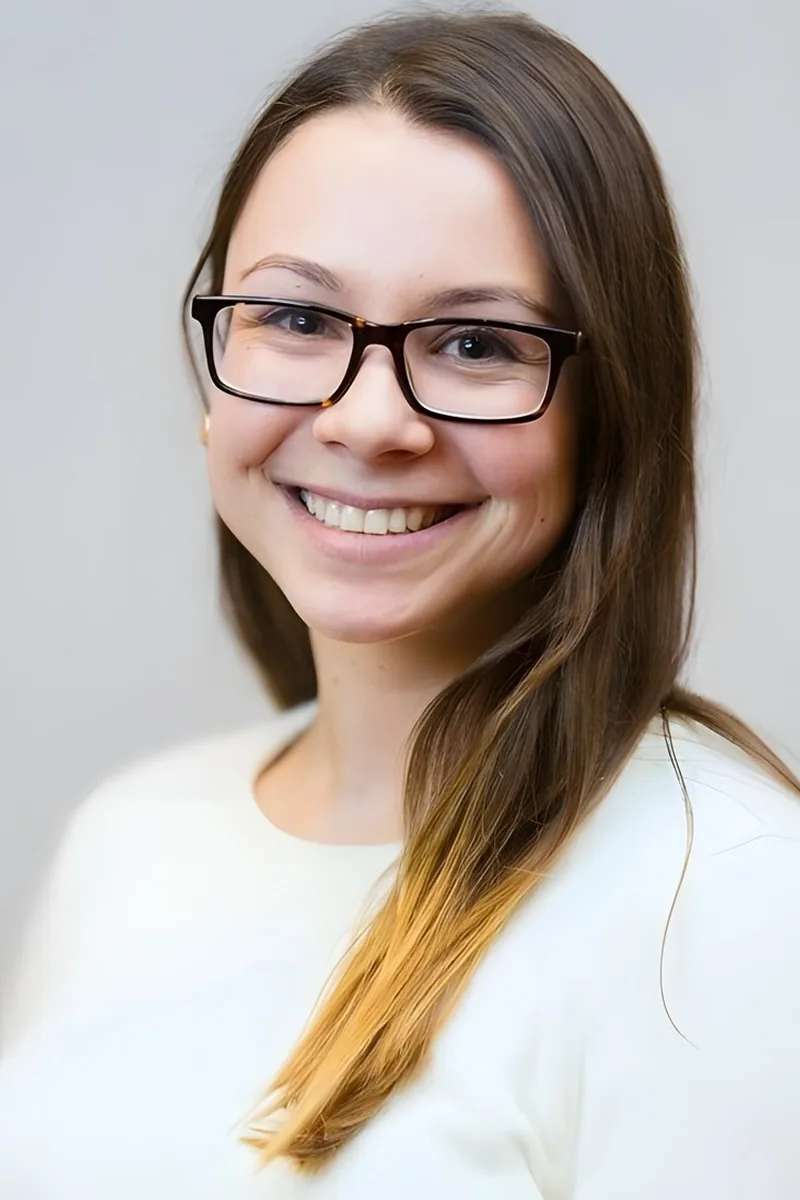
Running regression analyses, interpreting p-values, and choosing between parametric and nonparametric tests are things Martha does routinely in her social psychology research at Michigan. That hands-on fluency means she can explain not just how to compute a standard deviation or set up a hypothesis test, but why each step matters and what the results actually tell you. Rated 5.0 by students.

At Michigan Ross, Kerry runs into statistics through a business lens — market analysis, forecasting, and interpreting data to support strategic decisions, which means she teaches concepts like regression, probability, and hypothesis testing with a practical edge most textbook-only tutors lack. Her 33 ACT score reflects sharp quantitative reasoning, and she applies that same precision to breaking down problems involving distributions and variability so the logic behind each calculation is clear.
Economics training at the undergraduate level is essentially applied statistics — regression models, probability distributions, hypothesis testing. Jack's econ degree means he doesn't just teach the formulas; he connects them to real scenarios where data actually drives decisions. That practical lens makes abstract concepts like standard deviation and confidence intervals far easier to internalize.
Between his biomedical engineering degree and his graduate research, Adam has run enough statistical analyses to know which concepts actually confuse students: conditional probability, hypothesis testing, and interpreting p-values top the list. He walks through each problem by asking what the data is actually telling you before touching any formulas. That applied perspective makes topics like regression and confidence intervals feel purposeful rather than abstract.
Economics and statistics share a language — probability distributions, hypothesis testing, and regression all show up in both fields. Thomas studied economics and mathematics as an undergraduate, so he teaches statistics with an eye toward what these tools actually measure and why a particular test applies to a particular dataset. That context makes concepts like p-values and confidence intervals click faster.
I am a current medical student at the University of Michigan Medical School. I studied biology, business and Spanish at the University of Alabama, graduating summa cum laude. During college, I worked as a tutor with a tutoring company similar to Varsity Tutors where I taught college/high school/middle school Spanish, Chemistry, English, Biology, and Math. I also worked as an English as a Second Language volunteer instructor for 3 years during college and was an English Teaching Assistant at the Universidad Pontificia Bolivariana in Medellin, Colombia.
I'm a premedical student at Cornell University with extensive experience tutoring students, especially in chemistry at the high school and undergraduate level, writing at the high school and undergraduate level, and SAT/ACT prep.
I am a undergraduate freshman of the University of Michigan, studying business at the Ross School of Business. Working together with students and having a good time while seeing steady improvements has proven to provide me great joy. I believe that communication and relationship building is crucial for students to open up about their struggles and also for me to identify problems they don't realize they can improve on, so this is a key aspect of all of my lessons. During my free time, I enjoy playing sports or snacking on desserts while binge-watching Friends!
I am a recent graduate of the University of Michigan in Ann Arbor. I received my Master's degree in Biomedical Engineering with a minor in Computer Science and am currently applying to medical school. During college, I enjoyed tutoring children through a program called the Detroit Education Society, where I developed a passion for teaching the underserved, helping to bridge the education gaps between communities. While I tutor a broad range of subjects, I am most passionate about Math, Science, and English. I focus on teaching the fundamentals and inspiring students to love what they learn. In my spare time, I enjoy playing basketball, reading books, and hanging out with my friends.
I am 26 years old born and raised in Seattle Washington, University of British Columbia graduate and current 3rd year medical student. You may look at my accomplishments and assume I must have had a very consistent successful education process. This is not necessarily true, I struggled throughout high school with coursework and was slowly falling behind my peers. I was working very hard but was not getting the academic results that I wanted. I also reached out to academic tutors to help me understand core concepts in various subjects that my peers were not having any trouble with. Even during my undergraduate degree, I reached out to various academic tutors to give me an extra viewpoint on various difficult subjects and concepts. I understand what it is like to need extra help with coursework, I understand growing curious minds and the concepts that give many trouble because I have been through it. I am now a dean's list student at the top of my class in Medical school, and I can truly see how possible it is for any student to reach their academic goals no matter where you have come from. I believe the most intelligent individuals are the ones who can identify their weakness and seek help from others to succeed.
I am currently a sophomore at the University of Michigan Ann Arbor. I received my high school diploma from Northville High School with a perfect 4.0 GPA. I have been tutoring students for many years now in topics such as math, science, and Spanish. It is my goal to create a personalized plan for my students to help them best succeed in whatever they desire. I will work passionately to help you achieve outstanding standardized test scores, great grades in school, and a broader knowledge of whatever topic you would like to know more about. I can tutor in ACT prep (I received a 36/36), SAT prep (I received a 1560/1600), PSAT prep (I received a 1500/1520 - National Merit Finalist), AP prep, math, science, and Spanish. I can work with students of any age. Please feel free to message me for more information or set up a meeting!
I'm your girl! I majored in Biochemistry at the University of Michigan and am looking to help any students in need of assistance.
My background in math, economics, and finance has taught me to focus on understanding rather than memorizing. Having recently been a student myself, I understand how students think and where they can get stuck, which helps me stay patient and explain things from their perspective. As a bilingual speaker of English and Mandarin, I can also explain concepts in both languages when helpful.
As an economics major at Yale, Conor uses statistical methods constantly — regression analysis, probability distributions, hypothesis testing — so he teaches statistics as a practical toolkit rather than an abstract set of formulas. He's especially sharp at walking through the logic behind concepts like p-values and confidence intervals, which tend to confuse students who try to memorize procedures without understanding what the numbers actually mean.
Studying economics at Brown meant Carter lived inside datasets — running regressions, testing hypotheses, and interpreting distributions long before he started tutoring. That firsthand experience makes him especially effective at teaching concepts like standard deviation, normal models, and conditional probability in ways that feel grounded rather than abstract. He's rated 5.0 by students.
Interpreting p-values, choosing the right hypothesis test, and knowing when a confidence interval actually tells you something useful — these are the concepts that separate students who understand statistics from those just plugging into calculators. Zachary brings a researcher's perspective from his biochemistry and biophysics training, where statistical analysis was built into every experiment. Rated 5.0 by students.
Yi's graduate training in research and experimental psychology required heavy use of statistical methods — from hypothesis testing and ANOVA to regression modeling and interpreting p-values in published studies. That hands-on experience with real data analysis means she teaches statistics as a tool for answering questions, not just a set of formulas to memorize.
Emily's computational biology concentration at Cornell is essentially applied statistics — she uses probability distributions, confidence intervals, and regression analysis to interpret biological data every week. That hands-on context lets her explain statistical reasoning through concrete examples rather than abstract formulas.
Between her sociology research in undergrad and her MBA coursework, Krupa has run enough regressions, hypothesis tests, and probability models to know exactly where students get tripped up. She tackles the conceptual side — why you'd choose a t-test over a z-test, what a p-value actually means — so the formulas stop feeling arbitrary. Her 4.9 rating speaks to how clearly she communicates these ideas.
Studying economics at the undergraduate level means living inside probability distributions, hypothesis tests, and regression models — so Laura treats statistics as a language she already speaks fluently. She breaks down concepts like p-values and confidence intervals by tying them to concrete decision-making scenarios rather than abstract formulas. Her 5.0 rating speaks to how clearly that approach translates for students.
Probability distributions, hypothesis testing, confidence intervals — statistics asks students to think in a fundamentally different way than most math courses. Elliot spent years running statistical analyses on neural data during his PhD research, which means he can show exactly how concepts like p-values and regression actually function in practice, not just on a formula sheet.
Understanding statistics means learning to ask the right questions about data before running any test: Is the sample random? What's the shape of the distribution? Could this result have happened by chance? Ethan's policy background gave him years of practice interrogating datasets and translating statistical output into plain-language conclusions, a skill he now brings directly to topics like hypothesis testing and regression analysis.
Working as a research assistant in Yale's cognitive neuroscience lab meant Emily ran statistical analyses regularly — hypothesis testing, probability distributions, and interpreting p-values were part of her daily routine. That hands-on experience makes her especially effective at explaining why a statistical method works, not just how to execute it on a calculator.
A PhD statistician who also holds a biomedical engineering degree, Sam teaches introductory and intermediate statistics with an unusual amount of real-world context. Whether the topic is hypothesis testing, confidence intervals, or regression, he unpacks the logic behind each method so students can interpret results critically, not just run calculations.
Kaylah's graduate work in Computational Social Science at the University of Chicago is built almost entirely on statistical methods — probability distributions, hypothesis testing, regression modeling, and data interpretation. She teaches statistics the way she actually uses it: starting with what question you're trying to answer, then selecting and applying the right tool. Her background in cognitive neuroscience research means every example she pulls from is grounded in real data.
Testimonials
Because the right Statistics tutor makes all the difference.
Average Session Rating – Based on 3.4M Learner Ratings
Practice Statistics
Free practice tests, flashcards, and AI tutoring for Statistics
Other Kalamazoo Tutors
Related Math Tutors in Kalamazoo
Frequently Asked Questions
Varsity Tutors matches Kalamazoo students with expert Statistics tutors for 1-on-1 instruction. We pair each student with a tutor based on their specific needs, learning style, and goals.
Whether you need homework help, exam prep, or want to get ahead, our Statistics tutors are ready to help.
Common challenges include gaps from earlier material, difficulty with specific concepts, and trouble applying learning to new problems. These issues can snowball quickly in Statistics.
A tutor identifies where you're stuck, fills in gaps, and provides targeted practice. The 1-on-1 format means you get help exactly where you need it.
Tutors work with your student's actual coursework—homework assignments, class notes, and upcoming tests. This keeps tutoring directly relevant to what's happening in the classroom.
When you share information about your student's school and curriculum, we can match you with a tutor who has relevant experience.
All tutors complete background checks, credential verification, and teaching evaluation. Many of our Statistics tutors hold advanced degrees or have years of teaching experience.
You can review tutor profiles to find someone with the right background for your student's level and needs.
Many students see improved grades within a few weeks, along with better understanding of Statistics concepts and more confidence tackling challenging material.
Tutors track progress and adjust their approach to ensure continued improvement.
Most students benefit from 1-2 sessions per week. More frequent sessions help if your student is significantly behind or has an important exam coming up.
Your tutor can recommend a schedule based on your student's specific situation and goals.
Tutoring is purchased in packages of hours, with rates varying by tutor experience. Varsity Tutors offers several options to fit different budgets and needs.
You can discuss pricing during your consultation to find what works best.
Your tutor will assess where your student is, discuss goals, and start working on priority areas. Most students bring current homework or upcoming test material to focus on.
By the end, you'll have a clear sense of how the tutor can help and a plan for moving forward.
Let’s find your perfect tutor
Answer a few quick questions. We’ll recommend the right plan and match you with a top 5% tutor.