Award-Winning MCAT Chemical and Physical Foundations of Biological Systems Tutors
serving Bronx, NY
Who needs tutoring?
FEATURED BY


TUTORS FROM
- YaleUniversity
- PrincetonUniversity
- StanfordUniversity
- CornellUniversity
Award-Winning MCAT Chemical and Physical Foundations of Biological Systems Tutors serving Bronx, NY
Certified Tutor
6+ years
Rhea
The MCAT's Chemical and Physical Foundations section blends general chemistry, organic chemistry, physics, and biochemistry into passage-based problems that reward fast, integrated thinking. As a pre-med biology major at the University of Chicago, Rhea has recently worked through this exact content ...
University of Chicago
Bachelor of Science, Biology, General
Certified Tutor
Tony
Tackling the Chemical and Physical Foundations section requires connecting general chemistry and physics concepts to biological systems — something Tony did routinely as a biology major at Yale preparing for medical school. He breaks down high-yield topics like enzyme kinetics, fluid dynamics, and e...
Yale University
Bachelor of Science in Biology
Certified Tutor
10+ years
Samantha
The Chem/Phys section of the MCAT demands more than content recall — it requires applying general chemistry, organic chemistry, and physics concepts within passage-based experimental scenarios. Samantha, currently in medical school, unpacks how to read data tables mid-passage, connect them to underl...
Duke University
Bachelors in Global Health Determinants, Behaviors, and Interventions
Harvard Medical School
Current Grad Student, MD
Certified Tutor
10+ years
Zachary
The Chem/Phys section of the MCAT demands more than knowing general chemistry and physics — it requires applying those principles to biological systems under time pressure, from enzyme kinetics and thermodynamics to fluid dynamics in the circulatory system. Zachary's biochemistry and biophysics degr...
Yale University
Bachelors, Biochemistry and Biophysics
Certified Tutor
6+ years
David
Covering everything from Newtonian mechanics to amino acid chemistry, the Chem/Phys section demands fluency across disciplines that most students studied years apart. David's neuroscience background at Yale included heavy coursework in general chemistry, organic chemistry, and physics, so he connect...
Yale University
Bachelor of Science in Neuroscience
Harvard University
Current Grad Student, Bioethics and Medical Ethics
Certified Tutor
9+ years
Benjamin
Preparing for the MCAT's Chemical and Physical Foundations section requires connecting general chemistry, organic chemistry, and physics to biological systems — exactly the kind of cross-disciplinary thinking Benjamin's Vanderbilt neuroscience degree demanded. He breaks down passage-based questions ...
Vanderbilt University
Bachelor's degree in neuroscience and Russian
Certified Tutor
Laura
The Chem/Phys section of the MCAT throws biochemistry, general chemistry, organic chemistry, and physics at students in passage-based formats that demand fast analytical reading as much as content knowledge. Laura breaks down complex passages — enzyme kinetics graphs, electrochemistry calculations, ...
Massachusetts Institute of Technology
Bachelors, Economics
Certified Tutor
6+ years
The Chem/Phys section of the MCAT demands rapid passage interpretation layered on top of general chemistry, organic chemistry, and physics — and Sanjay has been through it himself with a biochemistry degree and medical school under his belt. He breaks down passage-based reasoning strategies for topi...
Rice University
Bachelor in Arts
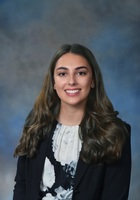
Certified Tutor
8+ years
Amanda
The Chemical and Physical Foundations section throws organic chemistry, physics, and general chemistry at students in passage-based formats that reward fast, accurate reasoning under pressure. Amanda tackled the MCAT herself on the path to her MD and knows which high-yield topics — enzyme kinetics, ...
The University of Alabama
Bachelor of Science, Biology, General
Baylor College of Medicine
Doctor of Medicine, Public Health
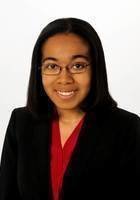
Certified Tutor
Jean
Having taken the MCAT and earned admission to Harvard Medical School, Jean knows firsthand how the Chemical and Physical Foundations section blends general chemistry, organic chemistry, and physics into passage-based reasoning problems. She teaches students to decode experimental setups quickly and ...
Harvard College
Bachelor in Arts, Sociology
Harvard Medical School
Doctor of Medicine, Medicine
Nearby MCAT Chemical and Physical Foundations of Biological Systems Tutors
Other Bronx Tutors
Related Graduate Test Prep Tutors in Bronx
Frequently Asked Questions
This section tests your understanding of general chemistry, organic chemistry, biochemistry, and physics as they apply to biological systems. You'll encounter questions on atomic structure, bonding, thermodynamics, kinetics, equilibrium, acid-base chemistry, organic reaction mechanisms, protein structure, and basic physics concepts like forces and energy. The section is 95 minutes long with 230 questions, so strong foundational knowledge across all these areas is essential for success.
Score improvement depends on your starting point, study consistency, and how targeted your preparation is. Most students see meaningful gains—often 3-5 points on the MCAT scale—when they work with tutors to identify weak topics, master problem-solving strategies, and practice under timed conditions. The key is diagnosing exactly which concepts or question types are holding you back, then building a focused study plan around those areas rather than reviewing everything broadly.
Students commonly struggle with pacing—the section requires fast recall and application of complex concepts under time pressure. Many find the transition between general chemistry and biochemistry disorienting, or struggle to recognize when to apply physics versus chemistry reasoning. Additionally, questions often layer multiple concepts together, so weak foundational knowledge in one area (like stoichiometry or equilibrium) creates problems downstream when those concepts appear in biochemistry questions.
Most students benefit from 3-6 months of consistent tutoring, depending on their baseline knowledge and target score. If you're starting with significant gaps in general or organic chemistry, you may need longer. A typical approach involves 1-2 sessions per week focused on concept review and problem-solving strategy, ramping up to more frequent sessions as test day approaches. Your tutor can assess your starting point and create a realistic timeline during your first session.
Practice tests are critical—they help you build stamina, identify weak topics, and learn to recognize question patterns under realistic time constraints. Most students should take full-length MCAT practice tests regularly (every 1-2 weeks during active prep) and use section-specific practice to drill Chemical and Physical Foundations questions in isolation. Tutors can help you analyze your practice test performance to pinpoint whether your mistakes stem from knowledge gaps, timing issues, or misreading questions.
Look for tutors with deep knowledge of general chemistry, organic chemistry, and biochemistry—not just surface-level familiarity. They should have strong MCAT scores themselves and experience teaching test-taking strategy, not just content review. It's also valuable to work with someone who understands how to diagnose your specific weak areas quickly and can explain complex topics in multiple ways. Varsity Tutors connects you with expert tutors in the Bronx who specialize in MCAT prep and can tailor their approach to your learning style and timeline.
Key strategies include learning to quickly identify what a question is really asking (many questions test conceptual understanding disguised in complex wording), knowing when to calculate versus estimate, and recognizing common wrong-answer patterns. Time management is critical—you have roughly 24 seconds per question, so you need to decide quickly whether to solve a problem or skip and return. Tutors can teach you how to spot high-yield questions worth your time and low-yield ones to move past, plus how to use process-of-elimination effectively when you're uncertain.
Confidence comes from preparation and familiarity. When you've practiced extensively with a tutor, seen similar question types repeatedly, and developed reliable problem-solving strategies, test day feels less intimidating. Tutors also help you build mental stamina by simulating test conditions, teaching you how to manage time pressure without panic, and helping you develop a growth mindset around mistakes. For students in the Bronx, having a local expert tutor who knows your strengths and weaknesses can provide real reassurance heading into test day.
Connect with MCAT Chemical and Physical Foundations of Biological Systems Tutors in Bronx
Get matched with local expert tutors