Award-Winning AP Physics C: Mechanics Tutors
serving Winston-Salem, NC
AP Physics C: Mechanics
Tutors in Winston-Salem
Private 1-on-1 tutoring, weekly live classes for academic support, test prep & enrichment, practice tests and diagnostics, and more to elevate grades and test scores.
Based on 3.4M Learner Ratings
UniversitiesSchools & Universities
DeliveredHours Delivered
ProficiencyGrowth in Proficiency
Who needs tutoring?
No obligation. Takes ~1 minute.
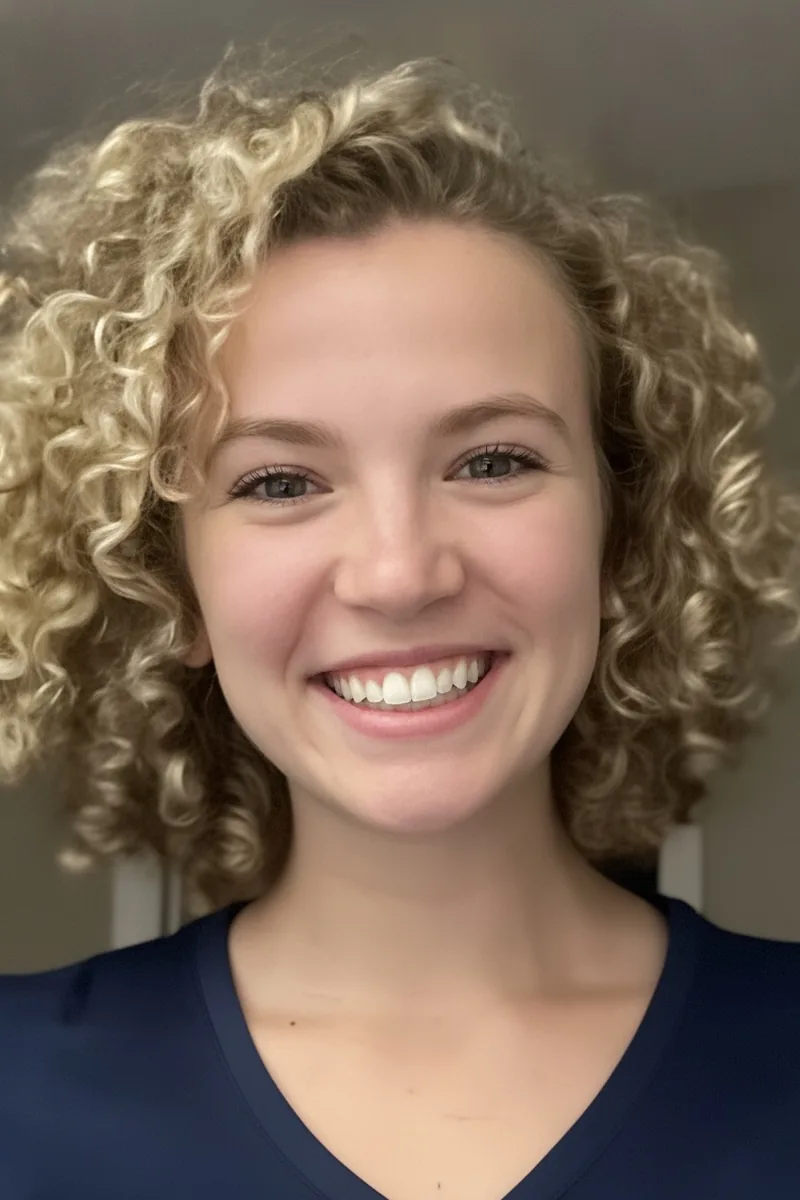
Danielle teaches across both physics and calculus, which matters for AP Physics C: Mechanics because the biggest stumbling block is usually the math — knowing when a force problem requires integration versus a straightforward F=ma setup. She zeroes in on free-body diagrams as the starting point for every problem, training students to map the physical situation before touching any calculus so the equations practically write themselves.

That moment in AP Physics C: Mechanics where a problem shifts from "apply F=ma" to "set up and solve the differential equation for this oscillating system" is where most students stall — and it's exactly where David's physics degree kicks in. He teaches students to read the physical situation first, identify which calculus tool fits (derivative for instantaneous rates, integral for accumulation), and then execute, so the math serves the physics instead of overwhelming it. His 1560 SAT underscores the quantitative precision he brings to the trickiest free-response setups.
Pharmacy school trains you to think in systems — how one variable cascades through an entire mechanism — and Lillian applies that same reasoning to mechanics problems where forces, constraints, and calculus all interact at once. Her prepharmacy science background covers the physics and math rigor AP Physics C demands, and her 34 ACT confirms the quantitative chops to back it up. She's especially effective at teaching students to identify which physical principle governs a problem before touching any equations, rated 4.9 by students.
Rachel's business economics major might not scream physics, but her 35 ACT and deep math background — she tutors through AP Calculus BC — mean she's comfortable with the calculus-based problem-solving that Mechanics demands. She approaches kinematics and force problems the way an economics student would: set up the model carefully, define your variables, then let the math do the work.
Sanjana's applied math studies at Harvard and her role as a Course Assistant for introductory calculus mean she's fluent in the exact differential and integral techniques that AP Physics C: Mechanics layers onto every force, torque, and energy problem. She's especially effective at bridging the gap when students grasp the physics intuitively but struggle to translate a scenario — say, a block on a spring with friction — into the correct differential equation and solve it cleanly. Rated 5.0 by students.
Most pre-med students avoid the calculus-heavy physics — Manideep leans into it, tackling AP Physics C: Mechanics alongside his biological sciences coursework at Northwestern, where he also TAs in the sciences. He breaks down conservation of energy and momentum problems by starting with the physical scenario and building the integral from there, so students learn a repeatable process instead of hunting for the right formula. Rated 5.0 by students.
Hello, my name is Yosef and I would be happy to serve as a math tutor. I place strong emphasis on a good balance between knowledge of mathematical content and proficiency in problem-solving, reasoning, and conveying mathematical ideas in writing. There are times when a student needs to be informed of a solution, times when he or she also needs to hear the explanation of why the solution works, and times when he or she should be guided to finding the solution on his or her own. It is important for the tutor to recognize which approach is appropriate. Frequently, when students struggle, it is because they do not understand the notation or terminology in use. In such cases, it is important to reassure the student, reminding him or her that he or she is only struggling with understanding a single word, not the entire mathematical concept. As a rule, people perform better and are better motivated when they have self-confidence, not when the task ahead seems frighteningly daunting. It is also important to recognize that different students learn best through different means. As an example, some students are visual learners and can understand the material best through pictures and gestures. Other students learn best through hearing the procedures vocalized, while still others learn best through writing out the steps of the solution procedure. I know to adapt my teaching style to the individual student. with these considerations in mind, I promise to provide the best assistance that I can, taking your individual needs into consideration.
Rice's mechanical engineering program puts Ashton through calculus-based statics, dynamics, and kinematics every semester — the same core mechanics that AP Physics C tests, just applied to real structural and machine systems. That daily exposure means he can spot whether a student's free-response mistake is a physics misread or a calculus execution error, and address the right one. His 32 ACT underscores the quantitative fluency backing his approach.
Vaughn's physics degree and 1590 SAT mean the calculus-based problem-solving AP Physics C: Mechanics demands — setting up Newton's second law as a differential equation, computing work done by variable forces — is squarely in his wheelhouse. He zeroes in on dimensional analysis and unit tracking as a way to catch errors before they cascade through multi-step free-response problems, a habit that pays off especially in rotational dynamics where signs and reference frames get tricky.
Twenty-five years teaching physics in Massachusetts public schools means Jacques has watched thousands of students hit the same walls on AP Physics C — and he knows exactly how to dismantle them, particularly around variable-force problems and the calculus of rotational inertia. His Princeton chemical engineering degree built the mathematical backbone, but it's the decades of classroom reps that sharpened his ability to explain why you set up the integral that way, not just how to evaluate it. Rated 4.8 by students.
Emergency medicine demands snap physics intuition — understanding how forces transfer through a body, how momentum changes in a collision, how energy dissipates on impact — and Victoria built that intuition through her pre-med physics coursework before medical school at Boston University. She teaches AP Physics C: Mechanics by grounding each calculus setup in a concrete physical scenario, making sure students can articulate *why* they're integrating a force over a displacement before they ever pick up a pencil. Her math-and-physics double focus across 25 tutoring subjects means she catches the exact moment a student's confusion shifts from the mechanics to the calculus.
Simulating cosmic ray acceleration through turbulent plasmas requires exactly the kind of calculus-based mechanics reasoning that AP Physics C tests — Newton's laws applied to complex systems, rotational dynamics, and energy methods. Dennis walks students through the hardest problems on the exam by teaching them to set up the physics first and let the calculus follow naturally. Rated 4.7 by students.
Emily's computational biology major at Cornell pairs heavy calculus and physics coursework with programming — a combination that trained her to model real systems mathematically, which is exactly what AP Physics C: Mechanics demands when a problem asks you to integrate a variable force or derive an equation of motion. Her 36 ACT and 1590 SAT reflect the kind of quantitative precision that pays off on the exam's trickiest free-response questions, especially those involving work-energy theorem applications and non-constant acceleration. Rated 4.9 by students.
Steven's biology degree from Drexel included the calculus-based physics sequence that maps directly onto AP Physics C: Mechanics — kinematics, Newton's laws in differential form, and energy conservation problems that demand clean integral setups. Where many science-track tutors skim the mechanics, his organismal physiology concentration meant applying force and motion concepts to biological systems, giving him a concrete way to explain why a free-body diagram matters before any calculus happens. Rated 5.0 by students.
Testimonials
Because the right AP Physics C: Mechanics tutor makes all the difference.
Average Session Rating – Based on 3.4M Learner Ratings
Practice AP Physics C: Mechanics
Free practice tests, flashcards, and AI tutoring for AP Physics C: Mechanics
Nearby AP Physics C: Mechanics Tutors
Other Winston-Salem Tutors
Related Science Tutors in Winston-Salem
Frequently Asked Questions
Varsity Tutors matches Winston-Salem students with expert AP Physics C: Mechanics tutors for 1-on-1 instruction. We pair each student with a tutor based on their specific needs, learning style, and goals.
Whether you need homework help, exam prep, or want to get ahead, our AP Physics C: Mechanics tutors are ready to help.
Common challenges include gaps from earlier material, difficulty with specific concepts, and trouble applying learning to new problems. These issues can snowball quickly in AP Physics C: Mechanics.
A tutor identifies where you're stuck, fills in gaps, and provides targeted practice. The 1-on-1 format means you get help exactly where you need it.
Tutors work with your student's actual coursework—homework assignments, class notes, and upcoming tests. This keeps tutoring directly relevant to what's happening in the classroom.
When you share information about your student's school and curriculum, we can match you with a tutor who has relevant experience.
All tutors complete background checks, credential verification, and teaching evaluation. Many of our AP Physics C: Mechanics tutors hold advanced degrees or have years of teaching experience.
You can review tutor profiles to find someone with the right background for your student's level and needs.
Many students see improved grades within a few weeks, along with better understanding of AP Physics C: Mechanics concepts and more confidence tackling challenging material.
Tutors track progress and adjust their approach to ensure continued improvement.
Most students benefit from 1-2 sessions per week. More frequent sessions help if your student is significantly behind or has an important exam coming up.
Your tutor can recommend a schedule based on your student's specific situation and goals.
Tutoring is purchased in packages of hours, with rates varying by tutor experience. Varsity Tutors offers several options to fit different budgets and needs.
You can discuss pricing during your consultation to find what works best.
Your tutor will assess where your student is, discuss goals, and start working on priority areas. Most students bring current homework or upcoming test material to focus on.
By the end, you'll have a clear sense of how the tutor can help and a plan for moving forward.
Let’s find your perfect tutor
Answer a few quick questions. We’ll recommend the right plan and match you with a top 5% tutor.