Award-Winning MCAT Verbal Reasoning Tutors
serving Houston, TX
Who needs tutoring?
FEATURED BY


TUTORS FROM
- YaleUniversity
- PrincetonUniversity
- StanfordUniversity
- CornellUniversity
Award-Winning MCAT Verbal Reasoning Tutors serving Houston, TX
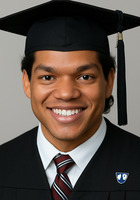
Certified Tutor
Tony
The MCAT's verbal reasoning passages are deliberately unfamiliar — philosophy, social science, humanities — and the trick is extracting an author's argument without getting lost in the content. Tony's Yale education immersed him in exactly this kind of dense, cross-disciplinary reading, and he compl...
Yale University
Bachelor of Science in Biology
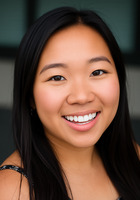
Certified Tutor
10+ years
Samantha
MCAT CARS passages are deliberately dense and unfamiliar — philosophy, ethics, art criticism — and the section rewards the ability to track an author's argument without getting lost in the weeds. As a current medical student who earned a perfect SAT verbal score, Samantha teaches specific strategies...
Duke University
Bachelors in Global Health Determinants, Behaviors, and Interventions
Harvard Medical School
Current Grad Student, MD
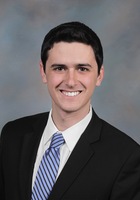
Certified Tutor
6+ years
David
The MCAT's CARS section isn't really about reading speed — it's about recognizing argument structure in passages on topics you've never seen before. David treats each passage as a logic puzzle, teaching students to identify the author's central claim and map how evidence supports it before even look...
Yale University
Bachelor of Science in Neuroscience
Harvard University
Current Grad Student, Bioethics and Medical Ethics
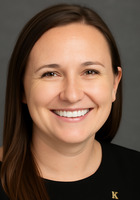
Certified Tutor
Laura
The MCAT's Critical Analysis and Reasoning Skills section throws dense humanities and social science passages at students who've spent months buried in biochemistry. Laura's 1510 SAT demonstrates her reading comprehension chops, and her economics background means she's comfortable dissecting complex...
Massachusetts Institute of Technology
Bachelors, Economics
Certified Tutor
Shayan
Penn's pre-health track is heavy on science, but Shayan's biology and literature background means he's equally comfortable pulling apart a dense ethics passage as he is with a biochemistry textbook — and CARS demands exactly that cross-disciplinary comfort. He teaches students to read for the author...
University at Buffalo
Bachelors, Biology, General
University of Pennsylvania
Current Grad Student, Pre-Health
Certified Tutor
Timothy
The MCAT's CARS section isn't a science test — it's an exercise in dissecting dense, unfamiliar arguments under pressure. As a current medical student who also studied political science, Timothy developed sharp close-reading skills across both humanities and sciences, and he teaches specific strateg...
Drexel University College of Medicine
Current Grad Student, M.D.
University of California Los Angeles
Bachelors, Political Science and Government
Certified Tutor
Vinay
MCAT CARS passages are deliberately dense and drawn from unfamiliar disciplines, which is exactly why Vinay's interdisciplinary background — biology, economics, public policy, and now medicine — gives him a natural edge in teaching the section. He breaks down how to identify an author's central thes...
Columbia University in the City of New York
Master in Public Health Administration, MPA in Developmental Practice
University of California Los Angeles
B.S. in Molecular, Cell, & Developmental Biology
Certified Tutor
Mosab
The CARS section rewards a specific kind of reading — extracting an author's argument from dense, unfamiliar passages under extreme time pressure. Mosab's dual background in international relations and health sciences means he's spent years doing exactly that across humanities and science texts, and...
Tufts University
Bachelors, International Relations and Arabic
Harvard University
Current Grad Student, Health Sciences

Certified Tutor
6+ years
Samantha
The MCAT's CARS section rewards a very specific kind of reading — extracting an author's argument structure, identifying assumptions, and evaluating evidence across dense humanities and social science passages. Samantha's neuroscience training at Penn, combined with her own love of reading and writi...
University of Pennsylvania
Bachelor in Arts, Neuroscience
Certified Tutor
10+ years
An economics degree trains you to read dense, jargon-heavy arguments about policy, markets, and human behavior — then tear apart the reasoning underneath. Rohan applies that same analytical lens to CARS passages, teaching students to strip away unfamiliar content and zero in on how an author builds ...
Northwestern University
Bachelors, Economics
Other Houston Tutors
Related Graduate Test Prep Tutors in Houston
Frequently Asked Questions
MCAT Verbal Reasoning tests reading comprehension and critical thinking under strict time pressure—students typically have about 8-9 minutes per passage. Common struggles include managing pacing while understanding complex scientific and humanities texts, distinguishing between what the passage explicitly states versus what can be inferred, and avoiding answer choices that seem correct but don't align with the author's main point. Many students also find that their usual reading speed isn't fast enough for the volume of material, making strategic skimming and passage mapping essential skills.
Score improvement depends on your starting point and how consistently you apply strategies taught. Students who work with a tutor typically see measurable gains—often 2-4 points on the MCAT's 118-132 scale—within 4-8 weeks of focused practice. The key is identifying your specific weaknesses (whether it's inference questions, timing, or passage comprehension) and drilling targeted strategies rather than just reading more passages. Consistent practice testing and reviewing mistakes under expert guidance accelerates improvement more than independent study alone.
Effective pacing starts with a strategic approach: spend 2-3 minutes actively reading and annotating the passage, then 5-6 minutes answering questions. Many students waste time rereading passages or overthinking answer choices. A tutor can teach you how to identify key claims, author's tone, and structural markers during your first read so you don't need to hunt for answers later. Practice tests are crucial—completing full sections under timed conditions helps you internalize the rhythm and identify where you're losing time, whether it's on certain question types or passages.
The most effective strategies include active annotation (marking main ideas, author's tone, and structural shifts), identifying question types before reading answer choices, and eliminating obviously wrong answers before comparing remaining options. Many students benefit from the "passage mapping" technique—jotting down a quick outline of the passage structure and main point. Understanding common question patterns (inference, main idea, author's attitude, function) helps you know exactly what to look for. Tutors can help you develop a personalized strategy that fits your reading style rather than forcing a one-size-fits-all approach.
Most students benefit from completing 8-12 full-length MCAT practice tests during their prep period, with at least 4-5 taken under strict timed conditions. However, quality matters more than quantity—reviewing every mistake thoroughly is more valuable than rushing through additional tests. For Verbal Reasoning specifically, practicing individual sections 2-3 times per week alongside full tests helps you build speed and accuracy without burnout. A tutor can help you create a realistic practice schedule based on your timeline and current performance level, ensuring you're drilling the right material at the right time.
Start by categorizing your mistakes: Did you misunderstand the passage, misread the question, or choose a plausible-sounding wrong answer? Track which question types trip you up most (inference, main idea, tone, function) and which passage subjects feel harder. After each practice test, spend time analyzing patterns rather than just reviewing individual questions. A tutor can help you spot trends you might miss on your own—for example, noticing that you consistently struggle with inference questions about author's purpose, or that you rush through humanities passages. Once you identify the pattern, targeted practice on that specific skill yields faster improvement.
Test anxiety often stems from feeling unprepared or uncertain about your approach. Building confidence comes from consistent, deliberate practice with clear strategy—knowing exactly how you'll tackle each passage and question type reduces the panic of the unknown. Many students find that practicing under timed conditions regularly (not just once or twice) desensitizes them to the pressure. A tutor can also help you develop mental strategies like recognizing when you're overthinking and knowing when to move on from a difficult question, which are critical skills for the MCAT's demanding pace.
Look for someone with strong MCAT credentials and specific experience teaching Verbal Reasoning—ideally someone who has scored highly on the section themselves and understands the nuances of test-taking strategy, not just reading comprehension. They should be able to diagnose your specific weaknesses quickly and teach you strategies tailored to your learning style rather than a generic approach. Varsity Tutors connects you with expert tutors for students in Houston who can create a personalized study plan, review your practice tests, and help you build both skills and confidence before test day.
Connect with MCAT Verbal Reasoning Tutors in Houston
Get matched with local expert tutors