Award-Winning SAT Tutors
serving Seattle, WA
SAT
Tutors in Seattle
Private 1-on-1 tutoring, weekly live classes for academic support, test prep & enrichment, practice tests and diagnostics, and more to elevate grades and test scores.
Based on 3.4M Learner Ratings
UniversitiesSchools & Universities
DeliveredHours Delivered
ProficiencyGrowth in Proficiency
Who will be getting tutoring?
No obligation. Takes ~1 minute.

What separates a good SAT score from a great one is often the ability to read like a test-maker — spotting how answer choices are designed to mislead on both the Reading and Writing sections. Grant's English degree and 1530 SAT score mean he teaches students to recognize those traps structurally, not just intuitively, while his comfort with math keeps the quantitative side from dragging down the composite. Rated 5.0 by students.
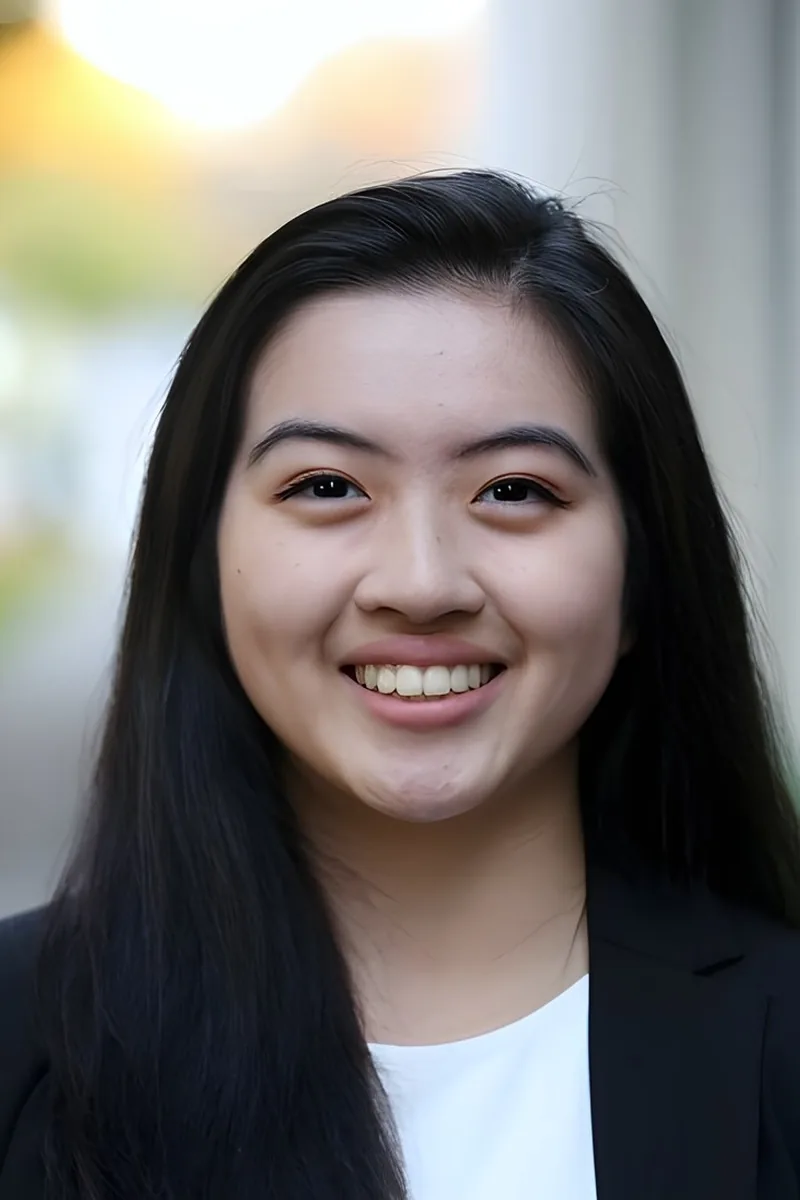
What separates a 1400 from a 1550 on the SAT often comes down to recognizing the exam's repeatable patterns — the algebra setups that recycle across tests, the evidence-pair traps in Reading, the handful of grammar rules that account for most Writing questions. Alice earned a 1550 herself and has spent over a year editing college admissions essays for students accepted to schools like CalTech and Northwestern, giving her unusual fluency across both the quantitative and verbal sides of the test. Rated 5.0 by students, she builds section-specific strategies rather than generic test-taking advice.
Most SAT prep treats the Reading and Math sections as completely separate animals, but Alex's PhD work in English trained the same close-analysis skills that unlock both evidence-based passage questions and the careful reasoning behind tricky word problems. He scored a 1560 on the SAT and knows exactly where the verbal sections punish sloppy reading — rhetorical purpose questions, command-of-evidence pairs, and grammar rules disguised as style choices. Rated 5.0 by students.
Scoring a 1520 on the SAT required Chica to master both the math and evidence-based reading sections at a high level — and her economics background in econometrics means she's especially sharp on the quantitative reasoning and data interpretation questions that trip students up. She breaks down each section's timing and question patterns so students know exactly where to push for extra points, rated 5.0 by her students.
Substitute teaching across every grade from kindergarten through twelfth gave Angela a clear picture of where foundational skills break down — exactly the kind of gaps the SAT exploits in its math and evidence-based reading sections. She scored a 1500 on the SAT herself and uses that experience to coach students on pacing, process-of-elimination strategies, and the Writing and Language grammar patterns that repeat test after test. Rated 5.0 by students.
Majoring in both English and Spanish at George Fox University gave Elizabeth the kind of close-reading stamina that pays off across the SAT's verbal sections — she teaches students to trace argument structure in dense passages and spot the grammar rules the Writing and Language section recycles most often. Her own 1490 SAT score means she's recently navigated the same test her students are preparing for, and she uses that familiarity to build section-specific pacing strategies that keep timing pressure from eroding accuracy.
Students who speak Mandarin at home sometimes hit unexpected walls on the SAT — not from lack of ability, but from subtle differences in how English grammar and rhetoric questions are structured. Xiansheng's cellular and molecular biology degree sharpens his approach to the Math and data interpretation side, while his deep fluency in both Mandarin and English (he tutors AP Chinese and all levels of Mandarin) lets him pinpoint exactly where bilingual students misread passage-based questions. He scored a 1450 on the SAT himself and holds a 4.7 rating.
Scoring well on the SAT means treating the Reading & Writing and Math sections as two different skill sets that share one trait: pattern recognition. Sameer approaches full-test prep by diagnosing where a student's time is leaking — slow reading, algebraic missteps, or second-guessing on evidence-based questions — and drilling that specific weakness rather than re-teaching content a student already knows.
I am a professional scientist with multiple years of experience in the biopharmaceutical field. I have spent time in the classroom with elementary aged students and am comfortable with this age group. I am also familiar with AP classes and ACT/SAT preparation. I look forward to sharing my love of learning with students and helping them achieve academic goals!
Antonia approaches SAT prep as two linked skill sets: the math side, where she drills Heart of Algebra and Passport to Advanced Math patterns, and the evidence-based reading and writing side, where she teaches students to use line references and elimination strategically. Because she tutors both English and math at advanced levels, she can build a unified study plan instead of treating each section in isolation. Students get a tutor who actually understands every part of the test, not just half of it.
Scoring a 1470 on the SAT takes both strong content knowledge and smart pacing — and Madyson's biochemistry background at Northeastern means she can tackle the math and evidence-based reading sections with equal confidence. She breaks down tricky algebra and data interpretation questions while also teaching students how to dissect passage structure and eliminate wrong answers efficiently.
Biology majors spend four years learning to read dense, data-heavy passages under pressure — exactly the skill that drives scores on the SAT's Evidence-Based Reading section. Ashley pairs that analytical reading ability with strong math fundamentals across algebra and data interpretation, and her own 1480 SAT score means she knows firsthand which question types eat up time and which reward a systematic approach.
Georgetown's math program trained Peter to think in precise, logical steps — exactly the skill that turns the SAT Math section's multi-step word problems and data analysis questions into straightforward solves. His 1580 SAT score and years of tutoring both math and writing mean he covers the full exam without switching gears, connecting algebraic reasoning on one section to evidence-based reading strategy on the next. Rated 5.0 by students.
Medical school admissions forced Nishad to master every section of the SAT on his way to a 1580 composite — and that full-test perspective means he coaches the Reading, Writing, and Math sections as one integrated strategy rather than three separate prep tracks. His premed science training sharpens his approach to data interpretation and graph-based questions, while his literature and essay background keeps the evidence-based reading instruction equally rigorous.
Scoring a 1520 on the SAT takes more than content knowledge — it requires knowing when to slow down on tricky evidence-based reading questions and when to trust your instincts on the math no-calculator section. Vansh pairs that firsthand experience with an aerospace engineering background at Georgia Tech, which means the quantitative reasoning and data analysis portions are second nature to him. Rated 5.0 by students, he breaks each section into repeatable strategies that make test day feel predictable.
Most SAT prep treats math and verbal as separate worlds, but Justin's PhD work in computational mathematics at the University of Chicago trained him to read precisely and reason quantitatively in the same breath — exactly what the SAT demands. He scored a 1560 and teaches students to attack the math sections through algebraic fluency rather than calculator dependence, while applying the same structured logic to evidence-based reading questions. Rated 5.0 by students.
What separates a 1500 from a 1600 on the SAT often comes down to eliminating careless errors under pressure — and JF, who earned that perfect 1600, built a systematic approach to time management and trap-answer recognition across both the Math and verbal sections. His dual background in mathematics and computer science at Stanford means he treats each question type algorithmically, teaching students to identify the fastest path to the correct answer rather than grinding through every problem the same way.
Studying both psychology and linguistics at the University of Chicago gave Sherry an unusual double lens for the SAT — the linguistics side sharpens her teaching of grammar rules, sentence structure, and rhetoric on the Writing & Language section, while the psychology side informs how she coaches students through test-day pacing and anxiety management. She scored a perfect 1600 and uses that familiarity with every section to pinpoint exactly where a student's points are slipping, whether it's evidence-based reading pairs or no-calculator algebra. Rated 5.0 by students.
Most SAT prep treats the math and verbal sections as two separate exams, but Viktor's UChicago math degree and his experience teaching literature, grammar, and college essays mean he can coach the full test without switching gears. He scored a 1600 — a perfect composite — and uses that familiarity with the exam's logic to teach students how to spot the algebraic structures hidden in word problems and the rhetorical patterns that make Reading section trap answers so tempting.
Public policy coursework at the college level means Dana spent years doing exactly what the SAT rewards — reading dense, argument-driven passages quickly and pulling out the evidence that actually supports a claim. She scored a 1450 on the SAT herself and pairs that firsthand experience with strategies for the Writing and Language section's grammar and rhetoric questions, where her strong background in essay writing and English syntax pays off.
Vivian scored a 1530 on the SAT while balancing a rigorous arts conservatory schedule at Juilliard, which means she knows how to build an efficient, high-impact study plan for students who don't have unlimited prep time. Her strength is teaching the verbal side — evidence-based reading and grammar questions — using the close-reading instincts she developed through her history degree and extensive essay work. Rated 4.9 by students.
The SAT's Writing and Language section rewards students who understand grammar rules cold — comma splices, subject-verb agreement, parallel structure — and Daniela's English major coursework means she can explain the logic behind each rule instead of just drilling corrections. Her 1560 SAT score also reflects real strength on the Reading side, where she teaches students to trace an author's argument through paired evidence questions. She rounds out prep on the math sections with a focus on translating word problems into solvable setups.
Phillip's biomedical engineering coursework at Brown means the SAT Math section — algebra, data analysis, advanced problem-solving — plays to his strongest skills, and his 1560 composite score confirms he knows how to execute under test-day pressure. He also coaches students through the Reading and Writing sections by teaching them to identify passage structure and eliminate wrong answers systematically rather than relying on feel. Rated 5.0 by students.
Testimonials
Because the right SAT tutor makes all the difference.
Average Session Rating – Based on 3.4M Learner Ratings
Practice SAT
Free practice tests, flashcards, and AI tutoring for SAT
Other Seattle Tutors
Related Test Prep Tutors in Seattle
Frequently Asked Questions
The University of Washington typically admits students with SAT scores between 1310-1480, with a middle 50% around 1380. To be competitive for UW, aim for a score of 1350 or higher. Keep in mind that UW considers your entire application holistically, so a strong score combined with good grades and essays significantly improves your chances of admission.
Seattle students generally perform above the national average of 1050, with many competitive high schools in the area seeing median scores in the 1150-1250 range. However, there's significant variation across Seattle's 9 school districts—students at well-resourced schools often score higher, while those with less test prep access may score closer to or below the national average. Personalized tutoring can help bridge this gap by addressing your specific weak areas.
Most students see improvements of 100-200 points with focused, personalized SAT prep, though the amount depends on your starting score and how much you practice. Students starting around 1000 often see larger gains (150-250 points), while those already scoring 1300+ typically see smaller but still meaningful improvements (50-100 points). The key is identifying your specific challenges—whether that's time management on Reading, grammar rules in Writing & Language, or multi-step problem-solving in Math—and targeting those areas systematically.
Most students benefit from starting SAT prep in the spring of junior year or early senior year, giving you 3-6 months before your first test attempt. This timeline allows you to take a diagnostic test, identify weak areas, and build skills gradually rather than cramming. If you're aiming for highly selective schools (1450+), starting earlier in junior year or even late sophomore year gives you more flexibility to retake the test if needed.
Both tests are equally accepted by colleges, but the SAT has become more popular nationwide and in Washington state in recent years. The best choice depends on your strengths: the SAT emphasizes reading comprehension and data analysis, while the ACT focuses more on science reasoning and covers more math content. Many Seattle students take a practice test in each format to see which plays to their strengths, then commit to one test for their applications.
The Reading section gives you 65 minutes for 52 questions—roughly 1.25 minutes per question—which is tight. Effective strategies include reading the questions first before the passage, using active annotation to track main ideas, and skipping difficult questions to return to later. Many students find that practicing with timed sections repeatedly helps them internalize a sustainable pace without sacrificing accuracy on easier questions.
Most students take the SAT 1-2 times, with many colleges now using score choice (letting you submit your best attempt). If your first score is significantly below your target, a retake 6-8 weeks later gives you time to address specific weaknesses. However, if you're already at or above your target range, a retake may not be worth the time and stress—focus that energy on other parts of your application instead.
Data analysis and graph interpretation questions require you to extract information accurately and avoid common traps. Practice by working through these questions untimed first to understand the concept, then gradually add time pressure. Focus on understanding what the graph is actually showing, read axis labels carefully, and practice translating between different representations (tables, graphs, equations). Personalized tutoring can help you identify whether you're missing questions due to conceptual gaps or rushing through the process.
Let’s find your perfect tutor
Answer a few quick questions. We’ll recommend the right plan and match you with a top 5% tutor.