Award-Winning AP Calculus AB Tutors
serving Seattle, WA
AP Calculus AB
Tutors in Seattle
Private 1-on-1 tutoring, weekly live classes for academic support, test prep & enrichment, practice tests and diagnostics, and more to elevate grades and test scores.
Based on 3.4M Learner Ratings
UniversitiesSchools & Universities
DeliveredHours Delivered
ProficiencyGrowth in Proficiency
Who needs tutoring?
No obligation. Takes ~1 minute.
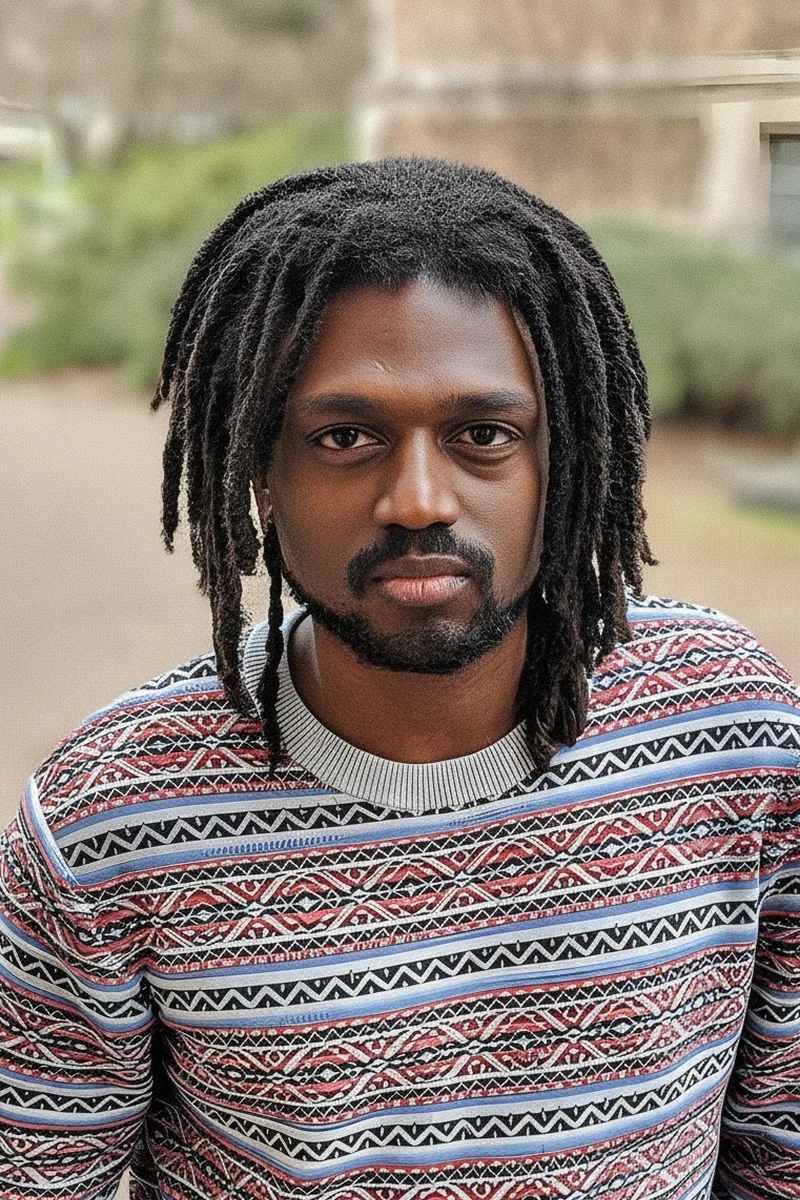
The jump from Pre-Calc to AP Calculus AB trips up students who memorized formulas without understanding what derivatives and integrals actually represent. Najja teaches limits, the chain rule, and Riemann sums by grounding each concept in its geometric or physical meaning — an approach rooted in his Stanford math training. That emphasis on understanding over rote memorization makes related-rates and optimization problems far less intimidating.

I am a Masters student in Physics at the University of Washington and have over 10 years of teaching and tutoring experience. Most recently, I worked as a teacher at the Yellow Wood Academy, a private high school that offers students a specialized one-on-one classroom environment. At YWA, I taught all high school science classes (including AP, Computer Programming, and Environmental Science) and all levels of high school math. In addition to my teaching and tutoring duties, I designed individualized lesson plans, curricula, homework assignments, and tests. Subjects I have successfully tutored Physics: all levels Chemistry: all levels high school, plus P-Chem, O-Chem Biology: all levels high school Math: all levels high school, plus Differential Equations, Statistics, some Group Theory. Standardized test preparation (incl. SAT, ACT, GRE, MCAT) Need help in another area? Just ask! While math and science are the subjects I am most passionate about, I am well-versed in many academic areas, and I may be able to help you.
Hi, I'm Laura! I graduated summa cum laude from Eastern Washington University with a bachelor's of science degree in mathematics and a minor in sociology. There, I earned the Frances B. Huston award, the most prestigious award given to graduating students, for excellence in academics, leadership, and community service. From there, I became a student at the University of Washington (UW), earning my Master of Science in Applied Mathematics and a position as a PhD student in the department. I was also awarded the Carl S. Pearson award for academic excellence in the Master's program. I have been working as a PhD student since then, with expertise in all types of math including algebra, calculus, linear algebra, and numerical analysis, among others. I also have years of experience coding in both python and matlab! I spent three years as an undergraduate teaching assistant, helping teach both high school and college level math classes. I also taught multiple sections of calculus at the University of Washington as a Master's student, and I have served as a teaching assistant throughout my time at UW. My favorite thing about these positions were the opportunities to work one-on-one with students, developing new approaches to help them understand difficult concepts. I love coming up with new examples or intuitive ways of thinking through math problems. I think everybody can learn math, and I love helping students of all ages and backgrounds achieve their mathematical goals! I have a number of resources to use in lesson planning, and I also welcome any resources or suggestions provided by students and parents to help tailor the experience to your needs. Please feel free to contact me with any questions or to schedule a session!
Teaching calculus as adjunct faculty at Washington State University means Moayad sees exactly where students stumble on limits, continuity, and the Fundamental Theorem — the same conceptual hurdles that determine AB exam scores. His two math degrees (including graduate work at Oregon State) give him the formal depth to explain not just how to apply the chain rule or evaluate a definite integral, but why each technique works. Rated 4.5 by students.
As part of an 8-year combined Leadership in Medicine program, Alice treats calculus the way a future physician would — derivatives describe how fast a patient's condition changes, integrals quantify total dosage over time — which gives her a natural vocabulary for the AB curriculum's application and interpretation questions. She scored a 1550 SAT and has spent years tutoring math at every level, so she's sharp at spotting the exact algebraic gaps that trip students up during chain rule or integration problems. Rated 5.0 by students.
Working in a research lab at Oregon Health and Sciences University while studying biomedical engineering at Johns Hopkins, Helen routinely uses derivatives to model physiological signals and integrals to quantify biological responses — making the AB curriculum's toughest application questions feel like Tuesday. She's especially sharp at teaching students how to set up and interpret definite integrals in context, the skill that separates students who can compute from those who can reason through free-response problems. Rated 4.8 by students.
Limits, derivatives, and integrals make more sense when a student can see what they actually describe — rates of change in motion, areas under real curves, accumulation in physical systems. Cory earned his B.S. in Physics, so he naturally connects AB topics like the chain rule and Riemann sums to concrete scenarios rather than leaving them as symbol-pushing exercises. His conversational teaching style keeps sessions from feeling like a second lecture.
Intensely curious, I am interested in STEM subjects and the liberal arts. I tutor to help you reach your educational goals and because it's immensely gratifying to see my students succeed.
I am a professional scientist with multiple years of experience in the biopharmaceutical field. I have spent time in the classroom with elementary aged students and am comfortable with this age group. I am also familiar with AP classes and ACT/SAT preparation. I look forward to sharing my love of learning with students and helping them achieve academic goals!
Cellular and molecular biology training means Xiansheng regularly used calculus to model enzyme kinetics and cell growth curves — contexts where understanding what a derivative or integral represents biologically makes the math intuitive rather than mechanical. He brings that same emphasis on meaning to the AB curriculum, particularly when teaching limits and the connection between rate functions and their antiderivatives. Rated 4.7 by students.
Studying Informatics with a Statistics minor at the University of Washington, Ria uses calculus daily in her coursework — from analyzing rates of change in data models to applying integration in statistical proofs. She breaks down AP Calculus AB topics like the chain rule, related rates, and the Fundamental Theorem of Calculus by connecting each concept to the one before it, so students build intuition instead of just memorizing procedures.
Brett spent his senior year at Syracuse tutoring student athletes through AP-level calculus, breaking down limits, derivatives, and integration techniques for students who needed concepts explained more than once and in more than one way. His engineering background at Penn means he can show exactly how the chain rule or a Riemann sum connects to real problems in science and design.
Scoring a 1570 SAT and 35 ACT takes the kind of disciplined problem-solving that translates directly into teaching limits, derivatives, and integration techniques at the AB level. Amber zeroes in on the moment students go from mechanically applying the power rule to actually understanding why the Fundamental Theorem ties differentiation and integration together — a shift that unlocks the entire second half of the course. Rated 5.0 by students.
The jump from pre-calculus to AP Calculus AB is where many students first encounter limits, derivatives, and the chain rule as interconnected ideas rather than isolated procedures. Corrina breaks down each concept using visual and physical intuition drawn from her engineering background, making abstractions like related rates feel concrete and solvable.
Mechanical and aerospace engineering at Princeton means Matthew builds on calculus daily — computing trajectories, analyzing forces, optimizing structural loads — so the AB curriculum's core techniques are second nature to him. He teaches each new concept by working through a few problems step by step, then hands students progressively harder variations, asking targeted questions that expose gaps before they become exam-day surprises. His 34 ACT underscores the quantitative precision behind that approach.
Three engineering degrees mean Andrea has spent years where calculus isn't a course but a daily language — computing derivatives to analyze mechanical stress, integrating to find volumes and energy transfers across systems. That fluency shows up most when she teaches limits and continuity, building the conceptual scaffolding that keeps students from hitting a wall once the AB curriculum reaches the Fundamental Theorem. Her 32 ACT and 4.8 rating back up an approach grounded in genuine mechanical intuition.
Caleb's statistics degree at Duke means he doesn't just teach AP Calculus AB procedures — he understands where concepts like limits, derivatives, and the Fundamental Theorem of Calculus lead in higher math. That perspective lets him explain *why* the chain rule or related rates problems work the way they do, giving students a conceptual grip that pays off on the AP exam.
Studying chemical engineering and math at Vanderbilt means Greg lives in calculus — using derivatives to model reaction rates and integrals to balance mass and energy flows — so the AB curriculum's toughest concepts have a concrete anchor in his everyday coursework. His 1550 SAT and 5.0 tutoring rating back up an approach that emphasizes building each problem's setup from the physics or chemistry it describes, which is exactly the skill that separates strong free-response scores from mediocre ones.
The jump from memorizing derivative rules to applying them on AP free-response questions is where most Calc AB students lose points. Adam breaks down each problem type — related rates, accumulation functions, slope fields — by teaching the reasoning behind setups so students can handle unfamiliar prompts on exam day.
The jump from memorizing derivative rules to actually applying them — related rates, optimization, accumulation functions — is where most AP Calc AB students stall. Matthew tackles these problems by tying them to physical intuition from his physics degree, making concepts like rate of change feel concrete instead of formulaic. His approach turns the AB exam's free-response section from a guessing game into a structured process.
The jump from memorizing derivative rules to actually reasoning through related rates and accumulation problems is where most AP Calc AB students stall. Agustin breaks those multi-step problems into smaller physical questions — what's changing, what's fixed, what depends on what — an approach rooted in how he uses calculus in his molecular biology studies. Rated 4.5 by students.
Rachel treats AP Calculus AB as a course built on a handful of core ideas — limits, the derivative as a rate of change, and accumulation through integrals — and teaches students to see every problem as a variation on those themes. Her economics and strategy studies at Washington University mean she's applying derivatives and optimization regularly outside the classroom. That real-world fluency makes related rates and curve sketching click faster for students.
Chemical engineering at the undergraduate level and then medical school means Siva has been setting up and solving calculus problems in high-stakes contexts for years — from modeling heat transfer and reaction kinetics to quantifying physiological rates of change. That depth shows when he teaches limits, continuity, and the mechanics of integration, because he can explain not just the procedure but the reasoning that makes free-response setups feel logical instead of mysterious. Rated 5.0 by students, with a 1560 SAT backing up the quantitative precision behind his approach.
Testimonials
Because the right AP Calculus AB tutor makes all the difference.
Average Session Rating – Based on 3.4M Learner Ratings
Practice AP Calculus AB
Free practice tests, flashcards, and AI tutoring for AP Calculus AB
Other Seattle Tutors
Related Math Tutors in Seattle
Frequently Asked Questions
AP Calculus AB covers limits, continuity, derivatives, applications of derivatives, and integrals. The course focuses on understanding rates of change and accumulation through both conceptual understanding and problem-solving skills. For students in Seattle, a strong foundation in these topics prepares you for the May exam and builds skills essential for college-level mathematics and STEM fields.
Score improvement depends on your starting point and how consistently you apply feedback. Students who work with tutors typically see gains of 1-2 score points on the 1-5 scale, with the greatest improvements coming from targeted practice on weak topics and developing stronger problem-solving strategies. The key is identifying which concepts need reinforcement early and practicing with actual AP exam questions under timed conditions.
Students often struggle most with related rates problems, optimization applications, and integration techniques—particularly understanding when to apply different strategies. Many also find the transition from computational skills to conceptual understanding challenging, especially when interpreting derivatives and integrals in real-world contexts. Personalized tutoring helps you build intuition around these concepts rather than just memorizing procedures.
Your first session focuses on understanding your current level, identifying specific topic gaps, and learning your learning style. You'll likely work through a few practice problems to pinpoint where concepts feel shaky, then develop a personalized study plan targeting those areas. This foundation helps ensure every subsequent session builds directly toward your AP exam goals.
Expert tutors help you develop timing strategies for both the multiple-choice and free-response sections, teach you how to approach unfamiliar problem types, and build confidence in your problem-solving process. Practice under timed conditions reveals pacing issues early, and working through released AP exams with a tutor helps you understand exactly what graders are looking for in free-response answers.
Ideally, start tutoring at the beginning of the school year or as soon as you notice concepts becoming unclear—waiting until spring often means less time to address foundational gaps. If you're already mid-year, starting now still gives you time to strengthen weak areas and build test-taking confidence before May. The earlier you identify what needs work, the more strategically you can use your study time.
Varsity Tutors connects you with tutors who have deep expertise in calculus and proven success helping students prepare for the AP exam. Many have backgrounds in mathematics, engineering, or related fields, and understand both the content and the specific demands of the AP test format. When you connect with a tutor, you can review their experience and approach to find the right fit for your learning style.
Practice tests are essential—they reveal which topics need more work, help you develop timing strategies, and build familiarity with the exam format so test day feels less overwhelming. Taking full-length practice exams under timed conditions, then reviewing mistakes with a tutor, is one of the most effective ways to improve your score. Most students benefit from completing at least 3-4 full practice exams before May.
Let’s find your perfect tutor
Answer a few quick questions. We’ll recommend the right plan and match you with a top 5% tutor.