Award-Winning AP Calculus BC Tutors
serving Seattle, WA
AP Calculus BC
Tutors in Seattle
Private 1-on-1 tutoring, weekly live classes for academic support, test prep & enrichment, practice tests and diagnostics, and more to elevate grades and test scores.
Based on 3.4M Learner Ratings
UniversitiesSchools & Universities
DeliveredHours Delivered
ProficiencyGrowth in Proficiency
Who needs tutoring?
No obligation. Takes ~1 minute.
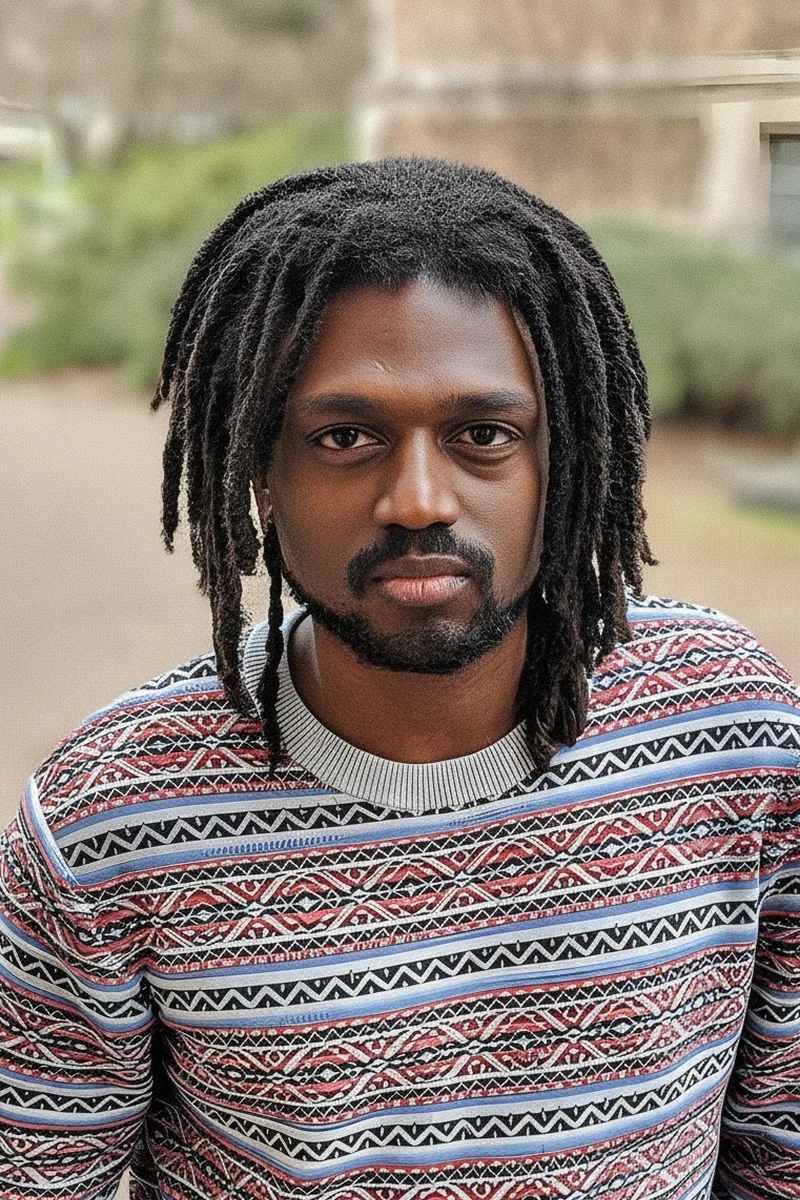
Having earned a math degree from Stanford, Najja brings genuine fluency with the theoretical underpinnings that separate BC from AB — particularly the logic behind convergence tests and the construction of series representations, where students often memorize steps without grasping why they're valid. His classroom teaching experience as a TA sharpened his ability to spot exactly where a student's reasoning breaks down, whether it's in setting up an improper integral or misapplying the ratio test. Rated 4.6 by students.

I am a Masters student in Physics at the University of Washington and have over 10 years of teaching and tutoring experience. Most recently, I worked as a teacher at the Yellow Wood Academy, a private high school that offers students a specialized one-on-one classroom environment. At YWA, I taught all high school science classes (including AP, Computer Programming, and Environmental Science) and all levels of high school math. In addition to my teaching and tutoring duties, I designed individualized lesson plans, curricula, homework assignments, and tests. Subjects I have successfully tutored Physics: all levels Chemistry: all levels high school, plus P-Chem, O-Chem Biology: all levels high school Math: all levels high school, plus Differential Equations, Statistics, some Group Theory. Standardized test preparation (incl. SAT, ACT, GRE, MCAT) Need help in another area? Just ask! While math and science are the subjects I am most passionate about, I am well-versed in many academic areas, and I may be able to help you.
Physics majors don't just take BC Calculus — they breathe it, using series expansions to model oscillations, parametric equations to track projectile paths, and integration techniques to derive everything from moment of inertia to electric potential. Cory's physics degree means he teaches topics like convergence tests and Taylor polynomial error bounds with the intuition of someone who's relied on them to solve real problems, not just pass exams. Rated 4.9 by students.
Intensely curious, I am interested in STEM subjects and the liberal arts. I tutor to help you reach your educational goals and because it's immensely gratifying to see my students succeed.
I am a professional scientist with multiple years of experience in the biopharmaceutical field. I have spent time in the classroom with elementary aged students and am comfortable with this age group. I am also familiar with AP classes and ACT/SAT preparation. I look forward to sharing my love of learning with students and helping them achieve academic goals!
Scoring a 36 on the ACT while studying economics at Vanderbilt means Kerr lives comfortably in the quantitative reasoning that BC Calculus demands — and his computer science focus sharpens the algorithmic thinking behind recursive sequences and series convergence. He teaches BC's trickiest leaps, like moving from basic integration to constructing Taylor polynomials, by grounding each new idea in the conceptual logic rather than just the procedural steps. Rated 4.9 by students.
Convergence tests, parametric equations, and Taylor series expansions are where BC separates from AB — and where many students start to feel lost. Rithi breaks these topics into intuitive steps, connecting new concepts back to the foundational calculus reasoning students already have. Her 1550 SAT and deep STEM background reflect the kind of mathematical fluency that makes those connections clear.
Biochemistry lab work at Columbia demands comfort with the calculus that models reaction kinetics and molecular behavior — Andrew has spent years using integration techniques and series approximations in that context, which gives his BC teaching a practical edge when students ask "why does this matter?" He's especially effective at breaking down the transition from AB to BC, tracing topics like Taylor polynomial construction and convergence criteria back to the derivative and integral logic students already trust. Rated 4.9 by students.
Series convergence tests, parametric equations, polar curves — BC Calculus piles on topics fast, and falling behind on even one unit can snowball. JF scored a perfect 1600 SAT and is studying mathematical and computational science at Stanford, where the calculus concepts from BC are the everyday language of coursework. That recent fluency means explanations stay intuitive rather than overly formal.
Teaching discrete math at Penn while finishing a CS master's means Keenan lives in the world of rigorous mathematical argument — the same mindset that separates students who survive BC from those who actually understand it, especially when series convergence proofs and error bound reasoning demand more than mechanical computation. His philosophy undergraduate training adds an unusual edge: he treats each BC concept like a logical claim that needs justification, which makes topics like the Lagrange remainder or comparison tests feel structured rather than arbitrary. Rated 5.0 by students.
Molecular biophysics at Brown means Srini is constantly using series approximations and integration techniques to model protein folding dynamics and molecular interactions — BC Calculus isn't a prerequisite he passed, it's a toolkit he reaches for weekly. That active use sharpens how he teaches convergence tests and parametric problems, grounding each in the kind of quantitative reasoning his 1600 SAT and 35 ACT reflect. Rated 4.8 by students.
BC Calculus layers convergence tests, parametric equations, and polar curves on top of an already demanding AB foundation, and keeping all of it organized is half the battle. Tessa's approach is to unpack each new topic by tying it back to core ideas students already understand — showing, for instance, how Taylor series are really just an extension of local linearity. She's a math major at Yale with a 4.9 client rating.
BC Calculus piles on topics like Taylor series, parametric equations, and convergence tests at a pace that leaves little room for falling behind. As a Penn math major who also tutors multivariable calculus and linear algebra, Ben understands these concepts at a depth that lets him explain not just the how but the why behind each technique. That deeper perspective makes integration methods and series analysis click faster.
Scoring a perfect 1600 on the SAT while studying computer science at MIT suggests Brice isn't just comfortable with calculus — he's fluent in it, and BC's extension into series, parametric equations, and advanced integration techniques sits squarely in his daily coursework. He breaks down topics like convergence tests by tracing each one back to the limit reasoning students already built in AB, turning what feels like a grab bag of rules into a coherent decision-making process. Rated 4.9 by students.
Derek scored a 5 on the AP Calculus BC exam and now studies applied mathematics at Harvard, which means series convergence tests, parametric equations, and polar area problems are still part of his daily toolkit. He breaks down intimidating topics like Taylor series error bounds and integration by parts into repeatable strategies that click on exam day. Rated 4.9 by students.
Penn's economics program leans heavily on calculus-driven modeling, and Mandy is working through that curriculum right now — which means BC topics like series approximations and integration techniques show up in her coursework as tools for analyzing economic behavior, not just abstract exercises. She's especially clear at walking through the logic of convergence tests and connecting new BC material back to the AB foundations underneath it. Holds a 5.0 rating.
Biomedical engineering at Yale means Jonathan lives in the calculus that comes after most students stop — modeling biological systems with differential equations, approximating nonlinear tissue behavior with series expansions, running convergence analysis on numerical simulations. That daily exposure makes him especially effective at teaching the logic behind the ratio and integral tests, because he's seen firsthand what happens when you pick the wrong one. Holds a 5.0 rating.
Testimonials
Because the right AP Calculus BC tutor makes all the difference.
Average Session Rating – Based on 3.4M Learner Ratings
Practice AP Calculus BC
Free practice tests, flashcards, and AI tutoring for AP Calculus BC
Other Seattle Tutors
Related Math Tutors in Seattle
Frequently Asked Questions
AP Calculus BC builds on Calculus AB and covers advanced integration techniques, differential equations, parametric equations, polar coordinates, and infinite series. The exam tests your ability to work with limits, derivatives, and integrals at a deeper level, plus new topics like convergence tests and Taylor series. Most students spend the year progressing through these topics systematically, with heavy emphasis on both computational skills and conceptual understanding.
AP Calculus BC moves quickly through abstract concepts—series convergence, polar curves, and parametric motion can feel disconnected from the concrete derivative and integral work students learn first. The exam also requires strong problem-solving skills under time pressure, and many students struggle with pacing through the 105-minute test. Additionally, weak foundational algebra or Calculus AB concepts can create gaps that compound as topics get more complex.
Score improvement depends on where you're starting and how consistently you engage with tutoring. Students who work with a tutor to identify weak topics, practice problem-solving strategies, and take timed practice tests typically see meaningful gains—often 1-2 points on the 1-5 scale. The key is starting early enough to address conceptual gaps and build confidence before test day, rather than cramming in the final weeks.
Practice tests are essential—they help you understand the exam format, identify which topics need more work, and build stamina for the full 105-minute test. Taking full-length practice tests under timed conditions reveals pacing issues and question types that trip you up. Most students benefit from taking 3-5 official or high-quality practice exams spread throughout their preparation, with focused review of mistakes between each one.
Students often rush through free-response questions without showing all required work, lose points on algebraic errors in integration, and struggle with series convergence tests—confusing when to use ratio test versus root test. Another frequent issue is misinterpreting parametric or polar problems, or failing to check answer reasonableness. Working with a tutor to review past exams and practice deliberate problem-solving helps catch these patterns before test day.
Varsity Tutors connects you with expert tutors who specialize in AP Calculus BC and understand the specific challenges students face. When getting matched with a tutor, look for someone with strong calculus credentials and experience helping students improve their AP scores. Your first session is a great opportunity to discuss your current level, target score, and whether you need help with specific topics like series or parametric equations.
The exam has two sections: 45 minutes for 30 multiple-choice questions (about 1.5 minutes per question) and 90 minutes for 6 free-response questions (roughly 15 minutes each). Most students benefit from skipping harder multiple-choice questions initially and returning to them later, then tackling free-response questions in order of difficulty. A tutor can help you practice this pacing strategy on timed practice tests so it feels natural on exam day.
Ideally, start tutoring early in the school year if you're struggling with foundational concepts or want to build a strong base. If you're already in the course and doing okay, starting 2-3 months before the exam gives you time to address weak areas and practice test-taking strategies. Starting too close to exam day limits your ability to fill conceptual gaps, so early intervention is always better than last-minute cramming.
Let’s find your perfect tutor
Answer a few quick questions. We’ll recommend the right plan and match you with a top 5% tutor.