Award-Winning AP Physics C: Mechanics Tutors
serving Seattle, WA
AP Physics C: Mechanics
Tutors in Seattle
Private 1-on-1 tutoring, weekly live classes for academic support, test prep & enrichment, practice tests and diagnostics, and more to elevate grades and test scores.
Based on 3.4M Learner Ratings
UniversitiesSchools & Universities
DeliveredHours Delivered
ProficiencyGrowth in Proficiency
Who needs tutoring?
No obligation. Takes ~1 minute.
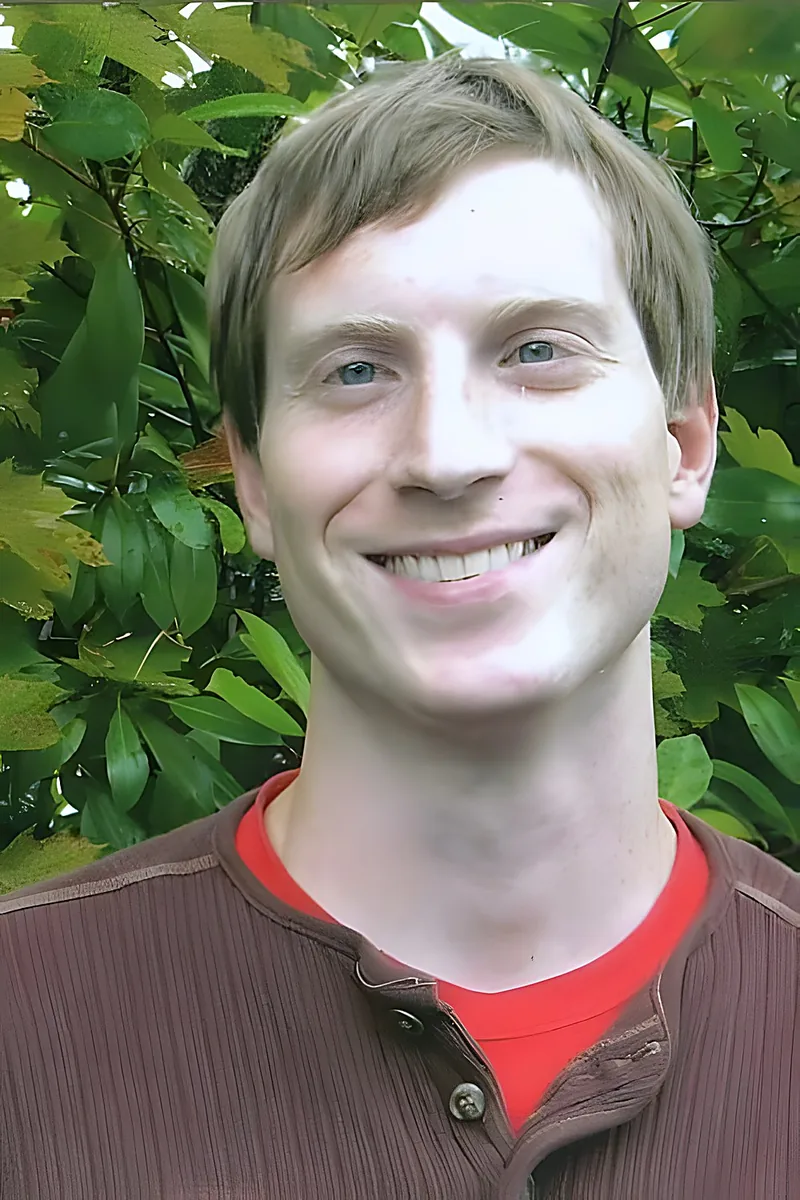
I am a Masters student in Physics at the University of Washington and have over 10 years of teaching and tutoring experience. Most recently, I worked as a teacher at the Yellow Wood Academy, a private high school that offers students a specialized one-on-one classroom environment. At YWA, I taught all high school science classes (including AP, Computer Programming, and Environmental Science) and all levels of high school math. In addition to my teaching and tutoring duties, I designed individualized lesson plans, curricula, homework assignments, and tests. Subjects I have successfully tutored Physics: all levels Chemistry: all levels high school, plus P-Chem, O-Chem Biology: all levels high school Math: all levels high school, plus Differential Equations, Statistics, some Group Theory. Standardized test preparation (incl. SAT, ACT, GRE, MCAT) Need help in another area? Just ask! While math and science are the subjects I am most passionate about, I am well-versed in many academic areas, and I may be able to help you.
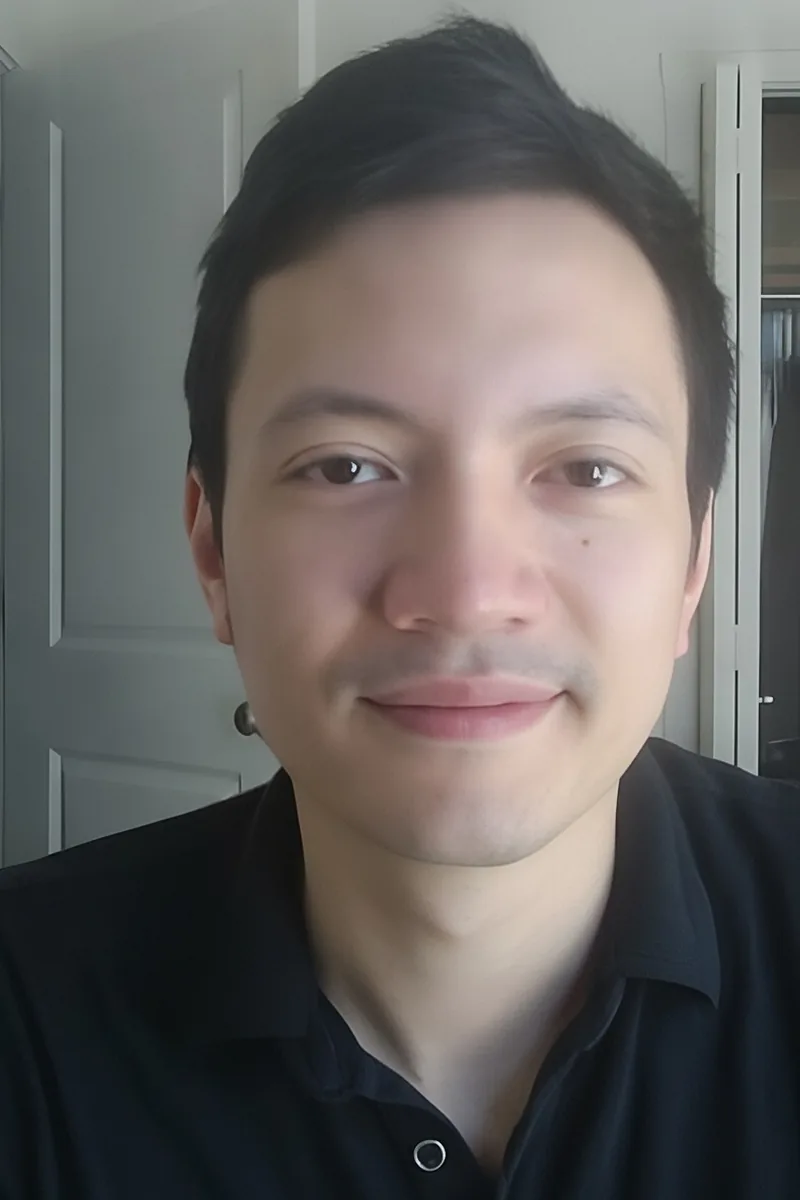
Mechanics is where Cory is most at home. He treats AP Physics C: Mechanics as a student's first real encounter with calculus-based reasoning about the physical world — deriving kinematic equations from integrals, connecting Newton's laws to differential equations in rotational dynamics, and building intuition for conservation laws that goes beyond plugging into formulas. His physics degree means the vector calculus never gets hand-waved away.
I am a professional scientist with multiple years of experience in the biopharmaceutical field. I have spent time in the classroom with elementary aged students and am comfortable with this age group. I am also familiar with AP classes and ACT/SAT preparation. I look forward to sharing my love of learning with students and helping them achieve academic goals!
Cornell pre-med students rarely double down on calculus-based physics, but Pratik tutors AP Physics C: Mechanics alongside AP Chemistry and AP Biology — giving him a cross-disciplinary lens that's especially useful when mechanics problems involve biological or chemical systems in free-response scenarios. His 35 ACT confirms the quantitative fluency needed to walk students through setting up torque equations or integrating variable forces without losing sight of the underlying physics.
Designing control systems for Northwestern's solar car means Michael applies Newtonian mechanics, rotational dynamics, and energy conservation principles daily — the exact topics AP Physics C: Mechanics tests. He teaches students to translate word problems into free-body diagrams and then into the calculus-based equations that earn full marks on free-response questions.
Biomedical engineering throws you into calculus-based mechanics from day one — Spencer's coursework has him modeling forces on biological systems using the same Newtonian framework and integral setups that AP Physics C tests on free-response problems. His 35 ACT and parallel teaching across both AP Calculus BC and AP Physics C mean he can diagnose whether a student's stuck on the physics concept or the calculus execution, and address the right one.
Rice's physics program throws Will into calculus-based mechanics every day — working through Lagrangian setups, variable-force integrations, and the rotational dynamics problems that make AP Physics C's free-response section so demanding. His approach starts with the underlying physical principle, then builds the math around it piece by piece, so students internalize the reasoning instead of pattern-matching to memorized solutions.
Jared's PhD work in mechanical engineering at Lehigh means he's solving advanced dynamics problems daily — the kind where AP Physics C's rotational kinematics and work-energy integrals are just the warm-up. His biomedical engineering background adds a practical dimension: he can show students how a torque problem on the exam mirrors the same mechanics behind joint loading or prosthetic design, making abstract calculus-based physics feel grounded in something real.
Vaughn's physics degree and 1590 SAT mean the calculus-based problem-solving AP Physics C: Mechanics demands — setting up Newton's second law as a differential equation, computing work done by variable forces — is squarely in his wheelhouse. He zeroes in on dimensional analysis and unit tracking as a way to catch errors before they cascade through multi-step free-response problems, a habit that pays off especially in rotational dynamics where signs and reference frames get tricky.
Simulating cosmic ray acceleration through turbulent plasmas requires exactly the kind of calculus-based mechanics reasoning that AP Physics C tests — Newton's laws applied to complex systems, rotational dynamics, and energy methods. Dennis walks students through the hardest problems on the exam by teaching them to set up the physics first and let the calculus follow naturally. Rated 4.7 by students.
Darren is midway through his physics degree at Northwestern, which means he's actively taking the upper-division mechanics courses that build directly on everything AP Physics C tests — and he still remembers exactly where the conceptual jumps from kinematics to rotational dynamics tripped him up the first time. He zeroes in on free-body diagrams and getting the calculus setup right before students ever touch a number, treating each problem as a reasoning exercise rather than a formula hunt. Rated 5.0 by students.
Sanjana's applied math studies at Harvard and her role as a Course Assistant for introductory calculus mean she's fluent in the exact differential and integral techniques that AP Physics C: Mechanics layers onto every force, torque, and energy problem. She's especially effective at bridging the gap when students grasp the physics intuitively but struggle to translate a scenario — say, a block on a spring with friction — into the correct differential equation and solve it cleanly. Rated 5.0 by students.
Kimanthi's biomedical engineering degree from Duke required the same calculus-heavy mechanics — torque on prosthetic joints, force integrals through fluid systems, energy methods applied to biomechanical models — that AP Physics C tests in a more abstract form. That background means she can ground rotational dynamics and work-energy problems in tangible physical scenarios, giving students an intuitive hook before the math gets dense. Rated 5.0 by students.
Working as a postdoctoral researcher at Brookhaven National Laboratory while teaching university physics at Hofstra, Lindamulage lives in the world of Newtonian mechanics and calculus-based dynamics daily — not as textbook exercises, but as tools for active research. That depth shows when tackling AP Physics C: Mechanics topics like rotational inertia derivations or variable-force work integrals, where real-life examples from the lab make abstract setups feel grounded. Students get someone who can explain why a conservation law works the way it does, not just how to apply it on exam day.
Three years of tutoring introductory physics students while completing dual bachelor's degrees in physics and mathematics — followed by a PhD in Computational Mathematics — means Justin has taught the calculus-based mechanics in AP Physics C from both sides of the chalkboard. He digs into the spots where students typically stall, like setting up angular momentum problems or knowing when a scenario calls for energy methods versus force analysis, and walks through the underlying math until the physics clicks. Rated 5.0 by students.
Testimonials
Because the right AP Physics C: Mechanics tutor makes all the difference.
Average Session Rating – Based on 3.4M Learner Ratings
Practice AP Physics C: Mechanics
Free practice tests, flashcards, and AI tutoring for AP Physics C: Mechanics
Other Seattle Tutors
Related Science Tutors in Seattle
Frequently Asked Questions
AP Physics C: Mechanics combines calculus with physics concepts, requiring students to not only understand physical principles but also apply calculus techniques like derivatives and integrals to solve problems. The exam emphasizes deep conceptual understanding and problem-solving skills rather than memorization, which challenges many students who haven't developed strong mathematical foundations or intuition for how forces, motion, and energy interact in real systems.
Score improvement depends on your starting point and commitment level. Students who work consistently with a tutor over several months typically see meaningful gains—often 2-4 points on the 5-point AP scale—by addressing conceptual gaps and developing stronger problem-solving strategies. The key is identifying which topics (kinematics, forces, energy, momentum, or rotational motion) are holding you back and building mastery in those areas through targeted practice and feedback.
Your first session is focused on assessment and planning. A tutor will review your current understanding of key AP Physics C: Mechanics topics, identify which areas need the most work (such as free-body diagrams, energy conservation, or rotational dynamics), and discuss your timeline and goals for the exam. Together, you'll create a personalized study plan that prioritizes the concepts and problem types that will have the biggest impact on your score.
The AP Physics C: Mechanics exam has two sections—a 45-minute multiple-choice section and a 45-minute free-response section—and pacing is critical. Effective strategies include practicing full-length exams under timed conditions to build speed, learning to quickly identify which problem-solving approach to use, and knowing when to skip a difficult question and return to it later. A tutor can help you develop a personalized pacing strategy based on your strengths and weaknesses, so you're not rushing through sections where you're strong or spending too much time on your weakest topics.
Common mistakes include misinterpreting free-body diagrams (forgetting forces or drawing them incorrectly), confusing when to use energy methods versus force-based approaches, making sign errors in vector problems, and rushing through calculus steps in kinematics problems. Many students also struggle with rotational motion concepts and forget to apply Newton's second law correctly in different reference frames. Regular practice with detailed feedback helps catch these patterns early so you can correct them before test day.
Look for tutors with strong physics backgrounds—ideally a degree in physics or engineering—and proven experience teaching AP Physics C: Mechanics specifically. They should be familiar with the current AP exam format, understand common student misconceptions, and have a track record of helping students improve their scores. Varsity Tutors connects you with expert tutors who have the subject knowledge and teaching experience to guide you through the calculus-based concepts and problem-solving strategies that define this course.
Most students benefit from starting tutoring 3-4 months before the exam in May, with 1-2 sessions per week depending on your current level and target score. If you're starting closer to the exam or struggling significantly, more frequent sessions (2-3 per week) can help you catch up faster. Consistent practice between sessions—working through problem sets and practice tests—is just as important as tutoring time, so plan to dedicate 5-7 hours per week to independent study alongside tutoring.
Practice tests are essential for AP Physics C: Mechanics because they help you build speed, identify weak topics, and get comfortable with the exam format. Take your first full-length practice test early to establish a baseline, then use subsequent tests to track progress and focus on specific areas that need improvement. Review every problem you miss or find difficult—understanding not just the right answer but why other approaches don't work—is where real learning happens. A tutor can help you analyze your practice test results and adjust your study plan accordingly.
Let’s find your perfect tutor
Answer a few quick questions. We’ll recommend the right plan and match you with a top 5% tutor.