Award-Winning AP Physics Tutors
serving Seattle, WA
AP Physics
Tutors in Seattle
Private 1-on-1 tutoring, weekly live classes for academic support, test prep & enrichment, practice tests and diagnostics, and more to elevate grades and test scores.
Based on 3.4M Learner Ratings
UniversitiesSchools & Universities
DeliveredHours Delivered
ProficiencyGrowth in Proficiency
Who needs tutoring?
No obligation. Takes ~1 minute.
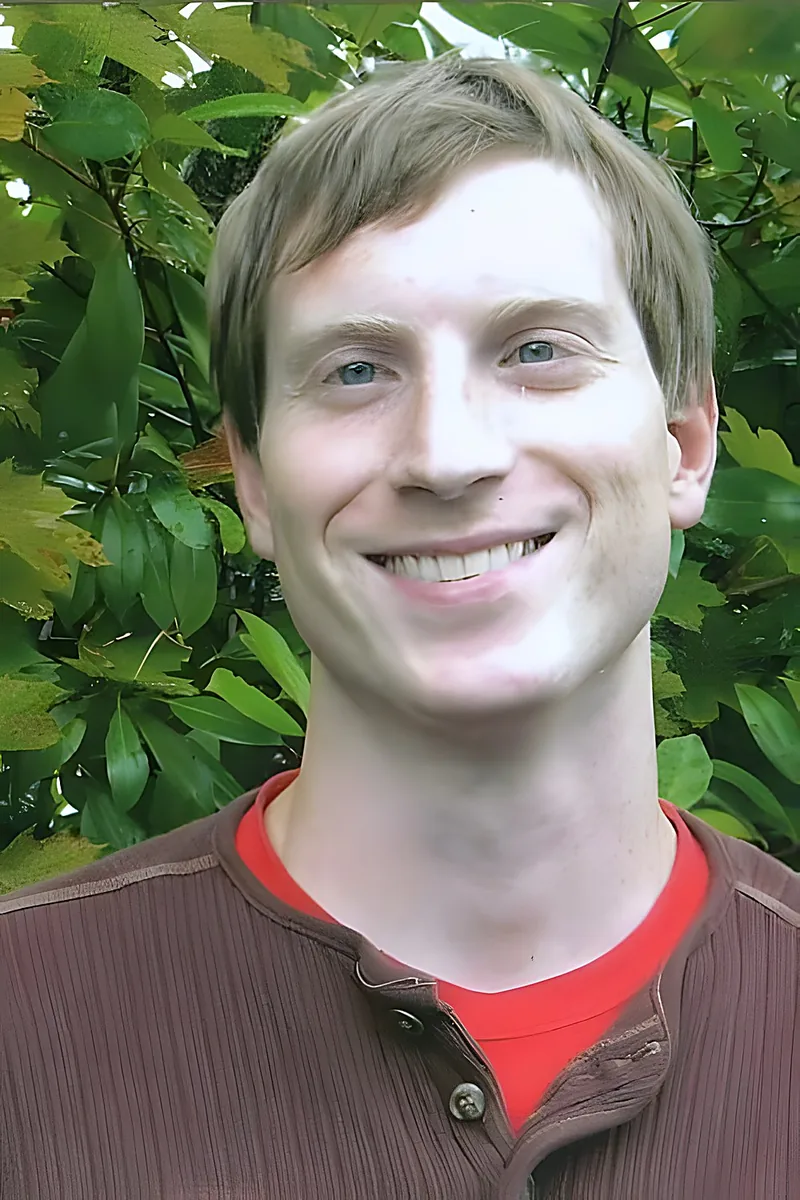
I am a Masters student in Physics at the University of Washington and have over 10 years of teaching and tutoring experience. Most recently, I worked as a teacher at the Yellow Wood Academy, a private high school that offers students a specialized one-on-one classroom environment. At YWA, I taught all high school science classes (including AP, Computer Programming, and Environmental Science) and all levels of high school math. In addition to my teaching and tutoring duties, I designed individualized lesson plans, curricula, homework assignments, and tests. Subjects I have successfully tutored Physics: all levels Chemistry: all levels high school, plus P-Chem, O-Chem Biology: all levels high school Math: all levels high school, plus Differential Equations, Statistics, some Group Theory. Standardized test preparation (incl. SAT, ACT, GRE, MCAT) Need help in another area? Just ask! While math and science are the subjects I am most passionate about, I am well-versed in many academic areas, and I may be able to help you.
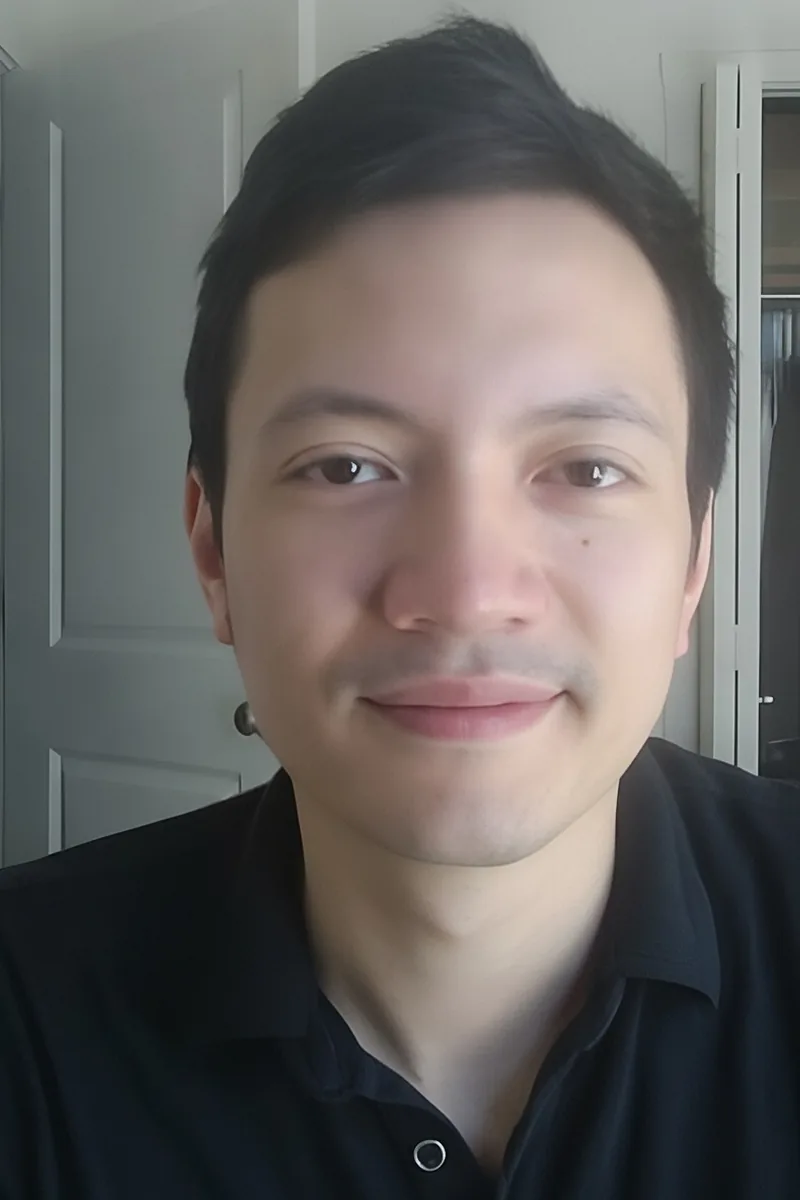
I am most passionate about tutoring is mechanics since this is usually a student's first exposure to synthesizing physical theories with mathematical concepts. Overall, I take a conversational approach to tutoring where I try my best to relate the material to the student's life experiences while drawing more conventional analogies that are proven to make the concept click.
I am a professional scientist with multiple years of experience in the biopharmaceutical field. I have spent time in the classroom with elementary aged students and am comfortable with this age group. I am also familiar with AP classes and ACT/SAT preparation. I look forward to sharing my love of learning with students and helping them achieve academic goals!
I am currently finishing up my time at Stevens Institute of Technology, to obtain a Bachelor of Engineering in Electrical Engineering. My love for teaching is something I found when I would tutor my younger brother in Calculus. Ever since I have been taking teaching opportunities where I can find them. At Stevens, the night prior to calculus exams, I would give a review of the materials to over 200 students at a time. Afterword I would stay and help any student that needed assistance one on one. I tutor many things but my biggest interests are Calculus(AB), Python programming, and other high school level maths. I believe the best way to teach math is to reduce the intimidation factor that math can have and this is exactly what seems to work for my students. In my spare time I like to hike, camp, ride my dirt bike and play basketball.
I am enrolled in the Mechanical Engineering PhD program at Rice University which will begin Fall 2020, and I am hoping to return to academia as a professor after earning my PhD. In the meantime, I am looking to share my passion for gaining knowledge, specifically in STEM, by educating the up and coming members of such a great field. I have experience tutoring both Calculus and Physics at Notre Dame, as well as experience as a Student Assistant for Differential Equations and Mechanics. I believe the key to learning is much deeper than learning to solve problems and that seeking knowledge is one of the best means for personal improvement.
I am a rising senior at Duke University. I major in Computer Science and am also getting a minor in Physics. I have had experience tutoring/teaching as a teaching assistant for three classes: Intro to Databases, Electricity and Magnetism (for engineers), and Computer Network Architecture. I have had industry experience in software development as an intern for IBM and a cybersecurity analyst for TIAA. Outside of school/work, I play the piano and train with the Duke Taekwondo Club. I have a strong background in computer science, physics, and math, but I love learning about and helping students with a wide variety of subjects!
I am an undergraduate student at the Massachusetts Institute of Technology, and I have tutored students since my early high school years. I've had experience instructing and guiding a variety of students, from young middle schoolers taking their first steps into the world of computer programming to my own peers struggling with their calculus exams. Over the past year alone, I've worked with over 30 students, spending several hours each day to help them stay up to speed on their schoolwork. I specialize in many areas of math as well as computer science, biology and physics. When tutoring students, I draw on my own experience with learning the material to identify and address the obstacles they face. I believe that promoting a deeper level of understanding of the subject, as opposed to merely teaching to the test or problem set, will enable students to excel in the long-term.
I'm currently a freshman at Rice University studying applied math. I've always had a love for sharing knowledge with others, and I started tutoring when I was a junior in high school. As a former AP student and a National AP Scholar, I have the experience necessary to guide my students through challenging curriculum. Though I specialize in tutoring mathematics and physics, I am experienced with and am happy to tutor a broad range of subjects.
I am an avid classical pianist, EMT, swimmer, and tinkerer. I love explaining things and paying forward my knowledge to those around me!
I'm a sophomore at Harvard studying Applied Math, Economics, and Computer Science. I've tutored in a variety of subjects throughout high school and currently work part-time as a Course Assistant for an Introductory Calculus course at Harvard. I especially love tutoring math and making it a more accessible subject for students to learn. Aside from academics, I'm passionate about community service (I'm a director for a student-run homeless shelter!), music, digital design, and baking!
I am a student at Cornell University pursuing a double major in Biological Sciences, concentrating in computational biology, and Computer Science. I have tutored math, biology, physics, and French to middle school and high school students. I have also facilitated group discussion sessions for English language learners. I love learning new things and helping others understand these concepts as well.
I am currently a student at Stanford University studying math and political science. I am passionate about sharing my knowledge and experience with younger students. I have helped students of different ages and from diverse socioeconomic backgrounds, and so I am very conscious of the needs and prior knowledge my students and tailor my tutoring method and style individually.
I am currently a senior at Johns Hopkins studying Biomedical Engineering. I have a lot of experience tutoring in math, physics, chemistry, and thermodynamics. I have also proof-read essays for college applications and english classes as well. Outside of school I like to cook, play basketball, and listen to music.
I'm Dennis. I study physics, math, and computer science. I have done research about cosmic ray acceleration at supernova shock fronts in the Princeton University Department of Astrophysics, simulating how the turbulent plasmas push protons and ions. I have also worked at the Norfolk State University Department of Engineering, designing, simulating, optimizing, and building light filters for wavelength-division optical-electronic multiplexers. Another field I study is the mathematics of quasicrystals and aperiodic tilings, such as the Penrose tiling of rhombuses.
I am currently a rising junior at Cornell University studying physics. I have worked with students of the elementary, middle, and high school levels in subjects such as math, physics, and even music production! I mainly focus on tutoring math and physics because I believe having a deep understanding of these subjects allows one to think more analytically of the world around us. I also believe in getting to know how a student learns best, as everyone learns differently, and tailoring lessons with that learning method in mind.
I am a third year electrical engineering student at Princeton University, with a focus in applied physics, and minors in German studies and history. I want to tutor because I am always excited about learning new things, and I want to share this with students of all ages. I find that this way, a student can do difficult work, excel, and feel both accomplished and happy. I have a broad range of specialties, from physics, to programming in Java and C, to German, to test prep and college applications help. I also love workshopping all kinds of writing, whether personal or academic. Some of my qualifications include physics research at a Max Planck Institute and acceptances to Harvard and UC Berkeley. I have experience teaching environmental science to children at a botanical garden and volunteering as a reading tutor for elementary schoolers behind grade level.
Testimonials
Because the right AP Physics tutor makes all the difference.
Average Session Rating – Based on 3.4M Learner Ratings
Other Seattle Tutors
Related Science Tutors in Seattle
Frequently Asked Questions
AP Physics 1 focuses on mechanics—motion, forces, energy, momentum, and rotational dynamics—making it ideal for students building foundational physics skills. AP Physics 2 covers electricity, magnetism, thermodynamics, waves, and modern physics, requiring stronger mathematical and conceptual reasoning. Both exams test your ability to apply physics principles to real-world scenarios, but AP Physics 2 is generally considered more challenging due to its abstract concepts. Knowing which course you're taking helps tutors tailor their instruction to your specific curriculum and exam format.
Score improvement depends on your starting point, consistency, and how much time you dedicate to practice. Students who work with a tutor typically see gains of 1-3 score points on the AP scale (1-5), with larger improvements when addressing specific weak areas like free-response questions or problem-solving strategies. The key is identifying gaps early—whether it's conceptual misunderstandings or test-taking pacing—and building targeted practice around those challenges. Most students benefit from starting tutoring at least 3-4 months before the exam to allow time for skill development and practice test refinement.
Many students struggle with translating word problems into physics equations, managing the multi-step problem-solving process, and balancing conceptual understanding with mathematical execution. Free-response questions are particularly challenging because they require you to justify your reasoning and show all work—partial credit depends on your approach, not just your final answer. Additionally, time management during the exam is critical; students often spend too long on difficult questions and rush through easier ones. A tutor can help you develop systematic problem-solving strategies, practice efficient time allocation, and build confidence in explaining your physics reasoning clearly.
Start by reading questions carefully to identify what's being asked before diving into calculations—many students misinterpret problems and waste time solving the wrong thing. On the multiple-choice section, eliminate obviously wrong answers first, then use physics reasoning to narrow down remaining choices. For free-response questions, outline your approach before writing, show all steps (even if you make a calculation error, you can earn credit for correct methodology), and manage your time by tackling questions you're confident about first. Practice tests under timed conditions are essential; they help you identify pacing issues and build familiarity with question formats before test day.
Ideally, start tutoring in the fall if you're taking the May exam, giving yourself 6-7 months to build skills and practice. However, even starting in January or February can make a meaningful difference if you're willing to commit to consistent work. In your first session, a tutor will assess your current understanding of key concepts, review your course progress, and identify specific areas where you're struggling—whether that's kinematics, energy conservation, or circuit analysis. From there, they'll create a personalized study plan that combines concept review, problem-solving practice, and timed practice tests leading up to exam day.
Varsity Tutors connects you with expert tutors in Seattle who specialize in AP Physics and understand both the College Board curriculum and effective exam preparation strategies. When you get matched with a tutor, they'll have demonstrated expertise in physics content and experience helping students improve their AP scores. You can discuss your specific goals—whether you're aiming for a 3, 4, or 5—and your tutor will tailor instruction to your needs, whether that means reviewing foundational concepts, mastering problem-solving techniques, or building test-taking confidence.
Practice tests are crucial because they simulate the actual exam format, help you identify weak areas, and train you to work under time pressure. Taking full-length practice tests every 2-3 weeks allows you to track your progress and adjust your study strategy based on which topics or question types are giving you trouble. Beyond full exams, practicing individual free-response questions and multiple-choice sets helps you build efficiency and confidence. Your tutor can review your practice test performance with you, pinpoint patterns in your mistakes, and help you develop targeted strategies to address them.
Test anxiety often stems from feeling unprepared or unsure of your problem-solving approach—personalized 1-on-1 instruction directly addresses both by building your conceptual understanding and giving you proven strategies to tackle difficult questions. Regular practice and seeing improvement over time builds genuine confidence, not false reassurance. Your tutor can also help you develop a pre-exam routine, practice relaxation techniques during timed sessions, and reframe challenging problems as opportunities to apply your skills rather than threats. Many students find that knowing they have a tutor to turn to when stuck reduces anxiety significantly.
Let’s find your perfect tutor
Answer a few quick questions. We’ll recommend the right plan and match you with a top 5% tutor.