Award-Winning Pre-Calculus Tutors
serving Seattle, WA
Pre-Calculus
Tutors in Seattle
Private 1-on-1 tutoring, weekly live classes for academic support, test prep & enrichment, practice tests and diagnostics, and more to elevate grades and test scores.
Based on 3.4M Learner Ratings
UniversitiesSchools & Universities
DeliveredHours Delivered
ProficiencyGrowth in Proficiency
Who needs tutoring?
No obligation. Takes ~1 minute.
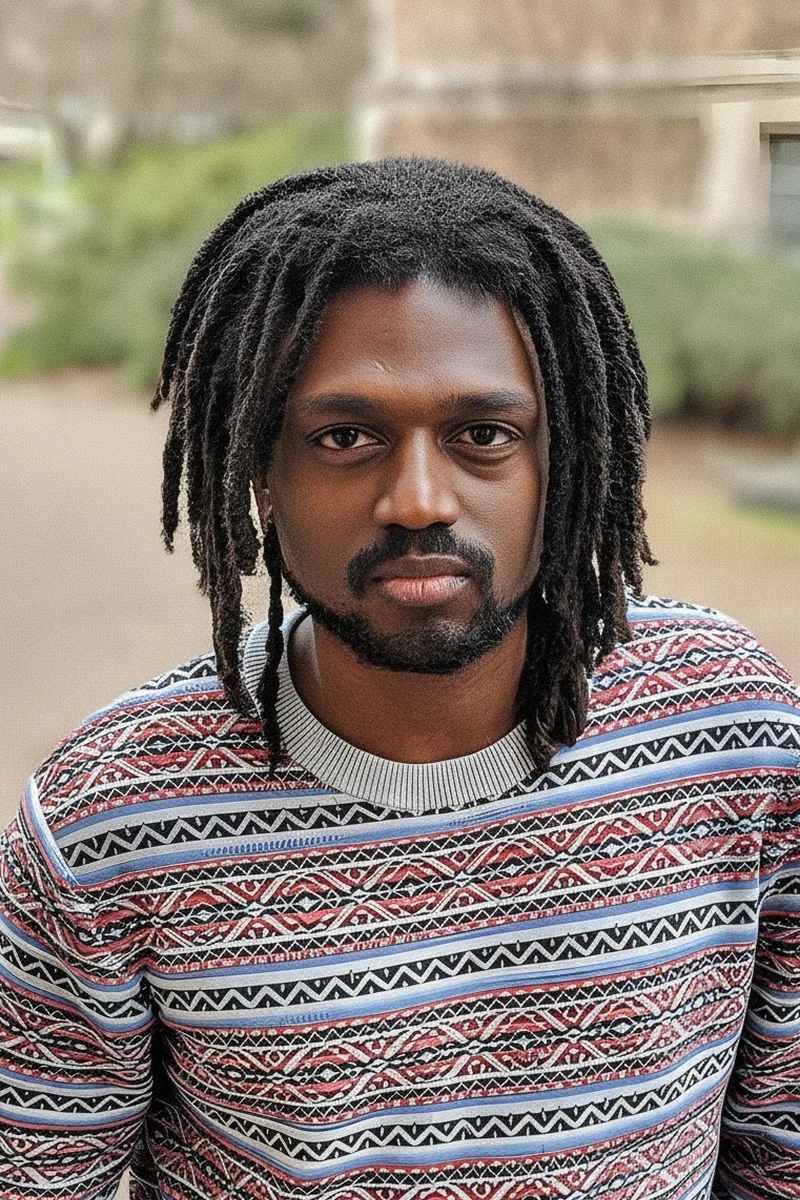
Najja earned a math degree from Stanford, where applying formulas and mathematical properties mattered far more than memorizing them — a habit he carries directly into how he teaches pre-calculus topics like trigonometric identities and composite functions. He digs into the reasoning behind each rule so students can reconstruct techniques on their own when a problem looks unfamiliar. His dual background in math and history gives him a knack for explaining abstract ideas in concrete, narrative terms.

I am a Masters student in Physics at the University of Washington and have over 10 years of teaching and tutoring experience. Most recently, I worked as a teacher at the Yellow Wood Academy, a private high school that offers students a specialized one-on-one classroom environment. At YWA, I taught all high school science classes (including AP, Computer Programming, and Environmental Science) and all levels of high school math. In addition to my teaching and tutoring duties, I designed individualized lesson plans, curricula, homework assignments, and tests. Subjects I have successfully tutored Physics: all levels Chemistry: all levels high school, plus P-Chem, O-Chem Biology: all levels high school Math: all levels high school, plus Differential Equations, Statistics, some Group Theory. Standardized test preparation (incl. SAT, ACT, GRE, MCAT) Need help in another area? Just ask! While math and science are the subjects I am most passionate about, I am well-versed in many academic areas, and I may be able to help you.
Hi, I'm Laura! I graduated summa cum laude from Eastern Washington University with a bachelor's of science degree in mathematics and a minor in sociology. There, I earned the Frances B. Huston award, the most prestigious award given to graduating students, for excellence in academics, leadership, and community service. From there, I became a student at the University of Washington (UW), earning my Master of Science in Applied Mathematics and a position as a PhD student in the department. I was also awarded the Carl S. Pearson award for academic excellence in the Master's program. I have been working as a PhD student since then, with expertise in all types of math including algebra, calculus, linear algebra, and numerical analysis, among others. I also have years of experience coding in both python and matlab! I spent three years as an undergraduate teaching assistant, helping teach both high school and college level math classes. I also taught multiple sections of calculus at the University of Washington as a Master's student, and I have served as a teaching assistant throughout my time at UW. My favorite thing about these positions were the opportunities to work one-on-one with students, developing new approaches to help them understand difficult concepts. I love coming up with new examples or intuitive ways of thinking through math problems. I think everybody can learn math, and I love helping students of all ages and backgrounds achieve their mathematical goals! I have a number of resources to use in lesson planning, and I also welcome any resources or suggestions provided by students and parents to help tailor the experience to your needs. Please feel free to contact me with any questions or to schedule a session!
Teaching pre-calculus as adjunct faculty at Washington State University means Moayad isn't just tutoring this material — he's designing syllabi, writing exams, and watching hundreds of students hit the same stumbling points around rational functions, limits intuition, and trigonometric identities. His two math degrees (BS and MS) give him the depth to explain why a concept works, not just how to execute it. Rated 4.5 by students.
The jump to Pre-Calculus trips up a lot of students because it demands fluency with trigonometric identities, complex functions, and limits all at once. Alice approaches each of these topics as its own mini puzzle, finding the specific strategy — graphical, algebraic, or numerical — that makes a concept click for each student. Her 5.0 rating speaks to how well that approach lands.
A physics degree means Cory learned pre-calculus concepts the hard way — by needing them to work in kinematics, wave equations, and circuit analysis before circling back to understand why they worked. That experience makes him especially sharp at teaching the bridge between algebraic manipulation and the functional thinking calculus demands, particularly when it comes to trigonometric relationships and limits of rational expressions. Rated 4.9 by students.
Intensely curious, I am interested in STEM subjects and the liberal arts. I tutor to help you reach your educational goals and because it's immensely gratifying to see my students succeed.
Most pre-calculus struggles trace back to a shaky handoff from algebra — students can solve equations but freeze when asked to think about functions as objects that transform, compose, and invert. Maria's applied math training at UCLA means she teaches that conceptual shift directly, connecting the algebraic manipulation students already trust to the functional reasoning calculus will demand. Her background in business economics also gives her a ready supply of real modeling contexts for exponential and logarithmic behavior.
The jump into trigonometric identities, polar coordinates, and limit intuition is where pre-calculus either prepares a student for calculus or leaves them scrambling. Xiansheng teaches these topics by showing how each one feeds directly into the derivatives and integrals ahead, so students understand the purpose behind every new concept.
Trigonometric identities, rational functions, and the unit circle are the concepts that separate students who are ready for calculus from those who aren't. Sameer teaches Pre-Calculus with an eye toward what's coming next, making sure students understand why limit behavior and function transformations matter before they ever see a derivative. His own path through AP Calculus BC and into university-level math keeps that connection sharp.
Ria's Informatics major at UW, with minors in Data Science and Statistics, means she's constantly translating between mathematical abstractions and their computational applications — exactly the kind of thinking pre-calculus demands when students hit sequences, function transformations, or logarithmic modeling. She bridges the gap between algebra mechanics and the more conceptual reasoning calculus will require, paying particular attention to how data-driven fields actually use these tools. Her teaching range from elementary math through AP Calculus AB means she can pinpoint exactly where a student's understanding breaks down and rebuild from there.
I'm a tutor who loves the moment when a concept finally clickswhether that's solving a calculus problem or debugging a first Python script. With experience teaching math from elementary to college level and professional training in full-stack development, I help students build confidence alongside competence in both math and programming. At Mathnasium, I worked with groups of 4-6 students at different levels, learning to adapt quickly to different learning styles. I bring that same flexibility to teaching HTML, CSS, JavaScript, Python, and other programming languages. I don't just give answersI guide students to discover solutions themselves because that's what sticks. Whether it's explaining why a for-loop isn't working, walking through derivatives, preparing for the SAT, or building a first web page, I focus on understanding over memorization. I'm patient but direct, and I adjust my approach based on what's actually working for each student. My goal is simple: make learning feel achievable, not intimidating, and give students tools they can use long after our sessions end.
The jump to pre-calculus trips up a lot of students because it's the first time they need to think about functions as objects — transforming them, composing them, analyzing their behavior. Christine's engineering coursework at Johns Hopkins required fluency with trigonometric identities, polar coordinates, and limits, so she teaches these topics with the confidence of someone who uses them daily.
Tutoring calculus students at Penn's Tutoring Center taught Brittany exactly which pre-calculus skills matter most — she saw firsthand where gaps in trigonometric reasoning or shaky function manipulation derailed students in Gen Chem and Physics. Her psychology training also gives her a sharp read on how students get stuck, letting her adjust explanations of topics like polynomial end behavior or composite functions on the fly. She's been teaching math since her Mu Alpha Theta days in high school and hasn't stopped since.
The jump into pre-calculus — trigonometric identities, limits, and complex functions — trips up even strong math students who breezed through earlier courses. Julia breaks these topics into logical building blocks, connecting each new idea back to the algebra and geometry students already know. Her Stanford coursework in economics and quantitative methods keeps her sharp on exactly the kind of function analysis pre-calc demands.
The moment pre-calculus shifts from familiar algebra into rational functions, sequences, and trigonometric identities, many students lose their footing — Vansh tackles that transition by making each new concept feel like a natural extension of what came before. His finance background at WashU means he thinks in terms of models and projections built on the same exponential and logarithmic frameworks students are learning to navigate. A 1550 SAT and 4.8 rating confirm he delivers on that approach.
Until age 16, Viktor saw math as mindless formula memorization — then a series of great teachers revealed the deeper logic underneath, and he ended up majoring in mathematics at UChicago. That conversion story shapes how he teaches pre-calculus: he digs into *why* the unit circle works or what a logarithm actually means, so students build real understanding instead of a formula sheet they'll forget by finals. His 1600 SAT and 35 ACT confirm the mathematical fluency behind that approach.
The jump to pre-calculus is where many students first encounter limits of their algebraic intuition — rational functions behave strangely, trigonometric identities pile up, and sequences suddenly matter. Emily tackles these topics by emphasizing the graphical and conceptual logic underneath, drawing on a math background that earned her a 1590 SAT and a 36 ACT.
Tim's computational neuroscience work at MIT sits right at the intersection where pre-calculus stops being abstract — he uses trigonometric models for neural oscillations, exponential decay for signal processing, and function composition to build the simulations his research depends on. That daily fluency means he can trace a topic like polar coordinates or logarithmic properties back to the intuition underneath it, not just the procedure on the page. His 34 ACT and 4.9 rating reflect the precision he brings to each session.
Doing research in Spectral Graph Theory at MIT means Enrico encounters the full toolkit of pre-calculus — eigenvalue behavior, polynomial roots, matrix transformations — at a level where shaky fundamentals would be immediately exposed. He teaches the course by making definitions click intuitively, so that concepts like composite functions or rational expressions feel like natural extensions of algebra rather than arbitrary new rules. His 36 ACT, 1570 SAT, and 5.0 rating confirm the depth behind that intuition.
A math degree from Penn means Ben didn't just pass through pre-calculus — he built everything that came after on top of it, from linear algebra to multivariable calculus. That depth lets him teach topics like rational functions and trigonometric identities by revealing the structural logic underneath, so students carry real understanding into calculus instead of a fragile set of memorized steps. Holds a 5.0 rating.
A physics major heading to Duke on a full merit scholarship, Nima treats pre-calculus as the language his discipline is built on — every vector problem, wave equation, and projectile model he encounters runs on trigonometric functions, parametric relationships, and limits of polynomial behavior. He teaches the course with that physics intuition, turning abstract graph transformations and identity proofs into tools students can actually visualize. His 1580 SAT confirms the quantitative sharpness behind that approach.
The jump into limits, trigonometric identities, and composite functions can feel overwhelming without someone who knows how to sequence the ideas clearly. Pinelopi has tutored math from pre-algebra through calculus, which means she can pinpoint exactly which earlier concept a student is missing when pre-calc material stops making sense. Rated 5.0 by students.
The jump to pre-calculus often trips students up at trigonometric identities and the shift from algebraic to function-based thinking. Ellie's biomedical engineering coursework at Yale runs on these exact tools — polar coordinates, parametric equations, and limits all show up in her daily problem sets. Rated 5.0 by students, she connects each pre-calc concept to the bigger mathematical picture so the material actually sticks.
Testimonials
Because the right Pre-Calculus tutor makes all the difference.
Average Session Rating – Based on 3.4M Learner Ratings
Practice Pre-Calculus
Free practice tests, flashcards, and AI tutoring for Pre-Calculus
Other Seattle Tutors
Related Math Tutors in Seattle
Frequently Asked Questions
Pre-Calculus shifts from solving equations to understanding functions, their behaviors, and real-world applications. Students often struggle because it requires both procedural fluency and conceptual thinking—you need to not just solve problems, but understand *why* methods work and how different functions relate to each other. Personalized tutoring helps bridge this gap by connecting abstract concepts to concrete examples and building the foundational understanding needed for Calculus success.
Word problems, multi-step equations, graphing functions, and trigonometric identities consistently challenge Pre-Calculus students. Many students can perform isolated calculations but struggle to translate real-world scenarios into equations or visualize how transformations affect graphs. Expert tutors help students develop problem-solving strategies, recognize patterns across topics, and build confidence by breaking complex problems into manageable steps.
Yes—with 9 school districts across Seattle, schools use various textbooks and approaches (Common Core-aligned, traditional, or hybrid methods). This means Pre-Calculus instruction can vary significantly between schools. Varsity Tutors connects you with tutors who understand multiple curriculum frameworks and can align instruction with your specific school's approach, whether that's emphasizing graphical reasoning, algebraic manipulation, or conceptual understanding.
Showing work reveals your reasoning process and helps teachers identify where conceptual misunderstandings occur—not just computational errors. In Pre-Calculus, this is critical because you're building habits for Calculus, where understanding *why* a method works matters more than getting a single answer. Tutors help students develop clear, organized problem-solving strategies and explain their thinking, which strengthens both understanding and test performance.
Many students memorize transformation rules without truly visualizing how they work—shifting a parabola or reflecting a function becomes abstract symbol manipulation. Personalized tutoring uses visual tools, interactive graphing, and real-world contexts to help you see how changing parameters affects a graph's shape and position. This visual understanding transforms graphing from a mechanical task into intuitive pattern recognition, which is essential for Calculus.
Trig identities often feel like random memorization, but they're actually relationships between functions that follow logical patterns. The key is understanding the foundational identities (Pythagorean, quotient, reciprocal) and learning strategic approaches—like working from the more complex side or looking for common denominators. Expert tutors teach you these problem-solving strategies and help you recognize which identities apply in different contexts, turning frustrating proofs into manageable challenges.
Pre-Calculus anxiety often stems from feeling lost in a classroom setting or fearing judgment when asking questions. Personalized 1-on-1 instruction creates a judgment-free space where you can ask "dumb questions," work at your own pace, and celebrate small wins. Tutors help rebuild confidence by starting with concepts you *do* understand, connecting new material to that foundation, and showing you that struggle is a normal part of learning—not a sign you're not a "math person."
Your first session focuses on understanding your specific challenges, learning style, and goals—whether you're aiming for a strong grade, preparing for AP Calculus, or building foundational skills. Tutors assess your current understanding of key concepts, identify gaps, and discuss which topics need the most attention. From there, you'll develop a personalized plan that targets your weak areas while reinforcing strengths, ensuring every session builds toward your goals.
Let’s find your perfect tutor
Answer a few quick questions. We’ll recommend the right plan and match you with a top 5% tutor.