Award-Winning AP Chemistry Tutors
serving Mesa, AZ
AP Chemistry
Tutors in Mesa
Private 1-on-1 tutoring, weekly live classes for academic support, test prep & enrichment, practice tests and diagnostics, and more to elevate grades and test scores.
Based on 3.4M Learner Ratings
UniversitiesSchools & Universities
DeliveredHours Delivered
ProficiencyGrowth in Proficiency
Who needs tutoring?
No obligation. Takes ~1 minute.
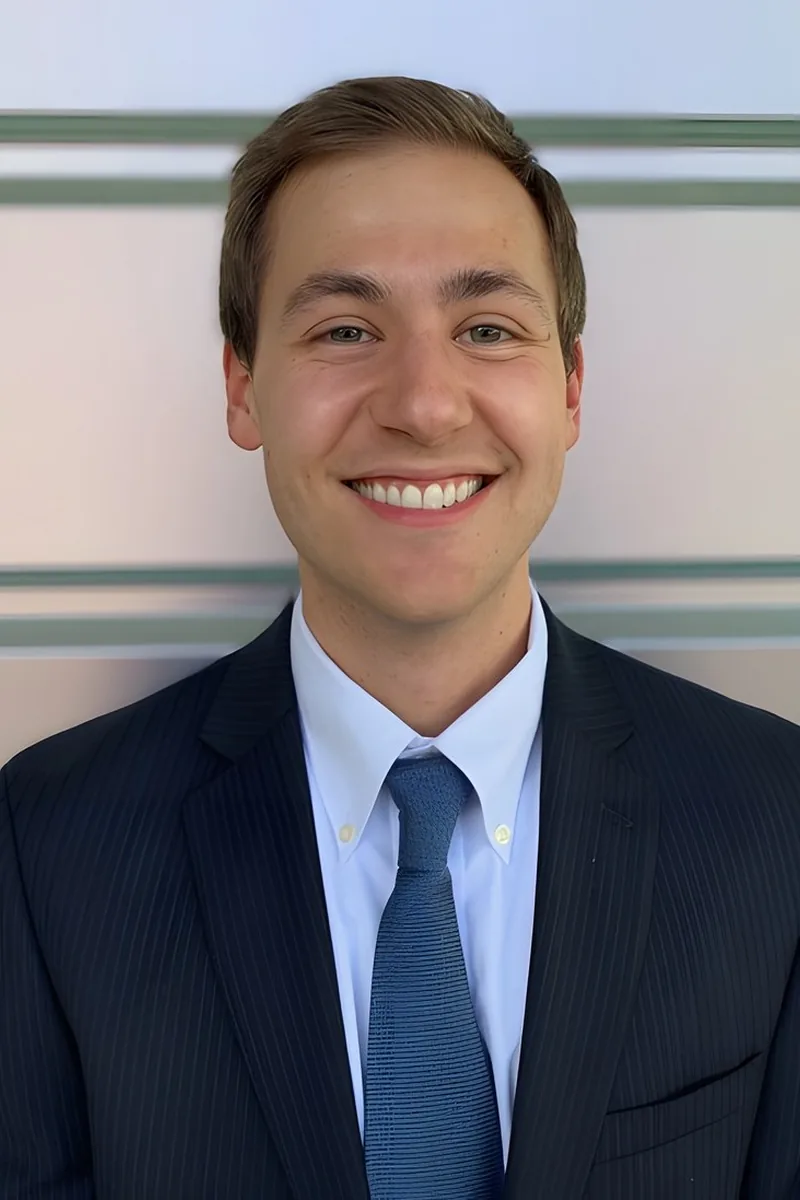
AP Chemistry's free-response questions demand more than correct calculations — they want students to explain why a reaction proceeds, connect molecular structure to macroscopic behavior, and justify claims with particulate-level reasoning. Jake digs into those conceptual explanations alongside the quantitative work, so students aren't blindsided by the written portions of the exam.

I have over two years of tutoring and teaching experience at Case Western Reserve University. I served as a Supplemental Instructor for ENGR 145 (Chemistry of Materials), where I created worksheets, led review sessions, and helped students develop strong conceptual foundations. I later worked as a Teaching Assistant for ENGR 210 (Circuits and Instrumentation), grading assignments and assisting students with hands-on circuit building and lab work. As a Biomedical Engineering major on the pre-med track, I specialize in tutoring pre-health and engineering courses, including General and Physical Chemistry, Math, Biology, Physics, and Anatomy and Physiology. I also provide MCAT preparation in the B/B, C/P, and P/S sections. My teaching approach focuses on clear explanations, active problem-solving, and adapting to each student's learning style. I strive to make challenging material approachable while helping students build confidence and independent learning skills.
Stoichiometry, equilibrium expressions, thermodynamics — AP Chemistry piles quantitative rigor on top of conceptual reasoning in a way that catches even strong science students off guard. Gordon's background spans both biology and chemistry at ASU, and he approaches each unit by tying the math to what's physically happening: why Le Chatelier's principle isn't just a rule to memorize but a logical consequence of how reactions behave.
Madeleine's applied mathematics degree with a physics concentration at Barrett Honors College means she's spent years doing the kind of quantitative heavy lifting that AP Chemistry's toughest problems require — particularly in thermodynamics and kinetics, where the math and the molecular behavior have to be understood together. Her physics lab research sharpened her ability to translate between equations and physical reality, which she brings to topics like enthalpy diagrams and rate law derivations. Rated 5.0 by students.
Tutoring chemistry through differential equations at ASU while completing a kinesiology and psychology degree gave Hanna an unusual vantage point — she learned to explain concepts like thermochemistry and equilibrium to students across very different science backgrounds. Now in medical school, she digs into the biochemical applications behind AP Chemistry topics, connecting Le Chatelier's principle or acid-base titrations to the physiological systems where they actually matter. Rated 5.0 by students.
Having co-taught an organic chemistry lab section and led review sessions for general chemistry at UC Berkeley, Yuxuan knows exactly where AP Chem concepts like equilibrium, thermodynamics, and electrochemistry break down for students. He tackles each topic by connecting the math — ICE tables, Hess's law calculations, rate law derivations — to the underlying chemical intuition so the formulas actually make sense.
AP Chemistry's free-response questions demand more than memorized reactions; they require students to connect thermodynamics, kinetics, and equilibrium into coherent explanations. Aaron tackles these multi-concept problems by breaking down the underlying math — logarithmic pH calculations, rate law derivations, Hess's law — so students can reason through unfamiliar prompts on exam day.
As an aspiring physician currently pursuing my Bachelor's in Physiology and Medical Sciences at the University of Arizona, I am passionate about empowering students to achieve their academic and personal aspirations. With over 5 years of tutoring experience across a diverse range of subjects including ACT, SAT, AP exams, and college application essays. I have developed a keen understanding of the unspoken rules that govern these assessments. My approach is student-centered and adaptive; I tailor my strategies to meet individual learning styles, whether that means incorporating engaging games for those with attention challenges or allowing self-directed learners to guide our sessions. Having recently navigated the same academic landscape as my students, I am intimately familiar with the pressures they face, and I strive to demystify the testing process. I am particularly excited about tutoring AP Biology, AP Calculus, and college applications, as these areas require not just content mastery but also strategic insight into what admissions officers are truly seeking. Outside of tutoring, I enjoy cooking, 3D printing, and weightlifting, all of which enrich my perspective and foster a supportive learning environment. Through tutoring, my goal is not just to teach but to mentor, equipping students with the tools they need to thrive in their educational journeys.
AP Chemistry's toughest questions — equilibrium calculations, electrochemistry, thermodynamic spontaneity — demand both math fluency and chemical intuition. Rithi's neuroscience and biotechnology training means she's applied these principles in real research contexts, not just on paper. Her 4.9 rating speaks to how clearly she breaks down even the most abstract reaction dynamics.
Cornell's engineering curriculum put Ravnoor through rigorous college-level chemistry, and his computer science training sharpened the algorithmic thinking that pays off when students need to systematically work through multi-step problems like limiting reagent calculations or electrochemical cell setups. He teaches AP Chemistry's quantitative sections by treating each problem like a debugging exercise — isolating variables, checking units at every step, and building toward answers methodically rather than jumping to formulas. Rated 5.0 by students.
AP Chemistry's jump from memorizing formulas to applying thermodynamics, equilibrium, and kinetics conceptually is where most students struggle. Catherine tackles these topics regularly in her BA/MD program's rigorous science sequence, so she can unpack reaction mechanisms and energy diagrams with real clarity. Scored a 34 on the ACT, she brings sharp analytical thinking to every problem set.
Raj's biochemistry and molecular biology degree means he's lived through the college-level versions of every AP Chemistry topic — from reaction kinetics and acid-base equilibria to the thermodynamic principles that trip up most students on free-response questions. He teaches the quantitative side (stoichiometry, ICE tables, rate law setups) by anchoring each calculation in what's physically happening at the molecular level, so students build intuition alongside technique. His 36 ACT and 5.0 rating back up that approach.
The jump from regular chemistry to AP Chemistry usually hits hardest around equilibrium, thermodynamics, and electrochemistry, where problems demand both quantitative precision and conceptual reasoning. Rebecca pairs her biology degree's deep chemistry coursework with a knack for walking through multi-step free-response questions so students learn to show their thinking clearly under exam pressure.
In 2022, I completed my Ph.D. in Chemistry at Vanderbilt University. My goal is to use my expertise in chemistry, algebra, and calculus to help students not only learn but also enjoy these subjects. My favorite subject to teach is general chemistry as it highlights the importance of interdisciplinary study combining, physics, math, and even biology. While my degree expertise lies in chemistry, I am equally adapt in teaching all levels of mathematics. I take pride in reinforcing mathematics concepts with tangible applications in other fields to highlight its importance and making learning interesting.
Equilibrium calculations and thermodynamics tend to be the units where AP Chemistry separates students who understand the 'why' from those running on memorized procedures. Sharan digs into the conceptual logic behind Le Chatelier shifts and Gibbs free energy so that quantitative problems feel like extensions of ideas, not isolated formulas. Her premed science background at Cornell keeps her sharp on exactly the kind of rigorous problem-solving the AP exam rewards.
Thermodynamics, electron orbitals, kinetics — AP Chemistry sits right at the intersection of Dennis's physics and math training. His research simulating turbulent plasmas and designing optical filters required deep fluency with atomic behavior and energy transfer, so he explains concepts like equilibrium and electrochemistry through the underlying physics rather than just memorized rules.
Few AP Chemistry tutors have actually written and graded college chemistry exams for years. Jeremy, a Yale-trained Ph.D. who has taught General Chemistry at the college level many times, knows precisely how equilibrium, thermodynamics, and kinetics questions are designed to test conceptual understanding versus rote calculation. He breaks down free-response strategies and teaches students to connect the big ideas the exam rewards.
A PhD in chemical engineering means Steven didn't just study chemistry — he lived in thermodynamics, kinetics, and equilibrium for an entire career. For AP Chemistry, he unpacks topics like electrochemistry, reaction mechanisms, and Le Chatelier's principle by explaining the concept, restating it differently, and then grounding it in a real-world scenario that makes the logic stick. Rated 4.9 by students.
Computational biology at Cornell means Emily lives at the intersection of quantitative reasoning and molecular science — she's worked through the same college-level chemistry that AP students are preparing for, but with the added demand of modeling chemical systems computationally. She teaches topics like equilibrium and reaction energetics by emphasizing the mathematical structure underneath, so students learn to read what equations are actually telling them about molecular behavior. Rated 4.9 by students.
I am most passionate about biology and chemistry. I am a firm proponent of education, believing it to be absolutely necessary for an improved quality of life, and I try to impart this appreciation to all of my students.
Testimonials
Because the right AP Chemistry tutor makes all the difference.
Average Session Rating – Based on 3.4M Learner Ratings
Practice AP Chemistry
Free practice tests, flashcards, and AI tutoring for AP Chemistry
Other Mesa Tutors
Related Science Tutors in Mesa
Frequently Asked Questions
AP Chemistry covers eight major units: atomic structure and periodicity, molecular and ionic bonding, intermolecular forces and properties, chemical reactions, kinetics, thermodynamics, equilibrium, and acids/bases. The exam tests both conceptual understanding and problem-solving skills, with questions ranging from multiple-choice to free-response problems that require detailed calculations and explanations. A tutor can help you master each unit systematically and understand how topics connect to one another.
Score improvement depends on your starting point and commitment level, but personalized 1-on-1 instruction typically helps students identify knowledge gaps and weak problem-solving strategies they wouldn't catch alone. Many students see meaningful gains by focusing on their specific challenges—whether that's equilibrium calculations, Lewis structures, or free-response writing. A tutor can create a targeted study plan and track your progress on practice problems to ensure steady improvement toward exam day.
Students often struggle most with thermodynamics, equilibrium calculations, and kinetics—topics that require both conceptual understanding and mathematical fluency. Free-response questions can also be challenging because they demand clear explanations alongside calculations, and many students lose points by not showing their reasoning. Additionally, the sheer volume of content and the fast pace of most AP Chemistry courses leave little room for review. Personalized tutoring helps you slow down on difficult concepts and practice explaining your thinking clearly.
Effective strategies include managing your time across the 225-minute exam (roughly 90 minutes for multiple-choice and 105 for free-response), reading questions carefully to identify what's actually being asked, and showing all work on free-response problems even if you're unsure of the final answer. Many students benefit from tackling easier multiple-choice questions first to build confidence, then returning to harder ones. A tutor can help you practice these strategies on full-length exams and give you feedback on pacing and problem-solving approaches.
Practice tests are essential—they help you get comfortable with the exam format, identify weak topics before test day, and build stamina for the full 3.75-hour exam. Taking full-length, timed practice tests under realistic conditions reveals which units need more study and whether you're managing time effectively. A tutor can review your practice test results with you, pinpoint patterns in your mistakes, and adjust your study plan accordingly so you're not just practicing blindly.
Varsity Tutors connects you with expert tutors for AP Chemistry in Mesa who understand the curriculum and exam format. When you get matched with a tutor, you can discuss your specific goals—whether you're aiming for a 3, 4, or 5—and they'll tailor sessions to address your weak areas and build confidence. You can start with a single session to see if the fit works, then schedule ongoing support leading up to exam day.
Frequency depends on your timeline and current level. If you're preparing several months before the exam, weekly or bi-weekly sessions work well for steady progress. If the exam is closer, more frequent sessions (2-3 per week) help you cover material faster and stay on track. A tutor can recommend a schedule based on your starting point and the units you need to focus on most.
Your first session is typically a chance to get to know your tutor and establish your goals—like your target score or which topics are most confusing. The tutor may assess your current understanding through a quick diagnostic or by asking about your recent coursework and exam performance. From there, you'll work together to create a study plan that fits your timeline and focuses on the areas where you'll see the biggest improvement.
Let’s find your perfect tutor
Answer a few quick questions. We’ll recommend the right plan and match you with a top 5% tutor.