Award-Winning AP Latin Tutors
serving Mission Viejo, CA
AP Latin
Tutors in Mission Viejo
Private 1-on-1 tutoring, weekly live classes for academic support, test prep & enrichment, practice tests and diagnostics, and more to elevate grades and test scores.
Based on 3.4M Learner Ratings
UniversitiesSchools & Universities
DeliveredHours Delivered
ProficiencyGrowth in Proficiency
Who needs tutoring?
No obligation. Takes ~1 minute.

Studying Classical Studies at Columbia means Sean reads Latin not as a classroom exercise but as the living backbone of his degree — translating the same Vergil and Caesar passages that drive the AP exam while simultaneously studying the historical and philosophical contexts that make those texts click. That dual lens is especially useful for the free-response essays, where connecting a grammatical choice to an author's larger purpose separates strong answers from surface-level ones.
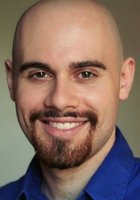
While Latin isn't John's primary teaching area, his English and drama training sharpens the close-reading and rhetorical analysis skills that AP Latin's essay and free-response sections demand — particularly when students need to discuss how Vergil or Caesar construct persuasive or dramatic moments in their texts. His experience with literature and writing gives him a practical angle on the interpretive side of the exam.
Having studied Latin through the advanced level and across multiple classical languages, Jamie uses a comprehensible input approach that treats Vergil and Caesar not as decoding exercises but as stories — building the kind of reading fluency that lets students handle sight passages and literary analysis questions without freezing up. A master's in Special Education also means Jamie knows how to adapt when a student's usual approach to grammar or translation isn't clicking.
Brendan studied Latin through AP level and beyond, tackling authors like Virgil and Caesar in their original texts. For the AP exam specifically, he digs into sight-reading strategy, scansion of dactylic hexameter, and the analytical essay prompts that trip students up most. Rated 5.0 by students.
Paul's strongest academic ground is math and science, but he's studied Latin through multiple levels and brings a test-taker's edge to the AP exam — his 1570 SAT reflects the kind of precise, careful reading that pays off when you're parsing Vergil's tangled word order under timed conditions. He approaches translation passages almost like logic puzzles, teaching students to lock onto grammatical signals like case endings and verb moods before worrying about polished English.
Having studied Latin through three levels — including AP — Sarah knows firsthand where students get tripped up on the exam's translation and essay demands. Her English degree sharpens the literary analysis side, especially when students need to articulate how Vergil's word order or Caesar's sentence structure creates meaning in free-response prompts. Rated 5.0 by students.
A Reed College Classics degree means Marilyn didn't just study Latin — she lived in the language alongside Ancient Greek, building the kind of cross-linguistic intuition that makes tricky AP constructions like fear clauses and conditions contrary to fact easier to explain from multiple angles. She's especially sharp on Vergil's poetry, where understanding meter and word order simultaneously is half the battle for students tackling sight-reading passages under exam pressure. Rated 4.8 by students.
Translating Vergil and Caesar under AP exam conditions requires more than vocabulary recall; it demands recognizing how ablative absolutes, indirect discourse, and subjunctive clauses reshape meaning in real passages. Meghna digs into the grammar underlying each line so students can parse unfamiliar constructions confidently and write the kind of analytical essays the exam rewards.
Earning the National Latin Exam Gold Award all four years of high school — culminating in AP Latin — means Hanna has translated her way through the Aeneid and De Bello Gallico line by line. She teaches students to parse Vergil's complex syntax and Caesar's deceptively simple prose by building real comfort with subjunctive constructions, indirect discourse, and scansion rather than relying on glossary lookups. Rated 5.0 by students.
Most AP Latin students hit a wall not with vocabulary but with the grammar — figuring out how a string of ablative absolutes or nested subjunctive clauses actually fits together in a real passage of Caesar. Ben studied classical and medieval Latin and brings an English major's close-reading instincts to translation work, teaching students to track how word order and syntax carry meaning rather than just hunting for dictionary definitions. His 34 ACT and 4.7 rating point to the kind of precise, careful reading the exam rewards.
Reading Vergil's Aeneid and Caesar's Bellum Gallicum at AP speed requires more than vocabulary — it means parsing ablative absolutes, indirect discourse, and fear-of-the-subjunctive moments without losing the thread of the narrative. Alex studied Classics as an undergraduate and reads Latin fluently, so he can walk students through both the grammatical architecture and the literary analysis the AP exam demands.
I am confident in both my quantitative and verbal skills, I consider my primary strength to lie in standardized test-taking, the process of which I profoundly enjoy, strange as it is to say.
Testimonials
Because the right AP Latin tutor makes all the difference.
Average Session Rating – Based on 3.4M Learner Ratings
Practice AP Latin
Free practice tests, flashcards, and AI tutoring for AP Latin
Nearby AP Latin Tutors
Other Mission Viejo Tutors
Related Languages Tutors in Mission Viejo
Frequently Asked Questions
AP Latin focuses on reading and analyzing Latin texts, primarily selections from Virgil's Aeneid and Caesar's Gallic Wars. The exam tests your ability to translate passages, understand grammar and syntax, answer comprehension questions, and demonstrate knowledge of Roman culture and history. Most students spend the year building vocabulary, mastering complex grammatical structures, and developing strategies for sight-reading unfamiliar Latin passages under timed conditions.
Many students struggle with the sheer volume of vocabulary and complex sentence structures required for fluency in classical Latin. The timed nature of the exam—especially the translation section—creates pressure that can affect performance even for well-prepared students. Additionally, understanding the cultural and historical context of the texts is essential for answering comprehension questions accurately, which requires studying beyond just grammar and vocabulary.
Expert tutors can identify your specific weak areas—whether that's verb conjugations, subjunctive clauses, or cultural knowledge—and create a focused study plan to address them. They can provide intensive practice with sight-reading passages, teach strategic approaches to tackling the exam sections, and build your confidence through targeted feedback. For students in Mission Viejo, personalized 1-on-1 instruction means you get a customized pace that matches your learning style, rather than moving at a class pace that may not serve you.
Score improvement depends on where you're starting and how consistently you engage with tutoring. Students who begin with a strong foundation and work with a tutor for 2-3 months often see meaningful gains, while those starting further behind may need longer to build the vocabulary and grammar skills required. The most significant improvements typically come from targeted practice on exam-style questions and developing efficient translation strategies that save time during the test.
Most AP Latin students benefit from consistent weekly study, ideally combining tutoring sessions with independent practice. A typical schedule might include one or two tutoring sessions per week (1-2 hours total) plus 3-5 hours of independent study, including vocabulary review, grammar practice, and passage translation. The timeline matters too—starting preparation 3-4 months before the May exam gives you adequate time to build skills incrementally rather than cramming, which is particularly important for a language-heavy subject like Latin.
Varsity Tutors connects you with tutors who have deep expertise in AP Latin curriculum and exam strategy. When you reach out, you'll be matched with someone experienced in helping students master classical texts, develop translation skills, and build test-taking confidence. The matching process considers your specific needs—whether you're aiming for a 3 or a 5, or need help with particular grammar concepts—to ensure you get personalized support tailored to your goals.
Test anxiety in AP Latin often stems from time pressure and fear of encountering unfamiliar vocabulary. Expert tutors can help by teaching you strategic approaches like identifying the main idea before translating word-for-word, and practicing with timed sections so you develop confidence in your pacing. Building familiarity with the exam format through repeated practice tests is one of the most effective ways to reduce anxiety—when you know what to expect and have practiced under similar conditions, the actual test feels less intimidating.
Your first session is focused on understanding where you stand and what you need. Your tutor will likely assess your current Latin skills through a brief translation exercise or discussion, ask about your goals (target score, timeline, specific challenges), and learn about your learning style. From there, they'll outline a personalized plan that addresses your priorities, whether that's building foundational grammar knowledge, improving translation speed, or mastering test-taking strategies.
Let’s find your perfect tutor
Answer a few quick questions. We’ll recommend the right plan and match you with a top 5% tutor.