Award-Winning College Physics Tutors
serving Mission Viejo, CA
College Physics
Tutors in Mission Viejo
Private 1-on-1 tutoring, weekly live classes for academic support, test prep & enrichment, practice tests and diagnostics, and more to elevate grades and test scores.
Based on 3.4M Learner Ratings
UniversitiesSchools & Universities
DeliveredHours Delivered
ProficiencyGrowth in Proficiency
Who needs tutoring?
No obligation. Takes ~1 minute.
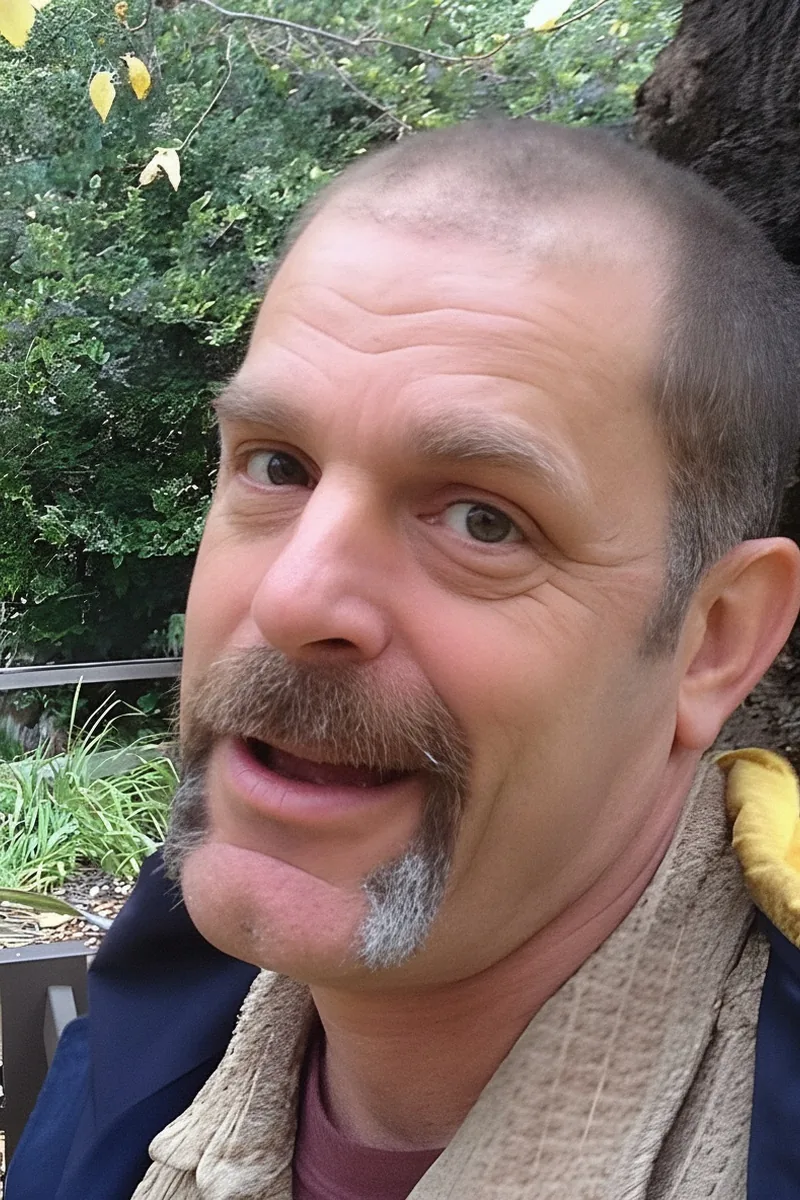
Engineering undergrads learn physics by building things that have to actually work — bridges that hold load, circuits that don't fry — and Mitch's general engineering degree put him through that full sequence of mechanics, E&M, and thermodynamics with real design constraints attached. He's especially good at teaching students to sketch the physical situation first (free-body diagrams, energy bar charts, field lines) so the math has something concrete to latch onto. Holds a 5.0 rating.
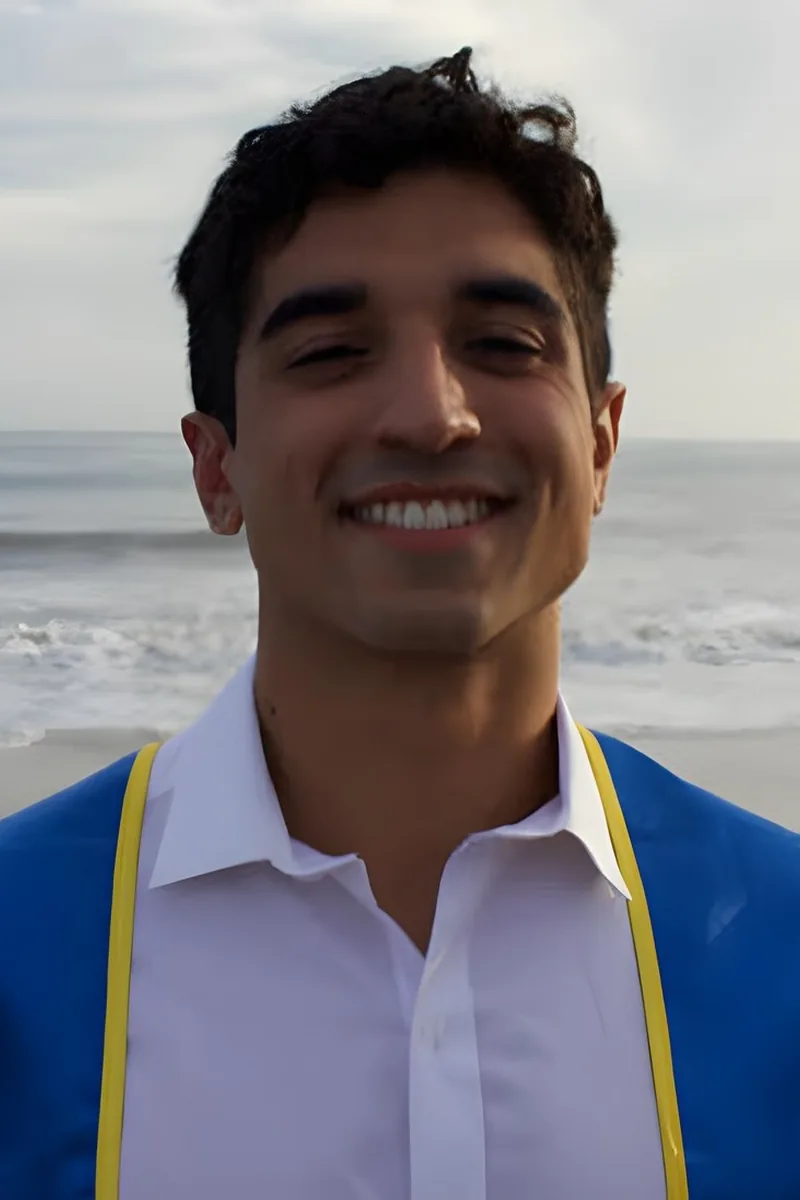
Between his UCSB honors biology coursework and his pre-med trajectory, Kevin has logged serious time with the physics that underpins living systems — fluid dynamics in circulation, pressure and volume in respiration, optics in vision, and the thermodynamics governing metabolic processes. He breaks down force diagrams and energy calculations by tying them back to concrete physical scenarios, so the math feels like it's describing something real rather than floating in abstraction. His 33 ACT reflects the quantitative reasoning he brings to calculus-based problem solving.
Biology majors often hit college physics expecting to memorize formulas the way they memorize metabolic pathways — and that's exactly where they stall out. Nicholas, who earned a 33 ACT while completing his own biology degree, tackles mechanics and electromagnetism by connecting the physical reasoning back to systems biology students already understand, like pressure gradients in circulation or torque in joint mechanics. That cross-disciplinary instinct makes the problem-solving approach click faster than pure equation drilling.
A state-certified teacher with a physics degree, Gerardo has taught the full arc of introductory physics — from free-body diagrams in mechanics through Gauss's law in electrostatics — and knows exactly where students lose the thread between the concept and the math. His classroom instinct is to get students talking through problems out loud, catching misunderstandings in real time before they calcify into bad habits. That teaching background means he reads confusion quickly and adjusts on the fly, which matters in a subject where one shaky assumption derails an entire solution.
Neuroscience at Pomona College meant Whitney spent serious time with the physics that governs how the body works — electrical potentials across membranes, wave mechanics in imaging, fluid dynamics in circulation — giving her a life-sciences angle on college physics that most tutors can't offer. She's especially good at walking through force diagrams and energy conservation problems by tying them back to biological systems students already care about. Her pre-med trajectory and 1480 SAT reflect the quantitative rigor she brings to each session.
UC Berkeley's integrative biology program requires a full year of calculus-based physics — mechanics, waves, thermodynamics, electromagnetism — and Jack earned a 1590 SAT while navigating that same quantitative rigor. His biology background gives him a useful second lens for physics concepts like fluid dynamics, pressure, and energy transfer, since he's used to thinking about how those principles play out in living systems rather than just on a whiteboard.
Private tutoring through her UC Irvine biology program meant Pooja was regularly fielding physics questions alongside the calculus and chemistry ones — force problems in physiology, pressure and flow in circulatory systems, optics in lab instrumentation. She treats college physics problems like puzzles to decode, walking students through the setup logic (free-body diagrams, energy accounting, identifying which conservation law applies) before any numbers get plugged in. Her strength is making the problem-solving process feel methodical rather than overwhelming.
Studying physics and mathematics simultaneously at Occidental means Drew is working through the same college physics material his students are — kinematics, forces, energy, waves — with the added benefit of seeing the mathematical scaffolding in his math courses the same week it shows up in his physics lectures. That real-time parallel gives him a sharp sense of which derivations are actually worth understanding versus which ones students can treat as tools, so sessions stay efficient and targeted.
Jenna's neuroscience degree from Indiana University covered a surprising amount of physics — action potentials are fundamentally circuit problems, and understanding imaging techniques like fMRI requires grappling with electromagnetism and wave behavior. Now heading into medical school, she brings that interdisciplinary lens to college physics topics like mechanics and electricity, connecting abstract equations to the biological systems where they actually play out. Rated 4.9 by students.
Between teaching biology, chemistry, and physics across both high school and college levels, Tito has an unusually broad view of how scientific concepts interconnect — which pays off in college physics, where a thermodynamics problem might demand chemistry intuition or a biomechanics question pulls from biology. He breaks problems into their physical setup first, making sure students can sketch the scenario and identify governing principles before touching any math. Rated 4.8 by students.
Currently pursuing a physics-engineering 3-2 program, Valerie is taking the same calculus-based physics courses her students are navigating — mechanics, waves, electromagnetism — which means she knows exactly which problem types are showing up on exams right now. That real-time familiarity with the material, combined with her 1500 SAT and hands-on engineering coursework, lets her walk through force diagrams and energy methods with the kind of specificity that generic physics tutoring often lacks.
Pre-med students often struggle with college physics because the course feels disconnected from biology — but Fady, currently applying to medical school with a biological sciences degree, naturally bridges that gap by tying force, pressure, and energy concepts back to physiological systems. He breaks down mechanics and fluid dynamics problems step by step, emphasizing the physical intuition behind each setup rather than letting students default to equation-hunting.
College-level physics ramps up fast once partial derivatives, line integrals, and differential equations enter the picture. Sarah earned her B.A. in both Physics and Mathematics, so she walks through topics like Gauss's Law or Lagrangian mechanics by unpacking the math and the physics simultaneously — no hand-waving, no skipped steps.
MIT's core physics sequence is calculus-heavy and fast — Vania not only survived it but tutored other students through it via the university's Seminar XL program, which means she's seen firsthand where classmates stall on topics like rotational motion, wave mechanics, and Gauss's law. Her mechanical engineering major keeps her applying those physics principles daily in coursework on statics, dynamics, and thermodynamic systems, so her explanations stay rooted in how the concepts actually get used. Rated 5.0 by students.
Between earning a mechanical engineering bachelor's and pursuing his master's, Aaron has taken calculus-based physics from every angle — statics, dynamics, thermodynamics, fluid mechanics — and now applies those principles daily in graduate-level research and coursework. He breaks down problems by teaching students to sketch the physical situation first, identify constraints, and only then select the right conservation law or force equation. Holds a 5.0 rating.
A chemistry degree from Yale means Zosia spent years in courses where physics does the heavy lifting — thermodynamics driving reaction spontaneity, quantum mechanics explaining atomic structure, electrostatics governing molecular interactions — so she knows these concepts from the inside out. She's particularly effective at teaching students to translate word-heavy problem statements into clean free-body diagrams or energy bar charts before touching an equation. Rated 4.9 by students.
Four years teaching undergraduate physics labs at the University of Michigan — especially courses designed for non-STEM majors — taught Michael how to strip intimidating topics like electromagnetism, circuits, and wave optics down to their physical intuition before layering the math back on. His PhD research deepened that fluency across the full spectrum of college physics, from introductory mechanics through advanced electrodynamics and special relativity. Rated 4.7 by students.
Theater might not scream physics, but Amber's breadth across math and science tutoring — from calculus to chemistry to AP-level coursework — means she's comfortable with the quantitative reasoning that college physics demands, and her 5.0 rating confirms students agree. She's particularly effective at teaching the problem-setup habits that separate students who flounder from those who don't: sketching free-body diagrams, identifying conservation laws, and translating word problems into equations before plugging in numbers. Her ACT 35 reflects the kind of cross-disciplinary sharpness that keeps pace with fast-moving, concept-dense courses.
Running an immunology lab at Columbia University Medical Center means Matthew applies physics daily in ways most tutors haven't — calibrating imaging equipment, analyzing force and pressure data in tissue samples, and troubleshooting instruments that depend on optics and electromagnetism. That hands-on fluency, combined with a physics degree and a 35 ACT, lets him teach college-level mechanics and E&M problems by connecting equations to the physical systems they actually describe.
Having served as a teaching assistant for Differential Equations and Mechanics at Notre Dame, Jeffrey has already spent time explaining the exact concepts — torque, oscillations, coupled systems — that trip up students in university physics courses. His mechanical engineering PhD work at Rice deepens that fluency, especially in thermodynamics and rotational dynamics where the math gets dense fast. He's rated 4.9 by students.
Bidyut's biomedical engineering coursework at Johns Hopkins means he tackles college physics problems — from rotational dynamics to electromagnetic induction — with the applied perspective of someone who uses these principles in lab and design work daily. He connects abstract force diagrams and circuit analyses to real engineering scenarios so the physics actually clicks. Rated 5.0 by students.
Rice University's physics program is notoriously rigorous, and Ainsley came out the other side with both a B.S. in Physics and a philosophy degree that sharpened her ability to reason through ambiguous, multi-step problems — exactly the skill that separates students who survive college physics from those who don't. She digs into the conceptual logic behind topics like rotational dynamics and electrostatics, making sure students understand *why* an approach works before applying it to increasingly complex scenarios. Rated 4.9 by students.
Between simulating supernova shock fronts at Princeton and building optical filters at Norfolk State, Dennis has applied college-level physics across mechanics, electromagnetism, thermodynamics, and wave optics in real research settings. He unpacks difficult problem sets by connecting each concept to the physical scenario it describes — an approach that's especially effective for students transitioning from plug-and-chug to genuine problem-solving.
Three physics-related bachelor's degrees give Avram an unusually deep undergraduate perspective on the subject — he's worked through mechanics, electromagnetism, and modern physics multiple times across different programs, which means he knows exactly where the conceptual gaps tend to hide. He breaks down wave phenomena and optics problems by connecting the math back to physical intuition, so equations feel like descriptions of real behavior rather than symbols to manipulate. His 1520 SAT reflects the quantitative precision he brings to problem solving.
Predentistry requires a deep pass through college physics — optics, fluid dynamics, mechanics of materials — and Erica tackled that coursework at Harvard alongside a History of Science degree that gave her an unusual ability to explain *where* physical concepts come from and how they evolved into the frameworks students use today. She breaks down problem-solving by connecting the conceptual narrative to the math, so students aren't just plugging into formulas but understanding the physics driving each step. Rated 4.9 by students.
Testimonials
Because the right College Physics tutor makes all the difference.
Average Session Rating – Based on 3.4M Learner Ratings
Nearby College Physics Tutors
Other Mission Viejo Tutors
Related Science Tutors in Mission Viejo
Frequently Asked Questions
College Physics builds on foundational concepts but requires deeper understanding of how theoretical principles apply to real-world systems. Students often struggle with visualizing abstract concepts like electromagnetic fields and wave behavior, translating word problems into equations, and connecting multiple concepts to solve complex problems. Many also find the math requirements—particularly calculus and unit conversions—challenging when layered on top of the physics reasoning itself.
Understanding concepts is far more valuable in College Physics. While you'll need to know key formulas, memorizing them without understanding when and why to use them leads to poor problem-solving. Expert tutors help you build conceptual frameworks—understanding how forces, energy, and motion interconnect—so you can apply knowledge to unfamiliar problems rather than just reproduce solutions you've seen before.
Yes. Tutors can help you understand the physics principles behind your experiments, design better hypotheses, analyze data more effectively, and connect lab observations back to theory. This support strengthens both your experimental skills and your conceptual understanding, making lab reports clearer and helping you see how abstract physics concepts play out in real measurements and observations.
Your first session focuses on understanding your specific challenges—whether that's kinematics, thermodynamics, electromagnetism, or problem-solving strategies. The tutor will assess your current understanding, identify gaps, and work with you to create a personalized plan. You'll likely work through a practice problem together to establish how the tutor can best support your learning style and course goals.
Expert tutors use multiple strategies to make abstract concepts concrete—drawing force diagrams, walking through vector components step-by-step, using analogies to familiar systems, and breaking complex phenomena into smaller, understandable pieces. Many tutors also recommend interactive simulations and visual resources that let you manipulate variables and see immediate results, transforming invisible forces and fields into something you can reason about.
Effective problem-solving in College Physics requires a systematic approach: identifying what's given and what you're solving for, choosing the right physics principles, setting up equations carefully, and checking if your answer makes physical sense. Tutors teach you this structured method, help you practice it on increasingly difficult problems, and give you feedback on where your reasoning breaks down—building confidence and skill over time.
Varsity Tutors connects you with expert tutors who understand College Physics and can work with your schedule and learning needs. The matching process considers your specific challenges, course level, and goals to ensure you work with someone who can help you succeed. You can start with a single session to see if it's a good fit, then continue building on that foundation.
Tutors help you review key concepts, practice problems similar to exam questions, identify your weak areas, and develop test-taking strategies specific to physics. Rather than cramming formulas, you'll work through practice exams, learn to manage time during problem-solving, and build the confidence that comes from truly understanding the material. This targeted preparation typically leads to stronger performance and deeper retention.
Let’s find your perfect tutor
Answer a few quick questions. We’ll recommend the right plan and match you with a top 5% tutor.