Award-Winning AP Physics C: Mechanics Tutors
serving Mission Viejo, CA
AP Physics C: Mechanics
Tutors in Mission Viejo
Private 1-on-1 tutoring, weekly live classes for academic support, test prep & enrichment, practice tests and diagnostics, and more to elevate grades and test scores.
Based on 3.4M Learner Ratings
UniversitiesSchools & Universities
DeliveredHours Delivered
ProficiencyGrowth in Proficiency
Who needs tutoring?
No obligation. Takes ~1 minute.
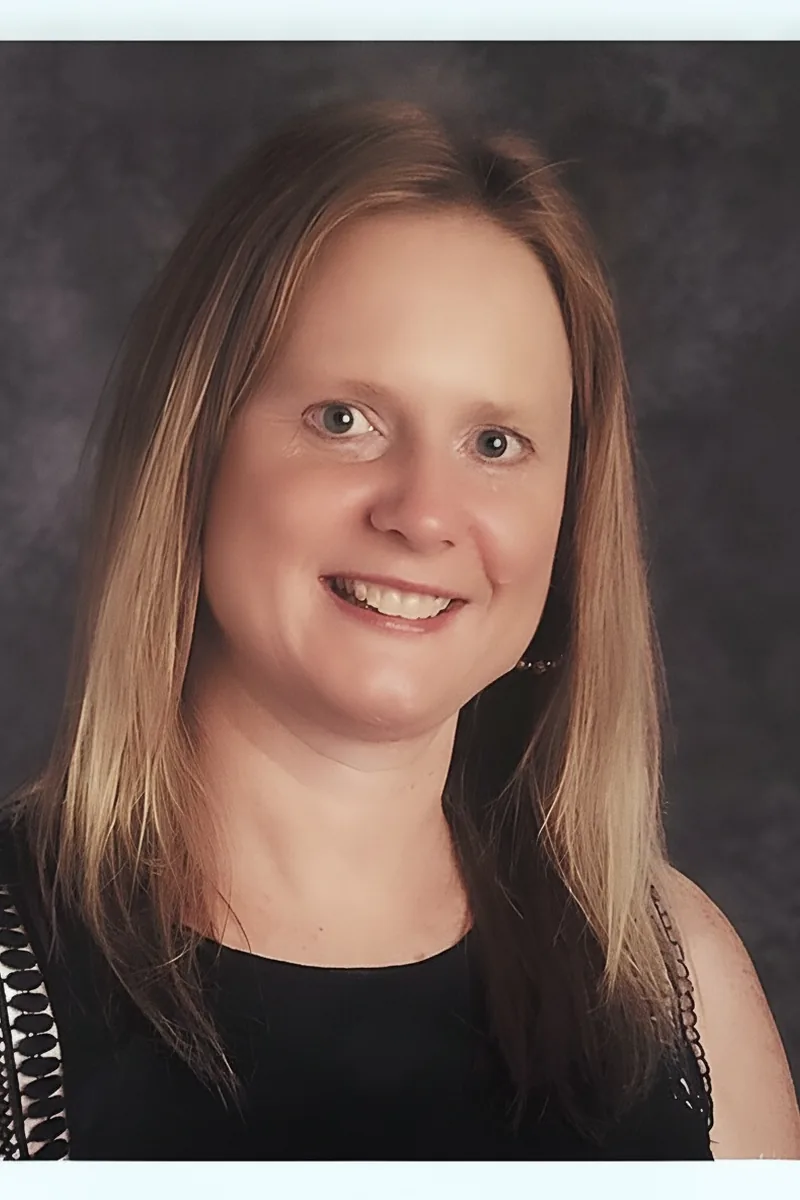
An applied physics degree means Karen didn't just study mechanics for an exam — she built her entire undergraduate education around the Newtonian framework, calculus-based problem-solving, and laboratory work that AP Physics C condenses into a single course. She's especially sharp at connecting real-world scenarios (a spinning figure skater, a car banking a curve) to the free-body diagrams and integrals students need to produce under timed conditions. Rated 5.0 by students.

Designing control systems for Northwestern's solar car means Michael applies Newtonian mechanics, rotational dynamics, and energy conservation principles daily — the exact topics AP Physics C: Mechanics tests. He teaches students to translate word problems into free-body diagrams and then into the calculus-based equations that earn full marks on free-response questions.
Biomedical engineering throws you into calculus-based mechanics from day one — Spencer's coursework has him modeling forces on biological systems using the same Newtonian framework and integral setups that AP Physics C tests on free-response problems. His 35 ACT and parallel teaching across both AP Calculus BC and AP Physics C mean he can diagnose whether a student's stuck on the physics concept or the calculus execution, and address the right one.
Chemical-biological engineering at the undergraduate level means Kristen solved mechanics problems with real calculus stakes — variable-force work integrals, rotational inertia derivations, coupled differential equations — long before they became exam questions. Her 36 ACT and 1590 SAT speak to the quantitative sharpness she brings to the trickiest AP Physics C problems, especially when students need to bridge the gap between setting up Newton's second law in differential form and actually executing the integration. Rated 4.9 by students.
Vaughn's physics degree and 1590 SAT mean the calculus-based problem-solving AP Physics C: Mechanics demands — setting up Newton's second law as a differential equation, computing work done by variable forces — is squarely in his wheelhouse. He zeroes in on dimensional analysis and unit tracking as a way to catch errors before they cascade through multi-step free-response problems, a habit that pays off especially in rotational dynamics where signs and reference frames get tricky.
AP Physics C: Mechanics isn't the obvious fit for a political science major — but Lila also tutors calculus, pre-calculus, and both AP Physics C courses, and her 36 ACT reflects the quantitative chops that calculus-based mechanics actually demands. She's especially useful for students who need someone to slow down and rebuild the connection between a free-body diagram and the integral it implies, rather than racing through derivations.
Hello, my name is Yosef and I would be happy to serve as a math tutor. I place strong emphasis on a good balance between knowledge of mathematical content and proficiency in problem-solving, reasoning, and conveying mathematical ideas in writing. There are times when a student needs to be informed of a solution, times when he or she also needs to hear the explanation of why the solution works, and times when he or she should be guided to finding the solution on his or her own. It is important for the tutor to recognize which approach is appropriate. Frequently, when students struggle, it is because they do not understand the notation or terminology in use. In such cases, it is important to reassure the student, reminding him or her that he or she is only struggling with understanding a single word, not the entire mathematical concept. As a rule, people perform better and are better motivated when they have self-confidence, not when the task ahead seems frighteningly daunting. It is also important to recognize that different students learn best through different means. As an example, some students are visual learners and can understand the material best through pictures and gestures. Other students learn best through hearing the procedures vocalized, while still others learn best through writing out the steps of the solution procedure. I know to adapt my teaching style to the individual student. with these considerations in mind, I promise to provide the best assistance that I can, taking your individual needs into consideration.
Cornell pre-med students rarely double down on calculus-based physics, but Pratik tutors AP Physics C: Mechanics alongside AP Chemistry and AP Biology — giving him a cross-disciplinary lens that's especially useful when mechanics problems involve biological or chemical systems in free-response scenarios. His 35 ACT confirms the quantitative fluency needed to walk students through setting up torque equations or integrating variable forces without losing sight of the underlying physics.
AP Physics C: Mechanics often trips up students who are comfortable with calculus in a math class but freeze when they need to apply it to a pulley system or a variable-force spring problem. Andrew pairs his strong math background — he's pursuing a double focus in finance and mathematics at Boston College — with hands-on physics tutoring across multiple levels, including the SAT Physics subject test. That cross-subject fluency means he can spot whether a student's stuck on the physics setup or the calculus execution and address the right one.
Sanjana's applied math studies at Harvard and her role as a Course Assistant for introductory calculus mean she's fluent in the exact differential and integral techniques that AP Physics C: Mechanics layers onto every force, torque, and energy problem. She's especially effective at bridging the gap when students grasp the physics intuitively but struggle to translate a scenario — say, a block on a spring with friction — into the correct differential equation and solve it cleanly. Rated 5.0 by students.
Free-body diagrams, rotational inertia, and conservation of energy problems all require calculus-based reasoning that trips students up when they try to rely on formulas alone. Emily completed the full pre-med physics sequence at Cornell and spent her senior year tutoring calculus — two skills that converge directly in AP Physics C: Mechanics. She breaks multi-step problems into the underlying math so students see why the setup matters as much as the answer.
Having TA'd multiple engineering courses at WashU while earning dual degrees in mechanical and energy engineering, Ava spent semesters breaking down the same calculus-based force analysis, work-energy theorems, and rotational dynamics that define the AP Physics C: Mechanics curriculum. Her 35 ACT speaks to the quantitative precision she brings to exam prep, and her current graduate work in environmental engineering keeps her fluent in the applied physics and differential equations students encounter on test day.
Testimonials
Because the right AP Physics C: Mechanics tutor makes all the difference.
Average Session Rating – Based on 3.4M Learner Ratings
Practice AP Physics C: Mechanics
Free practice tests, flashcards, and AI tutoring for AP Physics C: Mechanics
Nearby AP Physics C: Mechanics Tutors
Other Mission Viejo Tutors
Related Science Tutors in Mission Viejo
Frequently Asked Questions
AP Physics C: Mechanics covers kinematics, dynamics, energy and momentum, circular motion, oscillations, and gravitation. The course emphasizes calculus-based problem-solving and conceptual understanding of how objects move and interact through forces. For students in Mission Viejo preparing for the AP exam, mastering these foundational topics is essential since the exam tests both conceptual reasoning and mathematical application across all these units.
AP Physics C: Mechanics requires strong calculus skills alongside physics reasoning—you're not just memorizing formulas, but deriving and applying them in novel situations. Many students struggle with translating word problems into mathematical models, managing multi-step problem-solving under time pressure, and connecting abstract concepts like work and energy to real-world scenarios. Personalized tutoring helps identify where your understanding breaks down and builds confidence in tackling complex problems systematically.
Score improvement depends on your starting point and consistency, but students typically see meaningful gains—often 1-2 points on the 1-5 AP scale—when they work with a tutor to target weak areas, practice problem-solving strategies, and take full-length practice exams regularly. The key is identifying whether you're struggling with conceptual understanding, mathematical execution, or exam pacing, then addressing those specific gaps. Most students benefit from starting tutoring 3-4 months before the May exam to allow time for skill-building and practice.
Your first session focuses on assessment and goal-setting. The tutor will review your current understanding of key AP Physics C: Mechanics concepts, identify which units or problem types challenge you most, and learn about your exam timeline and target score. From there, you'll develop a personalized study plan that prioritizes your weak areas while reinforcing strengths. This diagnostic approach ensures every session is tailored to your needs rather than following a generic curriculum.
Practice tests are critical—they reveal not just what you don't know, but how you perform under timed conditions, where you lose points to careless errors, and how well you manage the 90-minute exam window. Taking full-length practice tests every 2-3 weeks and reviewing them with a tutor helps you refine pacing, identify recurring mistakes, and build test-day confidence. Varsity Tutors connects you with tutors who use official AP practice materials and teach strategic approaches to different question types.
Common pitfalls include misapplying kinematic equations to non-constant acceleration scenarios, confusing work and energy, making sign errors in force and momentum problems, and rushing through multi-part questions without showing clear reasoning. Students also often struggle with free-response questions that require setting up differential equations or justifying answers conceptually. A tutor can help you develop a systematic approach to each problem type, catch these patterns in your practice work, and build the habits that prevent them on test day.
Ideally, you should begin focused exam preparation 3-4 months before the May AP exam, though this depends on your current comfort level with the material. If you're struggling with foundational concepts, starting earlier (even in the fall) gives you time to build understanding before intensive practice begins. For students in Mission Viejo, connecting with a tutor early in the school year allows you to reinforce classroom learning and identify gaps before they compound, making spring review much more efficient.
Look for tutors with strong physics and calculus backgrounds, ideally with experience teaching or tutoring AP Physics C specifically. They should understand the College Board's exam format, have access to official practice materials, and be able to explain concepts in multiple ways since physics reasoning is deeply individual. Varsity Tutors connects you with expert tutors who have proven success helping students master mechanics and prepare for the AP exam with confidence.
Let’s find your perfect tutor
Answer a few quick questions. We’ll recommend the right plan and match you with a top 5% tutor.