Award-Winning AP Physics C: Mechanics Tutors
serving Long Beach, CA
AP Physics C: Mechanics
Tutors in Long Beach
Private 1-on-1 tutoring, weekly live classes for academic support, test prep & enrichment, practice tests and diagnostics, and more to elevate grades and test scores.
Based on 3.4M Learner Ratings
UniversitiesSchools & Universities
DeliveredHours Delivered
ProficiencyGrowth in Proficiency
Who needs tutoring?
No obligation. Takes ~1 minute.
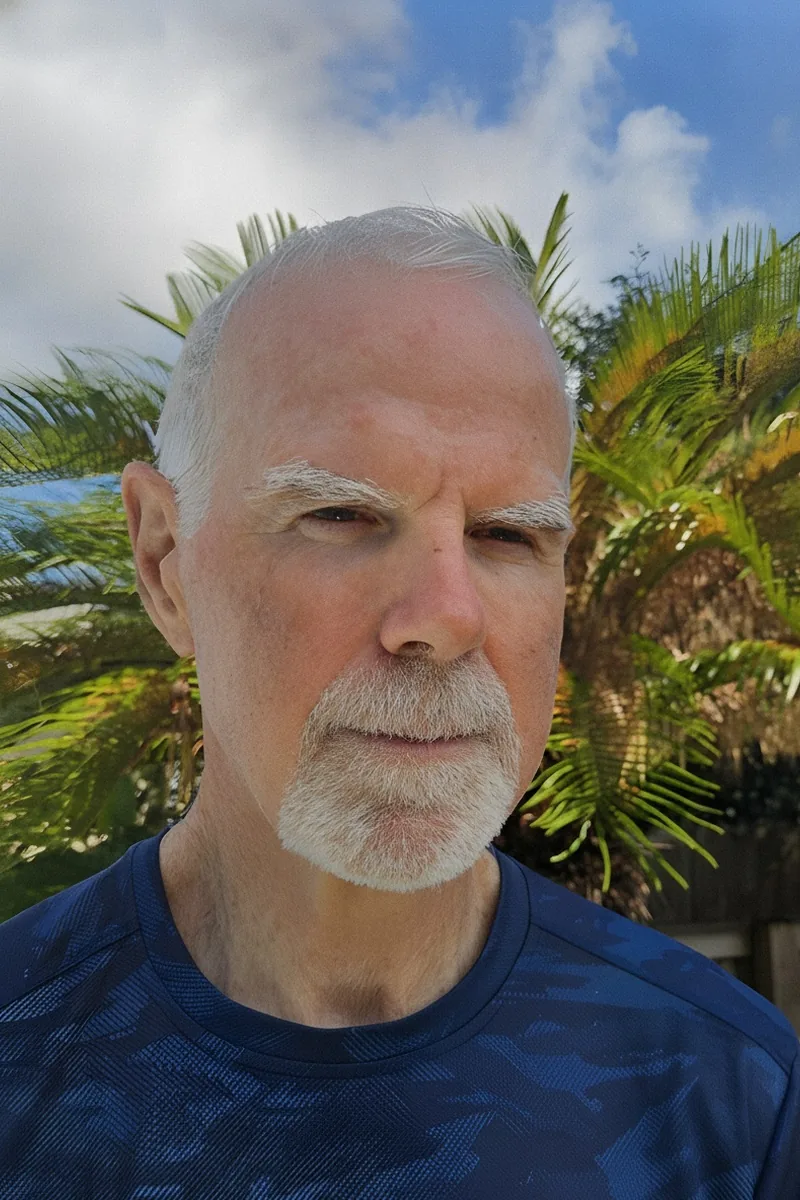
Decades of chemical engineering work gave Steven a particular fluency with the calculus-based mechanics that AP Physics C demands — he's applied Newton's laws, energy methods, and differential equations to real industrial systems, not just textbook scenarios. He explains each concept multiple ways, layering physical intuition with worked examples until the connection between the physics and the integral clicks. Rated 4.9 by students.

Rice's physics program throws Will into calculus-based mechanics every day — working through Lagrangian setups, variable-force integrations, and the rotational dynamics problems that make AP Physics C's free-response section so demanding. His approach starts with the underlying physical principle, then builds the math around it piece by piece, so students internalize the reasoning instead of pattern-matching to memorized solutions.
Emergency medicine demands snap physics intuition — understanding how forces transfer through a body, how momentum changes in a collision, how energy dissipates on impact — and Victoria built that intuition through her pre-med physics coursework before medical school at Boston University. She teaches AP Physics C: Mechanics by grounding each calculus setup in a concrete physical scenario, making sure students can articulate *why* they're integrating a force over a displacement before they ever pick up a pencil. Her math-and-physics double focus across 25 tutoring subjects means she catches the exact moment a student's confusion shifts from the mechanics to the calculus.
Biomedical engineering throws you into calculus-based mechanics from day one — Spencer's coursework has him modeling forces on biological systems using the same Newtonian framework and integral setups that AP Physics C tests on free-response problems. His 35 ACT and parallel teaching across both AP Calculus BC and AP Physics C mean he can diagnose whether a student's stuck on the physics concept or the calculus execution, and address the right one.
Studying mathematics and physics at Harvard, Matthew is building the calculus and mechanics toolkit simultaneously — which means he sees the connection between a differential equation and a physical system as one idea, not two separate steps. His 34 ACT and deep comfort with multivariable calculus let him dig into the trickier AP Physics C territory, like work done by position-dependent forces or setting up moment-of-inertia integrals for composite objects, with real mathematical fluency. Rated 4.9 by students.
Steven's biology degree from Drexel included the calculus-based physics sequence that maps directly onto AP Physics C: Mechanics — kinematics, Newton's laws in differential form, and energy conservation problems that demand clean integral setups. Where many science-track tutors skim the mechanics, his organismal physiology concentration meant applying force and motion concepts to biological systems, giving him a concrete way to explain why a free-body diagram matters before any calculus happens. Rated 5.0 by students.
Computational mathematics at Rice is essentially applied calculus with the volume turned up — Vinson's coursework in differential equations and numerical methods maps directly onto the mechanics problems where students need to set up Newton's second law as a differential equation and solve it, not just memorize kinematic formulas. His 36 ACT and National AP Scholar status (including AP Physics and the full calculus sequence) mean he's been through the exact exam pressure these students face. Rated 4.8 by students.
Kimanthi's biomedical engineering degree from Duke required the same calculus-heavy mechanics — torque on prosthetic joints, force integrals through fluid systems, energy methods applied to biomechanical models — that AP Physics C tests in a more abstract form. That background means she can ground rotational dynamics and work-energy problems in tangible physical scenarios, giving students an intuitive hook before the math gets dense. Rated 5.0 by students.
Designing control systems for Northwestern's solar car means Michael applies Newtonian mechanics, rotational dynamics, and energy conservation principles daily — the exact topics AP Physics C: Mechanics tests. He teaches students to translate word problems into free-body diagrams and then into the calculus-based equations that earn full marks on free-response questions.
UCLA's engineering curriculum has David solving the same calculus-based mechanics — work-energy integrals, variable-force problems, rotational inertia derivations — that the AP Physics C exam tests, and his computer science training adds a systematic, algorithmic approach to setting up multi-step free-response problems. He's especially sharp at teaching students to diagram a physical system, identify which conservation law applies, and then write the correct integral or derivative before calculating anything. Rated 4.8 by students.
Sanjana's applied math studies at Harvard and her role as a Course Assistant for introductory calculus mean she's fluent in the exact differential and integral techniques that AP Physics C: Mechanics layers onto every force, torque, and energy problem. She's especially effective at bridging the gap when students grasp the physics intuitively but struggle to translate a scenario — say, a block on a spring with friction — into the correct differential equation and solve it cleanly. Rated 5.0 by students.
Studying Mechanical & Aerospace Engineering at Princeton, Nicolas solves calculus-based mechanics problems daily that go well beyond what the AP exam asks — rigid body dynamics, energy methods for complex systems, and the vector calculus behind rotational motion. That depth lets him quickly pinpoint whether a student's mistake lives in the physics reasoning or the integral setup, and fix the actual gap. Rated 5.0 by students.
Testimonials
Because the right AP Physics C: Mechanics tutor makes all the difference.
Average Session Rating – Based on 3.4M Learner Ratings
Practice AP Physics C: Mechanics
Free practice tests, flashcards, and AI tutoring for AP Physics C: Mechanics
Nearby AP Physics C: Mechanics Tutors
Other Long Beach Tutors
Related Science Tutors in Long Beach
Frequently Asked Questions
AP Physics C: Mechanics focuses on classical mechanics and includes kinematics, Newton's laws, work and energy, momentum, circular motion, oscillations, and gravitation. The course emphasizes calculus-based problem solving, so you'll need to apply derivatives and integrals to physics concepts. Understanding these foundational topics is essential since they build on each other throughout the course.
Many students struggle with the calculus integration required to solve mechanics problems—it's not just about knowing physics concepts, but also applying calculus fluently under time pressure. Additionally, the exam requires strong problem-solving intuition to set up equations correctly before calculating answers. Common pain points include visualizing motion in multiple dimensions, understanding energy conservation in complex systems, and managing time during the exam's 90-minute multiple-choice section.
Score improvement depends on your starting point and consistency with tutoring. Students who work with tutors on targeted weak areas—whether that's calculus application, free-body diagrams, or energy problems—typically see meaningful gains by exam day. The key is identifying your specific gaps early and practicing similar problems repeatedly; many students improve by 2-3 points on the AP scale (out of 5) when they focus on understanding concepts deeply rather than memorizing formulas.
Start by reading each question carefully to identify what's being asked before diving into calculations. On the multiple-choice section, sketch free-body diagrams and write down relevant equations before solving—this prevents careless errors. For the free-response section, show all work clearly since partial credit is awarded; manage your time by tackling easier problems first, then returning to complex multi-part questions. Practice tests are invaluable for building speed and confidence with the exam format.
Your first session focuses on understanding your background and identifying your specific challenges. A tutor will likely review a recent test or problem set you've completed, ask about concepts that feel unclear, and assess your calculus skills since they're critical to success. From there, you'll work together to create a personalized study plan targeting your weak areas and building toward exam readiness.
Take full-length practice tests under timed conditions to simulate exam pressure and identify pacing issues. After completing a test, review every problem—not just ones you missed—to understand the reasoning behind correct answers. Focus on patterns in your mistakes: Are you making calculus errors, misreading questions, or misunderstanding concepts? Use these insights to guide your tutoring sessions and targeted practice on specific topics like rotational motion or simple harmonic motion.
Look for tutors with strong physics backgrounds—ideally with physics degrees, teaching experience, or demonstrated expertise in calculus-based mechanics. They should understand both the AP curriculum and common student misconceptions, and be able to explain concepts clearly while building your problem-solving confidence. Experience helping students improve their AP scores is a valuable indicator of their ability to guide you effectively.
Ideally, begin tutoring at the start of the school year to build a strong foundation in kinematics and Newton's laws—these topics underpin everything else. If you're already mid-course, starting now is still beneficial; even a few months of focused tutoring can address specific weak areas before the May exam. The earlier you identify gaps, the more time you have to practice and build conceptual understanding rather than cramming formulas.
Let’s find your perfect tutor
Answer a few quick questions. We’ll recommend the right plan and match you with a top 5% tutor.