Award-Winning AP Physics C: Mechanics Tutors
serving San Jose, CA
AP Physics C: Mechanics
Tutors in San Jose
Private 1-on-1 tutoring, weekly live classes for academic support, test prep & enrichment, practice tests and diagnostics, and more to elevate grades and test scores.
Based on 3.4M Learner Ratings
UniversitiesSchools & Universities
DeliveredHours Delivered
ProficiencyGrowth in Proficiency
Who needs tutoring?
No obligation. Takes ~1 minute.

Rice's mechanical engineering program puts Ashton through calculus-based statics, dynamics, and kinematics every semester — the same core mechanics that AP Physics C tests, just applied to real structural and machine systems. That daily exposure means he can spot whether a student's free-response mistake is a physics misread or a calculus execution error, and address the right one. His 32 ACT underscores the quantitative fluency backing his approach.
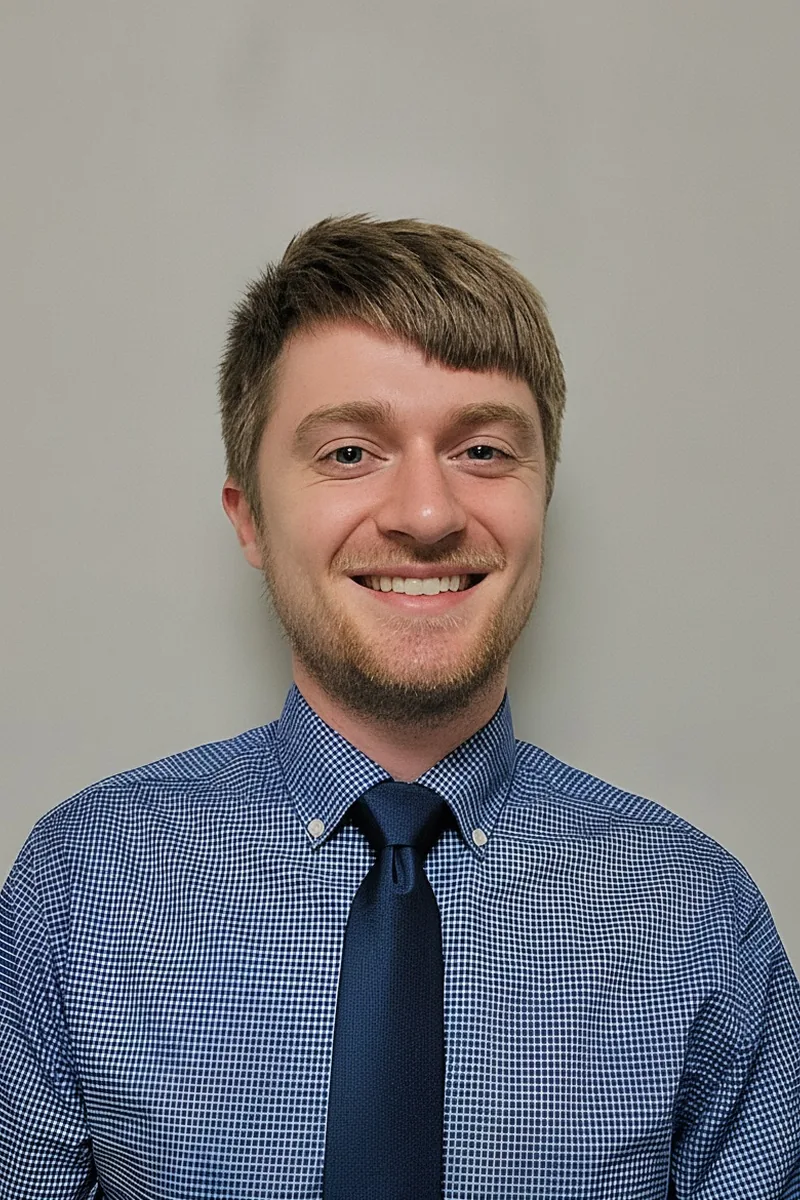
Three physics degrees and a 1570 SAT give Bryan the kind of deep mathematical fluency that AP Physics C: Mechanics rewards — particularly on problems where students need to set up differential equations for non-uniform circular motion or derive momentum impulse through integration. He teaches the course across both high school and college levels, so he knows exactly which conceptual leaps trip students up when the exam shifts from straightforward kinematics to multi-step rotational problems. Rated 5.0 by students.
Darren is midway through his physics degree at Northwestern, which means he's actively taking the upper-division mechanics courses that build directly on everything AP Physics C tests — and he still remembers exactly where the conceptual jumps from kinematics to rotational dynamics tripped him up the first time. He zeroes in on free-body diagrams and getting the calculus setup right before students ever touch a number, treating each problem as a reasoning exercise rather than a formula hunt. Rated 5.0 by students.
Biophysics at Rice means Aadith solves mechanics problems where the calculus isn't optional — modeling forces on protein structures, analyzing torque in molecular motors, applying Newton's laws to systems most students never picture in a physics classroom. That cross-disciplinary lens gives him a knack for teaching students how to read a physical scenario and decide whether to reach for an energy integral or a force-based differential equation. His 1590 SAT underscores the mathematical precision he brings to every free-response setup.
Twenty-five years teaching physics in Massachusetts public schools means Jacques has watched thousands of students hit the same walls on AP Physics C — and he knows exactly how to dismantle them, particularly around variable-force problems and the calculus of rotational inertia. His Princeton chemical engineering degree built the mathematical backbone, but it's the decades of classroom reps that sharpened his ability to explain why you set up the integral that way, not just how to evaluate it. Rated 4.8 by students.
Scoring a 5 on both AP Physics C: Mechanics and AP Calculus BC while taking 16 AP courses total, Derek built the habit of connecting calculus tools to physical intuition under real exam pressure — and he brings that same efficiency to tutoring. His computer science major at Harvard sharpens his approach to mechanics problems: decompose the system, identify constraints, then execute the math cleanly, much like debugging code. Rated 4.9 by students, he's particularly effective at teaching the structured problem-solving that turns rotational dynamics and variable-force scenarios into manageable steps.
Engineering coursework at Notre Dame means Alexandra is solving calculus-based mechanics problems every week — free-body diagrams with variable forces, work-energy integrals, the full Newton's second law treatment that AP Physics C demands. Her 1530 SAT and 32 ACT point to the quantitative comfort that lets her explain the reasoning behind each setup rather than just walking through formulas. Rated 5.0 by students.
Simulating cosmic ray acceleration through turbulent plasmas requires exactly the kind of calculus-based mechanics reasoning that AP Physics C tests — Newton's laws applied to complex systems, rotational dynamics, and energy methods. Dennis walks students through the hardest problems on the exam by teaching them to set up the physics first and let the calculus follow naturally. Rated 4.7 by students.
Data analytics trains you to model systems mathematically and interpret what the numbers actually mean — skills Vishank applies directly when tackling AP Physics C: Mechanics problems that require setting up kinematic equations or integrating variable forces. His coursework in calculus through linear algebra, combined with tutoring across both math and science, means he can diagnose whether a student's struggle on a free-response problem is a physics misunderstanding or a calculus execution error. Rated 4.9 by students.
Chemical engineering grad work at ASU Barrett means Alex solves calculus-based mechanics problems daily — from force balances on fluid systems to energy integrals across reactors — and that fluency translates directly to the kinematics, work-energy, and rotational dynamics on the AP Physics C: Mechanics exam. He also tutors AP Calculus BC and SAT Math (1560 SAT), so when a student's free-response answer falls apart, he can quickly isolate whether it's the physics reasoning or the integration technique that needs fixing. Rated 5.0 by students.
Chemical-biological engineering at the undergraduate level means Kristen solved mechanics problems with real calculus stakes — variable-force work integrals, rotational inertia derivations, coupled differential equations — long before they became exam questions. Her 36 ACT and 1590 SAT speak to the quantitative sharpness she brings to the trickiest AP Physics C problems, especially when students need to bridge the gap between setting up Newton's second law in differential form and actually executing the integration. Rated 4.9 by students.
Jared's PhD work in mechanical engineering at Lehigh means he's solving advanced dynamics problems daily — the kind where AP Physics C's rotational kinematics and work-energy integrals are just the warm-up. His biomedical engineering background adds a practical dimension: he can show students how a torque problem on the exam mirrors the same mechanics behind joint loading or prosthetic design, making abstract calculus-based physics feel grounded in something real.
Testimonials
Because the right AP Physics C: Mechanics tutor makes all the difference.
Average Session Rating – Based on 3.4M Learner Ratings
Practice AP Physics C: Mechanics
Free practice tests, flashcards, and AI tutoring for AP Physics C: Mechanics
Nearby AP Physics C: Mechanics Tutors
Other San Jose Tutors
Related Science Tutors in San Jose
Frequently Asked Questions
AP Physics C: Mechanics focuses on classical mechanics and includes kinematics, Newton's laws, work and energy, momentum, circular motion, oscillations, and gravitation. The course emphasizes calculus-based problem solving, which distinguishes it from AP Physics 1. For students in San Jose, understanding these core topics deeply is essential since the AP exam requires both conceptual understanding and the ability to apply calculus to physics problems.
The main difficulty lies in integrating calculus with physics concepts—students must not only understand the physics but also manipulate derivatives and integrals to solve problems. Many students struggle with the transition from algebra-based physics to calculus-based reasoning, and the time pressure on the exam makes it easy to make computational errors. Personalized tutoring helps identify whether gaps are in physics understanding or mathematical execution, allowing targeted practice in weak areas.
The exam consists of two sections: a 45-minute multiple-choice section (35 questions) and a 45-minute free-response section (3 questions). The multiple-choice section tests breadth of knowledge and quick problem-solving, while free-response questions require detailed explanations and multi-step solutions. Understanding how to manage time across both sections and knowing when to show work versus estimate is critical for maximizing your score.
Score improvement depends on your starting point and how consistently you engage with practice. Students who work with tutors typically see gains of 1-2 points on the 1-5 AP scale, though improvement varies based on initial understanding and effort. The most significant gains come from identifying specific problem areas—whether it's circular motion, energy conservation, or calculus application—and drilling those concepts with targeted practice tests and problem sets.
Practice tests are essential for AP Physics C: Mechanics success. They help you understand the exam's pacing, identify weak topics, and build test-taking stamina. Ideally, you should take full-length practice tests under timed conditions every 2-3 weeks leading up to the exam, then review mistakes carefully. Tutors can help you analyze which types of problems consistently trip you up and develop strategies to address them before test day.
Your first session typically involves assessing your current understanding of key mechanics concepts, reviewing your course materials, and identifying specific challenges—whether that's free-body diagrams, energy problems, or calculus integration. The tutor will also discuss your timeline and goals (improving your grade, preparing for the AP exam, etc.) to create a personalized study plan. This diagnostic approach ensures your tutoring focuses on areas where you'll see the most improvement.
Common mistakes include misapplying Newton's second law in non-inertial reference frames, making sign errors with vectors, and incorrectly setting up calculus expressions for kinematics problems. Students also often rush through free-response questions without clearly showing their work, losing points for reasoning even when their final answer is correct. Time management is another issue—students frequently run out of time on the free-response section. Tutors help you slow down, use systematic problem-solving approaches, and practice showing complete solutions.
Look for tutors with strong backgrounds in physics and calculus, ideally with experience teaching or tutoring AP-level material. Tutors familiar with the College Board's exam format and scoring rubrics can provide valuable insight into what graders are looking for on free-response questions. Varsity Tutors connects you with expert tutors who understand the specific challenges of AP Physics C: Mechanics and can tailor instruction to your learning style and goals.
Let’s find your perfect tutor
Answer a few quick questions. We’ll recommend the right plan and match you with a top 5% tutor.