Award-Winning AP Physics C: Mechanics Tutors
serving San Francisco, CA
AP Physics C: Mechanics
Tutors in San Francisco
Private 1-on-1 tutoring, weekly live classes for academic support, test prep & enrichment, practice tests and diagnostics, and more to elevate grades and test scores.
Based on 3.4M Learner Ratings
UniversitiesSchools & Universities
DeliveredHours Delivered
ProficiencyGrowth in Proficiency
Who needs tutoring?
No obligation. Takes ~1 minute.

Richard holds both a B.S. in Math and a B.S. in Physics, which means the calculus and the mechanics aren't two separate languages for him — they developed together, and he teaches AP Physics C that way, treating the math as inseparable from the physical reasoning rather than an add-on. His graduate work in atmospheric sciences demanded constant modeling of force systems and fluid dynamics, so problems involving variable forces or energy conservation across complex scenarios are second nature. He can also tutor entirely in Spanish for bilingual students who think more clearly in their first language.
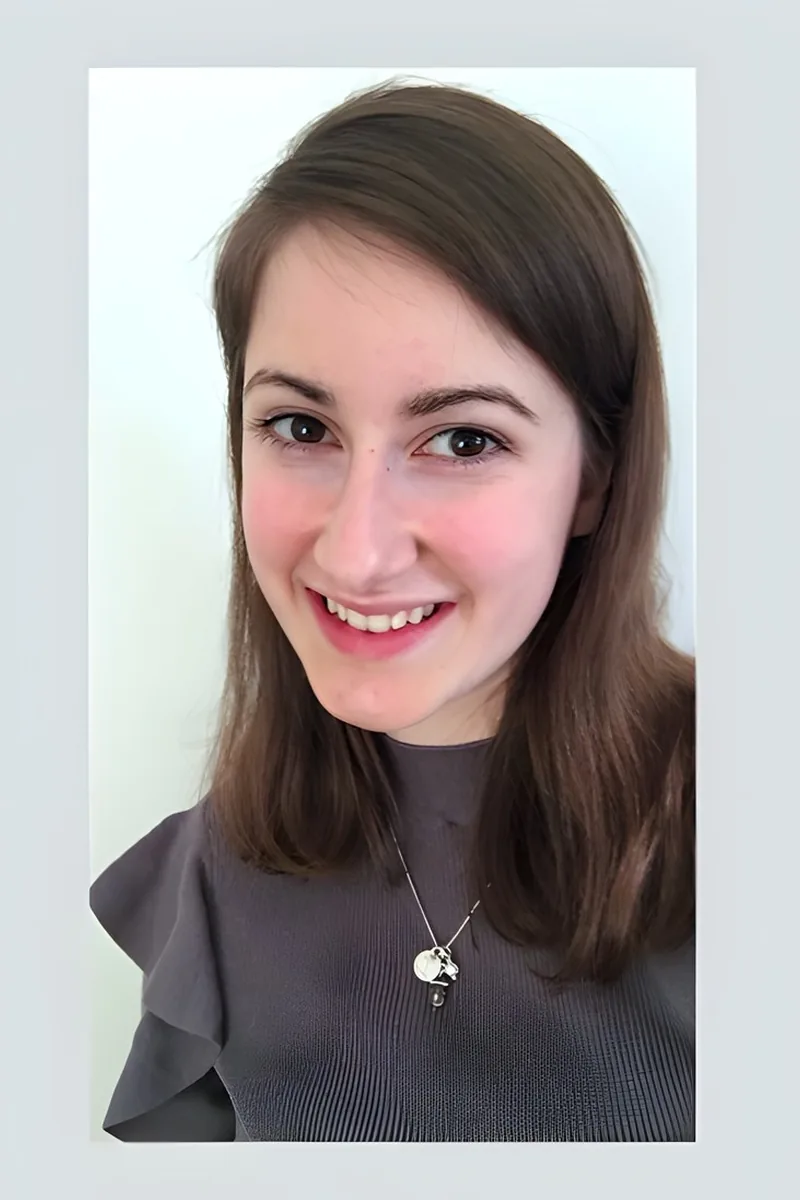
Pharmacy school trains you to think in systems — how one variable cascades through an entire mechanism — and Lillian applies that same reasoning to mechanics problems where forces, constraints, and calculus all interact at once. Her prepharmacy science background covers the physics and math rigor AP Physics C demands, and her 34 ACT confirms the quantitative chops to back it up. She's especially effective at teaching students to identify which physical principle governs a problem before touching any equations, rated 4.9 by students.
Having earned a BS in both physics and math from Yale, Anthony did the calculus-based mechanics — Lagrangian setups, variable-force integrations, rotational energy derivations — before pivoting to a PhD in economics, which means he teaches the material with the clarity of someone who's already fully digested it rather than still learning alongside students. His 1560 SAT and 5.0 tutoring rating back up what his physics training makes obvious: he can untangle the spots where the calculus and the physical reasoning collide, especially on free-response problems that demand both.
Three physics degrees and a 1570 SAT give Bryan the kind of deep mathematical fluency that AP Physics C: Mechanics rewards — particularly on problems where students need to set up differential equations for non-uniform circular motion or derive momentum impulse through integration. He teaches the course across both high school and college levels, so he knows exactly which conceptual leaps trip students up when the exam shifts from straightforward kinematics to multi-step rotational problems. Rated 5.0 by students.
Most pre-med students avoid the calculus-heavy physics — Manideep leans into it, tackling AP Physics C: Mechanics alongside his biological sciences coursework at Northwestern, where he also TAs in the sciences. He breaks down conservation of energy and momentum problems by starting with the physical scenario and building the integral from there, so students learn a repeatable process instead of hunting for the right formula. Rated 5.0 by students.
Twenty-five years teaching physics in Massachusetts public schools means Jacques has watched thousands of students hit the same walls on AP Physics C — and he knows exactly how to dismantle them, particularly around variable-force problems and the calculus of rotational inertia. His Princeton chemical engineering degree built the mathematical backbone, but it's the decades of classroom reps that sharpened his ability to explain why you set up the integral that way, not just how to evaluate it. Rated 4.8 by students.
Thirty years of teaching physics and holding a state certification means Michael has watched thousands of students hit the same stumbling blocks in calculus-based mechanics — the shift from memorizing kinematic equations to actually deriving motion from Newton's second law in integral form. His molecular biology graduate work gave him the quantitative rigor to teach across disciplines, and he uses that cross-training to connect force diagrams and energy methods to the kind of systematic reasoning that clicks on free-response problems.
Engineering coursework at Notre Dame means Alexandra is solving calculus-based mechanics problems every week — free-body diagrams with variable forces, work-energy integrals, the full Newton's second law treatment that AP Physics C demands. Her 1530 SAT and 32 ACT point to the quantitative comfort that lets her explain the reasoning behind each setup rather than just walking through formulas. Rated 5.0 by students.
Mechanics is where Cory is most at home. He treats AP Physics C: Mechanics as a student's first real encounter with calculus-based reasoning about the physical world — deriving kinematic equations from integrals, connecting Newton's laws to differential equations in rotational dynamics, and building intuition for conservation laws that goes beyond plugging into formulas. His physics degree means the vector calculus never gets hand-waved away.
Between his mechanical engineering studies at Case Western Reserve and a perfect 36 ACT, Kevin has the calculus chops and physical intuition that AP Physics C: Mechanics rewards — especially on free-response problems where a sloppy free-body diagram dooms the entire solution. He zeroes in on the skill most students underestimate: translating a physical setup into the right differential expression before any computation begins, whether it's a variable-mass system or a non-trivial torque problem.
Cornell pre-med students rarely double down on calculus-based physics, but Pratik tutors AP Physics C: Mechanics alongside AP Chemistry and AP Biology — giving him a cross-disciplinary lens that's especially useful when mechanics problems involve biological or chemical systems in free-response scenarios. His 35 ACT confirms the quantitative fluency needed to walk students through setting up torque equations or integrating variable forces without losing sight of the underlying physics.
Three years of tutoring introductory physics students while completing dual bachelor's degrees in physics and mathematics — followed by a PhD in Computational Mathematics — means Justin has taught the calculus-based mechanics in AP Physics C from both sides of the chalkboard. He digs into the spots where students typically stall, like setting up angular momentum problems or knowing when a scenario calls for energy methods versus force analysis, and walks through the underlying math until the physics clicks. Rated 5.0 by students.
Testimonials
Because the right AP Physics C: Mechanics tutor makes all the difference.
Average Session Rating – Based on 3.4M Learner Ratings
Practice AP Physics C: Mechanics
Free practice tests, flashcards, and AI tutoring for AP Physics C: Mechanics
Nearby AP Physics C: Mechanics Tutors
Other San Francisco Tutors
Related Science Tutors in San Francisco
Frequently Asked Questions
AP Physics C: Mechanics covers kinematics, Newton's laws, work and energy, momentum, circular motion, oscillations, and gravitation. The course emphasizes calculus-based problem solving, which distinguishes it from AP Physics 1. Students learn to apply differential and integral calculus to physics concepts, making it essential to have strong math foundations before enrolling.
The main difficulty lies in the combination of rigorous physics concepts and calculus requirements. Many students struggle with the transition from algebra-based to calculus-based reasoning, pacing through problem sets, and understanding when to apply different problem-solving approaches. Additionally, the exam format requires quick decision-making under time pressure, which can amplify anxiety for students who haven't practiced extensively with timed problems.
Score improvement depends on your starting point and consistency with preparation. Students who work with tutors typically see gains of 1-2 score points (on the 1-5 scale) over several months, though students starting from a weaker foundation may see more dramatic improvements. The key is identifying specific weak areas—whether that's conceptual understanding, calculus application, or exam pacing—and targeting those systematically through practice and feedback.
Your first session typically focuses on assessment and goal-setting. A tutor will review your current understanding of core mechanics concepts, identify where you're strongest and where you need support, and discuss your target score and timeline. This helps create a personalized study plan that addresses your specific challenges, whether that's mastering free-body diagrams, understanding energy conservation, or improving your exam pacing strategy.
Practice tests are critical for success. They help you identify weak topics, build test-taking stamina, and become familiar with the exam format and timing constraints. Working through full practice exams under timed conditions reveals whether your struggles are conceptual or strategy-based. Most students benefit from taking at least 3-4 full practice tests before exam day, with review and targeted practice between each one.
If you're taking the course, consistent study throughout the school year is ideal. For focused exam prep in the final weeks before the May exam, most students benefit from 5-10 hours per week of active practice and review. The timeline depends on your baseline—students with strong calculus skills and prior physics experience may need less time, while those building foundational understanding should start earlier and pace more gradually.
Common mistakes include misapplying Newton's second law in circular motion problems, incorrectly setting up energy conservation equations, and rushing through free-response questions without showing complete work. Time management is another major issue—students often spend too long on difficult multiple-choice questions and don't leave enough time for free-response sections. Working with a tutor to review past exams and practice deliberate problem-solving helps you avoid these pitfalls.
Look for tutors with strong physics and calculus backgrounds, ideally with AP exam experience or physics teaching background. They should understand both the conceptual foundations and the exam-specific strategies needed to score well. When you connect with a tutor through Varsity Tutors, you can discuss their experience with AP Physics C specifically and their approach to addressing common student challenges in mechanics and calculus-based problem solving.
Let’s find your perfect tutor
Answer a few quick questions. We’ll recommend the right plan and match you with a top 5% tutor.