Award-Winning AP Environmental Science Tutors
serving San Francisco, CA
AP Environmental Science
Tutors in San Francisco
Private 1-on-1 tutoring, weekly live classes for academic support, test prep & enrichment, practice tests and diagnostics, and more to elevate grades and test scores.
Based on 3.4M Learner Ratings
UniversitiesSchools & Universities
DeliveredHours Delivered
ProficiencyGrowth in Proficiency
Who needs tutoring?
No obligation. Takes ~1 minute.
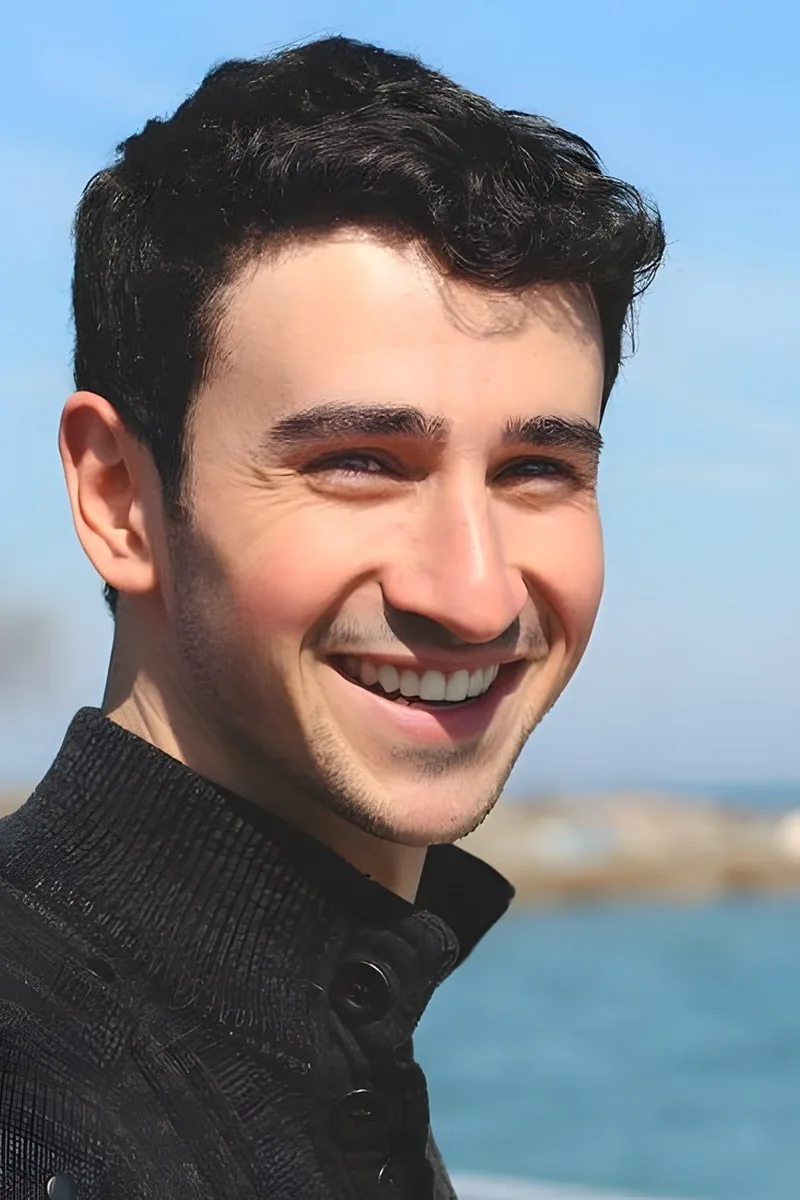
Cognitive science trains you to think in systems — how inputs, feedback loops, and cascading effects connect across complex networks — which maps surprisingly well onto APES topics like biogeochemical cycles, ecosystem disruption, and human-environment feedback. Zachary applies that systems-thinking lens to help students trace cause-and-effect chains across units, which is the skill that separates 3s from 5s on the free-response section. He scored a 32 on the ACT and carries a 4.8 tutoring rating.

Computer science and environmental science don't often overlap — until the APES exam asks students to interpret large data sets on biodiversity indices, model population growth curves, or analyze trends in atmospheric CO₂ concentrations, which is where Firas's PhD-level data analysis and machine learning research at Princeton becomes genuinely useful. He teaches students to read graphs and tables with the systematic precision of a data scientist, breaking down the quantitative free-response questions that catch memorization-focused students off guard. Rated 5.0 by students.
Business students learn to think in systems — supply chains, market feedback loops, cost-benefit trade-offs — and Myna applies that same framework to APES topics like resource depletion, environmental policy trade-offs, and the economic arguments embedded in free-response questions about sustainability. Her 34 ACT reflects sharp reading comprehension and data interpretation skills, which she channels into breaking down the graphs, experimental designs, and calculation problems that catch students off guard on exam day.
Gordon's biology degree from Arizona State and his Teach for America experience mean he's taught environmental science concepts to students with wildly different starting points — from kids encountering food webs for the first time to premed undergrads already comfortable with biochemical cycles. That range sharpened his ability to adjust explanations on the fly, which pays off on APES units like global water resources and soil degradation where students need to toggle between memorized vocabulary and applied problem-solving within the same free-response question.
Studying Human Biology at Stanford with a concentration in health policy gives Jake a direct line into the APES units on public health, pollution, and environmental legislation — he understands how ecological disruptions translate into real human consequences, which is exactly the kind of reasoning the free-response section rewards. His 34 ACT and 5.0 tutoring rating back up an approach that emphasizes connecting biological systems to their policy implications rather than treating each unit as isolated material.
Eileen's neuroscience coursework at Vanderbilt — tracing how disruptions propagate through biological systems — gives her a useful lens for APES topics like bioaccumulation, feedback loops in climate systems, and how environmental toxins affect organisms at multiple scales. She scored a 36 on the ACT and brings that same precision to the data-interpretation and calculation questions that catch students off guard on exam day.
Brett earned three bachelor's degrees and a master's in biology, which means topics like biogeochemical cycles, ecosystem energy flow, and population ecology aren't just APES vocabulary for him — they're concepts he studied repeatedly across multiple degree programs. He brings that layered understanding to the lab-design and data-analysis questions where students need to explain mechanisms, not just label diagrams. Rated 5.0 by students.
Most APES students can memorize vocabulary lists but freeze when a free-response question asks them to explain how a neurotoxin moves through a food web or why bioaccumulation affects top predators disproportionately — Jhonatan's neuroscience specialization means he actually understands those biological mechanisms at the molecular level. He teaches students to trace environmental disruptions through living systems rather than treating each unit as isolated content, which is the connective thinking the exam scores highest. Rated 5.0 by students.
Supervising an AmeriCorps conservation program in New Mexico means Rachel doesn't just teach APES concepts like land management, resource depletion, and habitat restoration — she manages real projects dealing with them daily. Her Johns Hopkins master's in Environmental Health Sciences adds the scientific rigor behind topics like pollution pathways and risk assessment, while her public health training sharpens the kind of systems-level thinking the exam's free-response questions demand.
Hello, students! My name is Pranav, and I'm so excited to be tutoring with Varsity Tutors. I have vast experience tutoring both personally and professionally; I've held officer positions in several nonprofit organizations, including STEMpals and The Do Re Mi Project, teaching courses ranging from biology to music theory. I took 16 AP courses throughout high school with all 5s, and I earned a 1570 on my SAT, so I'm pretty familiar with the majority of academic subjects! I have experience tutoring any and all skill levels, and I'm always open to expanding my horizons, so please don't hesitate to book your first lesson. I'm looking forward to meeting with you!
Creative writing isn't the obvious path to APES, but Sydney's strength is in the skill most students neglect: constructing clear, evidence-driven free-response answers that earn full credit instead of rambling through half-remembered vocabulary. Her 35 ACT and 1600 SAT reflect the kind of analytical reading ability that translates directly to interpreting experimental designs and data sets on the exam. Rated 4.9 by students.
Stanford's Science, Technology, and Society major sits at the exact intersection APES lives in — where ecological science meets human systems, policy decisions, and technological trade-offs. Rithika's IB and National AP Scholar background means she's already navigated the kind of interdisciplinary, essay-heavy exams that APES models itself on, and she uses that experience to teach students how to connect scientific evidence to real-world environmental consequences in their free-response answers.
Testimonials
Because the right AP Environmental Science tutor makes all the difference.
Average Session Rating – Based on 3.4M Learner Ratings
Practice AP Environmental Science
Free practice tests, flashcards, and AI tutoring for AP Environmental Science
Nearby AP Environmental Science Tutors
Other San Francisco Tutors
Related Science Tutors in San Francisco
Frequently Asked Questions
Score improvement depends on your starting point and commitment level. Students who work with tutors typically see gains of 1-2 points on the AP scale (which ranges from 1-5), though some improve more significantly. The key is identifying your specific weak areas—whether that's unit mastery, free-response writing, or exam pacing—and targeting those systematically.
Most students benefit from starting tutoring 3-4 months before the May exam, which gives enough time to review content, practice full-length tests, and refine test-taking strategies.
Students in San Francisco and beyond often struggle most with Unit 8 (Aquatic and Terrestrial Ecosystems), Unit 6 (Energy Resources and Consumption), and Unit 4 (Biogeochemical Cycles). These units require synthesizing complex systems and understanding interconnected processes—not just memorizing facts.
Free-response questions on these topics demand higher-level thinking and clear written explanations. A tutor can help you move beyond memorization to truly understanding how these systems work, which is what the AP exam tests.
The free-response section has three questions: two short-answer questions (3 points each) and one long essay (10 points). Success requires clear, concise writing and specific evidence. Many students lose points by being vague—the rubrics reward concrete examples and quantitative thinking.
A solid strategy includes: reading each question twice before answering, identifying exactly what's being asked, organizing your response with clear topic sentences, and using specific data or examples. Practice writing under timed conditions (about 20 minutes per question) helps you develop efficiency and clarity before test day.
You have 90 minutes for 80 multiple-choice questions—about 1 minute per question. Many students waste time overthinking easier questions or get stuck on difficult ones, leaving less time for sections they'd find easier. The key is strategic triage: quickly identify questions you can answer confidently, tackle medium-difficulty ones next, and come back to truly difficult questions if you have time.
Practice full-length exams under timed conditions helps you internalize this pacing. A tutor can review your practice tests to identify which question types slow you down and teach you patterns to recognize answers faster.
Varsity Tutors connects you with expert tutors who specialize in AP Environmental Science and understand the specific challenges San Francisco students face. When you get matched with a tutor, you can discuss your current score, target score, and which units need the most work—whether that's climate systems, human population dynamics, or environmental policy.
The best tutors combine deep subject knowledge with test strategy expertise, helping you understand content while also teaching the specific skills the AP exam rewards.
Ideally, start preparing 4-5 months before the May exam (around January). This timeline allows you to review all 8 units systematically, take multiple practice tests, identify weak areas, and build confidence. If you're starting later, even 6-8 weeks of focused tutoring can meaningfully improve your score, especially if your tutor targets your specific weaknesses.
Starting early also reduces test anxiety—you'll have time to practice under realistic conditions and refine your approach before the actual exam.
Practice tests serve two purposes: building endurance for the 3-hour exam and identifying content gaps. Take your first full-length practice test early (around January) to establish a baseline. Then take tests every 3-4 weeks to track improvement and adjust your study focus.
After each test, analyze your performance carefully: Did you miss certain question types? Did time pressure cause careless errors? Were you weak on specific units? A tutor can help you interpret these patterns and create a targeted study plan rather than just reviewing everything again.
Let’s find your perfect tutor
Answer a few quick questions. We’ll recommend the right plan and match you with a top 5% tutor.