Award-Winning AP Environmental Science Tutors
serving San Jose, CA
AP Environmental Science
Tutors in San Jose
Private 1-on-1 tutoring, weekly live classes for academic support, test prep & enrichment, practice tests and diagnostics, and more to elevate grades and test scores.
Based on 3.4M Learner Ratings
UniversitiesSchools & Universities
DeliveredHours Delivered
ProficiencyGrowth in Proficiency
Who needs tutoring?
No obligation. Takes ~1 minute.

Between his dual majors in Statistics/Economics and Business Analytics at Carnegie Mellon, Nitin spends most of his time building and interpreting data models — which is exactly the skill set APES leans on when students have to calculate ecological footprints, analyze pollution trends, or interpret population growth curves on the exam. He approaches the course's free-response questions as data-driven arguments, teaching students to pull evidence from graphs and tables and structure answers that actually earn full credit.
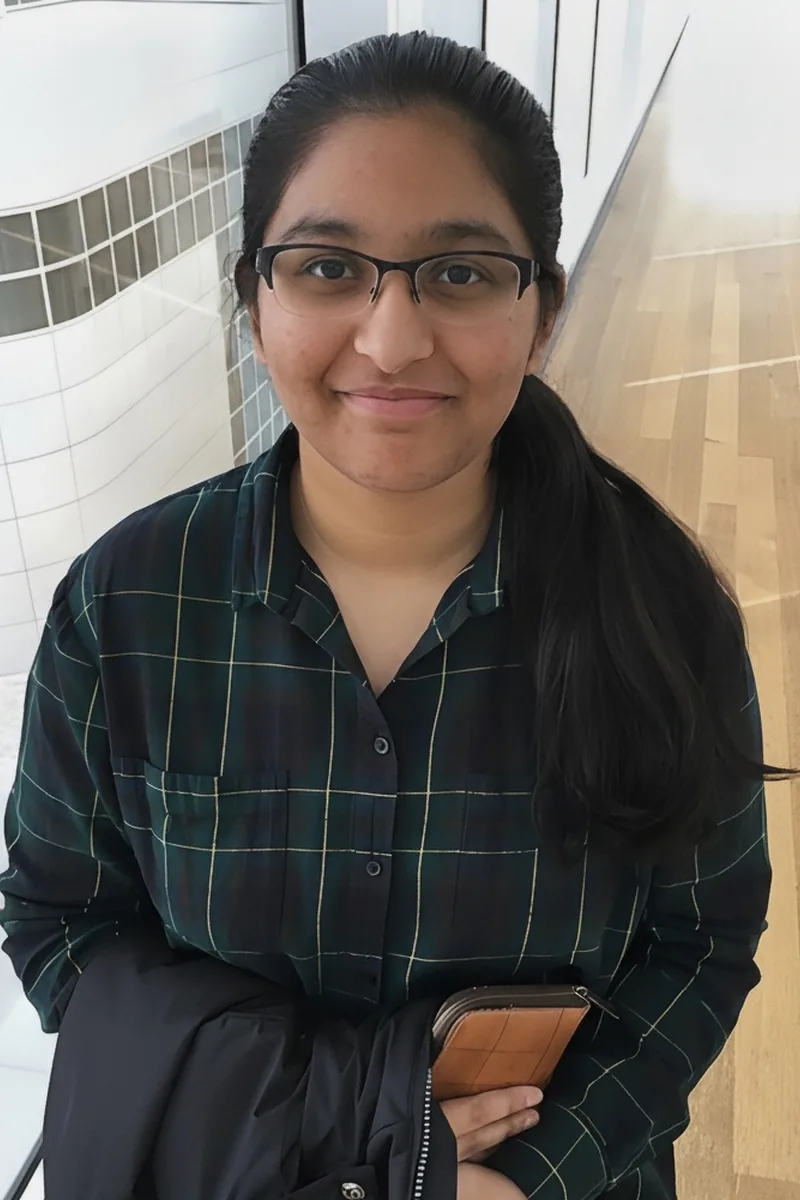
Business students learn to think in systems — supply chains, market feedback loops, cost-benefit trade-offs — and Myna applies that same framework to APES topics like resource depletion, environmental policy trade-offs, and the economic arguments embedded in free-response questions about sustainability. Her 34 ACT reflects sharp reading comprehension and data interpretation skills, which she channels into breaking down the graphs, experimental designs, and calculation problems that catch students off guard on exam day.
Running a marine biology summer camp means Zoey has taught kids to trace real ecological relationships — predator-prey dynamics, nutrient runoff in coastal systems, habitat loss from human development — which map directly onto the APES curriculum's core units. Her master's in marine biology gives her the field-level understanding of biodiversity, conservation, and ecosystem interactions that turns abstract exam topics into concrete examples students actually remember. Rated 4.9 by students.
Eric's degree in Ecology & Evolutionary Biology means he studied the actual science behind APES — population ecology, species interactions, and ecosystem-level processes — not just the survey-course version. He teaches students to think about environmental problems the way an ecologist would, tracing how a disturbance like deforestation or nutrient loading ripples through trophic levels and feedback loops until the full picture clicks.
Kiera is majoring in Ecology and Evolutionary Biology at Dartmouth, which means she's studying biodiversity, population dynamics, and ecosystem interactions at a level well beyond what the APES exam requires — and her engineering modification adds the quantitative rigor needed for calculations like energy transfer efficiency and ecological footprint math. She scored a 35 on the ACT and holds a 5.0 tutoring rating, bringing that same precision to the data-analysis and experimental-design questions that make up the bulk of the free-response section.
Katie holds a master's in science education and a bachelor's in natural resources and conservation — meaning she didn't just study APES topics like land use, biodiversity, and resource management as exam content; they were her actual field of study. She teaches students to think in cause-and-effect chains across units, connecting deforestation to soil erosion to water quality decline, which is exactly the kind of multi-step reasoning the free-response rubrics reward. Rated 5.0 by students.
Biochemistry gives Don a molecular-level understanding of the processes APES only scratches the surface of — he can explain why dissolved oxygen drops downstream of a nutrient spill by walking through the actual chemistry of eutrophication and aerobic decomposition, not just labeling a diagram. That depth, plus a 35 ACT and 5.0 rating from students, makes him especially sharp on the exam's quantitative pieces like calculating biomass transfer between trophic levels or interpreting water quality data sets.
Three years working on organic farms and sustainable land stewardship projects gave Dylan firsthand experience with the biogeochemical cycles, soil science, and ecosystem dynamics that AP Environmental Science tests in detail. He connects FRQ-style questions back to real fieldwork — explaining nutrient runoff or biodiversity loss through situations he's actually observed — which makes the material stick far better than rote review.
A Harvard-trained researcher who wrote his senior thesis on John Dewey's philosophy of education, Henry connects AP Environmental Science topics like biogeochemical cycles and ecosystem dynamics to the real-world policy debates that make them matter. He teaches students to interpret data sets and construct free-response answers that earn full credit by linking evidence to scientific claims.
Organismal physiology — Steven's concentration at Drexel — is essentially the study of how living systems respond to their environments, which maps directly onto APES topics like how pollutants move through organisms, how species adapt to habitat changes, and why bioaccumulation works the way it does. That biological depth, paired with a 34 ACT and 5.0 tutoring rating, means he can teach both the conceptual ecology and the math-heavy questions on energy calculations and resource analysis that the exam increasingly emphasizes.
Scott earned his Master's in Ecology studying exactly the systems the AP Environmental Science exam tests — biogeochemical cycles, biodiversity loss, population dynamics, and resource management. He breaks down free-response questions by teaching students to connect data interpretation with the underlying ecological principles, which is where most points are won or lost on exam day.
Computational physics PhD work means Yuanhao spends his days modeling complex systems — simulating how variables interact across scales, which is exactly the skill APES demands when students need to trace how, say, rising CO₂ concentrations ripple through carbon cycles, ocean chemistry, and global temperature feedback loops. His civil engineering background adds practical grounding in topics like water treatment infrastructure, land-use impact analysis, and the resource-flow calculations that show up in the quantitative free-response questions.
Testimonials
Because the right AP Environmental Science tutor makes all the difference.
Average Session Rating – Based on 3.4M Learner Ratings
Practice AP Environmental Science
Free practice tests, flashcards, and AI tutoring for AP Environmental Science
Nearby AP Environmental Science Tutors
Other San Jose Tutors
Related Science Tutors in San Jose
Frequently Asked Questions
Score improvements depend on your starting point and commitment to practice. Many students see meaningful gains by focusing on weak areas—whether that's understanding ecosystems, data interpretation, or essay writing—through targeted preparation. A tutor can help you identify which content areas need the most work and develop a study plan that maximizes your preparation time before the May exam.
Students often struggle most with quantitative reasoning—calculating population growth, interpreting graphs, and understanding energy flow through ecosystems. The free-response section also challenges many test-takers because it requires you to apply concepts to real-world scenarios and explain your reasoning clearly. A tutor can break down these challenging topics into manageable pieces and give you practice with the specific question formats you'll see on test day.
The exam has 80 multiple-choice questions (90 minutes) and 3 free-response questions (90 minutes). For the multiple-choice section, aim to spend about 1 minute per question, which leaves time to review. For free-response, spend 2-3 minutes planning your answer before writing, and allocate roughly 25-30 minutes per essay. A tutor can help you practice this pacing with full-length practice tests so timing feels natural on exam day.
Taking at least 3-4 full-length practice tests under timed conditions is ideal, spread across your preparation timeline. This gives you a realistic sense of the exam format, helps you identify weak content areas, and builds test-day confidence. Between practice tests, focus on targeted review of topics where you lost points. A tutor can review your practice test results with you to pinpoint patterns in your mistakes and adjust your study strategy accordingly.
Free-response success comes from clearly explaining your reasoning and supporting claims with specific evidence. Graders want to see that you understand the concept, can apply it to a scenario, and can communicate your thinking logically. Practice writing essays under timed conditions, and get feedback on whether your explanations are clear and complete. A tutor can review your essays, point out where you're missing key details, and help you develop a template for organizing your thoughts quickly during the exam.
Data interpretation questions require you to extract information from graphs, tables, and charts, then connect that data to environmental concepts. Many students rush through these questions or misread the axes and labels. The key is to slow down, identify what the data is actually showing, and explain the relationship to the environmental principle being tested. A tutor can walk you through the steps for analyzing different types of data displays and help you practice until the process becomes automatic.
Varsity Tutors connects you with expert tutors for students in San Jose who specialize in AP Environmental Science and understand the exam format, content, and scoring rubric. You can work with a tutor who matches your learning style and schedule, whether you prefer focused sessions on specific topics or comprehensive exam preparation. Getting matched with the right tutor makes a real difference—they can target your exact weak areas and build your confidence before test day.
Ideally, you'll begin focused exam preparation 8-10 weeks before the May test date, though this depends on your current comfort level with the material. If you're struggling with core concepts, starting earlier gives you time to build a solid foundation. If you're generally confident but want to refine your test-taking strategy and practice timing, 6-8 weeks of targeted prep is often sufficient. A tutor can assess where you stand and create a realistic preparation timeline tailored to your needs.
Let’s find your perfect tutor
Answer a few quick questions. We’ll recommend the right plan and match you with a top 5% tutor.