Award-Winning College Physics Tutors
serving Fresno, CA
College Physics
Tutors in Fresno
Private 1-on-1 tutoring, weekly live classes for academic support, test prep & enrichment, practice tests and diagnostics, and more to elevate grades and test scores.
Based on 3.4M Learner Ratings
UniversitiesSchools & Universities
DeliveredHours Delivered
ProficiencyGrowth in Proficiency
Who needs tutoring?
No obligation. Takes ~1 minute.
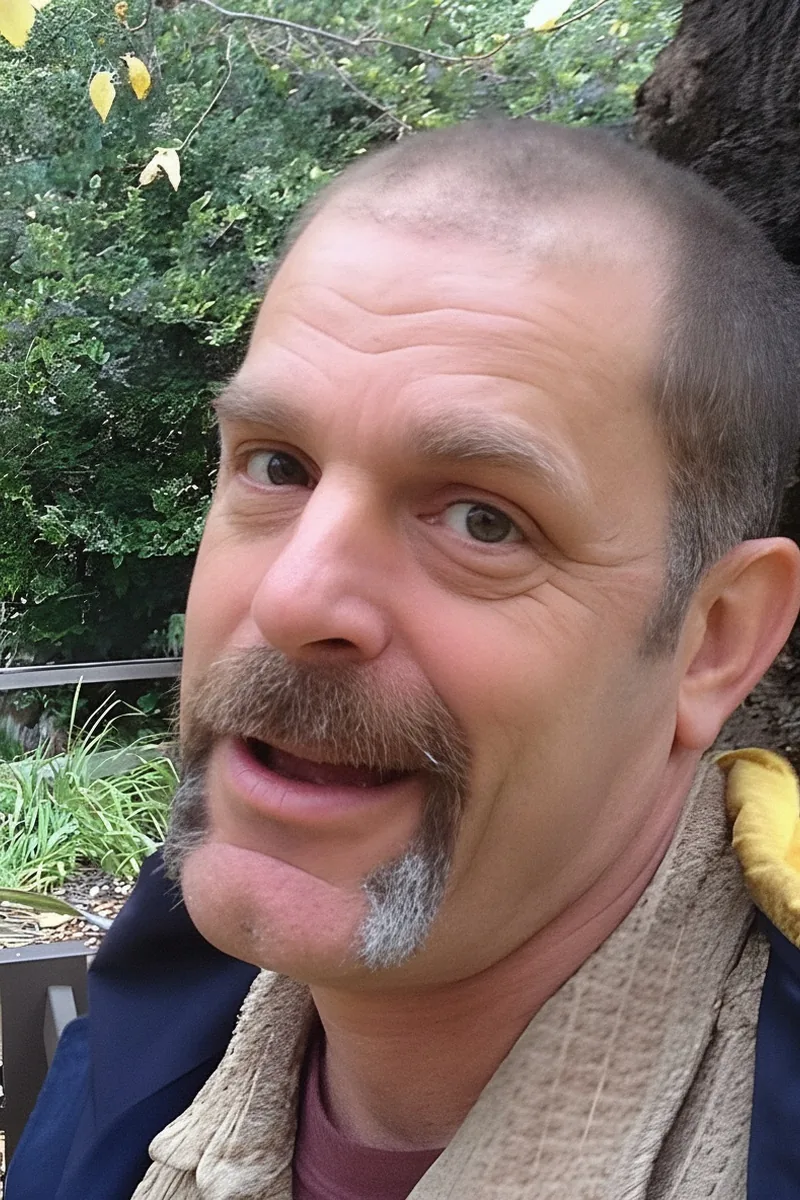
Engineering undergrads learn physics by building things that have to actually work — bridges that hold load, circuits that don't fry — and Mitch's general engineering degree put him through that full sequence of mechanics, E&M, and thermodynamics with real design constraints attached. He's especially good at teaching students to sketch the physical situation first (free-body diagrams, energy bar charts, field lines) so the math has something concrete to latch onto. Holds a 5.0 rating.
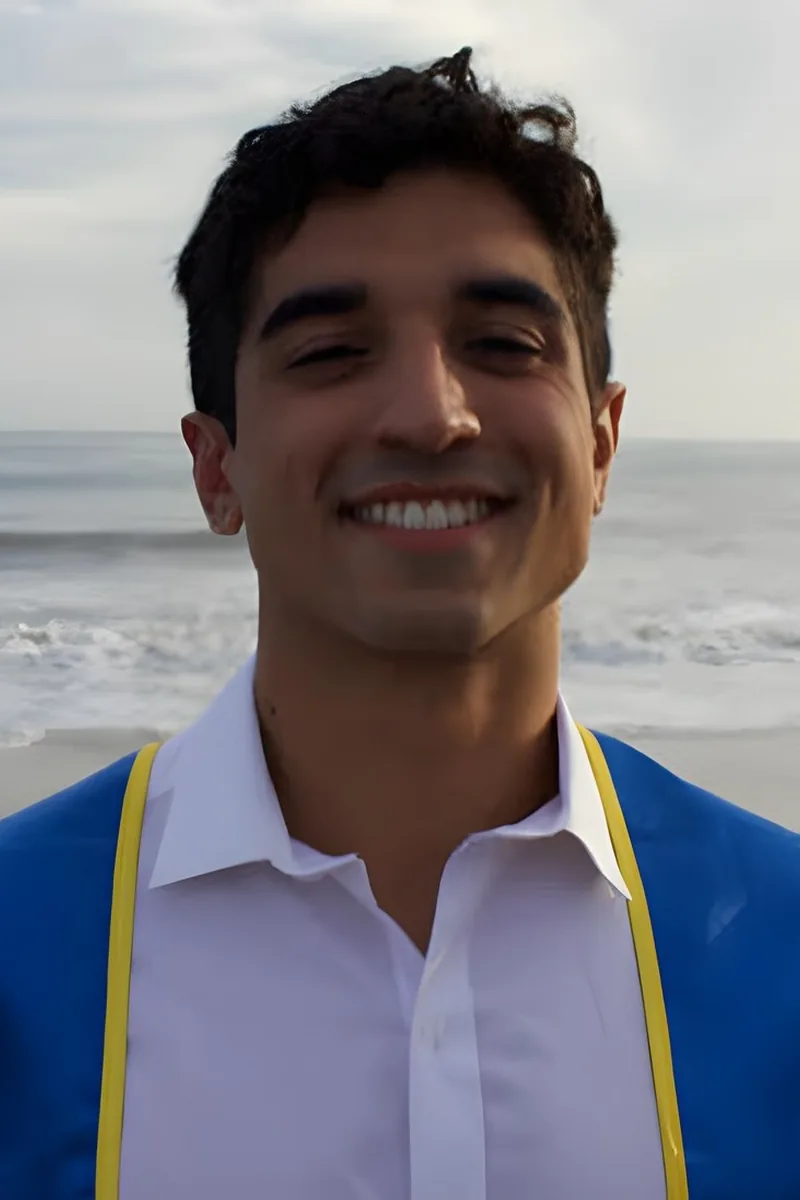
Between his UCSB honors biology coursework and his pre-med trajectory, Kevin has logged serious time with the physics that underpins living systems — fluid dynamics in circulation, pressure and volume in respiration, optics in vision, and the thermodynamics governing metabolic processes. He breaks down force diagrams and energy calculations by tying them back to concrete physical scenarios, so the math feels like it's describing something real rather than floating in abstraction. His 33 ACT reflects the quantitative reasoning he brings to calculus-based problem solving.
Biology majors often hit college physics expecting to memorize formulas the way they memorize metabolic pathways — and that's exactly where they stall out. Nicholas, who earned a 33 ACT while completing his own biology degree, tackles mechanics and electromagnetism by connecting the physical reasoning back to systems biology students already understand, like pressure gradients in circulation or torque in joint mechanics. That cross-disciplinary instinct makes the problem-solving approach click faster than pure equation drilling.
A state-certified teacher with a physics degree, Gerardo has taught the full arc of introductory physics — from free-body diagrams in mechanics through Gauss's law in electrostatics — and knows exactly where students lose the thread between the concept and the math. His classroom instinct is to get students talking through problems out loud, catching misunderstandings in real time before they calcify into bad habits. That teaching background means he reads confusion quickly and adjusts on the fly, which matters in a subject where one shaky assumption derails an entire solution.
Neuroscience at Pomona College meant Whitney spent serious time with the physics that governs how the body works — electrical potentials across membranes, wave mechanics in imaging, fluid dynamics in circulation — giving her a life-sciences angle on college physics that most tutors can't offer. She's especially good at walking through force diagrams and energy conservation problems by tying them back to biological systems students already care about. Her pre-med trajectory and 1480 SAT reflect the quantitative rigor she brings to each session.
Private tutoring through her UC Irvine biology program meant Pooja was regularly fielding physics questions alongside the calculus and chemistry ones — force problems in physiology, pressure and flow in circulatory systems, optics in lab instrumentation. She treats college physics problems like puzzles to decode, walking students through the setup logic (free-body diagrams, energy accounting, identifying which conservation law applies) before any numbers get plugged in. Her strength is making the problem-solving process feel methodical rather than overwhelming.
UC Berkeley's integrative biology program requires a full year of calculus-based physics — mechanics, waves, thermodynamics, electromagnetism — and Jack earned a 1590 SAT while navigating that same quantitative rigor. His biology background gives him a useful second lens for physics concepts like fluid dynamics, pressure, and energy transfer, since he's used to thinking about how those principles play out in living systems rather than just on a whiteboard.
Studying physics and mathematics simultaneously at Occidental means Drew is working through the same college physics material his students are — kinematics, forces, energy, waves — with the added benefit of seeing the mathematical scaffolding in his math courses the same week it shows up in his physics lectures. That real-time parallel gives him a sharp sense of which derivations are actually worth understanding versus which ones students can treat as tools, so sessions stay efficient and targeted.
Jenna's neuroscience degree from Indiana University covered a surprising amount of physics — action potentials are fundamentally circuit problems, and understanding imaging techniques like fMRI requires grappling with electromagnetism and wave behavior. Now heading into medical school, she brings that interdisciplinary lens to college physics topics like mechanics and electricity, connecting abstract equations to the biological systems where they actually play out. Rated 4.9 by students.
Between teaching biology, chemistry, and physics across both high school and college levels, Tito has an unusually broad view of how scientific concepts interconnect — which pays off in college physics, where a thermodynamics problem might demand chemistry intuition or a biomechanics question pulls from biology. He breaks problems into their physical setup first, making sure students can sketch the scenario and identify governing principles before touching any math. Rated 4.8 by students.
Currently pursuing a physics-engineering 3-2 program, Valerie is taking the same calculus-based physics courses her students are navigating — mechanics, waves, electromagnetism — which means she knows exactly which problem types are showing up on exams right now. That real-time familiarity with the material, combined with her 1500 SAT and hands-on engineering coursework, lets her walk through force diagrams and energy methods with the kind of specificity that generic physics tutoring often lacks.
Pre-med students often struggle with college physics because the course feels disconnected from biology — but Fady, currently applying to medical school with a biological sciences degree, naturally bridges that gap by tying force, pressure, and energy concepts back to physiological systems. He breaks down mechanics and fluid dynamics problems step by step, emphasizing the physical intuition behind each setup rather than letting students default to equation-hunting.
College-level physics ramps up fast once partial derivatives, line integrals, and differential equations enter the picture. Sarah earned her B.A. in both Physics and Mathematics, so she walks through topics like Gauss's Law or Lagrangian mechanics by unpacking the math and the physics simultaneously — no hand-waving, no skipped steps.
College-level physics demands more than plug-and-chug — problems in electrodynamics, rotational mechanics, or thermodynamics often require combining multiple principles in a single solution. Pranav digs into these multi-step problems as a Biomedical Engineering student at Johns Hopkins, where physics underpins much of his coursework. He walks through derivations and problem-solving strategies that build real fluency with the material rather than surface-level familiarity.
Three science-focused bachelor's degrees — including biology — meant Garrett sat through the full calculus-based physics sequence and kept coming back to it in physiology and physical chemistry, where concepts like fluid dynamics, pressure gradients, and energy transfer show up again and again. That repeated exposure across disciplines gives him an intuitive feel for when to apply conservation of energy versus momentum, or how to reason through a thermodynamics problem without getting lost in the formalism. His 1530 SAT speaks to the quantitative sharpness he brings to each session.
Chemical engineering at Georgia Tech means Aimee's spent years solving problems that blend thermodynamics, fluid mechanics, and energy balances — the same physics concepts that make college-level courses demanding, except she's applied them to reactor design and process optimization. Her biosystems engineering graduate work adds another layer, connecting classical mechanics and heat transfer to biological systems in ways that make abstract problem sets feel more concrete. Rated 4.9 by students.
Thermodynamics is where Rahul lights up — it was his favorite corner of Cornell's chemical engineering program, and that enthusiasm shows when he's walking someone through heat engines, entropy, or the first and second laws in a college physics context. His engineering training means he treats every problem as a physical system first and an equation second, pushing for the conceptual reasoning behind each step rather than formula-matching. Rated 4.9 by students.
A molecular biology background means Andrew regularly encountered physics in disguise — diffusion rates, membrane potentials, fluid dynamics in biological systems — before his doctoral work added another layer of analytical rigor. He breaks down mechanics and thermodynamics problems by connecting them to tangible phenomena, which makes the abstract math feel less like symbol-pushing. Rated 4.8 by students.
College-level physics layers calculus and more rigorous problem-solving onto the conceptual foundations from high school, and Samantha's Cornell science background means she's fluent in both the math and the theory. She breaks down topics like rotational dynamics, electric fields, and thermodynamic cycles using visual models and step-by-step dimensional analysis that keep the problem-solving process clear.
College-level physics ramps up fast, especially when courses introduce calculus-based mechanics or electromagnetism for the first time. Charles works through these topics as part of his mechanical engineering curriculum at Yale, so he can walk through derivations of torque, moment of inertia, or Gauss's law with the fluency of someone who applies them in lab and design projects regularly.
Biomedical engineering at Yale means Ellie applies physics daily — from fluid dynamics in circulatory models to electromagnetic principles in medical imaging. She breaks down topics like torque, wave optics, and circuit analysis by connecting them to real systems she encounters in her coursework and research. Rated 5.0 by students.
Studying computer science and applied math at Harvard means Derek uses physics constantly — from electromagnetism in circuit design to mechanics in computational modeling. He tackles college-level topics like Lagrangian dynamics and wave equations by connecting the math to physical intuition, making dense derivations feel less abstract.
Running an immunology lab at Columbia University Medical Center means Matthew applies physics daily in ways most tutors haven't — calibrating imaging equipment, analyzing force and pressure data in tissue samples, and troubleshooting instruments that depend on optics and electromagnetism. That hands-on fluency, combined with a physics degree and a 35 ACT, lets him teach college-level mechanics and E&M problems by connecting equations to the physical systems they actually describe.
A PhD in biomedical engineering means Andrew has spent years applying physics to biological systems — modeling forces on joints, analyzing fluid flow through tissues, understanding how electromagnetic fields interact with the body. That depth in mechanics, thermodynamics, and E&M carries directly into the calculus-based problem solving college physics courses demand. Rated 4.9 by students.
College-level physics demands comfort with calculus-based reasoning — deriving equations of motion, integrating force over a path for work, or applying differential equations to oscillations. Kathleen's math degree from Washington University and her experience teaching through multivariable calculus mean she can unpack both the physics intuition and the mathematical machinery simultaneously.
Testimonials
Because the right College Physics tutor makes all the difference.
Average Session Rating – Based on 3.4M Learner Ratings
Nearby College Physics Tutors
Other Fresno Tutors
Related Science Tutors in Fresno
Frequently Asked Questions
College Physics students often struggle with translating abstract concepts—like electromagnetic fields, quantum mechanics, or relativity—into concrete understanding. Beyond memorization, the course demands strong problem-solving skills, unit conversions, and the ability to apply multiple concepts to complex scenarios. Many students also find the mathematical foundation challenging, especially when calculus is involved. Personalized tutoring helps bridge these gaps by breaking down abstract ideas into visualizable models and building confidence in problem-solving strategies.
Your first session is about understanding where you stand and what you need most. A tutor will typically review your current coursework, identify specific topics causing confusion, and assess your problem-solving approach. From there, they'll create a personalized plan targeting your weak areas—whether that's conceptual understanding, math skills, or exam preparation. Most students leave their first session with clearer strategies for tackling problems and a roadmap for improvement.
Absolutely. Lab work is where physics becomes tangible, and tutors can help you understand the 'why' behind experiments, not just the procedures. They can explain how lab results connect to theoretical concepts, help you analyze data accurately, and develop stronger scientific reasoning skills. This deeper understanding makes both your lab reports and exam performance stronger, since you're learning to think like a physicist rather than just following steps.
Expert tutors teach you a systematic approach to physics problems: identifying what you know, visualizing the scenario, selecting the right equations, and checking your work. Rather than just showing you solutions, they guide you through your own thinking process so you can apply these strategies independently. This method builds both confidence and competence—you'll start seeing patterns across different problem types and develop intuition for which concepts apply when.
Both matter, but they work together. Strong conceptual understanding helps you know which calculations to perform and why they matter. Strong computational skills let you execute those calculations accurately under exam pressure. Tutoring addresses both: tutors help you visualize and truly grasp concepts while also building your mathematical fluency. When these skills are balanced, you'll perform better on exams and retain knowledge longer.
Starting 4-6 weeks before a major exam gives you solid time to identify gaps and build mastery, but even a few weeks of focused tutoring can significantly improve your performance. The key is consistency—regular sessions where you work through practice problems and get feedback on your approach. If you're struggling early in the course, starting sooner helps prevent concepts from piling up, since College Physics builds on itself heavily.
Varsity Tutors connects you with expert tutors who have deep knowledge of College Physics and proven teaching experience. When you get matched with a tutor, you'll know their qualifications and can discuss your specific needs before your first session. The matching process ensures you're working with someone who understands both the content and your learning style, so you can focus on improving rather than searching.
Understanding how physics principles apply to real situations—from smartphone technology to renewable energy to medical imaging—makes abstract concepts stick in your memory and helps you see why the material matters. This deeper engagement improves both retention and problem-solving ability. Tutors often use real-world examples to clarify difficult concepts and help you develop the kind of applied thinking that makes physics feel relevant rather than purely theoretical.
Let’s find your perfect tutor
Answer a few quick questions. We’ll recommend the right plan and match you with a top 5% tutor.