Award-Winning AP Physics C: Electricity and Magnetism Tutors
serving Denver, CO
AP Physics C: Electricity and Magnetism
Tutors in Denver
Private 1-on-1 tutoring, weekly live classes for academic support, test prep & enrichment, practice tests and diagnostics, and more to elevate grades and test scores.
Based on 3.4M Learner Ratings
UniversitiesSchools & Universities
DeliveredHours Delivered
ProficiencyGrowth in Proficiency
Who needs tutoring?
No obligation. Takes ~1 minute.

Gauss's law, Ampère's law, Faraday's law — AP Physics C: E&M asks students to think in vector fields and surface integrals, which is a major leap from mechanics. As an astrophysics and chemistry double major at CU Boulder, Graham works with electromagnetic theory as a core part of his studies and breaks down each law into the physical picture behind the math. He holds a 5.0 rating from students.
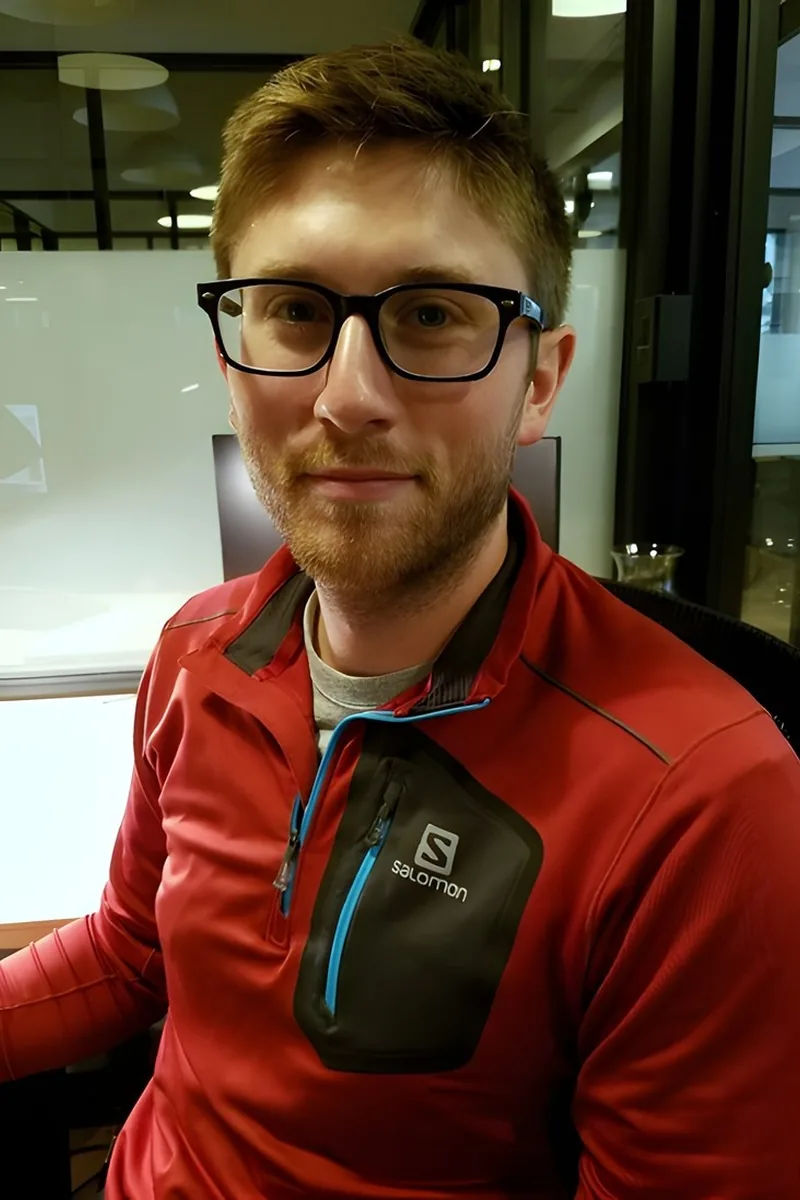
Gauss's law, Ampère's law, Faraday's law — E&M demands that students think in three dimensions about fields they can't see, then translate that reasoning into vector calculus. Evan breaks these abstract concepts into concrete, visual steps, connecting each integral to the physical situation it describes. His physics background makes him especially sharp on the Maxwell's equations framework that ties the whole course together.
Gauss's law, Ampère's law, Faraday's law — AP Physics C: E&M asks students to wield vector calculus in contexts that feel nothing like their math class. Cory breaks each problem into two layers: the physical picture (what are the charges and fields actually doing?) and the mathematical machinery (which symmetry makes the integral tractable?). That dual-track approach keeps students from drowning in formalism while still earning top scores.
Gauss's law, Ampère's law, RC circuits — AP Physics C: E&M piles abstract vector calculus on top of already counterintuitive electromagnetic concepts. Victoria unpacks each topic by building physical intuition first, like visualizing electric field lines before setting up a flux integral, so the math serves the physics instead of obscuring it. Her background in medical imaging gives her real-world examples of how electromagnetic principles show up beyond the textbook.
AP Physics C: E&M is where calculus and electromagnetism collide, and most of the difficulty lives in translating physical setups — Gaussian surfaces, Amperian loops, RC circuits — into the right integral or differential equation. Megan's applied mathematics degree gives her deep comfort with the vector calculus and differential equations that make this course so demanding. She breaks down Gauss's law and Faraday's law problems step by step, connecting the math to the physical intuition behind each result.
Gauss's law, Ampère's law, Faraday's law — AP Physics C: E&M asks students to wield vector calculus inside electromagnetic theory, which is a steep jump from most prior coursework. Steven approaches each topic by first explaining the physical picture, then showing the mathematical framework, then working through a practical example that ties both together. His PhD in chemical engineering required deep work with electromagnetic principles and multivariable calculus alike.
Gauss's law, Ampère's law, RC circuits, electromagnetic induction — E&M demands that students think in vector fields and apply calculus to invisible phenomena. As a Stony Brook physics major who also codes simulations, Kiran unpacks these abstractions by walking through the physical setup before touching an integral, which turns intimidating problems into a sequence of logical steps.
Gauss's law, Ampère's law, RC circuits, electromagnetic induction — AP Physics C: E&M is where most students hit a wall because the math and the physical intuition have to work together simultaneously. Dennis's research designing optical-electronic multiplexers required him to model electromagnetic wave behavior at a professional level, and he brings that fluency to breaking down the toughest problems on the exam.
AP Physics C: E&M is where calculus and physics collide — Gauss's law integrals, Faraday's law, and RC/RL circuit analysis all demand fluency in both. Jared's mechanical engineering PhD work at Lehigh means he uses Maxwell's equations and vector calculus daily, so he can unpack the math behind each concept rather than just handing students formulas to memorize.
E&M is where most AP Physics students hit their ceiling — Gauss's law, Ampère's law, and Faraday's law demand spatial reasoning and calculus fluency at the same time. Bidyut's biomedical engineering curriculum at Johns Hopkins required extensive work with electromagnetic theory, from circuit analysis to field modeling. He unpacks each law by building the physical picture first, then layering in the math so the integrals actually make sense.
Gauss's law, Ampère's law, Faraday's law — AP Physics C: E&M throws a wall of abstract vector calculus at students who were just getting comfortable with mechanics. Lillian tackles each law by grounding it in a concrete physical scenario first, then layering in the math. Her systematic approach to problem-solving, sharpened through years of STEM coursework, translates well to navigating complex circuit and field problems.
Gauss's law, Ampère's law, Faraday's law — AP Physics C: E&M asks students to choose the right tool for each field configuration and then execute the calculus cleanly. Sophia breaks each problem into two phases: identifying the symmetry that dictates the approach, then setting up and evaluating the integral. Her 5.0 rating speaks to how clearly she communicates concepts that most students find abstract.
Gauss's law, Faraday's law, Ampère's law — AP Physics C: E&M asks students to wield vector calculus in ways that feel like a massive leap from mechanics. Lindamulage tackles these topics regularly in his research at Brookhaven National Laboratory, so he can unpack concepts like electric flux, induced EMF, and RC circuits with the kind of physical intuition that turns intimidating math into clear reasoning.
Gauss's law, Ampère's law, Faraday's law — AP Physics C: E&M asks students to wield vector calculus inside electromagnetic theory, which is a steep jump from mechanics. Richard's electrical and computer engineering background at the University of Tulsa means he's worked through these derivations extensively and can connect abstract field equations to tangible circuits and real devices. He breaks down each Maxwell equation into physical intuition first, then builds toward the math.
Testimonials
Because the right AP Physics C: Electricity and Magnetism tutor makes all the difference.
Average Session Rating – Based on 3.4M Learner Ratings
Practice AP Physics C: Electricity and Magnetism
Free practice tests, flashcards, and AI tutoring for AP Physics C: Electricity and Magnetism
Nearby AP Physics C: Electricity and Magnetism Tutors
Other Denver Tutors
Related Science Tutors in Denver
Frequently Asked Questions
AP Physics C: Electricity and Magnetism covers electrostatics, conductors and insulators, electric potential, capacitance, electric circuits, magnetic fields, and electromagnetic induction. The course emphasizes calculus-based problem-solving, with heavy focus on Coulomb's law, Gauss's law, Ampere's law, and Faraday's law. Understanding these interconnected concepts and their mathematical applications is essential for success on the exam.
Students typically struggle most with Gauss's law and its applications, electromagnetic induction problems, and translating complex field diagrams into mathematical equations. Many find the transition from conceptual understanding to calculus-based problem-solving difficult, especially when dealing with non-uniform charge distributions or time-varying magnetic fields. Personalized 1-on-1 instruction can help you identify which specific concepts are holding you back and build the mathematical foundation needed to solve advanced problems confidently.
The exam has 45 multiple-choice questions (45 minutes) and 3 free-response questions (45 minutes), requiring quick problem recognition and efficient calculation. Many students lose points by spending too long on difficult multiple-choice items instead of moving forward strategically. A tutor can help you develop pacing strategies, practice timed sections, and learn which problems to tackle first based on your strengths.
Most students benefit from completing 4-6 full-length practice tests under timed conditions in the weeks leading up to the exam, combined with targeted practice on weak topic areas. Taking practice tests reveals patterns in your mistakes—whether they're conceptual gaps, calculation errors, or misunderstandings of question formats. A tutor can review your practice test performance with you, identify specific areas to focus on, and help you develop a study schedule that maximizes improvement.
Score improvement depends on your starting point and commitment level, but students who work with a tutor typically see gains of 1-2 score points on the 1-5 scale when they address conceptual gaps and practice consistently. The key is identifying which topics are costing you points—whether that's circuit analysis, field calculations, or free-response communication—and building mastery in those areas. Varsity Tutors connects you with tutors who can create a personalized study plan targeting your specific weaknesses.
Free-response questions reward clear reasoning and proper mathematical setup as much as the final answer. Many students lose points by skipping steps, not showing their work, or failing to explain their reasoning. A tutor can teach you how to structure your responses to earn partial credit, practice writing physics explanations clearly, and develop strategies for tackling unfamiliar problem types by breaking them into manageable steps.
Varsity Tutors connects you with expert tutors in Denver who specialize in AP Physics C: Electricity and Magnetism and understand the specific demands of the exam. You can get matched with a tutor who fits your schedule and learning style, whether you need help with one challenging topic or comprehensive exam preparation. The matching process considers your goals, availability, and preferred learning approach to ensure a strong fit.
Your first session is typically diagnostic—a tutor will assess your current understanding of key concepts, identify which topics are causing confusion, and learn about your goals (whether that's reaching a specific score or mastering particular units). You'll work through a few problems together to understand your problem-solving approach and where gaps exist. This foundation helps your tutor create a personalized study plan for the rest of your preparation.
Let’s find your perfect tutor
Answer a few quick questions. We’ll recommend the right plan and match you with a top 5% tutor.