Award-Winning AP Calculus BC Tutors
serving Hartford, CT
AP Calculus BC
Tutors in Hartford
Private 1-on-1 tutoring, weekly live classes for academic support, test prep & enrichment, practice tests and diagnostics, and more to elevate grades and test scores.
Based on 3.4M Learner Ratings
UniversitiesSchools & Universities
DeliveredHours Delivered
ProficiencyGrowth in Proficiency
Who needs tutoring?
No obligation. Takes ~1 minute.
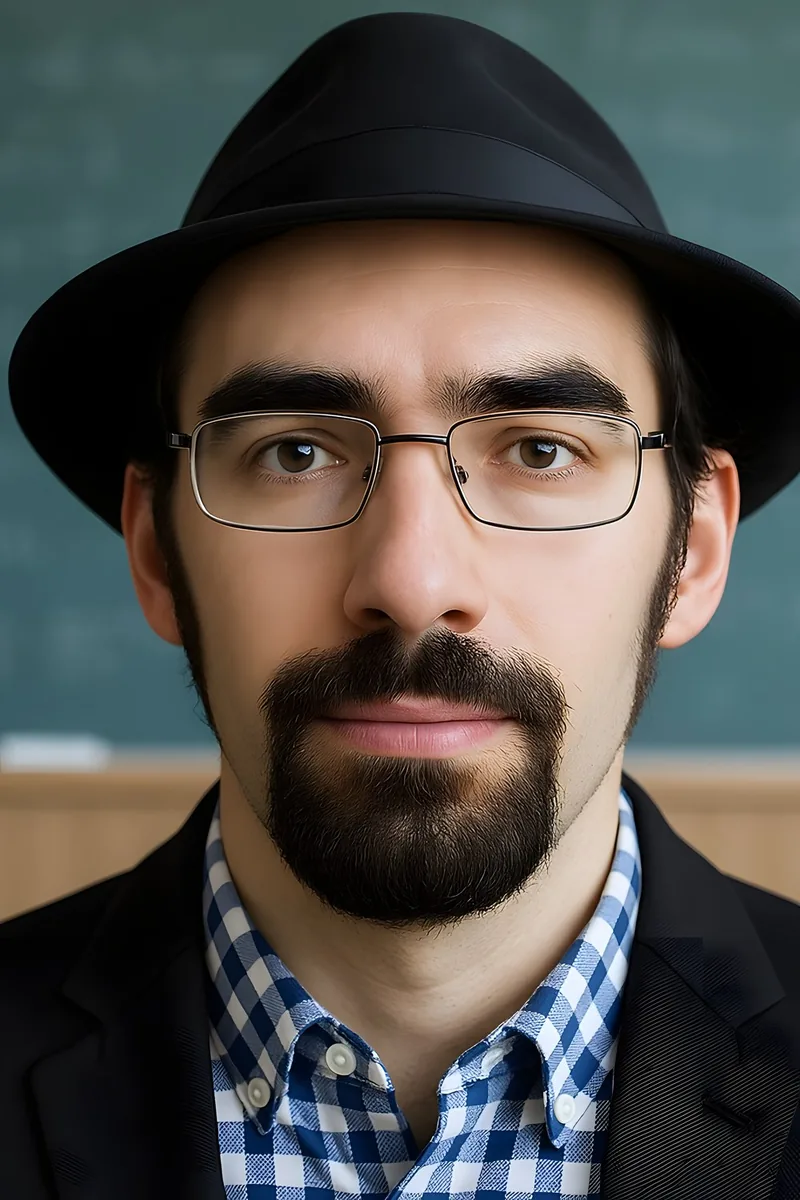
Hello, my name is Yosef and I would be happy to serve as a math tutor. I place strong emphasis on a good balance between knowledge of mathematical content and proficiency in problem-solving, reasoning, and conveying mathematical ideas in writing. There are times when a student needs to be informed of a solution, times when he or she also needs to hear the explanation of why the solution works, and times when he or she should be guided to finding the solution on his or her own. It is important for the tutor to recognize which approach is appropriate. Frequently, when students struggle, it is because they do not understand the notation or terminology in use. In such cases, it is important to reassure the student, reminding him or her that he or she is only struggling with understanding a single word, not the entire mathematical concept. As a rule, people perform better and are better motivated when they have self-confidence, not when the task ahead seems frighteningly daunting. It is also important to recognize that different students learn best through different means. As an example, some students are visual learners and can understand the material best through pictures and gestures. Other students learn best through hearing the procedures vocalized, while still others learn best through writing out the steps of the solution procedure. I know to adapt my teaching style to the individual student. with these considerations in mind, I promise to provide the best assistance that I can, taking your individual needs into consideration.

Series convergence, parametric equations, and polar curves make BC the course where strong calculus students finally have to slow down and think carefully. Anthony earned his BS in physics and math from Yale, where these concepts weren't just exercises — they were the language of electromagnetism and classical mechanics. He teaches BC topics by connecting each technique to why it exists and when it matters.
Molecular biology at Yale means Maxwell lives in calculus-heavy territory — modeling gene expression rates, quantifying cell growth curves, analyzing reaction kinetics — so BC topics like differential equations and series approximations aren't abstract exercises for him but tools he actually reaches for in research. He's especially good at walking through the logic of integration techniques and parametric problems by grounding them in the AB concepts students already trust. Holds a 5.0 rating.
Series convergence tests, parametric equations, polar curves — BC Calculus piles on concepts fast, and falling behind on one unit can cascade through the rest of the course. Ethan breaks each new topic back to its AB foundation before building upward, so students see Taylor series and integration techniques as extensions of ideas they already own rather than entirely new material.
BC Calculus layers convergence tests, parametric equations, and polar curves on top of an already demanding AB foundation, and keeping all of it organized is half the battle. Tessa's approach is to unpack each new topic by tying it back to core ideas students already understand — showing, for instance, how Taylor series are really just an extension of local linearity. She's a math major at Yale with a 4.9 client rating.
Series convergence tests, parametric equations, and polar coordinates make BC the course where strong calculus students finally have to slow down and think carefully. Kenneth breaks each of these topics into manageable pieces, connecting new BC material back to the AB foundations students already understand. His applied math degree keeps the focus on both rigor and intuition.
BC Calculus throws students into territory where AB concepts suddenly layer on top of each other — Taylor series, parametric equations, polar coordinates, and convergence tests all demand fluency with earlier material. Aaron scored a 5 on the AP Calculus BC exam and earned his math degree at Yale, so he knows exactly where the conceptual leaps happen and how to bridge them. Rated 5.0 by students.
I believe every person has potential, which must be drawn out of them. With over 4 years of leading workshops, being a Teaching Assistant and creating curriculum, and nearly two years of private tutoring, I know how to help students and people of all ages easily understand concepts in Science, Technology, Engineering, and Mathematics. Having graduated from Vanderbilt University with a Bachelors degree in Engineering Science, I know how to move from not understanding a subject to understanding it well. The subjects I tutor include: - Math (Algebra 1, Geometry, Algebra 2, Pre-Calculus**, Calculus 1**, Calculus 2** and Statistics**) - Computer Science (AP CSP / AP Comp SciA, Python, ReactJS/JavaScript, HTML/CSS, Powershell/Bash Scripting) - Science (Physics**) ** - tutor subject at high school/AP/college level My teaching style includes completely modeling a problem on the board. Then, I would guide a student through solving a problem before having them solve it independently.
My name is Francis Nguyen. I am married and have three beautiful daughters. I graduated with a Bachelor in Math Education in 2000 and a Masters in Math in 2003 from Fairfield University. I have been teaching high school for over 20 years. The subjects I have taught ranged from elementary math to Calculus, SAT and ACT. I love to help children learn math and succeed in math.
I was a private math (and chess) tutor for about half a year, and I was a math clinic tutor at university for three terms. I have loved math since I was a kid, and I enjoy it when my help allows people to better understand and appreciate math as well. So many students seem to have an innate distaste for math; I want to help students overcome that distaste, and come away with a greater understanding of how the math they are doing works, and more importantly, why it works.
Biochemistry lab work at Columbia demands comfort with the calculus that models reaction kinetics and molecular behavior — Andrew has spent years using integration techniques and series approximations in that context, which gives his BC teaching a practical edge when students ask "why does this matter?" He's especially effective at breaking down the transition from AB to BC, tracing topics like Taylor polynomial construction and convergence criteria back to the derivative and integral logic students already trust. Rated 4.9 by students.
Scoring a 36 on the ACT while studying Human Biology at Cornell means Sharan lives at the intersection of rigorous quantitative thinking and applied science — exactly where BC Calculus sits when series approximations and integration techniques start modeling real biological systems. She breaks down the AB-to-BC jump by treating topics like Taylor polynomials and convergence tests as logical extensions of limits and derivatives, not a separate universe of formulas to memorize. Rated 5.0 by students.
When students hit BC's convergence tests and feel like they're just memorizing a checklist of names — ratio, root, integral, comparison — Samuel reframes each test as a question about how a series behaves, turning rote steps into genuine reasoning. His applied mathematics coursework means he's actively using Taylor series and parametric models in contexts where getting the convergence wrong isn't just a lost point but a broken solution. That perspective, plus a 1590 SAT reflecting sharp quantitative instincts, keeps his teaching grounded in understanding rather than procedure-shuffling.
Environmental engineering graduate work is essentially applied calculus — Kate's thesis work required series approximations for modeling fluid dynamics and integration techniques for analyzing pollutant transport, so BC topics like Taylor polynomials and improper integrals are tools she's used professionally, not just academically. She's particularly good at showing how convergence tests follow a logical decision tree rather than feeling like a random grab bag of techniques. Rated 4.9 by students.
Most people who breeze through math can't explain it — Daniel learned BC Calculus by grinding through the logic of every convergence test, every parametric derivative, every series expansion until it genuinely made sense, and that's exactly how he teaches it. As an applied mathematics undergrad, he's currently using these tools in upper-level coursework, so he knows which BC concepts tend to feel arbitrary and how to make the reasoning behind them stick.
Notre Dame's Science-Computing program front-loads calculus-heavy coursework — Aidan moved through multivariable calc and differential equations while simultaneously applying integration techniques and series in his science courses, so BC topics like Taylor polynomials and convergence tests landed as tools he actually needed, not just exam hurdles. He's especially sharp at tracing where a BC struggle — say, setting up an integral in polar coordinates or choosing the right convergence test — traces back to an AB concept that needs reinforcing. His 35 ACT and premed science background keep explanations precise and grounded.
Studying both mathematics and computer science at Rice, William is taking the courses that treat BC topics like series convergence and parametric integration as foundational tools rather than standalone exam material. His 1540 SAT reflects the kind of precise, structured reasoning he brings to breaking down the jump from AB to BC — especially when Taylor polynomial construction or convergence tests start feeling like they came out of nowhere.
Coming out of Thomas Jefferson High School for Science and Technology — one of the most rigorous STEM pipelines in the country — Rhamy had BC Calculus concepts like series convergence and parametric integration locked down before most students even encounter them. His computer engineering program at Vanderbilt keeps those tools sharp daily, since signal analysis and circuit design lean heavily on the same Taylor expansions and differential equations that define the BC curriculum. Rated 5.0 by students.
Tackling series convergence tests, parametric equations, and polar curves requires more than memorizing formulas — it demands knowing when and why each technique applies. Talia approaches BC-specific topics by building intuition around each concept before drilling the mechanics, so students can handle the free-response questions that reward deep understanding over rote calculation.
Mackenzie scored a 35 on the ACT and tutors math at every level from elementary through AP, which means she knows exactly which algebra and AB gaps trip students up once BC introduces new integration techniques and series. She walks through problems like setting up improper integrals or applying ratio tests by tracing each step back to the reasoning behind it, so students build intuition they can rely on during the exam.
Physics majors don't just take BC Calculus — they breathe it, using series expansions to model wave behavior, integration techniques to solve equations of motion, and parametric equations to describe trajectories. Kiran is finishing a physics and computer science double major at Stony Brook, which means topics like Taylor polynomials and convergence aren't abstract to him; they're tools he reaches for in his own coursework daily. His 34 ACT and 4.7 rating speak to an ability to make that applied intuition accessible to students still building their BC toolkit.
Sanjana doesn't just know AP Calculus BC — she teaches it, serving as a Course Assistant for Harvard's introductory calculus sequence. That means she's seen exactly where students stumble on Taylor series, parametric equations, and convergence tests, and she knows how to untangle those concepts in real time. Rated 5.0 by students.
Testimonials
Because the right AP Calculus BC tutor makes all the difference.
Average Session Rating – Based on 3.4M Learner Ratings
Practice AP Calculus BC
Free practice tests, flashcards, and AI tutoring for AP Calculus BC
Nearby AP Calculus BC Tutors
Other Hartford Tutors
Related Math Tutors in Hartford
Frequently Asked Questions
AP Calculus BC covers all topics from AP Calculus AB plus additional material including parametric equations, polar coordinates, and series. The full curriculum includes limits, derivatives, applications of derivatives, integrals, differential equations, and sequences and series. For students in Hartford, understanding this expanded scope is important since BC is a full year course that moves at a faster pace than AB, requiring solid foundational knowledge from the start.
During an initial session, a tutor will assess your current understanding of calculus concepts, identify specific areas where you're struggling, and learn about your goals for the AP exam. This diagnostic helps create a personalized study plan tailored to your needs—whether you're strengthening fundamentals, tackling series and sequences, or building test-taking confidence. You'll leave with clarity on your starting point and a clear roadmap forward.
Many students struggle with the pace of BC material, especially the transition from derivatives to integrals and the abstract nature of series and sequences. Other frequent pain points include understanding when to apply different integration techniques, managing time during the exam, and building confidence with free-response questions. Personalized 1-on-1 instruction helps you slow down on tough concepts and develop strategies for tackling unfamiliar problem types.
Score improvement depends on your starting point and how consistently you engage with tutoring. Students who work with tutors typically see meaningful gains by focusing on weak areas, practicing with released exams, and refining test-taking strategies. Many students move from scoring a 2 or 3 to a 4 or 5 with targeted support, though the timeline varies based on how far you are from the exam and how much you practice between sessions.
The AP Calculus BC exam has two sections with strict time limits: 105 minutes for multiple choice and 90 minutes for free response. A tutor can help you practice pacing strategies, identify which problems to tackle first, and learn when to skip and return to harder questions. Working through released exams under timed conditions during tutoring sessions builds the stamina and decision-making skills you need on test day.
Series and sequences are abstract concepts that require understanding convergence tests, Taylor series, and when to apply them—topics that feel disconnected from earlier calculus work. Many students find the notation confusing and struggle to know which test to use for a given series. Personalized instruction breaks down these concepts step-by-step, connects them to earlier material, and gives you practice identifying which strategies work for different problem types.
Look for tutors with strong mathematics backgrounds, experience teaching or tutoring AP Calculus specifically, and familiarity with the current AP exam format. Ideally, they've helped other students prepare for the exam and can share strategies for both multiple-choice and free-response sections. Varsity Tutors connects you with expert tutors who understand the BC curriculum and know how to build both your conceptual understanding and test-taking skills.
Practice tests are essential—they help you identify weak areas, build stamina for the full exam length, and get comfortable with the question format and pacing. Taking released AP exams under timed conditions reveals which topics need more work and whether timing is an issue. A tutor can review your practice test performance with you, explain mistakes, and help you develop strategies to avoid repeating them on test day.
Let’s find your perfect tutor
Answer a few quick questions. We’ll recommend the right plan and match you with a top 5% tutor.