Award-Winning Pre-Calculus Tutors
serving Washington, DC
Pre-Calculus
Tutors in Washington
Private 1-on-1 tutoring, weekly live classes for academic support, test prep & enrichment, practice tests and diagnostics, and more to elevate grades and test scores.
Based on 3.4M Learner Ratings
UniversitiesSchools & Universities
DeliveredHours Delivered
ProficiencyGrowth in Proficiency
Who needs tutoring?
No obligation. Takes ~1 minute.
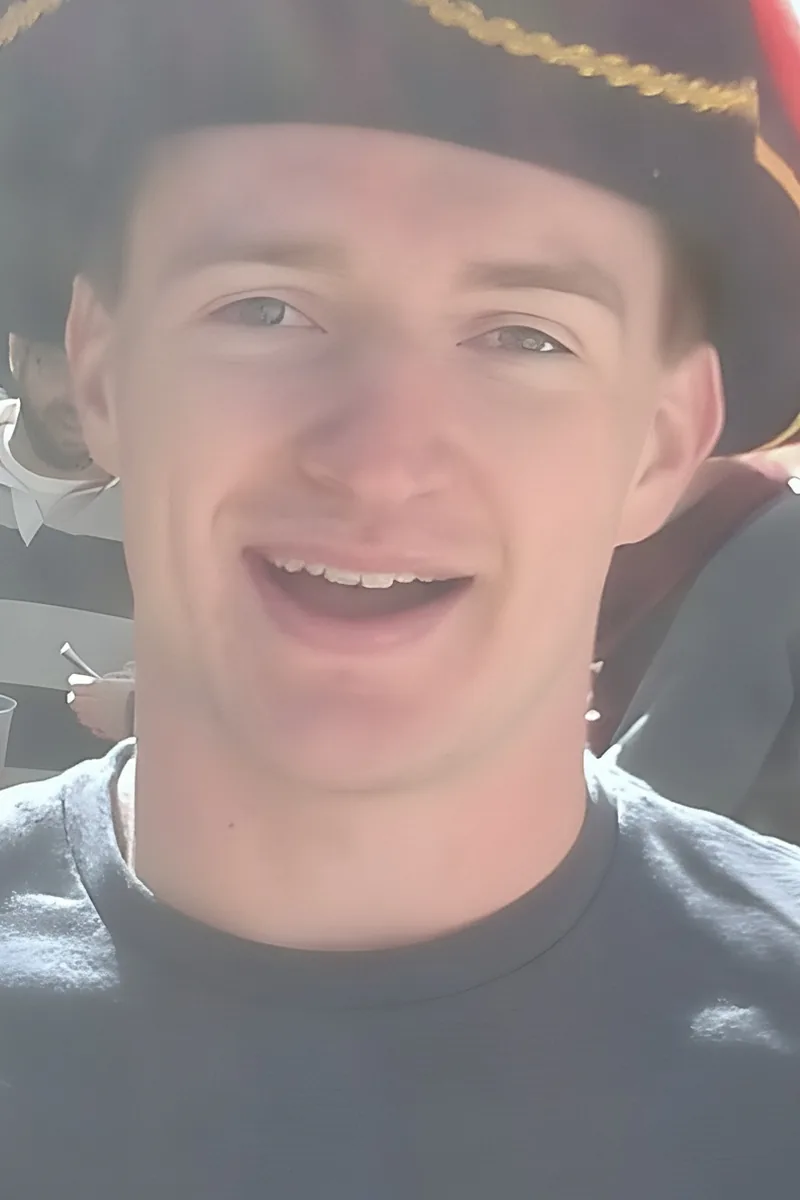
Remington's PhD work in condensed matter physics means he's spent years relying on the exact toolkit pre-calculus introduces — trigonometric manipulation, parametric equations, and the kind of limit reasoning that makes or breaks a first semester of calculus. He teaches pre-calc by working backward from how these concepts actually get used in higher math and science, so students understand the purpose behind every identity and transformation. Rated 5.0 by students.
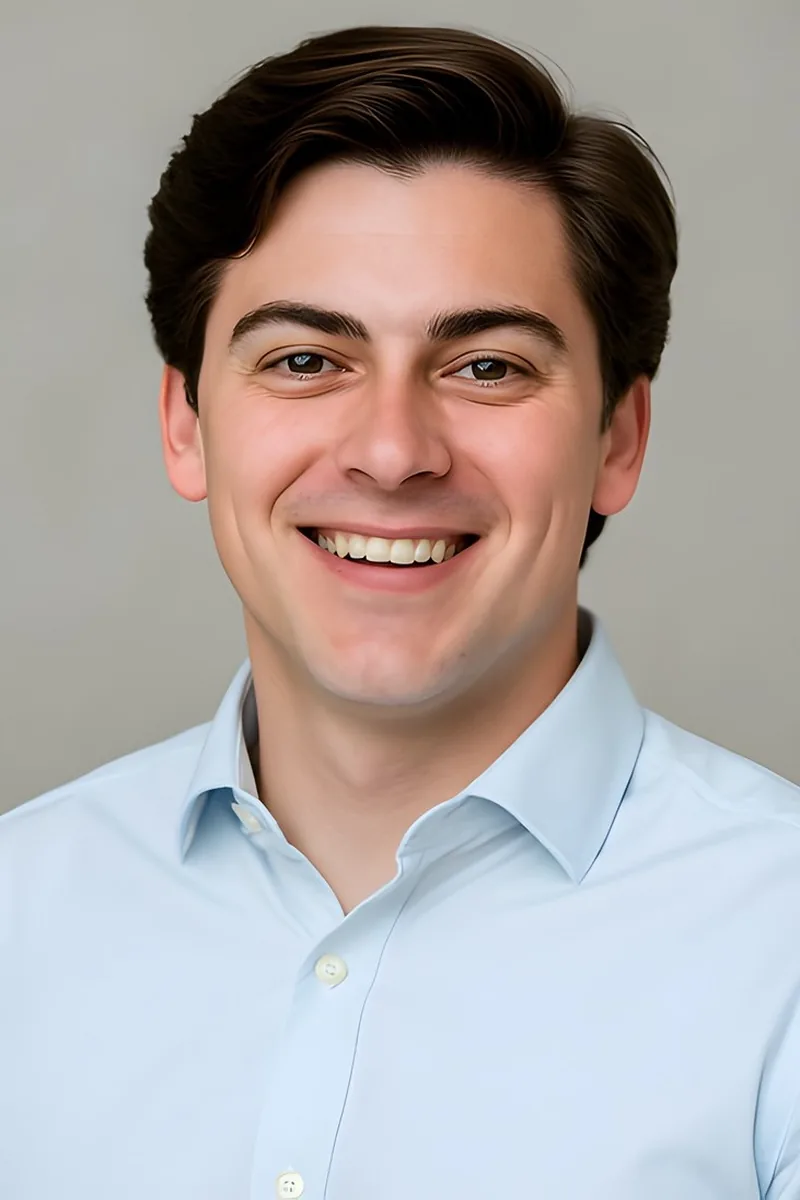
Philosophy trained Adam to break complex arguments into logical steps — a skill that translates directly to pre-calculus, where students need to chain together algebraic reasoning, trigonometric definitions, and function transformations in sequence. He treats each new topic as a logical extension of what came before, so concepts like composite functions or logarithmic rules feel like natural progressions rather than isolated formulas to memorize. His 35 ACT and 5.0 rating back up the approach.
The moment pre-calculus shifts from familiar algebra into rational functions, sequences, and trigonometric identities, many students lose their footing — Vansh tackles that transition by making each new concept feel like a natural extension of what came before. His finance background at WashU means he thinks in terms of models and projections built on the same exponential and logarithmic frameworks students are learning to navigate. A 1550 SAT and 4.8 rating confirm he delivers on that approach.
Everything in Pre-Calculus — trigonometric identities, rational functions, limits intuition — exists to set students up for calculus, but most courses don't make that connection explicit. Annie does, because she's already on the other side of it: her engineering program at Cornell showed her exactly which Pre-Calc skills matter most and where gaps tend to cause trouble later.
Differential equations, calculus, and physics all live on Bidyut's teaching roster — which means he knows exactly which pre-calculus skills (and which specific weak spots) will matter most once students move forward. His biomedical engineering training at Johns Hopkins keeps him fluent in the trigonometric, exponential, and composite function reasoning that pre-calc demands, and he teaches those topics by connecting them to the applied problems where sloppy understanding actually costs you. A 36 ACT and 5.0 rating back up the depth he brings.
What separates students who survive pre-calculus from those who actually understand it is whether they've internalized the *why* behind each technique — and Daniel, as an applied mathematics major, learned every concept the hard way, by sitting down and working through the logic piece by piece. That deliberate approach makes him especially effective at breaking down topics like rational functions and graph transformations, since he teaches the reasoning he had to build for himself rather than skipping steps that feel obvious. Rated 4.7 by students.
The jump to pre-calculus is where students suddenly need to think about trigonometric identities, limits of sequences, and polar coordinates all at once. Margaret tackles each of these by connecting them back to algebraic reasoning students already have, rather than treating every unit as brand new. Rated 4.9 by students, she's especially effective at demystifying the transition into calculus-level thinking.
Having scored 5s on both AP Calculus BC and AP Physics C while at a Harvard-track pace of 16 AP courses, Derek built the kind of deep pre-calculus fluency — limits of rational expressions, trigonometric manipulation, composite function analysis — that only comes from leaning on those tools constantly across multiple disciplines. His computer science major adds a distinctive angle: he teaches sequences, recursive definitions, and function behavior through the algorithmic thinking that makes those concepts precise rather than fuzzy. A 1550 SAT and 4.9 rating round out the picture.
The jump to pre-calculus trips up a lot of students because it's the first time they need to think about functions as objects — transforming them, composing them, analyzing their behavior. Christine's engineering coursework at Johns Hopkins required fluency with trigonometric identities, polar coordinates, and limits, so she teaches these topics with the confidence of someone who uses them daily.
After studying economics and computer science at Caltech, Brian developed a habit of thinking about functions as machines — inputs transform into outputs through a chain of operations, and pre-calculus is where that mechanical intuition gets built. He digs into the transition points that trip students up most, like moving from polynomial behavior to rational functions where asymptotes and holes suddenly matter. His 1580 SAT reflects the kind of precision he brings to breaking down each concept.
Computer science at Harvard means Parita thinks in functions all day — composition, recursion, domain restrictions, input-output logic — which is exactly the mental framework pre-calculus demands when students hit rational functions, piecewise definitions, and sequences. She tackles the course by making the abstract behavior of function families feel as concrete and debuggable as a line of code. Her 35 ACT and 5.0 rating back that up.
As a Course Assistant for Harvard's introductory calculus sequence, Sanjana sees exactly where pre-calculus gaps — shaky grasp of limits intuition, weak trigonometric identities, or incomplete understanding of function transformations — trip students up once the pace accelerates. She teaches those topics with that forward view, building each concept so it holds weight in the calculus course that's coming next. Holds a 5.0 rating and a 1560 SAT.
The jump from algebra to calculus-readiness often stalls at one specific point: understanding how functions actually behave — why a rational expression blows up near an asymptote, how composite functions layer transformations, what makes polynomial end behavior predictable. Samuel tackles that conceptual bridge head-on, drawing on his applied mathematics training at Caltech where these ideas aren't theoretical warm-ups but working tools. His 1550 SAT confirms the quantitative sharpness behind his teaching.
The jump from Algebra 2 to Pre-Calculus is where many students lose their footing, especially around trigonometric identities, polar coordinates, and the behavior of rational functions. Michael approaches these topics by connecting them to the calculus concepts they're designed to prepare for, so students understand the purpose behind each new technique. His engineering degree means he's used every one of these tools in practice, not just on paper.
Testimonials
Because the right Pre-Calculus tutor makes all the difference.
Average Session Rating – Based on 3.4M Learner Ratings
Practice Pre-Calculus
Free practice tests, flashcards, and AI tutoring for Pre-Calculus
Other Washington Tutors
Related Math Tutors in Washington
Frequently Asked Questions
Pre-Calculus tutors for students in Washington, DC focus on building the foundational concepts needed for Calculus success. Key topics include advanced function analysis, trigonometry, exponential and logarithmic functions, sequences and series, and conic sections. Tutors help students move beyond memorizing procedures to truly understanding how these concepts connect—recognizing patterns in function behavior, understanding why certain solving strategies work, and seeing the real-world applications behind the math. This deeper conceptual foundation is especially important given the rigor of DC's school system.
Word problems in Pre-Calculus require students to translate everyday situations into mathematical language—a skill that doesn't come naturally to most. Tutors help by breaking down the problem-solving process: identifying what information matters, choosing the right function or equation to model the situation, and interpreting results in context. Rather than jumping straight to solving, tutors teach students to sketch problems, label variables carefully, and check whether their answer makes sense. This systematic approach builds confidence and helps students see Pre-Calculus as a tool for understanding the world, not just abstract symbols on a page.
Graphing is often where Pre-Calculus students struggle most because it requires connecting algebraic properties to visual representations. Tutors help students understand how key features—zeros, asymptotes, domain and range, transformations—show up in both equations and graphs. They teach students to predict what a graph will look like before plotting it, and to work backward from a graph to identify the function. With practice and guidance, students develop intuition about function behavior, making calculus concepts like limits and derivatives much more intuitive later on.
Trigonometry is a major transition point in Pre-Calculus where many students hit a wall. Tutors help by grounding trig in the unit circle and real-world contexts rather than isolated formulas and identities. Understanding why sine and cosine are related, how angles connect to coordinates, and when different identities apply transforms trig from a symbol-pushing exercise into a coherent system. Tutors also address the notation and vocabulary that confuse students, and help them develop strategies for solving trig equations and proving identities step-by-step.
Math anxiety is real, especially as coursework becomes more abstract. Personalized 1-on-1 instruction creates a safe space for students to ask questions, make mistakes, and learn from them without judgment. Tutors can slow down on concepts that are shaky, celebrate small wins, and help students see patterns in their own thinking—"You always struggle with word problems because you skip the planning step, but when you sketch it out first, you catch your mistakes." As students experience success and understand why things work, confidence naturally follows. For students in Washington, DC, many face high academic expectations; a tutor who knows where they're struggling can make all the difference in shifting their mindset from "I'm bad at math" to "I can do this with support."
Yes. Tutors help students prepare for classroom exams and AP Precalculus by building the strong conceptual foundation needed to handle any problem variation. Rather than drilling isolated topics, they focus on connecting ideas—understanding how exponential and logarithmic functions are inverses, or how trigonometric identities simplify complex expressions. Tutors also teach test-taking strategies specific to math: how to read a problem carefully, when to show work vs. use calculators, and how to avoid careless errors under time pressure. Practice tests are valuable too, but expert tutors know that understanding *why* you missed a problem matters more than just getting the right answer next time.
Varsity Tutors connects you with expert Pre-Calculus tutors who understand the DC curriculum and can personalize instruction to your learning style. The process is straightforward: share what you're working on—whether it's specific topics, test prep, or general confidence building—and we match you with a tutor experienced in helping students reach their goals. Tutors work with your schedule and can adjust their approach based on what's working. Many students find that even a few sessions focused on a particular concept can clear up confusion and get them back on track.
Let’s find your perfect tutor
Answer a few quick questions. We’ll recommend the right plan and match you with a top 5% tutor.