Award-Winning AP Statistics Tutors
serving Miami, FL
AP Statistics
Tutors in Miami
Private 1-on-1 tutoring, weekly live classes for academic support, test prep & enrichment, practice tests and diagnostics, and more to elevate grades and test scores.
Based on 3.4M Learner Ratings
UniversitiesSchools & Universities
DeliveredHours Delivered
ProficiencyGrowth in Proficiency
Who needs tutoring?
No obligation. Takes ~1 minute.
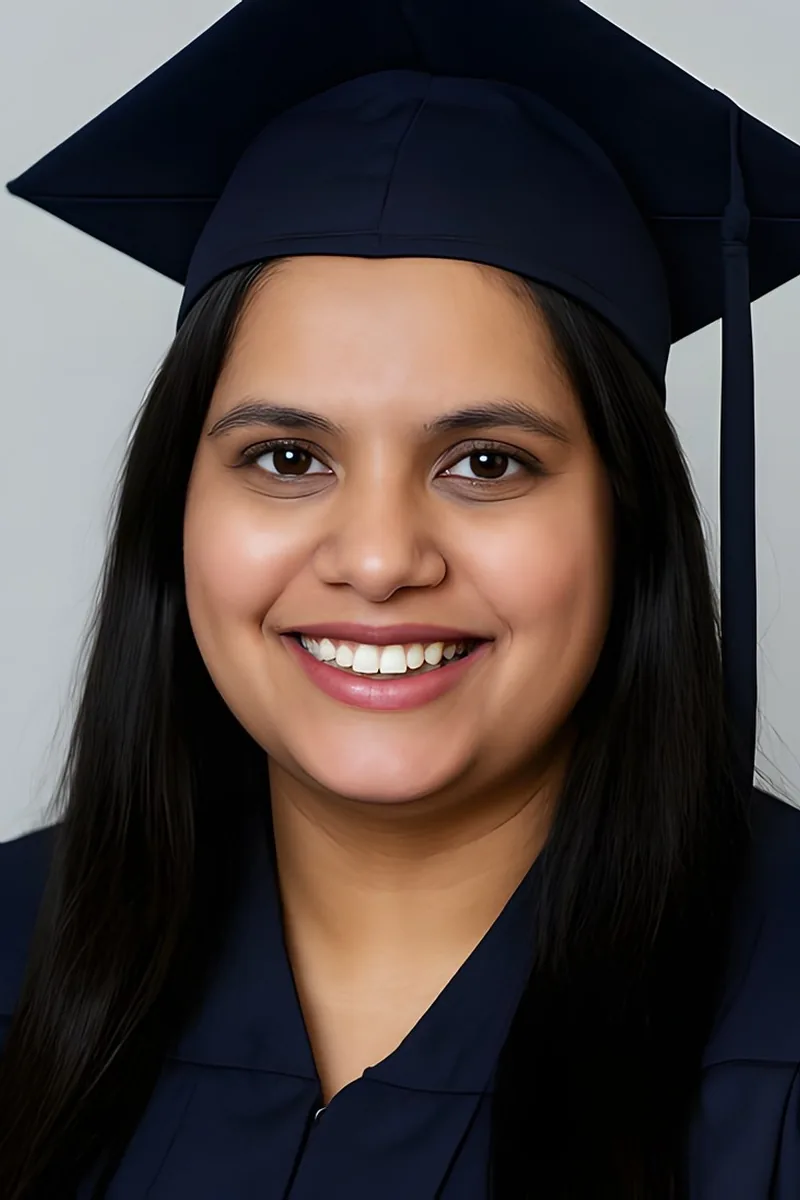
Biomedical engineering at UIC meant Apoorva was designing experiments, collecting noisy biological data, and running statistical tests to figure out whether a device prototype actually performed better than chance — which is the same inferential reasoning AP Stats builds its curriculum around. She's especially sharp on the probability and simulation units, where her engineering instinct for modeling uncertainty makes abstract concepts like sampling variability feel concrete and grounded. Holds a 4.6 rating.

I like helping students. I am very patient. I have experience teaching Calculus classes at the University of Miami. I have done private tutoring for all levels of math up to Calculus, as well as Statistics, Business Math, and Math Finance. I have worked in the actuarial field. I have an undergraduate degree in mathematics from Michigan State University and a Master's degree in mathematics from the University of Miami. I worked for The Princeton Review as a tutor for the SAT. I did very well on both the SAT and ACT, and like teaching students how to do better on those. I like history, too, and always find it fun to tutor history.
Civil engineering at UF means Cavan is constantly working with data — load distributions, material strength variability, environmental sampling — where understanding standard deviation and normal models isn't abstract but determines whether a structure stands or fails. He brings that concrete grounding to the probability and sampling distribution units in AP Stats, making concepts like the Central Limit Theorem click by tying them to scenarios where the math has real stakes. Rated 5.0 by students.
Most AP Stats students can punch a hypothesis test into their calculator but freeze when the free-response asks them to justify their conditions check or interpret a p-value in context — that's the gap Jenna zeros in on. Her psychology background means she's read and critiqued dozens of studies built on chi-square tests, correlation claims, and sampling methods, so she teaches the statistical reasoning behind the procedures rather than just the keystrokes. Rated 5.0 by students.
A physics degree means Payal has spent years propagating uncertainties, fitting curves to experimental data, and deciding whether a result is real or just statistical noise — skills that translate almost one-to-one into AP Stats concepts like inference, regression, and normal distribution modeling. She's especially sharp on the probability units, where her comfort with combinatorics and conditional reasoning from physics problem sets gives students a more intuitive way into topics that feel abstract without concrete examples. Rated 5.0 by students.
Licensed math teacher with a bachelor's in mathematics, Jacob brings the algebraic backbone that makes AP Stats click — he knows exactly when students need a quick refresher on transformations or logarithmic properties to make sense of Normal calculations or linearizing curved data. His classroom experience with Common Core's data and statistics strands means he's already taught the conceptual groundwork that the AP exam builds on, particularly around variability, sampling, and making claims from data. Rated 5.0 by students.
Neuroscience research at Duke meant Ankit was knee-deep in experimental design before he ever opened an AP Stats textbook — controlling for confounding variables, choosing between-subjects versus within-subjects designs, and deciding whether behavioral data actually supports a hypothesis. That background makes him especially sharp on the exam's experimental design and chi-square inference questions, where understanding why you structure a study a certain way matters more than memorizing formulas. Rated 4.8 by students.
Most AP Stats students come in expecting another math class and get blindsided when the exam asks them to write — to describe distributions in context, justify a choice of test, or explain what a confidence interval actually captures. Emerson's dual background in biology and psychology means he's read and dissected dozens of studies built on exactly this kind of statistical reasoning, from clinical trial designs to behavioral research with messy human data. Rated 5.0 by students, he teaches the interpretive vocabulary and structured argumentation that turn a halfway answer into full free-response credit.
With two master's degrees in mathematics education and state teaching certification, Anthony has taught the full arc of the math curriculum — which means he knows exactly where AP Stats diverges from every other math class students have taken. He zeroes in on the reasoning behind inference procedures, teaching students to articulate why they're choosing a particular test and what their conclusion actually means in context, rather than just punching numbers into a calculator. His 34 ACT reflects the kind of disciplined, structured thinking that pays off on the exam's language-heavy free-response questions.
Having scored a 34 ACT and earned a 5.0 rating from students, Emily brings a visual learner's instinct to a subject that's really about reading graphs, interpreting data displays, and spotting patterns — skills her MFA in Photography sharpened in unexpected ways. She teaches students to slow down on boxplots, scatterplots, and residual plots the way an artist reads an image: noticing what's actually there before jumping to conclusions about what it means. That habit pays off on AP Stats free-response questions, where describing distributions and justifying conclusions in precise language is worth more than any formula.
Most AP Stats students come in expecting another formula-driven math class, then hit a wall when the exam asks them to explain *why* they chose a particular test or *what* a confidence interval actually captures in context. Javier, whose finance background means he's used statistical reasoning to evaluate real financial data, zeroes in on that interpretive shift — particularly teaching students to write the kind of clear, context-specific justifications that earn full credit on free-response questions.
I am listening to and learning about him or her as an individual. I can also discover what motivates the student during this conversation and plan for how to frame future tutoring sessions in terms of what the student already knows and enjoys.
Biology research generates the kind of data AP Stats is built around — sample sizes, variability, and the question of whether an observed difference is real or just chance. Hanna's biology coursework and research minor at Nova Southeastern mean she's already navigated experimental design and statistical inference in lab settings, so she teaches concepts like sampling distributions and hypothesis tests through the lens of actual studies rather than abstract formulas. Rated 5.0 by students.
IB Mathematics and accounting coursework gave Elizabeth a dual fluency — she's comfortable with both the computational side of statistics and the kind of contextual interpretation that IB's analysis-heavy approach demands. That combination is particularly useful for the AP Stats units on confidence intervals and chi-square tests, where students need to move fluidly between calculator output and explaining what the numbers mean in context. Rated 4.9 by students.
Mechanical engineering at Alabama means Abigail is knee-deep in data analysis — testing hypotheses about material strength, modeling variability in system performance, and interpreting whether experimental results actually support a design choice. That engineering context translates directly to AP Stats topics like inference procedures and regression interpretation, where understanding why you're running a test matters more than memorizing which button to press on the calculator.
Most AP Stats students come in expecting another formula-driven math class, then hit a wall when the exam asks them to explain *why* a normal model applies or *what* a 95% confidence level actually means in context. Tessa's math major at Yale gives her the theoretical grounding to unpack those conceptual questions, while her history training — building arguments from evidence, weighing competing interpretations — maps surprisingly well onto the kind of structured, language-precise reasoning the free-response section rewards. Rated 4.9 by students.
Carnegie Mellon's biology program is lab-intensive, and Puja spent semesters designing experiments, collecting messy real-world data, and determining whether results were meaningful — skills that map directly onto AP Stats topics like experimental design, sampling methods, and inference reasoning. She's particularly sharp at teaching students how to translate calculator output into the precise written explanations the free-response section demands, since her science training required the same kind of defend-your-conclusion thinking. Rated 4.7 by students.
Hello! My name is Gabe, and I currently work as a Biostatistician in New York. I hold a Master's degree in Epidemiology from Johns Hopkins and a Bachelor's degree from NYU. Statistics isn't for everyone, but I hope to help students expand their knowledge or gain confidence in using it for a class. I am skilled in R studio for statistical and epidemiological analysis. My goal is to help students perform their best by becoming comfortable with the concepts.
Computational biology at Cornell means Emily lives in statistical analysis — hypothesis testing, regression models, and probability distributions are part of her daily coursework. She breaks down AP Stats concepts like experimental design and inference by connecting them to real datasets, making the logic behind each test click before students ever touch a formula sheet.
Graduate-level applied statistics at Penn State is a different animal from AP Stats, but William uses that deeper training to show students why formulas like the one for standard error of a sampling distribution are built the way they are — which makes the interpretation questions on the exam far less mysterious. His biomedical engineering background also means he's comfortable grounding lessons in real study designs, from clinical trials to observational health data, so students practice writing the kind of context-specific conclusions the free-response rubric actually rewards. Rated 4.8 by students.
Pure math training at the University of Chicago might seem like an odd fit for AP Stats, but Carson's coursework in probability theory and combinatorics gives him the formal backbone behind concepts like sampling distributions and expected value that most students only encounter as calculator procedures. He's especially sharp at demystifying the normal distribution and z-score logic, connecting them back to the mathematical reasoning that makes the formulas make sense rather than just appear on a formula sheet.
Pre-med coursework at Cornell means Pratik reads research papers full of p-values, confidence intervals, and regression tables — the same statistical literacy AP Stats is designed to build. He leans into the biology-meets-data angle, teaching students how to interpret experimental results and articulate why a particular inference procedure fits the study design, which is where the free-response rubric awards the most points. His 35 ACT reflects the kind of precise, structured reasoning that translates well to stats communication.
Caltech's economics program is quantitatively rigorous — Brian's coursework meant building econometric models, running hypothesis tests on real datasets, and defending statistical conclusions in ways that mirror exactly what AP Stats free-response questions demand. His dual background in CS and economics gives him a knack for explaining the logic behind choosing between z-procedures and t-procedures, or why independence conditions matter, in terms that click for students who think algorithmically. SAT score of 1580 speaks to the precision he brings to exam strategy.
Scoring a 36 ACT means Ethan knows how to break down standardized testing — and AP Statistics is really a standardized test in statistical thinking, where the free-response grading hinges on precise language about inference and experimental design. His environmental science and public policy background at the undergraduate level required constant engagement with data analysis, from interpreting regression models in climate studies to evaluating sampling methods in policy research. Rated 5.0 by students, he zeroes in on the communication side of stats that most math-oriented tutors overlook.
Neuroscience research runs on statistics — hypothesis testing, confidence intervals, regression analysis, interpreting p-values from real experimental data. Daniel applies that firsthand lab experience from his work at the Jungers Center for Neuroscience Research to break down AP Statistics concepts in ways that go beyond formula sheets. His biomedical engineering coursework at Rice keeps these tools sharp and current.
Biostatistics coursework during her Master's in Biotechnology gave Rithi hands-on experience designing experiments, running statistical tests on biological data, and interpreting whether results actually mean something — which is the exact reasoning cycle AP Stats builds its curriculum around. She's especially sharp on the probability and sampling distribution units, where her neuroscience research background makes concepts like normal approximations and variability in sample means feel concrete rather than abstract. Rated 4.9 by students.
Game Theory for advanced middle schoolers at Johns Hopkins CTY required Carter to make probability, expected value, and strategic reasoning click for students years ahead of the typical curve — experience that translates directly to the combinatorics and probability units in AP Stats. His economics training at Brown also means he's comfortable with regression and inference in applied contexts, so he can ground abstract concepts like sampling variability in real decision-making scenarios rather than just calculator routines. Rated 5.0 by students.
Testimonials
Because the right AP Statistics tutor makes all the difference.
Average Session Rating – Based on 3.4M Learner Ratings
Practice AP Statistics
Free practice tests, flashcards, and AI tutoring for AP Statistics
Nearby AP Statistics Tutors
Other Miami Tutors
Related Math Tutors in Miami
Frequently Asked Questions
AP Statistics covers four main units: exploring data through visualizations and summary statistics, sampling and experimentation design, probability and random variables, and inference using confidence intervals and hypothesis testing. The exam emphasizes understanding statistical concepts and applying them to real-world scenarios rather than heavy computation. A tutor can help you master each unit's core ideas and practice the types of problems you'll encounter on test day.
Score improvements depend on your starting point and study commitment, but students typically see meaningful gains—often 2-4 points on the AP scale—when working with a tutor over several months. The key is identifying your specific weak areas (like probability concepts or interpreting confidence intervals) and practicing targeted problem sets. Consistent practice combined with personalized instruction helps you build confidence and develop the analytical thinking the exam rewards.
Many students struggle with interpreting probability and understanding when to use different statistical tests—concepts that require strong conceptual understanding rather than memorization. Others find the free-response section intimidating because it requires explaining your reasoning clearly and showing all steps. Time management is another challenge; students often spend too long on calculations when they should focus on understanding the problem setup and selecting the right approach.
Start by reading questions carefully to identify what's being asked before diving into calculations. On multiple-choice, eliminate obviously wrong answers first, then reason through remaining options. For free-response questions, organize your work clearly and explain your reasoning step-by-step—graders award partial credit for correct methodology even if your final answer is off. Practice tests are essential; they help you develop pacing (aim to finish with 10-15 minutes to review) and identify which question types trip you up.
Your first session focuses on understanding your current level, learning goals, and specific challenges. A tutor will likely review some foundational concepts, assess which topics feel solid and which need work, and discuss your timeline before the exam. This helps create a personalized study plan that targets your weak areas and builds on your strengths, so you make the most efficient progress toward your score goal.
Most students benefit from 3-4 months of consistent preparation, with tutoring sessions 1-2 times per week combined with independent practice. If you're starting closer to exam day or struggling with foundational concepts, more frequent sessions help you catch up. Beyond tutoring, plan for 5-7 hours of weekly practice outside sessions—working through problem sets, reviewing notes, and taking practice tests are crucial for internalizing statistical reasoning.
Look for tutors with strong statistics backgrounds—ideally college-level coursework or professional experience with data analysis. They should understand the AP curriculum deeply and have experience helping students prepare for the exam. Most importantly, they should explain concepts clearly, adapt to your learning style, and help you develop problem-solving strategies rather than just working through practice problems together.
Practice tests are critical—they help you get comfortable with the exam format, develop timing strategies, and identify which topics need more review. Aim to take at least 3-4 full practice exams in the weeks leading up to test day. Beyond full tests, working through targeted problem sets for specific units (like probability or inference) builds confidence and helps you recognize patterns in question types, so you can apply your knowledge flexibly on exam day.
Let’s find your perfect tutor
Answer a few quick questions. We’ll recommend the right plan and match you with a top 5% tutor.