Award-Winning SAT Tutors
serving Round Lake Beach, IL
SAT
Tutors in Round Lake Beach
Private 1-on-1 tutoring, weekly live classes for academic support, test prep & enrichment, practice tests and diagnostics, and more to elevate grades and test scores.
Based on 3.4M Learner Ratings
UniversitiesSchools & Universities
DeliveredHours Delivered
ProficiencyGrowth in Proficiency
Who will be getting tutoring?
No obligation. Takes ~1 minute.

Law school at the University of Chicago sharpened exactly the skills the SAT rewards — picking apart dense passages under time pressure, spotting logical gaps, and choosing precise language over vague alternatives. Elena pairs that training with a perfect 1600 SAT score and a tutoring approach built around listening to students reason through problems so she can pinpoint the specific assumptions or misreadings costing them points. Her government, Spanish, and legal background gives her unusually natural command of both the verbal and quantitative sides of the exam.
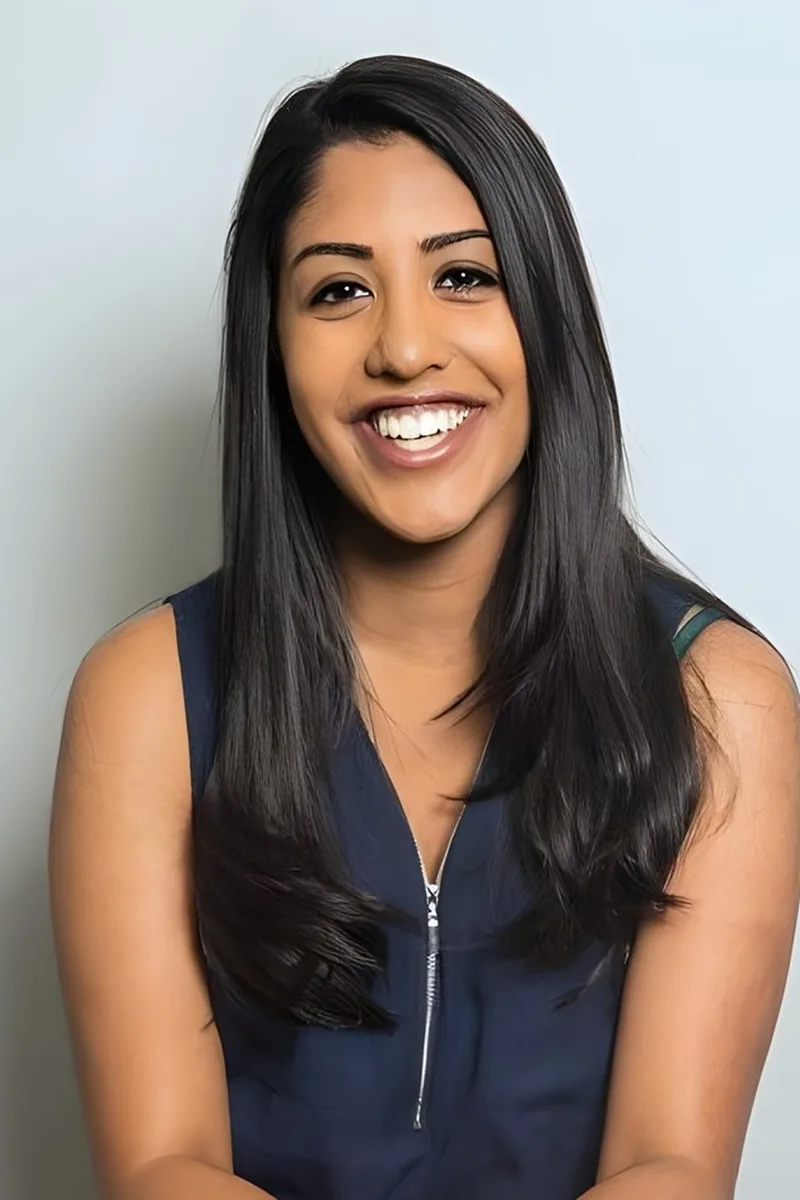
Northwestern's Honors Program in Medical Education accepted Anna straight out of high school, which meant she had to master the kind of disciplined, high-stakes test-taking that the SAT demands — and her 1590 score reflects that. She teaches students to treat the math section's word problems as logic puzzles and coaches a systematic elimination approach on the Reading and Writing passages that cuts through ambiguity under time pressure.
Going from a 25 ACT to a perfect 36 taught Astoria something most tutors never learn firsthand: how to reverse-engineer a standardized test and build strategies section by section. She applies that same diagnostic approach to the SAT — breaking down question types in Evidence-Based Reading, pinpointing grammar patterns in Writing and Language, and identifying the algebra and data analysis concepts that appear most frequently on test day. Her 1530 SAT score and 4.8 rating speak to how well those strategies translate.
Most SAT prep treats the math and verbal sections as two separate exams, but Viktor's UChicago math degree and his experience teaching literature, grammar, and college essays mean he can coach the full test without switching gears. He scored a 1600 — a perfect composite — and uses that familiarity with the exam's logic to teach students how to spot the algebraic structures hidden in word problems and the rhetorical patterns that make Reading section trap answers so tempting.
After working as a test prep tutor and admissions consultant in Hong Kong, Asta developed a full-picture approach to the SAT — she knows not just how to raise scores but how those scores fit into a broader college application strategy for students targeting U.S. universities. Her 1530 SAT and University of Chicago political science training sharpen her coaching on the Reading section especially, where she teaches students to trace an author's argument before touching the answer choices. Rated 5.0 by students.
A 1580 SAT gives Spencer credibility, but what actually sets him apart is how he reverse-engineers each section — breaking down Reading passages by question type, drilling the grammar patterns that repeat on Writing, and teaching the specific algebra and data-analysis concepts the College Board leans on hardest. His engineering background at UIUC means the math section is second nature, freeing him to spend more time on the verbal strategies most math-strong students overlook. He builds sessions around active problem-solving, adjusting his approach based on where each student's score is actually leaking points.
Industrial engineering at Northwestern trained Oliver to optimize systems — a mindset he applies to the SAT by identifying exactly where students hemorrhage points and building targeted drills around those patterns. His own 1590 puts him just ten points from a perfect score, and his approach emphasizes the timing and elimination strategies that close that last gap between a strong score and a top-percentile one. Rated 5.0 by students.
Jessica scored a 1590 on the SAT while studying economics and cancer biology at the University of Chicago — a combination that means she's equally comfortable unpacking a dense evidence-based reading passage and walking through heart-of-algebra problems under time pressure. She teaches students to spot the recurring grammar and rhetoric patterns in the Writing and Language section, turning questions that feel subjective into straightforward pattern matches.
Philosophy training at Princeton built exactly the kind of argument-dissection skills that show up on every SAT Reading passage — identifying claims, weighing evidence, spotting logical structure under time pressure. Jeff pairs that with a 1550 SAT score and direct experience teaching test prep for Kaplan and Summit Tutors, so he knows both the content and the pacing strategies that move scores. His history MA from Berkeley adds depth on the social science and historical passages that many students find trickiest.
Scoring a 1540 on the SAT means Ingrid knows how to navigate both the evidence-based reading passages and the no-calculator math section at a high level. She breaks down question types — command of evidence, words in context, passport to advanced math — so students recognize patterns instead of second-guessing themselves. Her engineering background at Northwestern also gives her a systematic approach to pacing and eliminating wrong answers under time pressure.
A 1430 SAT scorer with a physics degree, Eitan brings analytical precision to every section of the test — from dissecting evidence-based reading passages to catching the grammar patterns that the College Board recycles again and again. He also treats the math section as more than just formulas, teaching students to recognize which approach (algebraic, graphical, or plug-in) solves each problem fastest. Rated 5.0 by students.
A 1560 SAT scorer with a chemical engineering degree and medical school ahead of him, Siva knows how to break down both the math and evidence-based reading sections with precision. He teaches specific pacing strategies for each section — like back-solving on algebra-heavy problems and eliminating trap answers in the reading passages — that turn near-misses into correct responses. Rated 5.0 by students.
Sociology trained Evan to pull arguments apart and read critically under pressure — exactly what the SAT's evidence-based reading questions demand — while his current graduate work in statistics keeps him sharp on the data analysis and algebra that dominate the math sections. He scored a 1590 on the SAT and uses that experience to teach specific pacing and elimination strategies rather than generic test advice. Holds a 5.0 rating.
As a pre-med biology and chemistry major at Northwestern, Kade tackles the SAT Math section with the same systematic precision he applies to organic chemistry problem sets — translating word problems into clean equations and catching the algebraic traps the College Board loves to set. His 1550 composite score backs up an approach that also extends to the Reading and Writing sections, where his science background makes data-interpretation passages and evidence-based questions feel like second nature.
Oberlin's dual-degree program in Environmental Studies and Jazz Trumpet forced Emily to toggle constantly between analytical and creative thinking — a combination that maps surprisingly well onto the SAT, where students shift from data-heavy math problems to nuanced passage analysis within the same sitting. She scored a 1560 and uses that experience to teach concrete pacing and elimination strategies across both sections. Rated 4.8 by students.
I've been working with students for over seven years, from middle school all the way through college, across subjects like math, calculus, statistics, linear algebra, chemistry, and physics, with a lot of SAT and ACT prep mixed in. My background is perhaps a little unconventional. I have two bachelor's degrees, one in Engineering and one in Communication Studies, plus a Master's in Design. That combination means I can guide you through challenging technical material and communicate it in a way that is easy to grasp. What I care most about is helping students get to a place where they don't need me anymore. I know that sounds like a strange thing for a tutor to say, but I think it's the right goal. I'm not here to walk you through steps to copy down. I want you to understand why something works, because that's what holds up under pressure, on a test you haven't seen before. If you're ready to ace that test or prove that theorem that's been bugging you, reach out and let's work together
Theater training sharpens exactly the skills most students underestimate on the SAT — close reading of complex texts, rhetorical analysis, and the discipline to perform under pressure. Hallie pairs that background with a 1550 SAT score and deep experience in college essay coaching, so she builds strategies across both the Reading & Writing and Math sections while keeping the bigger admissions picture in view.
Sam's PhD in Statistics and biomedical engineering training make the SAT Math section — especially data analysis, scatterplot interpretation, and multi-step algebra — feel like familiar territory rather than test-day stress. He also covers the Reading and Writing sections, where his analytical habits carry over to breaking down evidence-based questions and spotting grammar patterns. Rated 4.9 by students, with a 1490 SAT of his own.
What sets Mahalia apart for SAT prep is her writing-intensive background — three creative writing and arts degrees mean she instinctively spots the rhetorical and grammatical patterns the Writing and Language section recycles, and she teaches students to read Evidence-Based Reading passages the way a writer would, tracking argument structure and tone shifts rather than re-reading. She scored a 1550 on the SAT herself, and her 5.0 tutoring rating speaks to how well that combination of test knowledge and language instinct translates to actual score gains.
Scoring a 1560 on the SAT gave Sanjana a clear map of how the test actually works — where it rewards careful reading versus quick calculation, and which question types eat up time without yielding points. As a Harvard applied math student who also tutors writing and reading, she tackles both sections with equal depth, breaking down everything from evidence-based passage questions to no-calculator algebra strategies. Rated 5.0 by students.
Teaching bilingual and ESL students sharpened Adrianne's ability to explain the grammar logic and passage structures behind SAT Reading and Writing questions — she knows exactly where non-native and native speakers alike get tripped up by evidence-based reasoning and rhetoric traps. Her secondary education master's and social science background also mean she can walk students through the math section's word problems by teaching them to translate real-world scenarios into equations. She scored a 1430 on the SAT and holds a 5.0 tutoring rating.
Hi! My name is Julia.I currently work as a statistics tutor at Harper College. I also have a BS in Immunology and MS in Biomedical Science from the University of Alabama at Birmingham and a MS in Computational Data Analytics from Georgia Tech, where I served as a TA for the introductory coding class. I graduated high school in 2017, and scored a 1570 on the SAT, 34 ACT, and a perfect 1520 pSAT. I am an AP scholar and National Merit Finalist. I scored a 5 on the AP Biology exam and although I did not take the AP Statistics class in high school, I still scored a 4 on the exam after self-studying the material. I customize my tutoring style for each student based on how they learn, but always like to emphasize how and why we get to an answer, not just giving the solutions or blindly running through formulas. I myself prefer to learn this way because it helps with knowledge retention and relies less heavily on rote memorization, which can be tedious at best and even impossible with more complex subjects. If that sounds good to you, I'd love to schedule a session with you or answer any questions you may have. I'll hopefully see you soon!
Studying economics and public policy at the University of Chicago means Ethan spends his days building arguments from data and dissecting dense policy texts — exactly the skill set the SAT rewards across both its math and evidence-based reading sections. He scored a 1550 on the exam and uses that experience to teach students how to spot the reasoning patterns behind tricky answer eliminations, especially on the paired-evidence questions that cost most test-takers easy points.
Psychology training sharpens a specific skill that pays off on the SAT: reading dense, argument-driven passages and identifying exactly what evidence supports a claim. Robert applies that analytical lens across both the Reading and Math sections, where his 1550 score reflects deep familiarity with the exam's logic and pacing. Rated 4.9 by students, he also draws on his Spanish and humanities background to unpack the Writing and Language traps that rely on rhetorical structure.
Most SAT prep tutors specialize in either the verbal or the math side — Jacob covers both with genuine depth, drawing on a PhD in Physical Chemistry from UC Berkeley and a liberal arts education at Haverford that included heavy reading and writing across philosophy and literature. He teaches the Math section by connecting algebra and data analysis to the quantitative reasoning he uses daily as a research chemist, while his broad humanities background sharpens his coaching on evidence-based reading and grammar patterns. His 1510 SAT score and 4.9 rating speak to results on both sides of the exam.
Stage management trained Ariela to absorb complex, overlapping information and reorganize it fast — a skill that maps directly onto SAT prep, where switching between evidence-based reading, grammar logic, and algebra under time pressure is the whole challenge. She scored a 1590 and teaches students to treat each section as an organizational problem: identify what the question is actually asking, filter out distractions, and match the right strategy to the right question type.
Cognitive science trained Ilana to think about how people process information — a skill she applies directly to SAT prep by teaching students to recognize the exam's predictable patterns in evidence-based reading, grammar rules, and algebraic problem setups. She scored a 1560 and knows which strategic shortcuts actually hold up under time pressure versus which ones fall apart on harder question sets. Rated 5.0 by students, she adapts her explanations to how each person learns rather than running a one-size-fits-all playbook.
Charlie's University of Chicago English degree sharpened exactly the kind of close analytical reading the SAT rewards — picking apart argument structure, weighing evidence pairs, and spotting the rhetorical moves buried in dense passages. He scored a 1520 on the SAT itself, and his deep familiarity with the LSAT's logic-heavy format gives him an unusual toolkit for teaching students to eliminate wrong answers systematically rather than relying on feel. Rated 5.0 by students.
A 1500 SAT scorer with graduate-level training in research and analytical writing, Meagan brings particular strength to the Evidence-Based Reading and Writing sections, where her sociology and history background makes dissecting passage arguments second nature. She also tackles the math side systematically, breaking down data interpretation and word problems using the same statistical reasoning she applies in her own research. Rated 5.0 by students.
Sparsh's 1570 SAT score came out of a biomedical engineering program at Vanderbilt, which means his prep style leans heavily on the quantitative side — he teaches students to recognize the algebraic structures buried in word problems and to move through data interpretation questions with the efficiency that engineering coursework demands. On the verbal sections, he applies the same systematic logic, walking through evidence-based reading pairs as if they were lab reports where every claim needs supporting data.
Theatre and marketing might seem unrelated to the SAT, but Jack's Northwestern training in close reading, persuasive writing, and Spanish built exactly the analytical habits the Evidence-Based Reading and Writing sections reward — spotting how authors structure arguments and choosing precise language under pressure. He scored a 1520 on the SAT and uses that experience to teach pacing strategies and grammar patterns that students can apply consistently across both verbal and math sections.
Students who've already scored well but want to close the gap to a top-percentile SAT often need someone who's been through that exact grind — Kshitij earned a 1600 and knows where the last 50–100 points typically hide, from tricky no-calculator algebra setups to the evidence-pair questions that punish rushed reading. His approach at Michigan's Ross School of Business emphasizes building transferable problem-solving instincts so students can adapt when test day throws an unfamiliar passage or data set. Rated 4.8 by students.
Studying both literature and computational neuroscience at the University of Chicago means Gabriel lives in the overlap between analytical reasoning and close reading — exactly the combination the SAT demands across all its sections. He scored a 1590 and uses that experience to teach specific strategies for evidence-based reading pairs, grammar and rhetoric traps, and the algebraic modeling questions that account for most of the math section's difficulty. Rated 5.0 by students.
Scoring a 1550 on the SAT required Kathryn to master both the evidence-based reading passages and the no-calculator math section — two areas where most students lose the points that separate a good score from a great one. Her background spans both STEM coursework and heavy reading in history and literature, which means she can coach the verbal and quantitative sides with equal confidence. She breaks down each section's timing traps and question patterns so students know exactly where to pick up points.
Scoring a 1520 on the SAT while studying economics at the University of Chicago, Ellie knows how to break down both the math and evidence-based reading sections into repeatable strategies. She treats SAT prep like applied problem-solving — identifying where students lose points, then drilling the specific question types (data interpretation, command of evidence, passport-to-advanced-math) that move the needle fastest. Her background coaching high schoolers through a campus philanthropy program also means she's comfortable keeping motivation high during long prep stretches.
The SAT's math section plays to Devanshi's strengths as a computer science major — she thinks in logic, patterns, and efficient problem-solving, which is exactly what the no-calculator and calculator sections demand. But her 1590 composite means she's equally sharp on the verbal side, where she teaches students to treat evidence-based reading questions like debugging: systematically eliminating wrong answers until the correct one is obvious. Rated 5.0 by students.
A 1520 SAT scorer and Northwestern graduate, Devon breaks the exam into manageable patterns — from evidence-based reading questions that hinge on identifying a single line of support to the no-calculator math section's emphasis on algebraic structure. His background in writing and literature means he's especially sharp on the Reading and Writing sections, where knowing how to parse an author's argument quickly can save minutes per passage. Rated 5.0 by students.
What separates a good SAT score from a great one is often timing discipline and strategic elimination — two skills Aaron built systematically on his way to a 1530. His Organizational Behavior background gives him an unusual read on how test-makers design wrong answers to feel right, and he teaches students to spot those psychological traps across both the math and verbal sections. Rated 5.0 by students.
Grace's architecture and political science training at the University of Chicago built two skills that map directly onto SAT prep: precise quantitative reasoning for the Math section and the ability to tear apart dense argumentative texts for Evidence-Based Reading. She scored a 1530 on the SAT herself and uses that experience to teach pacing and question-type triage — knowing when to invest time in a passage and when to move on. Rated 5.0 by students.
Psychology majors learn to read dense research passages and interpret data tables — two skills that map almost perfectly onto the SAT's evidence-based reading questions and data-heavy math problems. Pinelopi scored a 1530 on the SAT and uses her Duke coursework in research methods to teach students how to quickly parse experimental passages and spot the answer choices that distort a study's actual findings. Rated 5.0 by students.
Testimonials
Because the right SAT tutor makes all the difference.
Average Session Rating – Based on 3.4M Learner Ratings
Practice SAT
Free practice tests, flashcards, and AI tutoring for SAT
Nearby SAT Tutors
Other Round Lake Beach Tutors
Related Test Prep Tutors in Round Lake Beach
Frequently Asked Questions
Varsity Tutors matches Round Lake Beach students with expert SAT tutors for 1-on-1 instruction. We pair each student with a tutor based on their specific needs, learning style, and goals.
Whether you need homework help, exam prep, or want to get ahead, our SAT tutors are ready to help.
Common challenges include gaps from earlier material, difficulty with specific concepts, and trouble applying learning to new problems. These issues can snowball quickly in SAT.
A tutor identifies where you're stuck, fills in gaps, and provides targeted practice. The 1-on-1 format means you get help exactly where you need it.
Tutors work with your student's actual coursework—homework assignments, class notes, and upcoming tests. This keeps tutoring directly relevant to what's happening in the classroom.
When you share information about your student's school and curriculum, we can match you with a tutor who has relevant experience.
All tutors complete background checks, credential verification, and teaching evaluation. Many of our SAT tutors hold advanced degrees or have years of teaching experience.
You can review tutor profiles to find someone with the right background for your student's level and needs.
Many students see improved grades within a few weeks, along with better understanding of SAT concepts and more confidence tackling challenging material.
Tutors track progress and adjust their approach to ensure continued improvement.
Most students benefit from 1-2 sessions per week. More frequent sessions help if your student is significantly behind or has an important exam coming up.
Your tutor can recommend a schedule based on your student's specific situation and goals.
Tutoring is purchased in packages of hours, with rates varying by tutor experience. Varsity Tutors offers several options to fit different budgets and needs.
You can discuss pricing during your consultation to find what works best.
Your tutor will assess where your student is, discuss goals, and start working on priority areas. Most students bring current homework or upcoming test material to focus on.
By the end, you'll have a clear sense of how the tutor can help and a plan for moving forward.
Let’s find your perfect tutor
Answer a few quick questions. We’ll recommend the right plan and match you with a top 5% tutor.