Award-Winning AP Biology Tutors
serving Grand Rapids, MI
AP Biology
Tutors in Grand Rapids
Private 1-on-1 tutoring, weekly live classes for academic support, test prep & enrichment, practice tests and diagnostics, and more to elevate grades and test scores.
Based on 3.4M Learner Ratings
UniversitiesSchools & Universities
DeliveredHours Delivered
ProficiencyGrowth in Proficiency
Who needs tutoring?
No obligation. Takes ~1 minute.

AP Biology's shift toward data analysis and experimental design means students need to do more than memorize cell processes — they need to interpret graphs, design controls, and justify claims with evidence. Pratik is a biology major at Cornell on the premed track, so he teaches concepts like gene regulation, cellular respiration, and ecology through the lens of how the exam actually tests them.
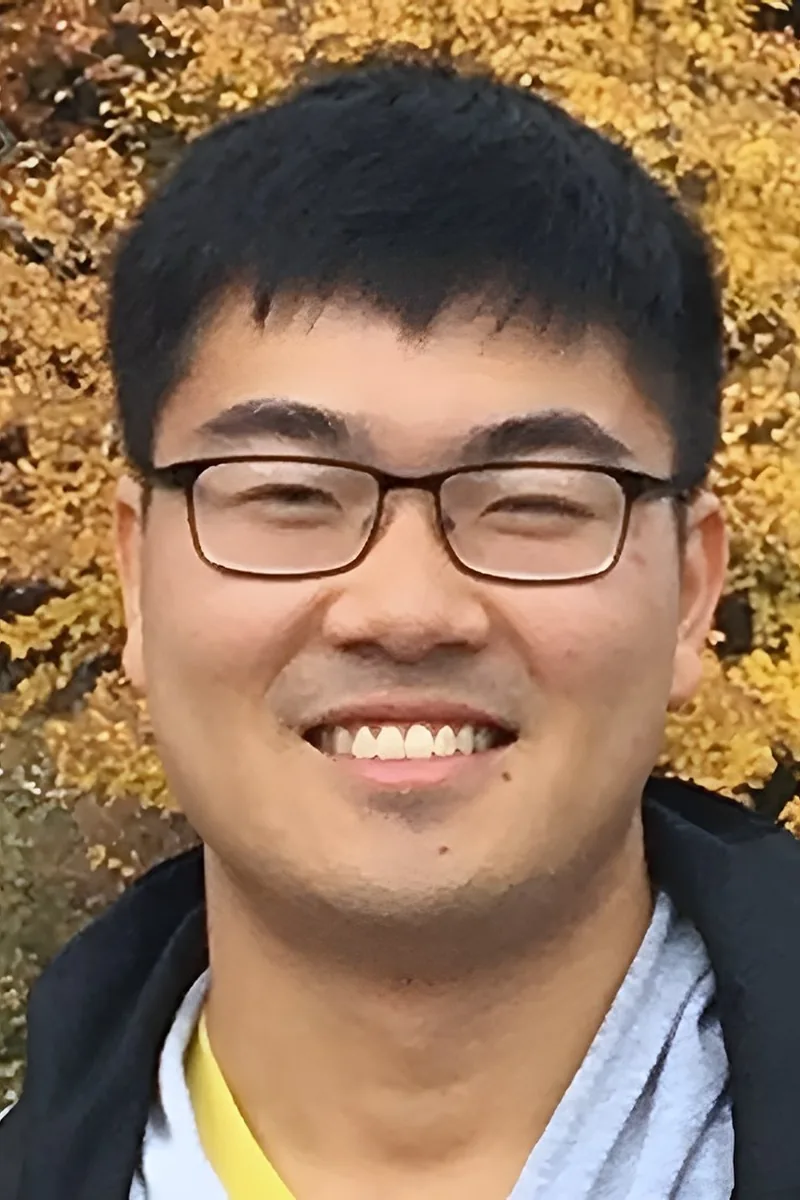
Jack's biomedical engineering master's from Michigan took him deep into the biology that underpins medical devices — cell signaling, tissue physiology, and developmental biology — which means he's tackled AP Bio's toughest content at a graduate level. He's currently applying to medical school and prepping for the MCAT, so concepts like photosynthesis, cellular respiration, and inheritance patterns are fresh and actively in rotation. Rated 4.9 by students.
Second-year med student at Wayne State, Ishan is currently neck-deep in the physiology and cell biology that AP Bio's exam leans on hardest — but what sets him apart is years of tutoring experience stretching back to high school, which means he's practiced at spotting exactly where a student's understanding breaks down in topics like cellular respiration or protein synthesis. He also tutored organic chemistry in college, giving him a molecular-level fluency that pays off when AP Bio questions ask students to explain enzyme kinetics or trace energy transformations through metabolic pathways.
Struggling through high school science before eventually excelling in a medical school program gives Macklin an unusual perspective on AP Bio — he knows exactly where students get stuck on topics like cellular respiration, enzyme kinetics, and signal transduction because he hit those same walls himself before mastering them at the graduate level. His exercise physiology degree and current medical training mean he can ground abstract concepts in how living systems actually function, connecting something like the electron transport chain to real physiological outcomes students can visualize. Rated 5.0 by students.
Currently conducting biomedical research at the NIH between her third and fourth years of medical school, Uchenna lives the biology that AP students are tested on — from cellular respiration and signal transduction to genetics and evolution. She teaches the exam's notoriously tricky experimental-design questions by walking through real research scenarios, so students learn to analyze data the way scientists actually do.
Carly's industrial engineering background means she thinks in systems and processes — which turns out to be a surprisingly effective lens for AP Bio's units on energy flow, feedback loops, and how inputs move through metabolic pathways like cellular respiration and photosynthesis. She also served as a college teaching assistant, so she's practiced at spotting exactly where a student's understanding breaks down and rebuilding the logic from that point forward.
Pharmacy school at the University of Michigan means Syeda has spent years studying biochemistry, pharmacology, and human physiology — disciplines that overlap heavily with AP Bio's units on cellular processes, signal transduction, and homeostasis. She's especially effective at teaching how molecules interact at the cellular level, like enzyme-substrate specificity or receptor-mediated responses, because she applies those same concepts daily in her Doctor of Pharmacy coursework. Rated 5.0 by students.
Studying biology at the University of Michigan, Krisha brings current coursework directly into her AP Bio tutoring — from cellular respiration and signal transduction to gene regulation and ecological dynamics. She breaks down the exam's data-analysis questions by teaching students to interpret experimental setups the way a working scientist would. Rated 5.0 by students.
Samantha is currently studying biology at the University of Michigan, which means the AP Bio curriculum — from cellular energetics to ecology — overlaps directly with her active coursework. What sets her apart for this exam is her ability to teach students how to read and interpret experimental data in the way the redesigned AP Bio format demands, where nearly every multiple-choice question includes a graph, table, or diagram. Her 35 ACT also signals the kind of analytical reading skill that translates well to coaching students through the exam's notoriously dense free-response prompts.
Working as a research assistant in Johns Hopkins' Department of Transplant Surgery means Jonathan encounters cell signaling, gene expression, and immune response in a clinical context every day. He brings that real-world lens to AP Biology, connecting dense topics like cellular respiration and heredity to the actual research happening in his lab. That bridge between textbook diagrams and living science makes the exam's application-heavy questions far less intimidating.
Pre-med coursework in movement science at Michigan means Ray has studied physiology and biochemistry from the angle of how living systems actually move and function — which gives him a practical hook for AP Bio's units on body systems, cellular energy, and signal transduction. His biochemistry background is especially useful when students need to connect molecular processes like enzyme kinetics or ATP production to the organism-level outcomes the free-response questions ask about. Rated 5.0 by students.
As a biology major at Washington University in St. Louis who served as a teaching assistant for an upper-level biology course, Alexander knows AP Bio from both sides — the content and the exam. He digs into the trickiest units, like cell signaling pathways and gene regulation, by mapping out the logic visually rather than relying on rote memorization. His approach emphasizes the data-analysis and experimental-design questions that carry heavy weight on the AP exam.
Nicolette's bioengineering degree from Rice meant she didn't just memorize biological systems — she had to model them, which is exactly the kind of mechanistic thinking AP Bio's free-response questions demand when students need to explain processes like signal transduction or feedback in gene regulation. Her engineering training makes her especially sharp at teaching students to reason through experimental design and data interpretation questions, where you have to connect variables to biological outcomes rather than just recall facts. Rated 5.0 by students.
A human biology degree from Cornell plus current graduate work in human development means Jonathan has studied the organism-level physiology and developmental processes that AP Bio's later units build toward — growth, reproduction, and how organisms maintain homeostasis through feedback mechanisms. He's particularly good at teaching students to read experimental data and construct the kind of evidence-based arguments the free-response section demands, a skill sharpened by his own med school prep and 1550 SAT analytical training. Rated 4.9 by students.
Biophysics at Rice means Aadith studies biological systems through a quantitative lens — analyzing protein folding energetics, membrane dynamics, and molecular interactions — which gives him an unusual edge on AP Bio's units covering macromolecule structure, enzyme kinetics, and cellular energetics. He's also actively taking biochemistry coursework alongside his physics major, so he can explain concepts like the chemiosmotic mechanism or allosteric regulation with the kind of molecular-level precision that earns full credit on free-response questions.
Ethan's economics and public policy studies at the University of Chicago aren't a typical path into AP Bio, but they've made him sharp at interpreting data sets, constructing evidence-based arguments, and reasoning through cause-and-effect chains — all skills the exam's free-response questions heavily reward. He's especially useful for students who struggle with the experimental design and data analysis portions of the test, where reading graphs and evaluating hypotheses matters more than memorizing vocabulary.
A molecular biology degree means Andrew has worked through the central dogma, cell division, and metabolic pathways at the bench level — exactly the content AP Bio's exam leans on hardest. His PhD training in law and management might seem unrelated, but it sharpened the argumentative writing skills that translate directly to constructing the multi-part explanations free-response questions demand. Rated 4.8 by students.
As a Cornell biology student on a pre-med track, Karim is actively studying the same cellular processes, genetics, and ecological concepts that AP Bio tests — so his explanations come with the freshness of someone working through this material at the college level right now. He's especially strong at breaking down how organisms maintain homeostasis and how evolutionary pressures shape populations, the kinds of big-picture connections the exam's data-interpretation questions demand. Rated 5.0 by students.
Cellular respiration, gene regulation, ecological energy flow — AP Biology demands that students think across scales, from molecules to ecosystems, often within a single free-response question. Sharan is deep in this material as a Human Biology major on the premed track at Cornell, and she unpacks complex processes like signal transduction by walking through each step with clear cause-and-effect reasoning.
Studying biomedical engineering at Duke means Eric thinks about biological systems at the molecular, cellular, and organismal levels every day. He tackles AP Biology's toughest units — signal transduction, gene regulation, and energy flow through ecosystems — by tying them back to the underlying logic that the AP exam rewards.
Teaching 10th-grade Biochemistry at a competitive Philadelphia magnet school means Kathleen lives in the overlap between biology and chemistry that defines the AP Bio exam. She digs into the molecular details — enzyme kinetics, cellular respiration energetics, gene expression regulation — with the depth the College Board expects on free-response questions. Rated 5.0 by students.
Studying biological engineering at MIT means Lainie encounters AP Bio's core content — gene regulation, cellular energetics, metabolic pathways — through the lens of designing and modeling biological systems, which gives her a more mechanistic understanding than a standard biology curriculum provides. She scored a 1580 SAT and has tutored students as young as four, so she's practiced at adjusting her explanations to match exactly how much detail a student can absorb. Rated 5.0 by students.
Running an immunology lab at Columbia Medical Center means Matthew doesn't just remember AP Biology content — he uses cellular signaling, gene expression, and immune system mechanics in active research. He teaches the course's trickiest units, like cell communication and ecology data analysis, by connecting textbook diagrams to what actually happens at the bench. That real-world grounding is especially useful for the AP exam's experimental-design and data-interpretation questions.
Testimonials
Because the right AP Biology tutor makes all the difference.
Average Session Rating – Based on 3.4M Learner Ratings
Practice AP Biology
Free practice tests, flashcards, and AI tutoring for AP Biology
Other Grand Rapids Tutors
Related Science Tutors in Grand Rapids
Frequently Asked Questions
AP Biology covers eight major units: chemistry of life, cell structure and function, cellular transport, cell communication and division, heredity, gene expression and regulation, natural selection, and ecology. The exam tests your understanding of these concepts through multiple-choice questions, free-response questions, and lab-based scenarios. Most students spend the school year building knowledge progressively, with tutoring helping you master challenging concepts like photosynthesis, cellular respiration, and evolutionary mechanisms.
Score improvement depends on your starting point and commitment level. Students who work with tutors typically see gains of 1-2 score points (on the 1-5 scale), with the biggest improvements when tutoring focuses on your specific weak areas—whether that's understanding enzyme kinetics, interpreting data sets, or constructing evidence-based arguments. Consistent practice combined with personalized instruction helps you move from memorizing facts to truly understanding biological concepts, which is what the AP exam rewards.
Students in Grand Rapids and beyond commonly struggle with cellular respiration and photosynthesis (the energy pathways and electron transport chains), meiosis and genetic inheritance patterns, and interpreting experimental data. Many also find it difficult to explain biological processes at multiple levels—molecular, cellular, and organismal—which the exam frequently tests. Tutors help you build conceptual understanding of these topics so you can explain the 'why' behind biological processes, not just memorize the steps.
The AP Biology exam is 3 hours long and consists of two sections: 60 multiple-choice questions (90 minutes) and 6 free-response questions (90 minutes). The free-response section includes two long questions (10 minutes each) and four short questions (6 minutes each), testing your ability to analyze data, design experiments, and construct scientific arguments. Tutoring can help you develop pacing strategies—knowing when to move on from difficult multiple-choice questions and how to budget time across the free-response section.
Practice tests are essential for AP Biology success. They help you identify weak content areas, get comfortable with the question formats, and build test-taking stamina. Most students benefit from taking full-length practice exams every 2-3 weeks starting in late winter, then more frequently as the May exam approaches. Tutors can review your practice test results with you, pinpoint exactly where you're losing points, and target instruction on those specific gaps rather than re-teaching material you already understand.
Ideally, preparation begins when your course starts in the fall, with consistent studying throughout the year. However, many students benefit from intensified tutoring in the final 6-8 weeks before the May exam. If you're struggling with specific units earlier in the year, connecting with a tutor right away prevents knowledge gaps from compounding. Tutors can help you create a realistic study schedule that balances your AP Biology class with other commitments, ensuring steady progress without burnout.
Test anxiety often stems from feeling unprepared or uncertain about content. Regular practice tests and targeted tutoring build genuine confidence—you'll know the material and have strategies for tackling unfamiliar questions. On exam day, techniques like reading questions carefully before answering, flagging difficult questions to return to later, and managing your breathing help you stay calm and focused. Tutors can also help you practice these strategies during study sessions so they feel natural when you take the actual exam.
Your first session focuses on understanding where you stand. A tutor will discuss your current grade, which topics feel strongest and weakest, your target AP score, and your learning style. They may review recent class materials or a practice test to identify specific gaps. From there, you'll develop a personalized plan that prioritizes the concepts most likely to appear on the exam and address your individual challenges, whether that's understanding complex processes or improving your free-response writing.
Let’s find your perfect tutor
Answer a few quick questions. We’ll recommend the right plan and match you with a top 5% tutor.