Award-Winning AP Physics C: Electricity and Magnetism Tutors
serving Grand Rapids, MI
AP Physics C: Electricity and Magnetism
Tutors in Grand Rapids
Private 1-on-1 tutoring, weekly live classes for academic support, test prep & enrichment, practice tests and diagnostics, and more to elevate grades and test scores.
Based on 3.4M Learner Ratings
UniversitiesSchools & Universities
DeliveredHours Delivered
ProficiencyGrowth in Proficiency
Who needs tutoring?
No obligation. Takes ~1 minute.
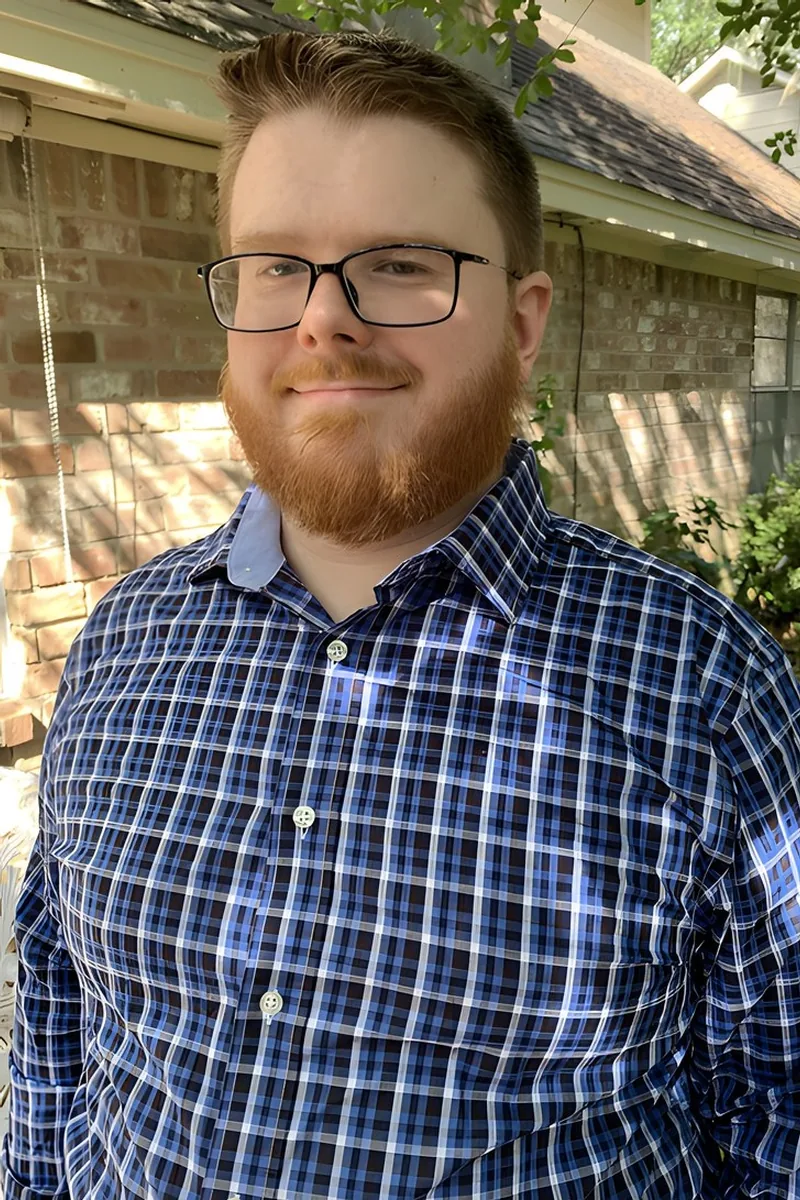
Electromagnetism was the centerpiece of Michael's teaching at the University of Michigan, where he designed and led undergraduate lab courses on circuits, fields, and waves. AP Physics C: E&M demands comfort with Gauss's law, Ampère's law, Faraday's law, and RC/RL circuit analysis — all topics he's taught extensively at the college level. He knows exactly where the conceptual gaps tend to open up, especially around flux integrals and the superposition of electric fields.

Gauss's law, Ampère's law, Faraday's law — E&M demands that students think in three dimensions about invisible fields, which is a fundamentally different skill than anything in Mechanics. Pratik tackles this by teaching students to visualize field lines and flux before jumping into the calculus, building geometric intuition that makes the integral setups feel natural.
I have a Master's degree in Chemical Engineering, with additional graduate studies in Chemical Engineering and Computer Science, and over 10 years of experience teaching and tutoring STEM subjects. I work with students of different ages, backgrounds, and learning styles in mathematics, physics, chemistry, and related subjects. I believe the best tutoring starts with understanding how each student thinks. My goal is to identify where a concept becomes unclear, explain it from the student's perspective, and help them build both understanding and confidence. I want my students to learn not just how to find the right answer, but why it is the right answer and how to approach similar problems independently. I believe there is always learning in teaching, and that is one of the reasons I continue to enjoy working with students after all these years.
Gauss's law, Ampère's law, Faraday's law — AP Physics C: E&M asks students to think in vector fields and surface integrals, which is a major leap from mechanics. As an astrophysics and chemistry double major at CU Boulder, Graham works with electromagnetic theory as a core part of his studies and breaks down each law into the physical picture behind the math. He holds a 5.0 rating from students.
Gauss's law, Ampère's law, Faraday's law — E&M demands that students think in three dimensions about invisible fields, which is a fundamentally different challenge than mechanics. Corrina tackles this by connecting each Maxwell equation to physical setups she encountered in her engineering coursework, making abstract flux integrals feel concrete. Rated 4.7 by students.
Gauss's law, Ampère's law, Faraday's law — AP Physics C: E&M asks students to wield vector calculus in physical contexts that feel genuinely abstract at first. Jacques tackles this by grounding each law in a concrete setup (a charged sphere, a solenoid, a changing magnetic flux) before layering in the integral formulations. His engineering training at Princeton and decades of classroom physics teaching make him unusually comfortable in this territory.
Gauss's law, Ampère's law, RC circuits — AP Physics C: E&M demands comfort with vector calculus applied to invisible fields, which is a steep jump for most students. David's engineering coursework at UCLA keeps him immersed in this material, and he excels at translating abstract field equations into concrete, visual reasoning.
Gauss's law and Ampère's law become far more manageable once a student can visualize the symmetry each problem is really asking about. Emily's physics coursework at Cornell covered electricity and magnetism at the calculus level, and she approaches each concept by connecting the integral setup to the physical scenario. Her 4.8 rating speaks to how clearly she translates abstract field equations into something students can actually work with.
AP Physics C: E&M is where calculus and electromagnetism collide — Gauss's law in integral form, Faraday's law, RC and RL circuits all demand comfort with both the physics and the math simultaneously. Serdar's physics teaching degree paired with his current nuclear engineering graduate work means he lives in the calculus-heavy side of physics daily. Rated 5.0 by students, he breaks down intimidating vector calculus applications into step-by-step reasoning.
Hi! I'm Palmer Blackstock, a passionate tutor with a Bachelor's degree in Physics from the University of Chicago and over two years of experience in tutoring high school and college students. My primary focus is on Physics at both introductory and advanced levels, with an additional focus in math subjects like Algebra, Pre-Calculus, and AP Calculus. In my past tutoring I've helped students grasp complex concepts in mechanics, waves, and electromagnetism, as well as math concepts in trigonometry and calculus. I believe in a collaborative, student-centered approach, where I'll ask the student what they know, what they don't know, and what they want to get out of our tutoring sessions. I always tailor my lessons to meet a student's individual needs. I'm dedicated not only to enhancing a student's understanding of math and science concepts but also fostering a love of science by providing engaging content and real-world examples. In addition to my passion for education, I also love writing and journalism, especially finding engaging methods for science communication. I enjoy reading books and listening to science podcasts. But I'm also an avid video game and board game player.
Electricity and Magnetism trips students up because it layers vector calculus onto already-abstract concepts like electric flux, Gauss's law, and electromagnetic induction. Rachel's calculus expertise gives her a solid handle on the integral and differential equations that drive E&M problem-solving. She's upfront that this is one of the toughest AP courses offered, and she approaches it by making sure the math never becomes the bottleneck.
Gauss's law, Ampère's law, Faraday's law — AP Physics C: E&M asks students to wield vector calculus in physical contexts that feel deeply abstract. Shira tackles this by grounding each law in a concrete scenario first (a charged sphere, a solenoid, a changing magnetic flux) before layering on the integral setup, so students build physical intuition alongside mathematical fluency.
Gauss's law, Ampère's law, and Faraday's law each require students to set up integrals over surfaces and paths that feel nothing like standard calculus problems. Vishank's comfort with multivariable math and his experience teaching across physics and calculus let him bridge that gap — showing exactly how to choose a Gaussian surface or an Amperian loop and why the math works the way it does.
AP Physics C: E&M is where calculus and electromagnetism collide, and most of the difficulty lives in translating physical setups — Gaussian surfaces, Amperian loops, RC circuits — into the right integral or differential equation. Megan's applied mathematics degree gives her deep comfort with the vector calculus and differential equations that make this course so demanding. She breaks down Gauss's law and Faraday's law problems step by step, connecting the math to the physical intuition behind each result.
Gauss's law, Ampère's law, Faraday's law — AP Physics C: E&M asks students to wield vector calculus in the service of invisible fields, which is a genuinely difficult conceptual shift. Spencer's biomedical engineering studies require exactly this skill set, since electromagnetic principles drive technologies like MRI and neural signal processing. He unpacks each law with clear diagrams and step-by-step integral setups so the math reinforces the physics instead of obscuring it.
Testimonials
Because the right AP Physics C: Electricity and Magnetism tutor makes all the difference.
Average Session Rating – Based on 3.4M Learner Ratings
Practice AP Physics C: Electricity and Magnetism
Free practice tests, flashcards, and AI tutoring for AP Physics C: Electricity and Magnetism
Nearby AP Physics C: Electricity and Magnetism Tutors
Other Grand Rapids Tutors
Related Science Tutors in Grand Rapids
Frequently Asked Questions
AP Physics C: Electricity and Magnetism is considered one of the more challenging AP exams because it requires both conceptual understanding and strong calculus skills. The course demands mastery of complex topics like electric fields, magnetic forces, and electromagnetic induction, combined with the ability to apply calculus to solve problems. Many students find the mathematical rigor more demanding than the conceptual physics itself, which is why focused preparation and personalized instruction can make a significant difference in performance.
Score improvement depends on your starting point and consistency with tutoring. Students who work with tutors typically see gains of 1-3 points on the AP scale (out of 5) over several months, though some see larger jumps by addressing specific weak areas early. The key is identifying which topics—like Gauss's law, circuit analysis, or magnetic field calculations—are holding you back, then building mastery through targeted practice and feedback. Starting tutoring 3-4 months before the exam gives you the best window for meaningful improvement.
The biggest hurdles are understanding how to apply Gauss's law and Ampère's law to different scenarios, managing the calculus required for flux and field calculations, and distinguishing between electric and magnetic effects in complex problems. Many students also struggle with pacing during the exam—the free-response section requires showing detailed work, which eats into time if you're not efficient. Additionally, visualizing three-dimensional electric and magnetic fields can be abstract and challenging without proper support.
Ideally, start tutoring in January or February if you're taking the exam in May, giving you 3-4 months to build foundational understanding and practice problem-solving. If you're struggling with earlier topics like electric fields or potential, starting even earlier (fall) helps prevent gaps from compounding. However, even targeted tutoring starting in March or April can help you refine test-taking strategies, work through practice exams, and boost confidence before exam day.
Practice tests are essential for AP Physics C: Electricity and Magnetism because they help you understand the exam format, identify weak topics, and build timing skills under pressure. Most students benefit from taking 4-6 full-length practice exams spaced throughout their preparation, with the first one early to establish a baseline and the last 2-3 in the final month to simulate test conditions. Between practice tests, focus on targeted review of topics where you lost points, rather than simply retaking exams.
Look for tutors with strong physics backgrounds and specific experience teaching AP Physics C, ideally with a track record of helping students improve their scores. They should be able to explain complex concepts like electromagnetic induction clearly, help you develop problem-solving strategies, and provide feedback on your free-response work. Varsity Tutors connects you with expert tutors for students in Grand Rapids who understand the AP curriculum and can tailor instruction to your learning style and timeline.
Your first session typically focuses on assessing your current understanding, identifying which topics are strongest and where you need the most support, and establishing a study plan. The tutor may ask you to work through a few practice problems to see how you approach problem-solving and where misconceptions might exist. From there, you'll develop a customized roadmap covering which topics to prioritize, how often to meet, and what practice materials to use.
Working through multiple practice exams with a tutor in a low-pressure setting builds familiarity with the format and reduces anxiety when you encounter similar questions on test day. Tutors also help you develop a personalized test-taking strategy—like which sections to tackle first, how to manage time on free-response questions, and how to check your work efficiently. As you see improvement in practice tests and gain mastery of difficult topics, your confidence naturally grows, which translates to calmer, more focused performance on the actual AP exam.
Let’s find your perfect tutor
Answer a few quick questions. We’ll recommend the right plan and match you with a top 5% tutor.